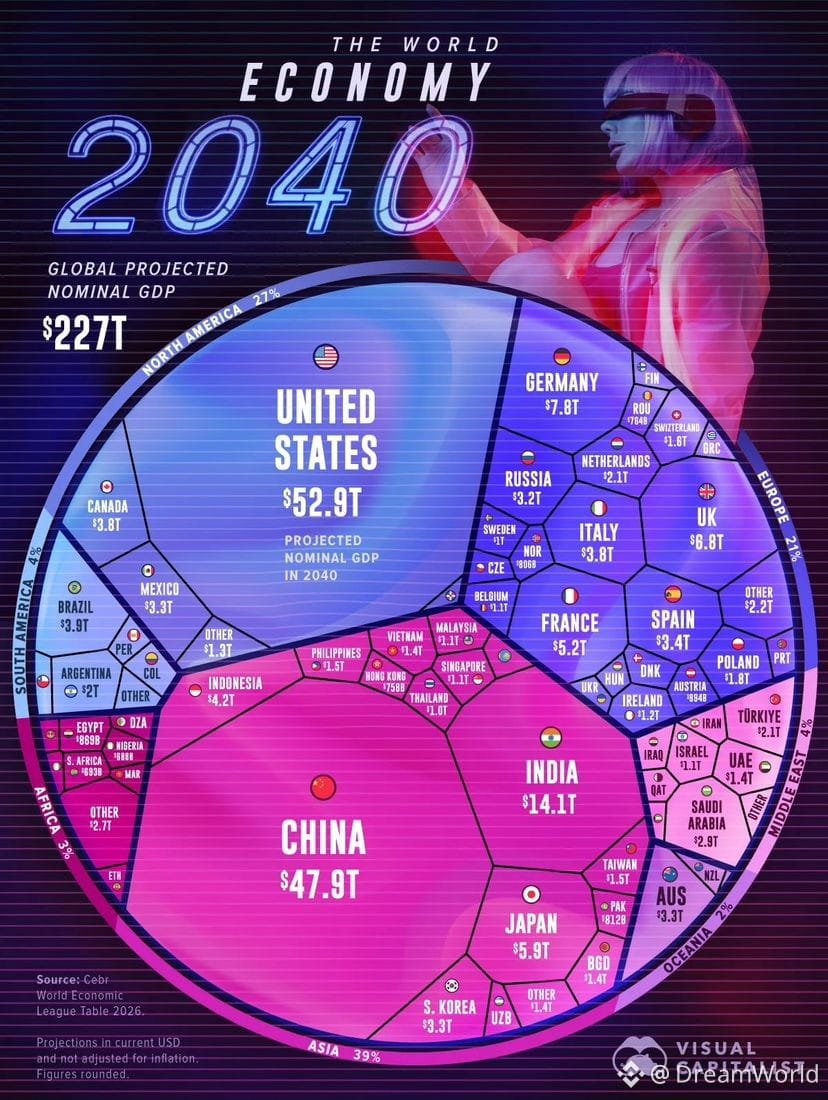

📊 Who will lead the global economy in 2040?
Cebr has updated its long-term forecast for 190 countries
Although Cebr itself promised back in 2020 that China would overtake the US as early as 2028. Since then, the date has been pushed back every year, and now even in 2040 America remains in first place, while China is expected to pull ahead only sometime around 2045🤷♂️.
This time, they even brought the date forward—not because China is accelerating, but because the long-term outlook for the US has worsened. China, meanwhile, is held back by an aging population, debt, and problems in the real estate sector, so Cebr no longer sees it as the engine of global growth as it once did.
India and Indonesia are being pulled upward by their young populations, who are just entering working age, while Europe is aging and gradually losing its share.
It’s worth bearing in mind that all the figures are calculated in current dollars, without adjusting for inflation. So rankings are affected not only by factories and services, but also by exchange rates. A weaker dollar or a stronger yuan could shift the “overtaking date” by several years… And in purchasing power parity terms, the IMF has long ranked China first.