$YB : The Trap of Mental Accounting With 'House Money'
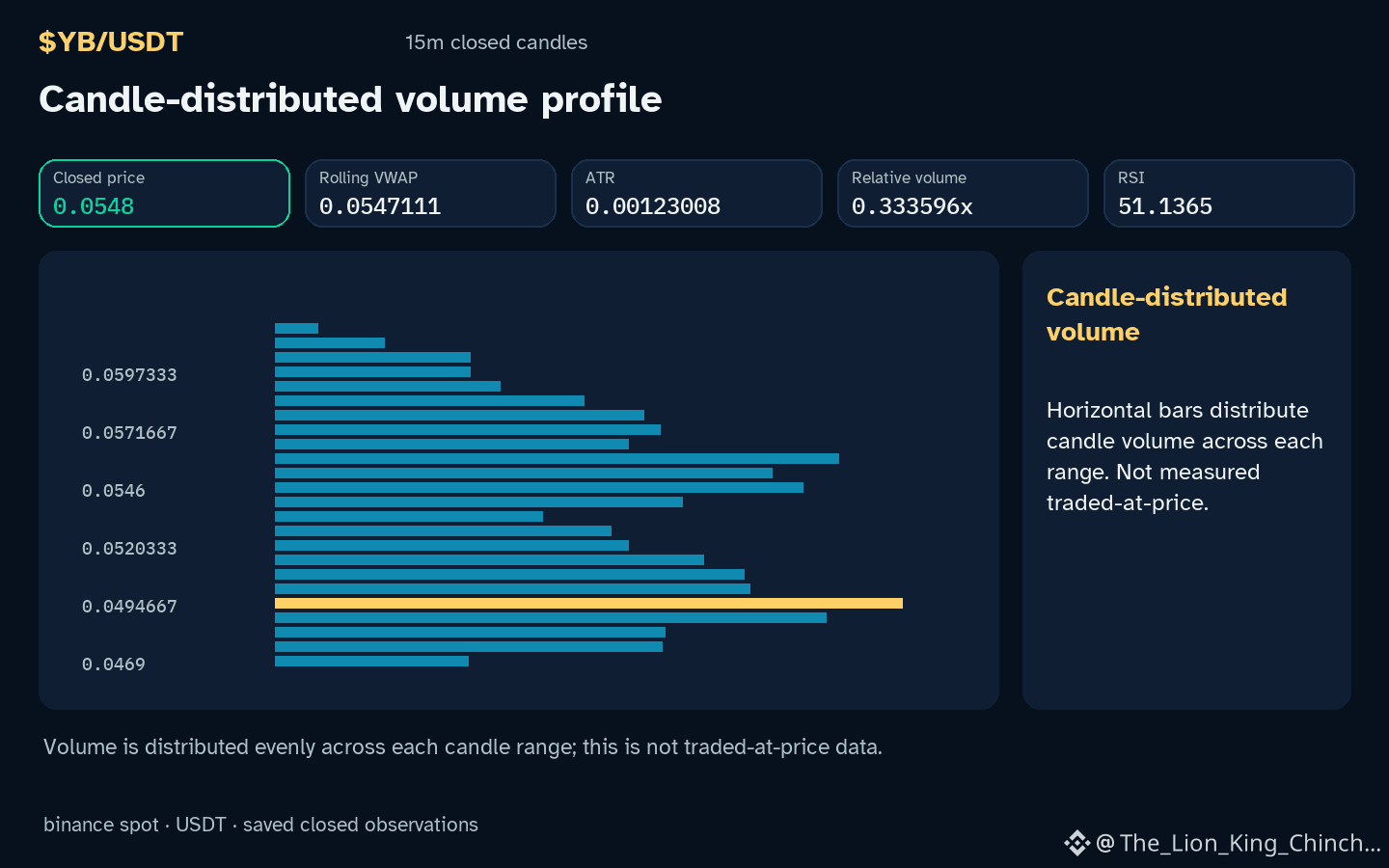
Imagine a trader who recently gained on $YB . The current price is 0.0548 near the recorded range, with hourly direction up. Observed values include hourly change 0.3663% and RSI 51.1.
Reckless risk-taking can occur when recent wins create a psychological buffer. A person treats new profits as separate from their main funds. This "house money" feels disposable. They may increase position size or abandon stop-losses because the asset feels safe after a gain. This is a hypothetical mechanism, not a claim about actual movers.
Consider a counterexample. A trader sees the price move above 0.054656. They feel confident and skip a planned exit level. If the market reverses, the "house money" no longer feels separate. The loss hurts the primary capital too. The initial win disappears, and the emotional impact doubles.
A practical self-check is to ask: Would I make this same trade if my account balance was zero? If the answer is no, the decision is driven by recent success, not objective analysis. State the limits clearly. Candles and volume alone cannot confirm motives. Relative volume at 0.33x baseline describes activity, not intent. The observation of "up" hourly direction is a fact, but the reason is unknown.
What future closed-candle evidence could weaken this interpretation? If the price holds above 0.0569 with sustained volume, the "reckless" label may be irrelevant. The move might just be a valid correction. Reassess by comparing the current risk-reward ratio to your pre-set rules. Do not let recent wins dictate new thresholds. The bias is in the mental labeling of funds, not the asset itself. Keep the rule or revise it only with fresh data, not feelings.
Probabilistic market research, not a recommendation or guaranteed return.
#YB #TradingPsychology #CryptoLearning