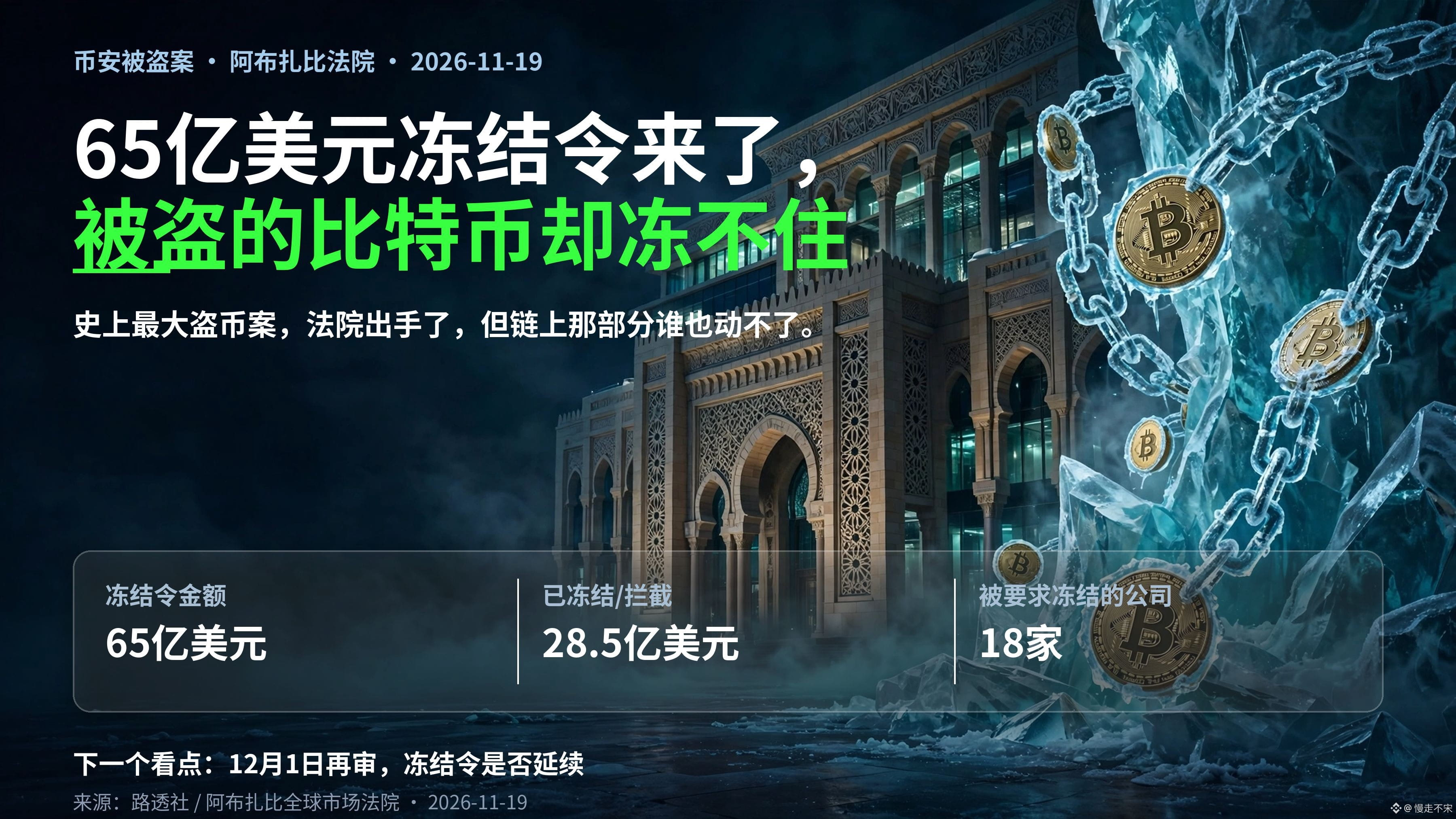
The $6.5 billion freezing order is in place, but not a single stolen Bitcoin can be frozen.
On November 18, the Abu Dhabi Global Market Court approved a worldwide freezing order for $6.5 billion, targeting the October 29 Binance theft of $6.3 billion—the largest crypto heist in history. The FBI has attributed it to the North Korean hacking group TraderTraitor.
Eighteen companies have been ordered to continue freezing assets connected to the case, including USDC issuer Circle and Trump family-linked World Liberty Financial. None of the 18 has been accused of wrongdoing, and Tether is not on the list.
So far, about $2.85 billion has been frozen or intercepted. The U.S. Department of Justice has also obtained authorization to seize more than $1.2 billion of it.
But there’s a major limitation: freezing orders can only reach intermediaries. Stablecoin issuers can freeze assets, but Bitcoin and Ether themselves can’t be frozen—the $6.5 billion order only freezes “the part that can be frozen.”
$BTC is currently trading at $63,622, up 0.17% in 24 hours, still fluctuating within the $62,000–$64,000 range. The price hasn’t reacted; this isn’t about market action, but how much of the stolen funds can be recovered.
The next thing to watch: a hearing on December 1 to determine whether the freezing order will remain in effect. Not investment advice.