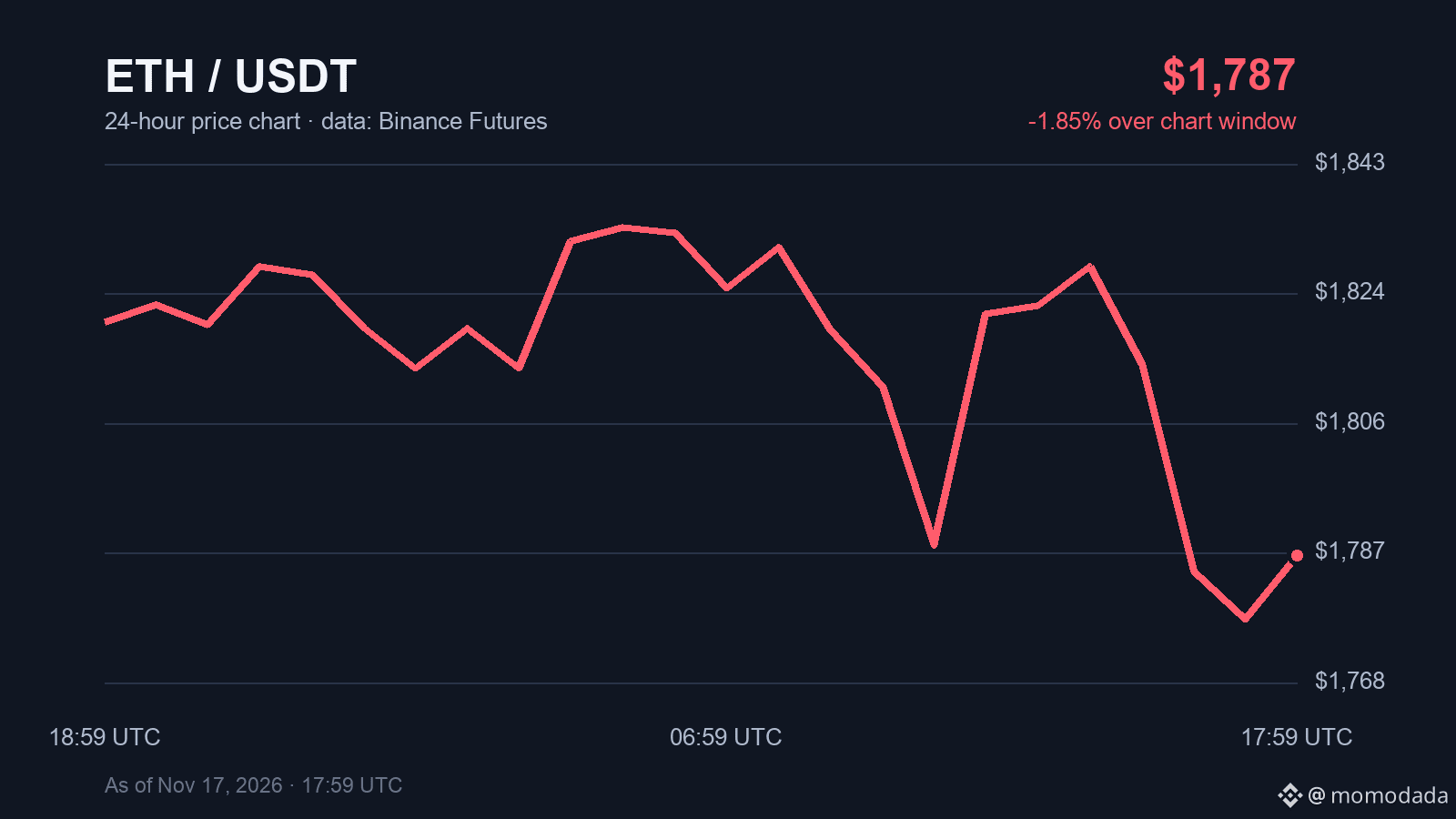
$ETH The moment it fell below 1,800, many people’s first reaction was: “It’s over. The altcoins are about to get crushed.”
Actually, this has nothing to do with ETH itself. When the broader market contracts, BTC can still hold up on the strength of its “big brother” status. ETH has it worst: it’s neither the safest haven nor like small-cap meme coins that can rocket on a burst of hype. When investors get spooked, it’s often the first to take a hit.
The worst thing about the 1,800 level isn’t that the number is sacred—it’s that everyone is watching it. Spot buyers want to see it hold, futures traders want to buy the dip there, and bears are waiting for it to break. When that many people pile in, there are more fake-outs: a sharp wick below the level, followed by an immediate rebound, designed to take out everyone whose stop-loss is sitting in plain sight.
Don’t rush to declare “ETH is finished,” but don’t assume it’s safe just because it’s back above 1,800, either. What really matters is whether spot buyers keep stepping in after a break below the level. Without that support, every bounce traps more buyers. With it, the harder the sell-off, the more likely it is to flush out leverage.
ETH doesn’t look like a hero right now. It looks more like the runner-up who’s been beaten up but is still standing. Before talking about a comeback, watch whether it can hold above 1,800.