The calculation that separates those who survive from those who go bust in $BTC 📊
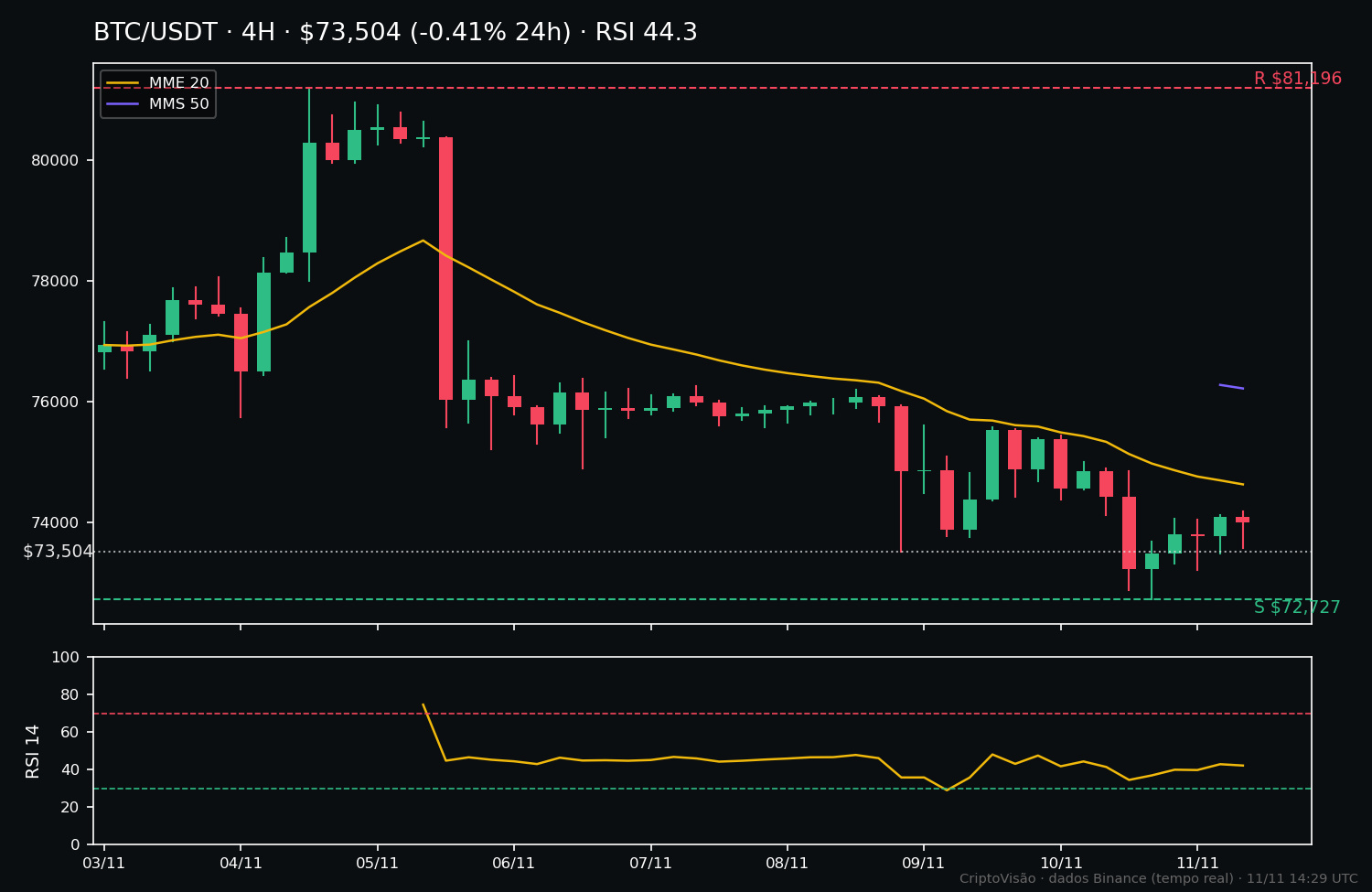
$BTC is at US$ 73,504 today (11/11): -0.41% in 24h and -3.83% for the week. This week's support is US$ 72,727 and resistance is US$ 81,196. The RSI-14 is at 44.3 (neutral), and the price remains below the 20-period (US$ 74,693) and 50-period (US$ 76,217) moving averages on the 4-hour chart — the market is weak. These are exactly the kinds of days when risk management determines who stays in the game.
Take the test before entering — 4 questions, with an example using US$ 1,000:
1. How much am I risking? The 1% rule: no more than US$ 10 per trade. Position size isn't determined by guesswork — it's determined by risk.
2. Where does the stop go? Below actual support, not at a round number. This week's support: US$ 72,727, so the stop goes at US$ 72,400. The distance from the entry (US$ 73,500) to the stop is US$ 1,100.
3. What is the position size? US$ 10 ÷ US$ 1,100 = 0.0091 $BTC (about US$ 669). The stop determines the size — never the other way around.
4. Is it worth it? With a target at US$ 75,700, the risk/reward ratio is 2.0:1 — meeting the minimum of 1:2. Below that, the best trade is no trade at all.
What if you get it wrong 10 times in a row? Ten 1% stops leave the account at ~US$ 904 (-9.6%) — you'd need to make +10.6% to recover. An all-in that loses half the account needs +100% just to break even. Several small stops are worth more than one "all-in": losing a little is the price of staying in the game.
Note: this is a calculation exercise, not a recommendation. The short-term trend is weak and $BTC remains below the moving averages — the math approves the example, but the context calls for caution.
Preserving capital is strategy No. 1. How many times have you entered a trade without calculating the stop first? 👇
#Bitcoin #GestaoDeRisco #CriptoVisao