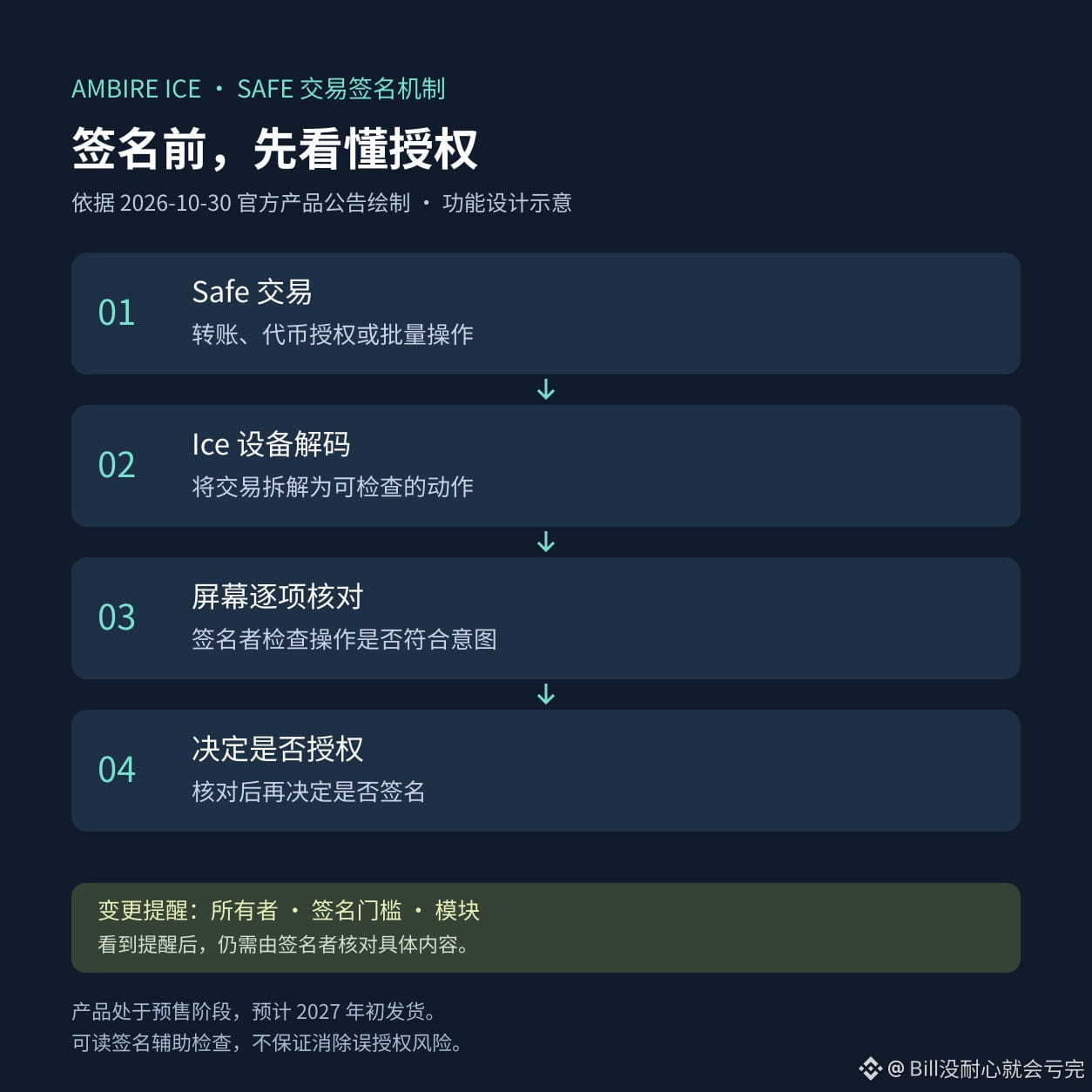

A hardware wallet keeps private keys on the device, but you still need to understand what you’re authorizing before signing. Ambire announced Ice on October 30, with improvements focused on this step: according to the official design, it decodes Safe transactions on the device, displays transfers, token approvals, and batch operations item by item, and alerts users to changes to owners, signature thresholds, and modules.
For people managing Safe multisigs, this is more useful than seeing only a string of signing requests. Protecting private keys and ensuring transaction details match your intentions are two separate checks. You still need to carefully review what’s on the screen—don’t confirm automatically just because you’re using a hardware wallet.
Ice is still in presale, and the company expects shipping to begin in early 2027. These capabilities come from the product announcement and don’t mean they’ve been validated through long-term real-world use. Open-source hardware and firmware are no substitute for security audits, and wallet operations still carry risks of unauthorized approvals and asset loss.
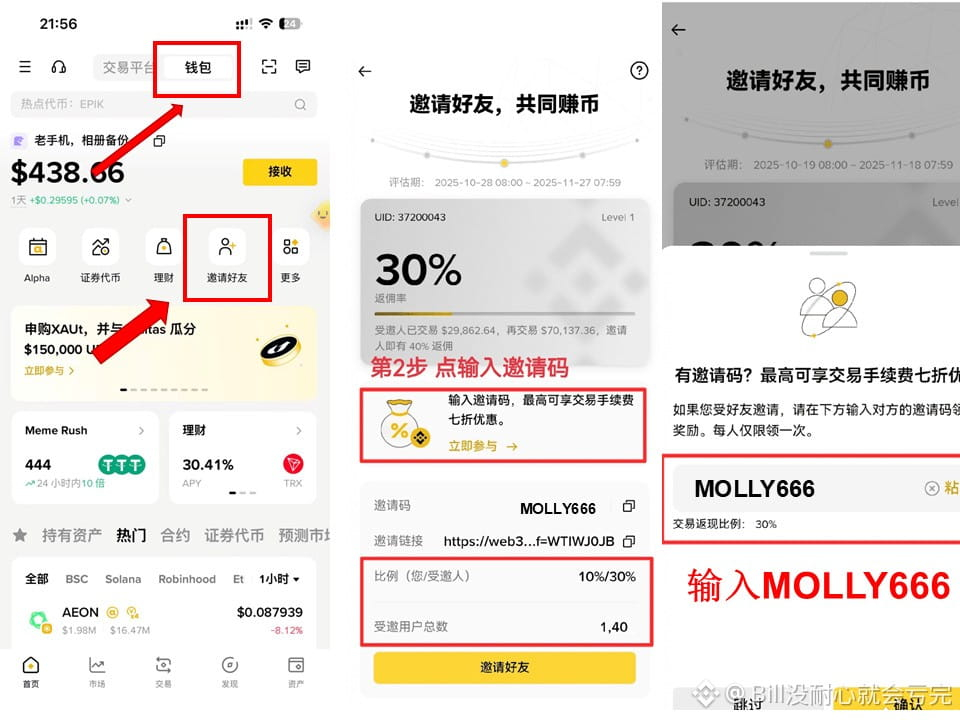
Binance Wallet invitation code: MOLLY666