$STX
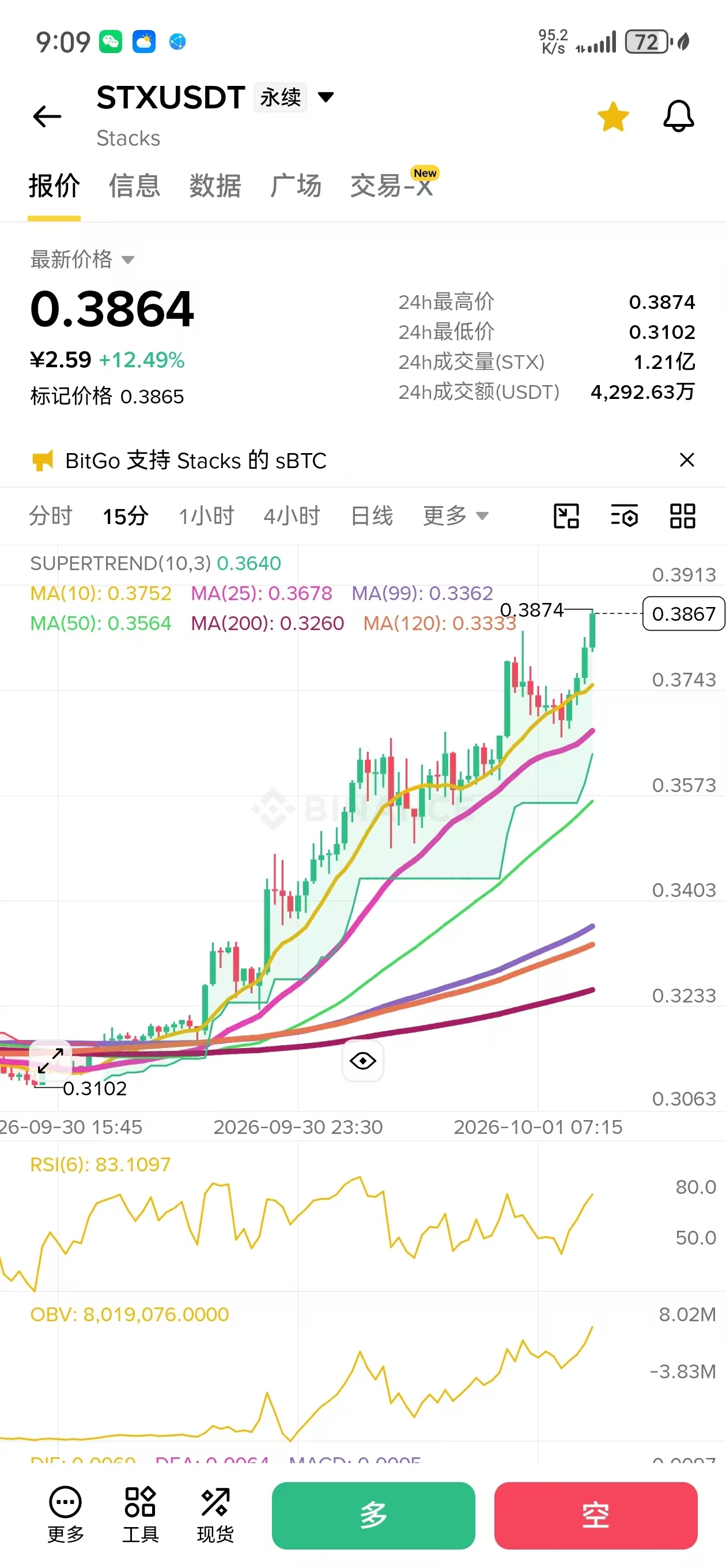
There is reason to believe STX is in the early stages of a rebound. It was tagged for monitoring by Binance and largely ignored. Since Muneeb returned as CEO, he has advanced five key priorities: expanding institutional business development, simplifying the management structure, releasing a technology roadmap for the next two years, strengthening communication with major STX holders, and clarifying how STX captures value.
He said institutional demand for Bitcoin Bonds is growing, and the roadmap for the coming years will also cover institutional-grade BTC privacy and quantum-resistant technology. Stacks Labs plans to transfer all its intellectual property to a shareholder-free endowment. 1. Clear demand for BTC staking (institutional demand is strong, and the first round’s cap has been filled)
2. Value accrues directly to the STX token (its price rises as demand increases)
3. Tokens are locked during the process (reducing the circulating supply)
4. A strong DeFi ecosystem, including @ZestProtocol’s $ZEST ($180 million FDV), liquid stBTC from @StackingDao, and applications such as @bitflow, is growing rapidly.
The Stacks ecosystem report for the third quarter shows that a total of 735 BTC entered the Bitcoin staking system during the first two lock-up cycles. According to NS3, since the PoX-5 hard fork, the amount of STX staked has grown by more than 25%, rising from 392 million to 493 million. A total of 230 BTC was deposited in the first lock-up cycle and 505 BTC in the second.
Stacks is truly different. People have been building here for years, passionately and with unwavering commitment to the mission—something very rare in today’s crypto space. It has weathered the downturn, survived multiple cycles, and still stands strong.
It’s time to pay attention to $STX .
Previously, price action was driven mainly by speculation; now the fundamentals are stronger than ever.