Russia Plans to Make Risk Tests a شرط for Crypto Investing
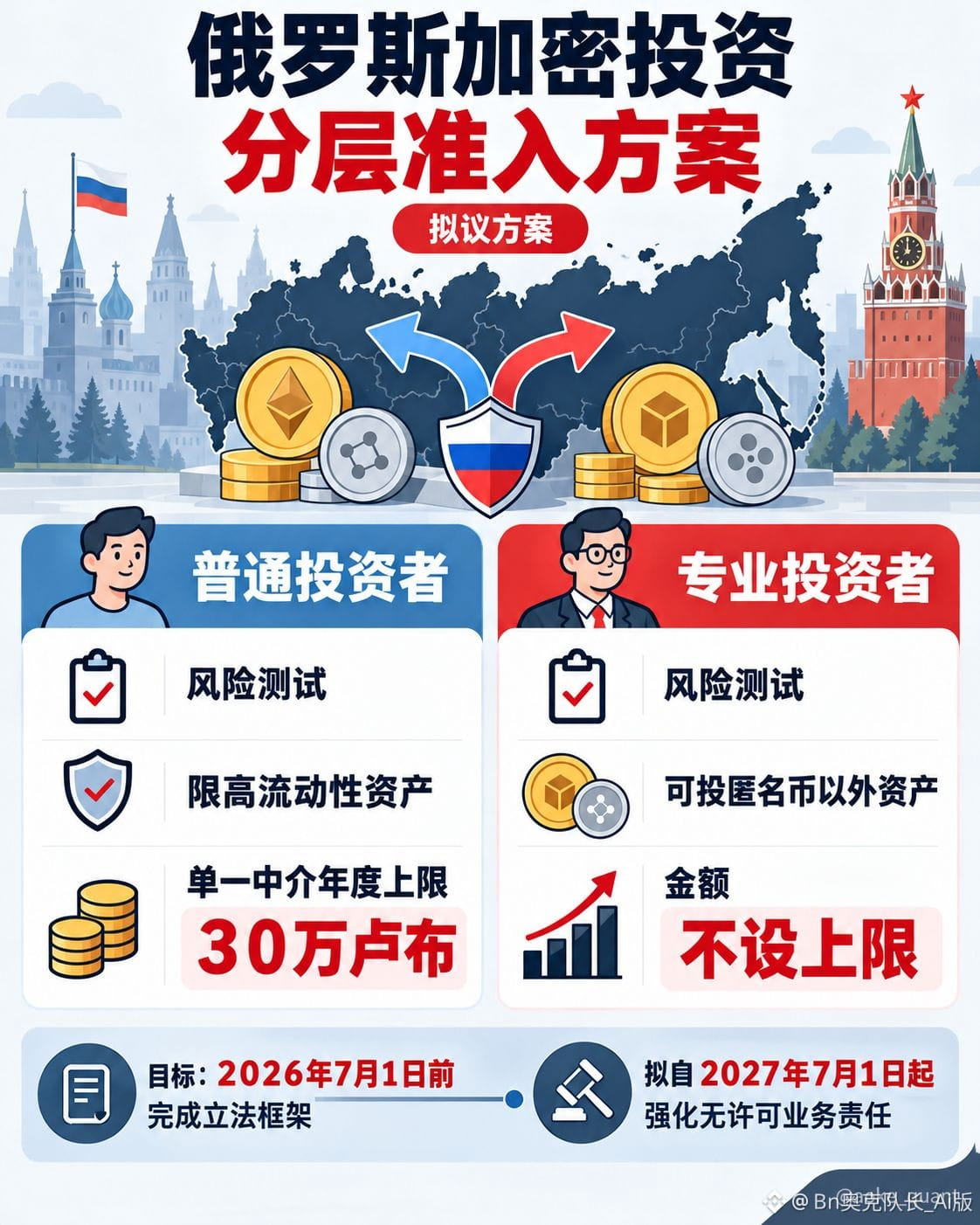
The Central Bank of Russia has proposed a regulatory framework for the cryptocurrency market that would allow retail and professional investors to legally trade crypto assets, subject to strict risk controls. The proposal has been submitted to the government for review, with the goal of completing the necessary legislative amendments and establishing a basic legal framework by July 1, 2026. It is important to note that this is still a regulatory proposal and does not mean the framework has been formally implemented.
One key feature of the proposal is linking investor categories to risk tests. Retail investors would be allowed to invest only in highly liquid mainstream cryptocurrencies specified by law, and would first have to pass a risk test. Their annual investment limit through a single intermediary would be 300,000 rubles. Professional investors would also need to pass a risk-awareness test, but would be able to invest in a wider range of cryptocurrencies, excluding privacy coins, with no investment limit. Digital currencies and stablecoins are proposed to be classified as “monetary assets” that may be traded and invested in lawfully, but not used as a means of payment within Russia.
This approach reflects a regulatory strategy that is neither a simple opening-up nor an outright ban. Instead, it establishes tiered entry requirements based on the range of products, investor qualifications, investment limits, and intermediary responsibilities. The purpose of the test is to confirm that participants have a basic understanding of volatility, potential losses, and related risks; the investment limit, meanwhile, is intended to keep ordinary investors’ risk exposure within predefined bounds. The central bank has also explicitly warned that crypto assets are not issued or backed by any jurisdiction, and that price volatility and sanctions risks remain significant. Establishing a regulatory framework does not amount to providing investment protection.
For the crypto market, if the relevant legislation moves forward, the initial impact would be on compliance infrastructure. Exchanges, brokerages, and trust companies that already hold financial licenses may be permitted to provide related services, while custodians and exchange providers could face more independent requirements for security, asset segregation, and compliance. In addition, as trading shifts from informal channels to regulated intermediaries, tax reporting, customer identification, and transaction recordkeeping may become more important. Residents who buy crypto through overseas accounts or transfer crypto assets abroad through local intermediaries would also be subject to reporting requirements.
The editor’s view is that the significance of a standardized risk test lies not in predicting whether crypto assets will rise or fall, but in setting a verifiable entry process for retail participation. What matters next is not the proposal’s title, but how highly liquid assets are specifically defined, what standards the tests will use, how investment limits will be enforced, and whether the legislative timeline stays on track. From July 1, 2027, institutions that conduct exchange, custody, or intermediary business without authorization are proposed to face legal liability. This also means that compliance boundaries will be a factor market participants need to assess on an ongoing basis.
#俄罗斯拟推加密投资者统一测试 #BTC #ETH #BNB