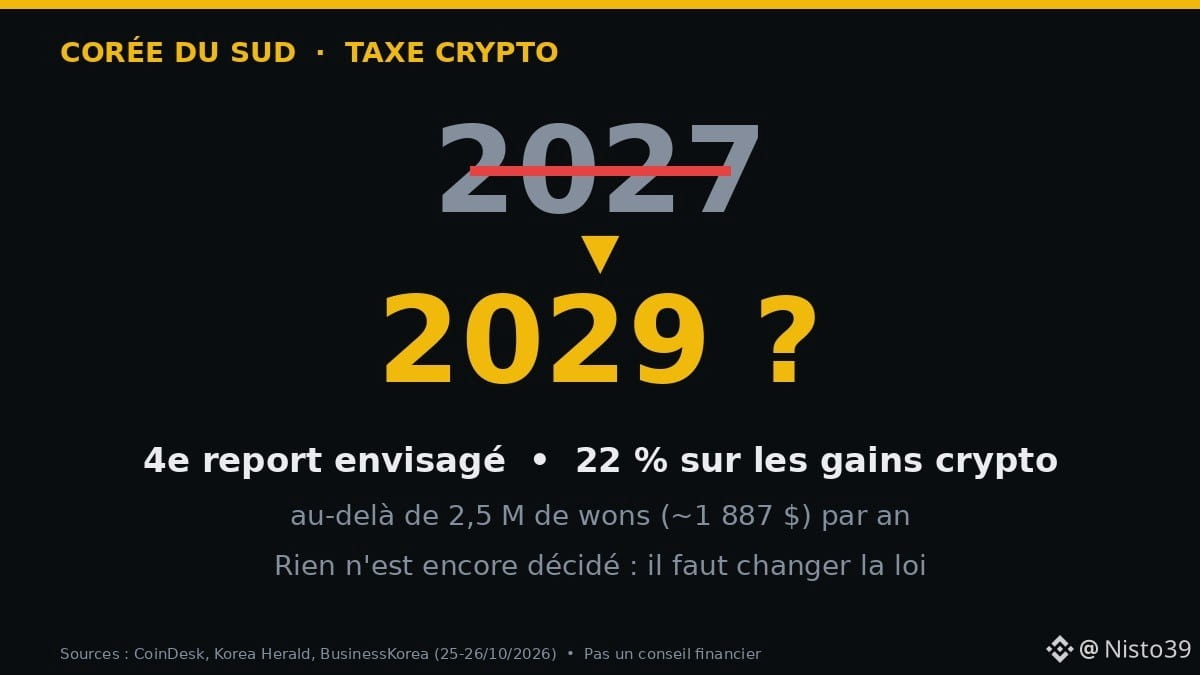
🇰🇷 South Korea may be about to delay its crypto tax… for the 4th time. And the reason affects everyone.
What’s happening (Oct. 25–26):
➡️ The tax was supposed to start on January 1, 2027: 22% (including local tax) on annual crypto gains above 2.5 million won (~$1,887).
➡️ The presidential office and the government are leaning toward delaying it until 2029. Nothing has been decided yet.
➡️ A lawmaker from the ruling party submitted a bill proposing this (Oct. 16).
💡 Why the delay?
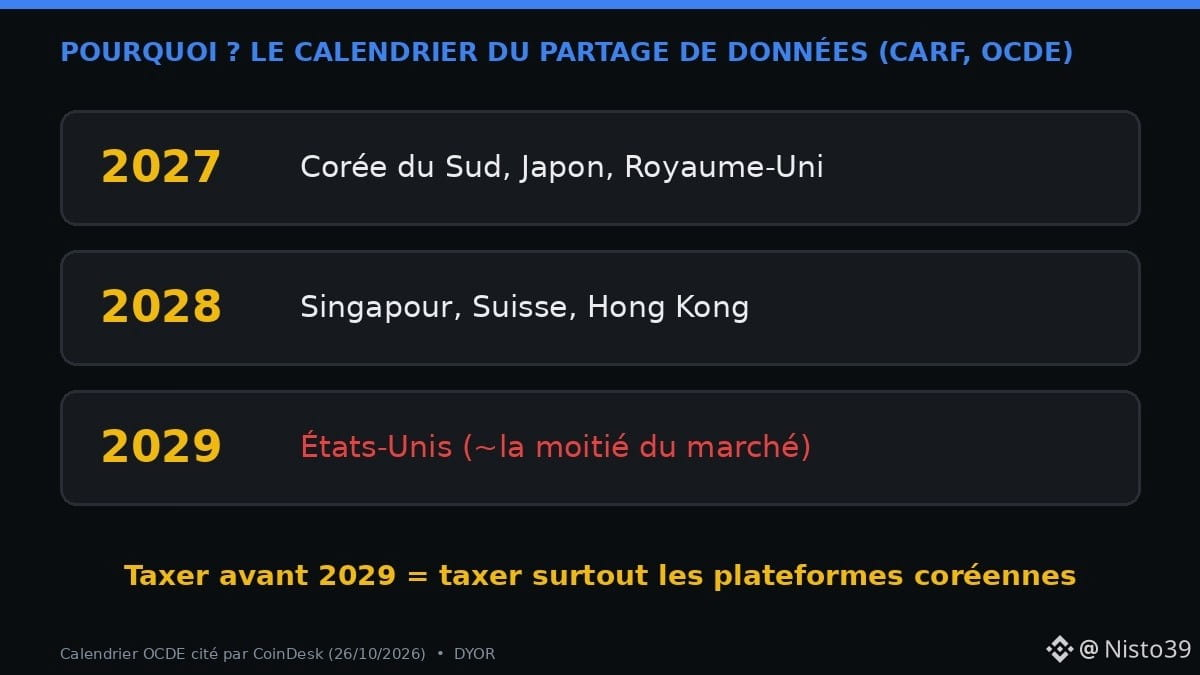
South Korea’s tax authorities can’t easily see what their citizens are doing on foreign platforms. The OECD’s international crypto information-sharing system (called CARF) is due to start for South Korea in 2027, but not until 2029 for the United States, which accounts for nearly half the market.
The result: taxing crypto from 2027 would mainly mean taxing people who use Korean platforms. Not very fair.
⚠️ The caveat:
South Korea’s tax authorities say they can still levy the tax without having 100% of the data. And this is already the 4th delay since the law was passed in 2020 (it was initially due to start in 2022).
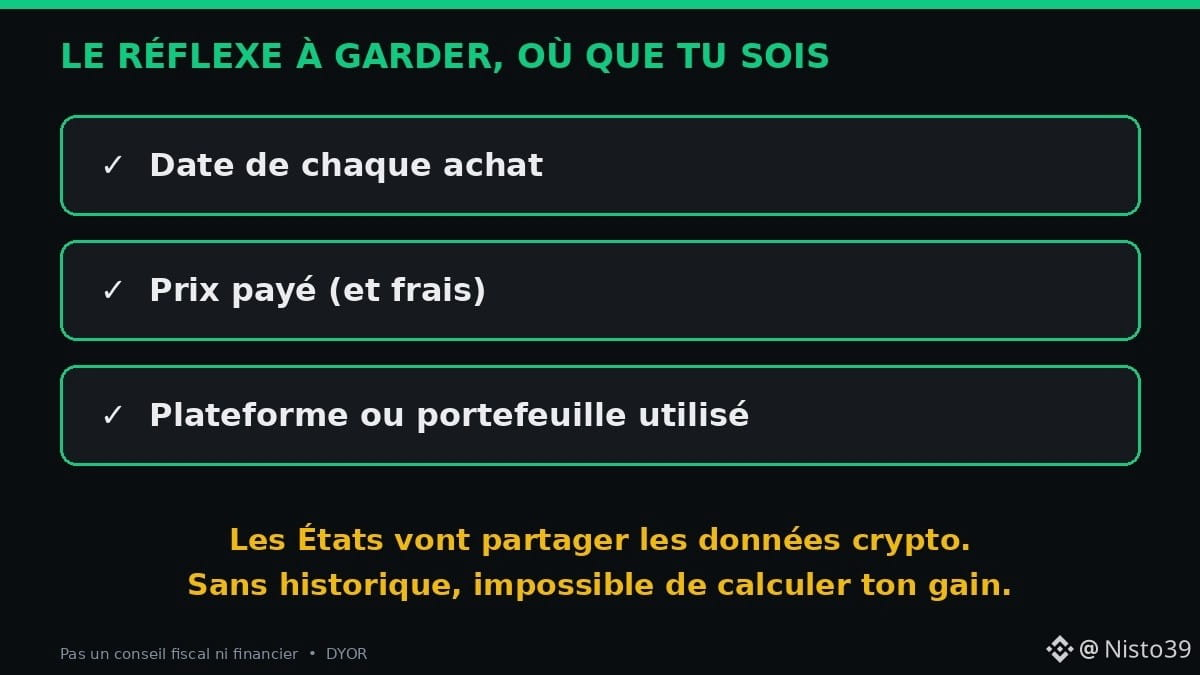
👩🏾💼 Imagine Awa, who resells fabrics in Saint-Louis and puts a little of her savings into crypto. She buys on one platform, transfers it to her wallet, then sells elsewhere. When her country starts taxing crypto, the first question will be: “How much did you pay for it?” Without a transaction history, there’s no way to answer.
The takeaway: countries are preparing to share crypto data with one another. Start keeping a record of your purchases today (date, price, platform).
What about you: do you keep track of your purchase prices, or trust your memory? 👇
Sources: CoinDesk, Korea Herald, BusinessKorea (Oct. 25–26, 2026). Not financial advice. DYOR.