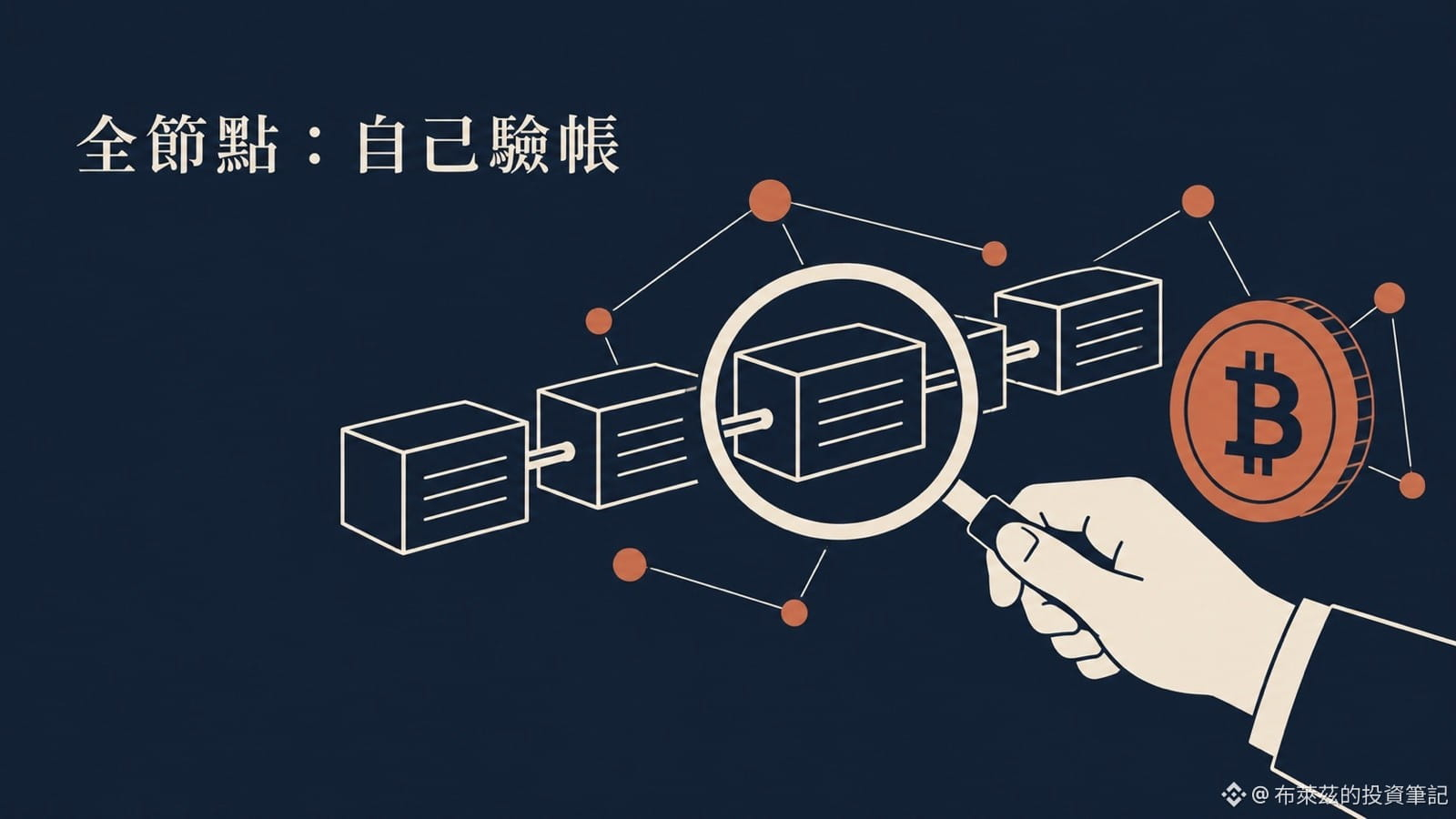
“Running a node” sounds technical, but it simply means verifying the ledger yourself instead of trusting numbers reported by others.
Bitcoin.org explains:
1. A full node is a program that fully verifies every transaction and every block.
2. Almost all full nodes also receive transactions and blocks from other nodes, verify them, and then relay them to other nodes.
3. Most full nodes also serve lightweight wallets: they help broadcast transactions to the network and notify the wallets when transactions involve them.
4. If not enough nodes are willing to do this, lightweight wallets can’t connect to the peer-to-peer network and have to rely on centralized services instead.
In other words, the balance in an exchange account is recorded by the exchange; what a lightweight wallet shows you is the result verified and reported by someone else’s node.
Not everyone needs to run a node. But before putting a significant amount of assets into one, you should at least know whose verification your balance is based on.
What to watch for next: When you see news about an upgrade to node software, first check whether every node needs to update and whether there’s a deadline. $BTC