The more complex AI chip design becomes, the more closely Cadence’s business deserves a look. But having a large number of orders and how much revenue can be recognized this quarter are two different questions.
CDNS’s third-quarter earnings call is scheduled for 05:00 Beijing time on October 27. This is a preview; the actual third-quarter results have not yet been announced.
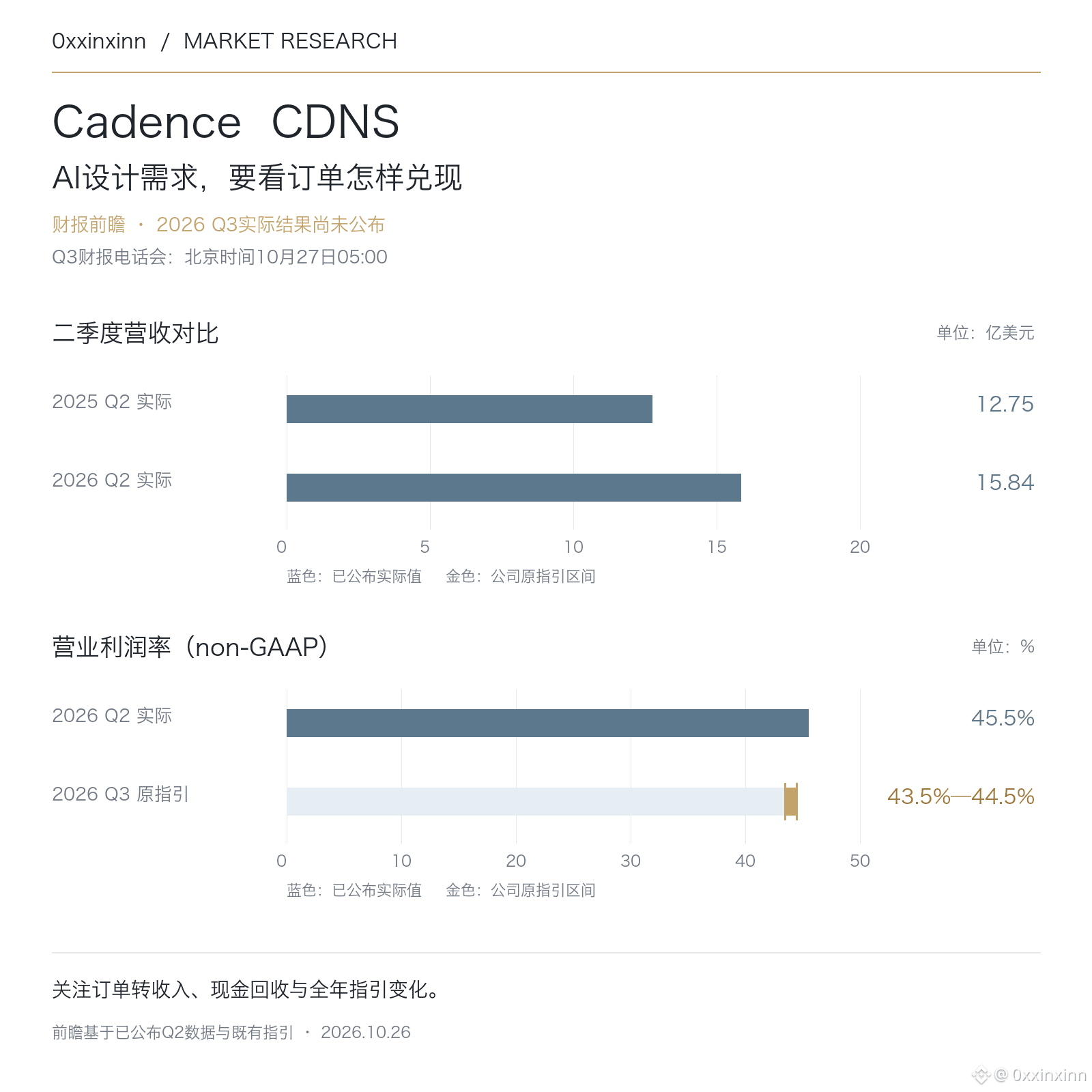
Second-quarter revenue was $1.584 billion, compared with $1.275 billion in the same period last year. Backlog at quarter-end was $8.1 billion, and the company expects to recognize $4.2 billion in revenue from remaining performance obligations over the next 12 months. These two figures are measured differently, and the $8.1 billion cannot be treated directly as next year’s revenue.
It’s also important to set the right benchmark for margins: second-quarter non-GAAP operating margin was 45.5%, while the original third-quarter guidance was 43.5%–44.5%. The company had already indicated that margins would decline sequentially. When results come out, simply pointing to a margin below the prior quarter and calling performance weaker could easily overlook the original guidance.
I’m more interested in how quickly orders convert into revenue and cash, and whether the full-year guidance changes. AI-related demand needs to show up in these figures. If growth is driven mainly by recognizing revenue early while cash collections fail to keep pace, that would warrant extra caution.