
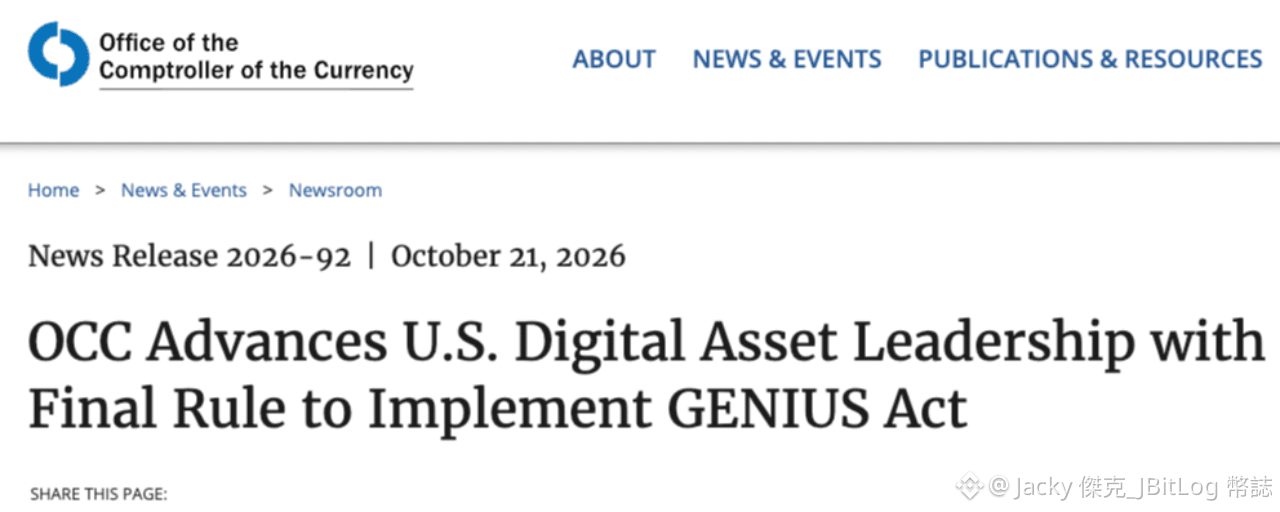

On October 21, U.S. time, the Office of the Comptroller of the Currency (OCC), which regulates national banks, published the final implementing rules for the GENIUS Act on stablecoins.
The law already prohibits stablecoin “issuers” from directly paying interest to holders, so the question we should focus on is whether third-party platforms like “exchanges” can still offer it.
A draft published in February this year said that certain arrangements between issuers and third parties “could be illegal.” But that provision has been removed from the final version.
Put simply, platforms like the U.S. exchange Coinbase will no longer be automatically treated as breaking the law when they give users “rewards” in stablecoins. The OCC will review these cases individually going forward.
But Rob Nichols, CEO of the American Bankers Association, issued a statement that same day criticizing the rule, saying it ran counter to “Congress’s clear intent to protect local lending” and would threaten the funds banks use to make loans.
It sounds like banks are safeguarding the entire economy.
But is that really the case?
◆◆◆
The figure banks cite most often comes from an estimate by the Independent Community Bankers of America (ICBA): if stablecoins could pay interest, lending by community banks (small local banks in the U.S.) would fall by $850 billion, or about NT$27.5 trillion.
But in April this year, the White House Council of Economic Advisers ran the numbers from a different angle and found that even a total ban on interest would increase community bank lending by just $500 million, or about NT$16.2 billion—roughly 1,700 times less than the ICBA’s estimate. Lending across all U.S. banks would rise by just 0.02%.
So what are banks really worried about?
When you keep your money in a bank checking account, the bank only has to pay you a little interest before lending your money out to earn a spread. But if stablecoin yields are allowed, you’ll have another option, and banks will have to offer higher interest rates to keep your money.
But keep in mind that yields on stablecoins issued by exchanges are not bank deposits, so if the platform runs into trouble, deposit insurance won’t reimburse you.
Taiwan’s Virtual Asset Services Act, which passed its third reading on June 30, is similar to the U.S. law: it only states that stablecoin issuers cannot pay interest. Whether exchanges can continue offering interest on stablecoin deposits will depend on what the FSC’s subsidiary regulations, expected as early as the first quarter of next year, say.
If it were up to you, would you convert your money to U for a higher interest rate, or leave it safely in the bank?
Feel free to share your thoughts with me~
⚠️ The content above is for reference only and does not constitute investment advice.