Satoshi Nakamoto’s 1 million bitcoins could be the first to be moved 🦖
🧭 群里聊方向
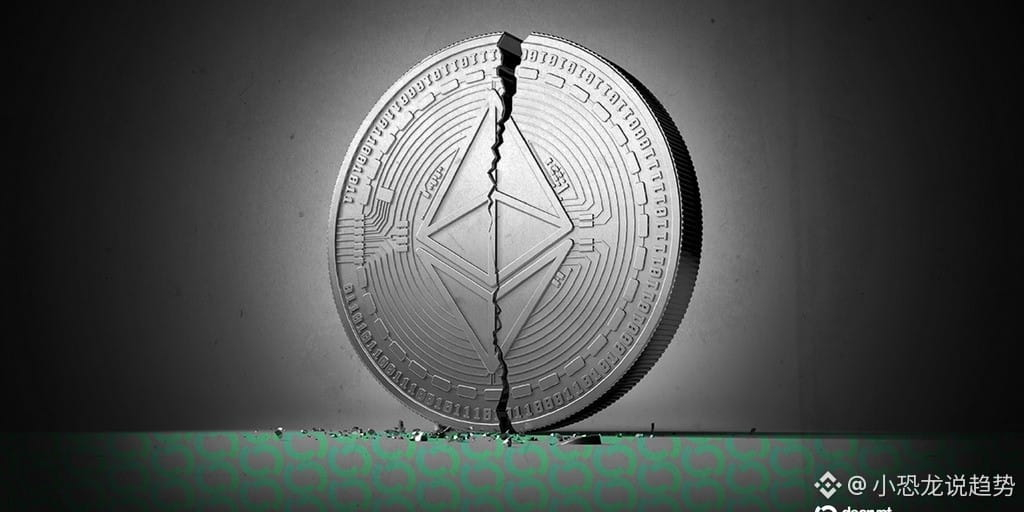
A core researcher at the Ethereum Foundation has suddenly urged everyone to move their coins to new addresses that have never signed a transaction. In the worst-case scenario, the signature algorithms used across the crypto world might not be broken by quantum computers years from now—they could be broken by AI within months.
The person sounding the alarm is researcher Justin Drake. On Wednesday, October 7, he posted on X, urging the entire industry to start preparing for what he calls “bunker mode”—moving assets in batches to addresses that have never sent a transaction. The public keys for these addresses are hidden behind hashes, so outsiders can’t see them.
His main concern is ECDSA, the signature algorithm used by both Bitcoin and Ethereum. Whenever a transaction is signed, the wallet’s public key is permanently exposed on-chain. If the algorithm is cracked, attackers could use the public key to work out the private key and drain the wallet completely 💥
Drake’s assessment is blunt: in the worst case, this could happen not years from now, but within months. By “cracked,” he means that a large GPU cluster could recover a private key in about a week. One piece of evidence he cited was the 722 AI mathematics manuscripts OpenAI released all at once on Tuesday. He believes structures such as elliptic curves are especially vulnerable to superintelligence ⚠️
He also mentioned one detail: wallets holding fewer than 50 bitcoins may currently get some protection from what’s known as the “Satoshi shield.” That’s because there are roughly 20,000 addresses associated with Satoshi Nakamoto across the network, each holding 50 bitcoins, for a total of nearly 1 million. At today’s price of over $80,000 per coin, that’s worth about $83 billion. These addresses would be among the first targets.
My take is that the real significance of this news isn’t when quantum computing will arrive, but that the risk timeline has moved up. People used to assume there was another decade of breathing room. Now even core developers are saying we may need to be ready within months. For ordinary coin holders, this isn’t a call to move your funds tonight—it’s a reminder that if you have a large wallet that’s been inactive for a long time, it’s best to plan your migration path in advance 🛡️
What’s worth watching is whether the Ethereum Foundation really speeds up its transition to quantum-resistant hash-based signatures, and whether major exchanges and stablecoin issuers begin publicly hardening their cold wallets. Once a major institution announces a migration, this narrative will move beyond tech-circle discussions and become a market-level action.
Let’s talk in the comments: if your private key could one day be calculated, would you move your money in advance, or bet that day is still far away?
Tap the profile picture to watch the livestream
Every day, we bring you the latest in on-chain security—not just what’s happening, but the reasoning and opportunities behind it 👀🚀
🧭 群里聊方向
A core researcher at the Ethereum Foundation has suddenly urged everyone to move their coins to new addresses that have never signed a transaction. In the worst-case scenario, the signature algorithms used across the crypto world might not be broken by quantum computers years from now—they could be broken by AI within months.
The person sounding the alarm is researcher Justin Drake. On Wednesday, October 7, he posted on X, urging the entire industry to start preparing for what he calls “bunker mode”—moving assets in batches to addresses that have never sent a transaction. The public keys for these addresses are hidden behind hashes, so outsiders can’t see them.
His main concern is ECDSA, the signature algorithm used by both Bitcoin and Ethereum. Whenever a transaction is signed, the wallet’s public key is permanently exposed on-chain. If the algorithm is cracked, attackers could use the public key to work out the private key and drain the wallet completely 💥
Drake’s assessment is blunt: in the worst case, this could happen not years from now, but within months. By “cracked,” he means that a large GPU cluster could recover a private key in about a week. One piece of evidence he cited was the 722 AI mathematics manuscripts OpenAI released all at once on Tuesday. He believes structures such as elliptic curves are especially vulnerable to superintelligence ⚠️
He also mentioned one detail: wallets holding fewer than 50 bitcoins may currently get some protection from what’s known as the “Satoshi shield.” That’s because there are roughly 20,000 addresses associated with Satoshi Nakamoto across the network, each holding 50 bitcoins, for a total of nearly 1 million. At today’s price of over $80,000 per coin, that’s worth about $83 billion. These addresses would be among the first targets.
My take is that the real significance of this news isn’t when quantum computing will arrive, but that the risk timeline has moved up. People used to assume there was another decade of breathing room. Now even core developers are saying we may need to be ready within months. For ordinary coin holders, this isn’t a call to move your funds tonight—it’s a reminder that if you have a large wallet that’s been inactive for a long time, it’s best to plan your migration path in advance 🛡️
What’s worth watching is whether the Ethereum Foundation really speeds up its transition to quantum-resistant hash-based signatures, and whether major exchanges and stablecoin issuers begin publicly hardening their cold wallets. Once a major institution announces a migration, this narrative will move beyond tech-circle discussions and become a market-level action.
Let’s talk in the comments: if your private key could one day be calculated, would you move your money in advance, or bet that day is still far away?
Tap the profile picture to watch the livestream
Every day, we bring you the latest in on-chain security—not just what’s happening, but the reasoning and opportunities behind it 👀🚀