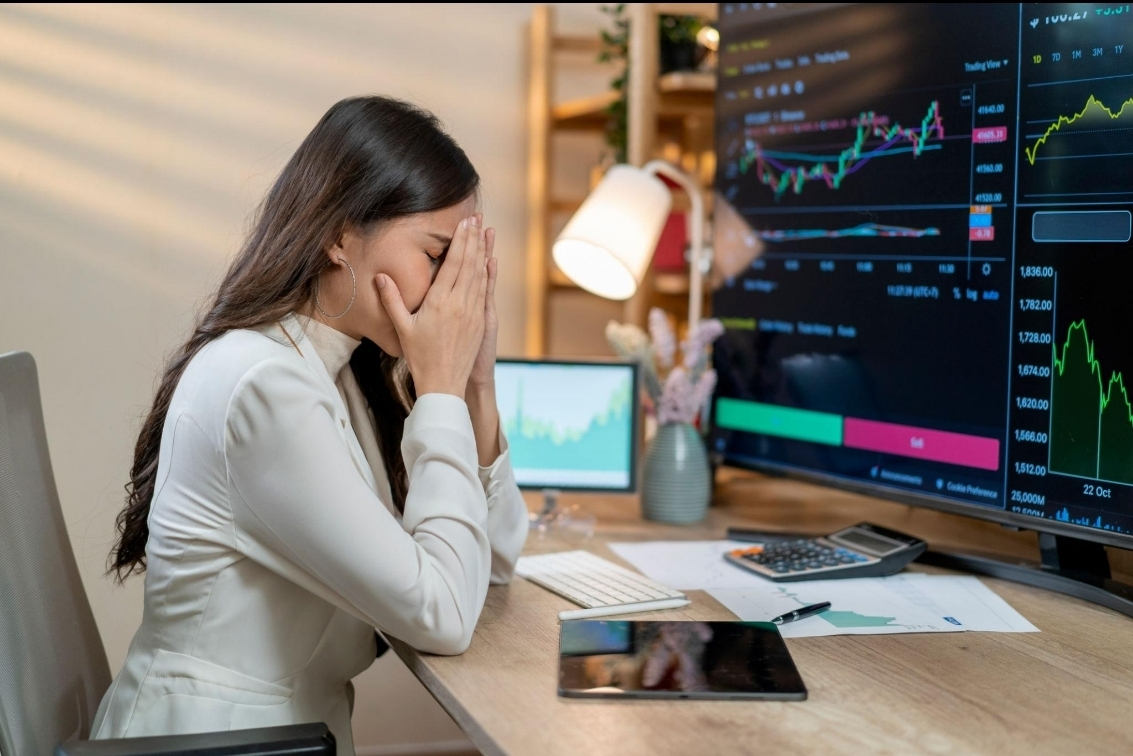
Today, let’s talk about an interesting topic: why do people who are fully invested often have the hardest time holding on?
I’m sure many of you have experienced this: the more bullish you are on a coin, say $BTC , the more you want to invest heavily. Gradually, you keep adding to your position until you’re fully invested—and then you find it even harder to hold on.
The truth is, once your position exceeds what you can psychologically handle, it becomes very difficult to view the market objectively. Your position size affects your mindset.
If you’re lightly invested and the price drops 10%, you might ask yourself:
Has the thesis changed? Have the fundamentals changed?
But if you’re fully invested and the price drops 10%, you’re more likely to think:
That’s it, how much further will it fall? Should I get out now?
You planned to hold for six months, but now you’re watching five-minute candlestick charts.
You used to focus on the trend, but now all you look at is your account balance.
A small pullback makes you panic; one big red candle makes you sell at a loss.
In the end, you sell at the bottom—not because you got the direction wrong,
but because your position was too large and your nerves gave out first.
That’s why holding a suitable position is important too.
A truly sensible position isn’t about “how much can I make at most this time?” It’s about asking:
If it suddenly drops 20%, will I still be able to sleep?
Can I still stick to my trading strategy?
If the answer is no, your position is already too large.
In short: with a small position, you watch the market; with a large position, you watch your profits and losses; fully invested, you watch your emotions.
What really helps you hold through a major market move is often more than just unwavering conviction.
It’s also having a position size that lets you feel comfortable enough to stick with your original judgment.
#美联储10月维持利率概率升至82.3%
#日经225涨2.5%创三月新高