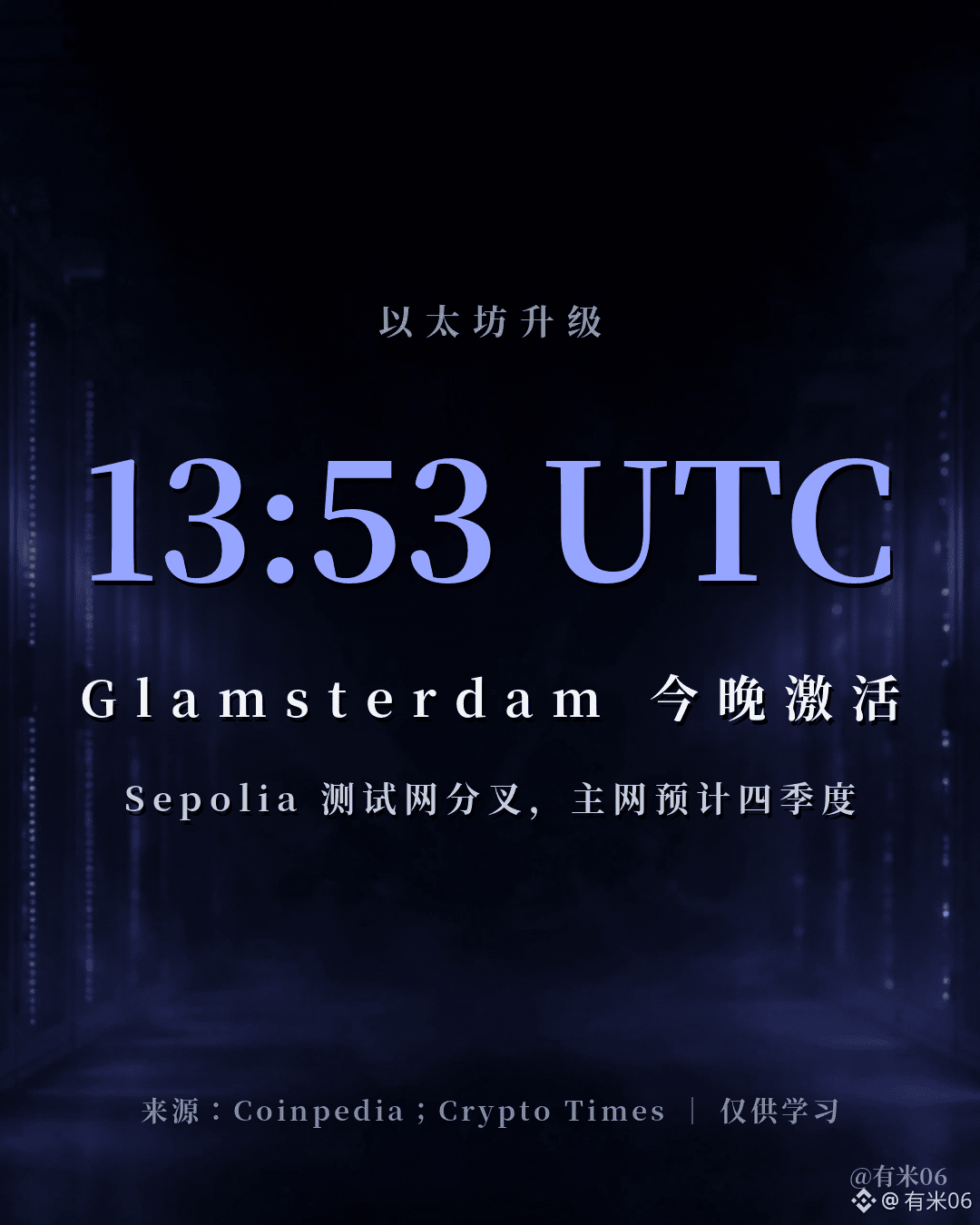
The Glamsterdam upgrade activates on the Sepolia testnet tonight at 13:53 UTC (21:53 Beijing time), epoch 353024.
This upgrade bundles changes to both the execution and consensus layers into a single activation: EIP-7732 (built-in proposer-builder separation), EIP-7928 (block-level access lists), and EIP-8037/8038 (gas repricing). The main focus is testing block gas limits at around 200 million gas.
But to be clear: this is only a testnet. The mainnet upgrade hasn’t been scheduled yet (it’s targeted for Q4, with the Hoodi testnet tentatively set for October 27), and regular ETH holders don’t need to do anything.
My take: Based on what we’ve seen over the past few years, testnet activations have had little impact on prices. The narrative around forks has long since shifted from “activation means a rally” to “a confirmed mainnet schedule is what drives a rally.” What’s really worth watching with Glamsterdam is the test of a 200-million-gas block limit. Scaling Ethereum L1 is the fundamental solution to L2 congestion and high fees, and institutions’ rationale for valuing ETH is shifting from “staking yield” to “the mainnet can capture more transaction fees after scaling.” If tonight’s Sepolia dress rehearsal goes smoothly, the mainnet may stay on track for Q4; if bugs emerge, the timeline will have to be pushed back.
Will you position yourself ahead of the upgrade, or wait until it goes live on mainnet?
I’ll keep tracking data like this—follow me to stay in the loop.
Data as of: 2026-10-05 16:46 UTC
Sources: Coinpedia; Crypto Times
For informational purposes only; not investment advice.
$ETH
#EthereumGlamsterdamUpgrade
This upgrade bundles changes to both the execution and consensus layers into a single activation: EIP-7732 (built-in proposer-builder separation), EIP-7928 (block-level access lists), and EIP-8037/8038 (gas repricing). The main focus is testing block gas limits at around 200 million gas.
But to be clear: this is only a testnet. The mainnet upgrade hasn’t been scheduled yet (it’s targeted for Q4, with the Hoodi testnet tentatively set for October 27), and regular ETH holders don’t need to do anything.
My take: Based on what we’ve seen over the past few years, testnet activations have had little impact on prices. The narrative around forks has long since shifted from “activation means a rally” to “a confirmed mainnet schedule is what drives a rally.” What’s really worth watching with Glamsterdam is the test of a 200-million-gas block limit. Scaling Ethereum L1 is the fundamental solution to L2 congestion and high fees, and institutions’ rationale for valuing ETH is shifting from “staking yield” to “the mainnet can capture more transaction fees after scaling.” If tonight’s Sepolia dress rehearsal goes smoothly, the mainnet may stay on track for Q4; if bugs emerge, the timeline will have to be pushed back.
Will you position yourself ahead of the upgrade, or wait until it goes live on mainnet?
I’ll keep tracking data like this—follow me to stay in the loop.
Data as of: 2026-10-05 16:46 UTC
Sources: Coinpedia; Crypto Times
For informational purposes only; not investment advice.
$ETH
#EthereumGlamsterdamUpgrade