

易琳Ten
169 Posts

易琳Ten
交易是修行,盈利是结果,纪律是信仰。🐺📈
66 Following
22.1K+ Followers
9.0K+ Liked
Posts
All
Quotes
Videos
PINNED

易琳Ten
·
--
Bullish#BTC Why am I still firmly optimistic about the bull market?
Many people believe that with rate-hike expectations heating up, oil prices staying high, and US Treasury yields remaining at elevated levels, the market environment does not support a bull market.
So, they conclude that this rally is just a bull trap, and that fresh lows will appear afterward.
That’s fine—everyone has their own judgment.
But I’ve always believed that in the early stage of switching from bear to bull, it is often accompanied by massive disagreement and doubt.
I don’t believe that a real bull market must wait until external conditions stabilize, economic data improves across the board, and only then—after the FOMC meeting—when Waller signals a rate-cut direction, will the market officially get started.
If everyone waits until good news is already in place, data turns better, and the market is unanimously bullish before entering, then where would the market be at that point?
Do institutions really not know that rate hikes may continue in the future? Don’t they pay attention to the US10Y and US30Y Treasury yields, or the persistently high oil prices?
Since these risks are all on the table, why has BTC still managed to put out such a行情?
I won’t easily deny my own judgment just because there are bearish factors in the market. Of course, my judgment could also be wrong—ultimately it still needs the market’s price action to verify.
Let time give the answer.
Maybe a year from now, when Bitcoin breaks its all-time high again, market voices will gradually shift from doubt to belief, and more and more people will firmly start to think: the bull market really is here.
But by then, what stage of the bull market will the行情 be in?
The market always starts amid doubt, moves forward amid differences, and turns狂热 amid consensus.
I don’t need everyone to agree with my view right now.
I only need to keep independent thinking, respect market signals, manage risk well, and then let time verify everything.
What’s truly worth thinking about is not when everyone believes in the bull market, but whether—in a market still full of disagreement—you have your own judgment, and the ability to take the risk that comes with that judgment.
#BTC #Bitcoin #EarlyBullMarket #交易认知
Many people believe that with rate-hike expectations heating up, oil prices staying high, and US Treasury yields remaining at elevated levels, the market environment does not support a bull market.
So, they conclude that this rally is just a bull trap, and that fresh lows will appear afterward.
That’s fine—everyone has their own judgment.
But I’ve always believed that in the early stage of switching from bear to bull, it is often accompanied by massive disagreement and doubt.
I don’t believe that a real bull market must wait until external conditions stabilize, economic data improves across the board, and only then—after the FOMC meeting—when Waller signals a rate-cut direction, will the market officially get started.
If everyone waits until good news is already in place, data turns better, and the market is unanimously bullish before entering, then where would the market be at that point?
Do institutions really not know that rate hikes may continue in the future? Don’t they pay attention to the US10Y and US30Y Treasury yields, or the persistently high oil prices?
Since these risks are all on the table, why has BTC still managed to put out such a行情?
I won’t easily deny my own judgment just because there are bearish factors in the market. Of course, my judgment could also be wrong—ultimately it still needs the market’s price action to verify.
Let time give the answer.
Maybe a year from now, when Bitcoin breaks its all-time high again, market voices will gradually shift from doubt to belief, and more and more people will firmly start to think: the bull market really is here.
But by then, what stage of the bull market will the行情 be in?
The market always starts amid doubt, moves forward amid differences, and turns狂热 amid consensus.
I don’t need everyone to agree with my view right now.
I only need to keep independent thinking, respect market signals, manage risk well, and then let time verify everything.
What’s truly worth thinking about is not when everyone believes in the bull market, but whether—in a market still full of disagreement—you have your own judgment, and the ability to take the risk that comes with that judgment.
#BTC #Bitcoin #EarlyBullMarket #交易认知

易琳Ten
·
--
Cute☺?
易琳Ten
·
--
I'm back again

慢就是快Mike8
·
--
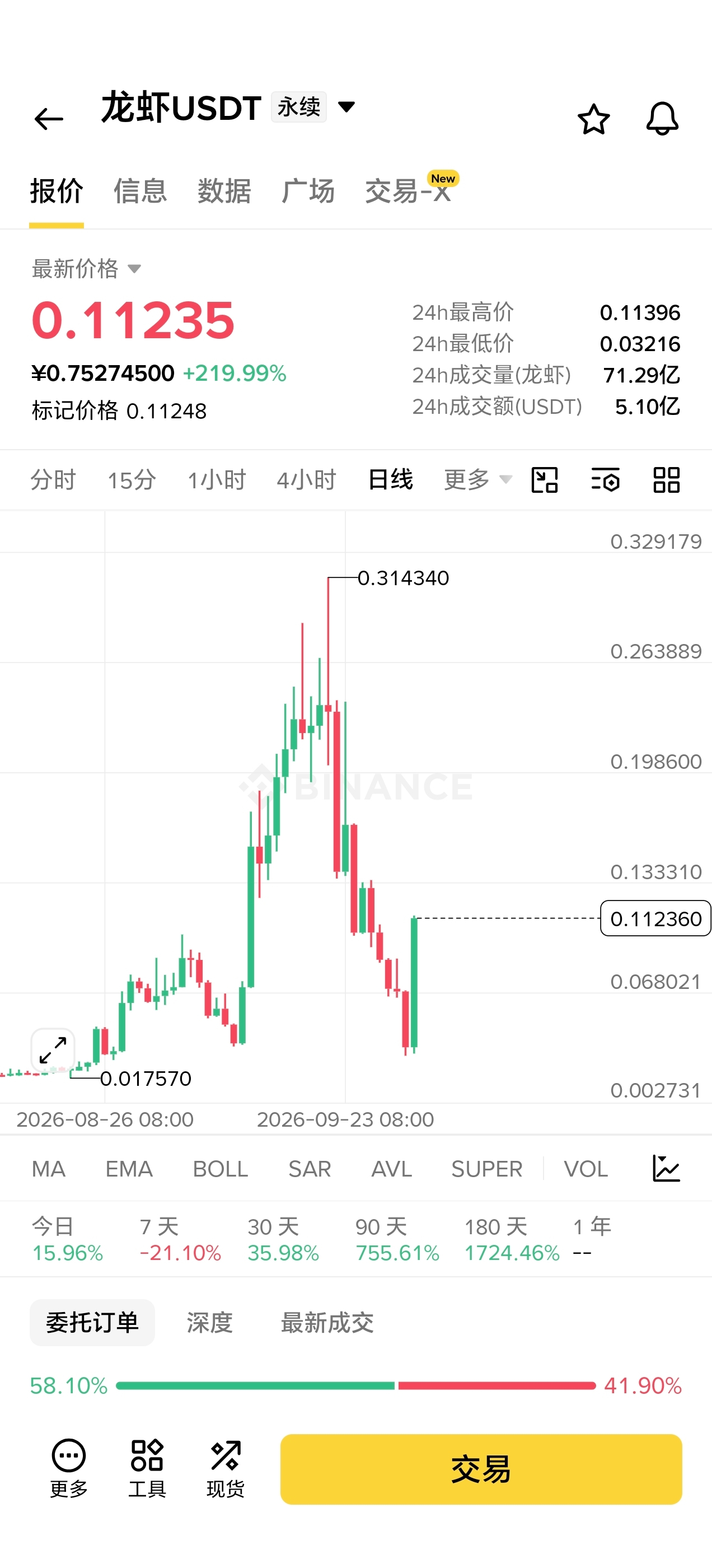
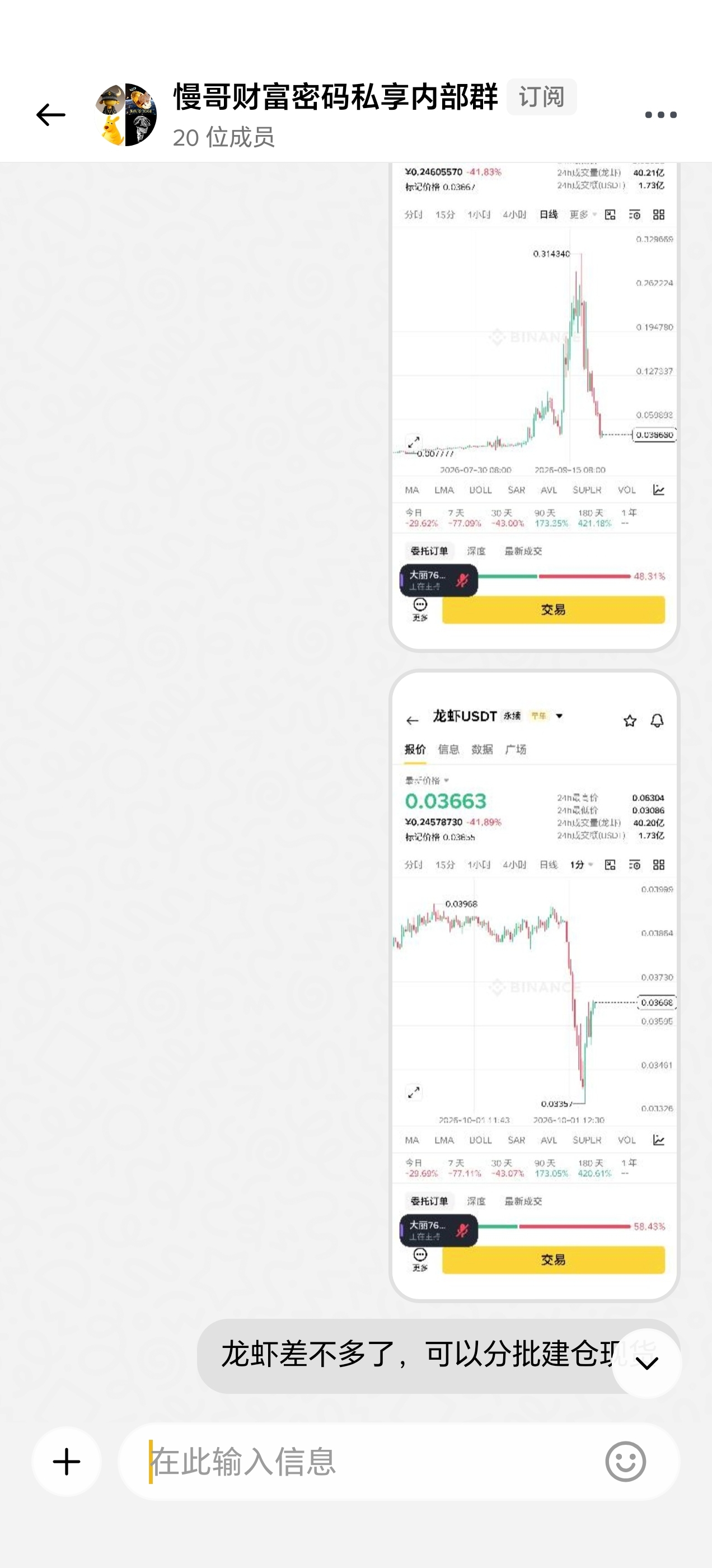
$龙虾 The lobster is too powerful. When it dipped yesterday, I got on board. The spot is already up nearly 3x!



橙子Joyce
·
--
BullishThe Fed’s hawkish cry is back! U.S. Treasury yields surge—where will the stock market go next?
U.S. stocks ended Wednesday with mixed performance. Although cooler PCE data briefly boosted the broader market, as Fed officials collectively released “hawkish” signals, both Treasury yields and the U.S. dollar index strengthened, weighing again on equities.
🚨 Fed turns uniformly hawkish: Is rate hikes not at the end?
Kashkari (President of the Minneapolis Fed): Inflation is still about 3%, far above the 2% goal. The neutral interest rate may be higher than previously expected. He expects another rate hike this year and another in 2027. He also cautioned about risks of long-term supply shocks stemming from the situation in Iran.
Lisa Cook (Federal Reserve Board Governor): Inflation has been above target for more than five and a half years. She supports a 25-basis-point rate hike in September and emphasized how high energy and housing costs in rural areas squeeze household budgets.
Goolsbee (President of the Chicago Fed): He bluntly said that maintaining high inflation for a long time is “playing with fire.” Large fiscal deficits and market expectations of AI-driven productivity gains could both lead to the economy overheating.
📈 Market reaction: Treasury yields hit multi-year highs, and the dollar strengthens
Treasury yields leap higher: The intraday yield on the 10-year Treasury broke above 5.3%, while the 30-year rose to around 5.64%, both at the highest levels since 2002.
U.S. stocks whipsaw: The Dow fell by more than 440 points in a single day, and the S&P 500 closed lower. Only the Nasdaq ended higher against the trend, supported by technology stocks.
The dollar index holds firm: The dollar rose nearly 2% in September, posting its best monthly performance in half a year. The market has basically priced in a December rate hike. It is now expected that total tightening over the next 12 months will be about 90 basis points.
💡 Key observations and takeaways
1. Pressure on the transmission of borrowing costs: With 10- and 30-year Treasury yields serving as pricing anchors, their persistent surge is broadly lifting mortgage and corporate financing costs, creating clear drag on the real economy and equity valuations.
2. “Term premium” returns: Strong GDP data and the expansion of fiscal deficits have pushed investors to demand higher yields from long-term Treasuries. Safe-haven and high-yield Treasury assets have siphoned off some capital from parts of the crypto and equity markets.
#美联储会议
#币安广场
$NVDA.US
$SPCX.US
$AMZN.US
U.S. stocks ended Wednesday with mixed performance. Although cooler PCE data briefly boosted the broader market, as Fed officials collectively released “hawkish” signals, both Treasury yields and the U.S. dollar index strengthened, weighing again on equities.
🚨 Fed turns uniformly hawkish: Is rate hikes not at the end?
Kashkari (President of the Minneapolis Fed): Inflation is still about 3%, far above the 2% goal. The neutral interest rate may be higher than previously expected. He expects another rate hike this year and another in 2027. He also cautioned about risks of long-term supply shocks stemming from the situation in Iran.
Lisa Cook (Federal Reserve Board Governor): Inflation has been above target for more than five and a half years. She supports a 25-basis-point rate hike in September and emphasized how high energy and housing costs in rural areas squeeze household budgets.
Goolsbee (President of the Chicago Fed): He bluntly said that maintaining high inflation for a long time is “playing with fire.” Large fiscal deficits and market expectations of AI-driven productivity gains could both lead to the economy overheating.
📈 Market reaction: Treasury yields hit multi-year highs, and the dollar strengthens
Treasury yields leap higher: The intraday yield on the 10-year Treasury broke above 5.3%, while the 30-year rose to around 5.64%, both at the highest levels since 2002.
U.S. stocks whipsaw: The Dow fell by more than 440 points in a single day, and the S&P 500 closed lower. Only the Nasdaq ended higher against the trend, supported by technology stocks.
The dollar index holds firm: The dollar rose nearly 2% in September, posting its best monthly performance in half a year. The market has basically priced in a December rate hike. It is now expected that total tightening over the next 12 months will be about 90 basis points.
💡 Key observations and takeaways
1. Pressure on the transmission of borrowing costs: With 10- and 30-year Treasury yields serving as pricing anchors, their persistent surge is broadly lifting mortgage and corporate financing costs, creating clear drag on the real economy and equity valuations.
2. “Term premium” returns: Strong GDP data and the expansion of fiscal deficits have pushed investors to demand higher yields from long-term Treasuries. Safe-haven and high-yield Treasury assets have siphoned off some capital from parts of the crypto and equity markets.
#美联储会议
#币安广场
$NVDA.US
$SPCX.US
$AMZN.US


龙大-观盘揽金
·
--
Are you starting to do T now?

周周1688
·
--
🇨🇳 October 1|Crypto Market Brief
$BNB 🧧
🎬 With Q4 starting off, there’s no “Uptober”—the market begins pricing in risks first
BTC is currently around $83.4–84.3K, ETH around $2.7K, SOL around $119.
Yesterday’s PCE data came in below expectations: Headline 3.4% YoY, Core 3.0%.
BTC briefly surged to $85.5K, but then pulled back to around $84K. Elevated U.S. Treasury yields continue to weigh on risk assets.
🔴 Nine straight days of ETF gains end
September 30: BTC ETF −$148.7M, ETH ETF −$59.6M, SOL ETF −$12.5M
Total: about −$221M.
Strong inflows have cooled temporarily, but it’s not yet enough to suggest the institutional trend has reversed.
🏛 CFTC eyes prediction markets
The CFTC submitted two draft rule proposals to OIRA, covering event contracts and their regulatory scope.
The key question is straightforward: for prediction markets like Kalshi and Polymarket, should regulation fall under the federal CFTC or state-level regulators?
For now, it’s only in the rulemaking stage—not the final rules.
⚠️ MetaMask pauses some validators
After detecting a security incident affecting infrastructure, MetaMask began exiting some impacted Ethereum staking validators.
No direct threats to users’ wallets have been found at this time. The company is treating the related actions as a precaution.
💥 Gate encounters a BEN trading error
Due to ticker confusion from the same token name, Gate mishandled BENUSDT perpetual funding-related adjustments, impacting about 200 accounts.
Gate says it will restore the related balances and take responsibility for the losses caused by the incident.
📊 Market Snapshot
BTC ≈ $83.4–84.3K
ETH ≈ $2.68–2.72K
SOL ≈ $118–119
BTC Dominance ≈ 58%
Fear & Greed ≈ 68–74
🎯 On the first day of October, the market is waiting for a new direction.
PCE has given interest-rate-cut expectations a bit of room, but ETF flows have cooled temporarily, and Treasury yields remain elevated.
And tomorrow, the market will shift its focus to U.S. nonfarm payroll employment data.
Q4 has just begun.
#1688家族family #crypto #RWA赛道 #defi $MOVR
$BNB 🧧
🎬 With Q4 starting off, there’s no “Uptober”—the market begins pricing in risks first
BTC is currently around $83.4–84.3K, ETH around $2.7K, SOL around $119.
Yesterday’s PCE data came in below expectations: Headline 3.4% YoY, Core 3.0%.
BTC briefly surged to $85.5K, but then pulled back to around $84K. Elevated U.S. Treasury yields continue to weigh on risk assets.
🔴 Nine straight days of ETF gains end
September 30: BTC ETF −$148.7M, ETH ETF −$59.6M, SOL ETF −$12.5M
Total: about −$221M.
Strong inflows have cooled temporarily, but it’s not yet enough to suggest the institutional trend has reversed.
🏛 CFTC eyes prediction markets
The CFTC submitted two draft rule proposals to OIRA, covering event contracts and their regulatory scope.
The key question is straightforward: for prediction markets like Kalshi and Polymarket, should regulation fall under the federal CFTC or state-level regulators?
For now, it’s only in the rulemaking stage—not the final rules.
⚠️ MetaMask pauses some validators
After detecting a security incident affecting infrastructure, MetaMask began exiting some impacted Ethereum staking validators.
No direct threats to users’ wallets have been found at this time. The company is treating the related actions as a precaution.
💥 Gate encounters a BEN trading error
Due to ticker confusion from the same token name, Gate mishandled BENUSDT perpetual funding-related adjustments, impacting about 200 accounts.
Gate says it will restore the related balances and take responsibility for the losses caused by the incident.
📊 Market Snapshot
BTC ≈ $83.4–84.3K
ETH ≈ $2.68–2.72K
SOL ≈ $118–119
BTC Dominance ≈ 58%
Fear & Greed ≈ 68–74
🎯 On the first day of October, the market is waiting for a new direction.
PCE has given interest-rate-cut expectations a bit of room, but ETF flows have cooled temporarily, and Treasury yields remain elevated.
And tomorrow, the market will shift its focus to U.S. nonfarm payroll employment data.
Q4 has just begun.
#1688家族family #crypto #RWA赛道 #defi $MOVR


静心1688
·
--
💥Born under the red flag, raised in the spring breeze. With the whole nation celebrating, I wish our mountains and rivers remain unharmed, may all in the world be at peace, and I wish our motherland a happy birthday—also wishing us safety and joy, every day.
#以太坊三季度涨70.9% #比特币ETF三季度净流入63.4亿美元
#以太坊三季度涨70.9% #比特币ETF三季度净流入63.4亿美元


奋斗Hustle1688
·
--
Wishing everyone a happy National Day and big money—take a break today.


520龙行天下
·
--
Hot topics flare up in rotation, temptations never stop, but missing out is far luckier than losing. Stay independent in your judgment, don’t get swept along by group sentiment, and refuse to chase highs blindly out of FOMO. Stick to trading discipline—manage your positions and strictly control risk. Trading is a test of knowledge and patience: keep your mindset steady and wait calmly for your own opportunities. Wishing everyone a calm rise and fall with your account staying green for a long time 🧧


楠楠nannan势不可挡
·
--
🧧 No need to dwell on the past, and don’t overthink the future. Live each moment in the present with care, allow everything to unfold, and stay at peace within—inner steadiness is the greatest confidence.$BNB


蒋雅琪1368
·
--
What’s going on with Sol—why isn’t it dropping, and why has it even hit a new high?
The project team suddenly announced good news: it has launched the Alpenglow testnet, which will significantly boost Sol’s network speed, reducing transaction finality from about 12.8 seconds to around 150 milliseconds!
The project team suddenly announced good news: it has launched the Alpenglow testnet, which will significantly boost Sol’s network speed, reducing transaction finality from about 12.8 seconds to around 150 milliseconds!
加倉妹
·
--
BullishBack from the break—set your focus, and get ready to go again!
I can enjoy life gracefully, or throw myself wholeheartedly into building my career.
No panic, no rush, no retreat—be yourself, and live your own精彩!😊
I can enjoy life gracefully, or throw myself wholeheartedly into building my career.
No panic, no rush, no retreat—be yourself, and live your own精彩!😊

易琳Ten
·
--
The courage to buy the dip, and the rationality to avoid the top.
How much you earn is decided by the market; how much you lose is determined by yourself.
How much you earn is decided by the market; how much you lose is determined by yourself.

易琳Ten
·
--
Bullish#BTC Why am I still firmly optimistic about the bull market?
Many people believe that with rate-hike expectations heating up, oil prices staying high, and US Treasury yields remaining at elevated levels, the market environment does not support a bull market.
So, they conclude that this rally is just a bull trap, and that fresh lows will appear afterward.
That’s fine—everyone has their own judgment.
But I’ve always believed that in the early stage of switching from bear to bull, it is often accompanied by massive disagreement and doubt.
I don’t believe that a real bull market must wait until external conditions stabilize, economic data improves across the board, and only then—after the FOMC meeting—when Waller signals a rate-cut direction, will the market officially get started.
If everyone waits until good news is already in place, data turns better, and the market is unanimously bullish before entering, then where would the market be at that point?
Do institutions really not know that rate hikes may continue in the future? Don’t they pay attention to the US10Y and US30Y Treasury yields, or the persistently high oil prices?
Since these risks are all on the table, why has BTC still managed to put out such a行情?
I won’t easily deny my own judgment just because there are bearish factors in the market. Of course, my judgment could also be wrong—ultimately it still needs the market’s price action to verify.
Let time give the answer.
Maybe a year from now, when Bitcoin breaks its all-time high again, market voices will gradually shift from doubt to belief, and more and more people will firmly start to think: the bull market really is here.
But by then, what stage of the bull market will the行情 be in?
The market always starts amid doubt, moves forward amid differences, and turns狂热 amid consensus.
I don’t need everyone to agree with my view right now.
I only need to keep independent thinking, respect market signals, manage risk well, and then let time verify everything.
What’s truly worth thinking about is not when everyone believes in the bull market, but whether—in a market still full of disagreement—you have your own judgment, and the ability to take the risk that comes with that judgment.
#BTC #Bitcoin #EarlyBullMarket #交易认知
Many people believe that with rate-hike expectations heating up, oil prices staying high, and US Treasury yields remaining at elevated levels, the market environment does not support a bull market.
So, they conclude that this rally is just a bull trap, and that fresh lows will appear afterward.
That’s fine—everyone has their own judgment.
But I’ve always believed that in the early stage of switching from bear to bull, it is often accompanied by massive disagreement and doubt.
I don’t believe that a real bull market must wait until external conditions stabilize, economic data improves across the board, and only then—after the FOMC meeting—when Waller signals a rate-cut direction, will the market officially get started.
If everyone waits until good news is already in place, data turns better, and the market is unanimously bullish before entering, then where would the market be at that point?
Do institutions really not know that rate hikes may continue in the future? Don’t they pay attention to the US10Y and US30Y Treasury yields, or the persistently high oil prices?
Since these risks are all on the table, why has BTC still managed to put out such a行情?
I won’t easily deny my own judgment just because there are bearish factors in the market. Of course, my judgment could also be wrong—ultimately it still needs the market’s price action to verify.
Let time give the answer.
Maybe a year from now, when Bitcoin breaks its all-time high again, market voices will gradually shift from doubt to belief, and more and more people will firmly start to think: the bull market really is here.
But by then, what stage of the bull market will the行情 be in?
The market always starts amid doubt, moves forward amid differences, and turns狂热 amid consensus.
I don’t need everyone to agree with my view right now.
I only need to keep independent thinking, respect market signals, manage risk well, and then let time verify everything.
What’s truly worth thinking about is not when everyone believes in the bull market, but whether—in a market still full of disagreement—you have your own judgment, and the ability to take the risk that comes with that judgment.
#BTC #Bitcoin #EarlyBullMarket #交易认知
易琳Ten
·
--
Many people are trying to describe the major drawdown at the beginning of 2023,
attempting to fit today’s market conditions using historical price action.
But what I want to say is:
History can rhyme, but it doesn’t simply repeat.
I’m more inclined to believe that we are still in Stage D.
However, before the target area is fully reached, the market may not necessarily replicate that year’s deep drawdown.
So, you can reference history, but don’t let it constrain you.
Past price action can help us understand the market’s rhythm,
but it cannot become a script for predicting the future.
Price movements may look similar, but the rhythm may not be the same;
structure can be replicated, but the path won’t be exactly repeated.
What truly matters in trading isn’t finding a historical copy,
but continuously adjusting your judgment based on current price, structure, and changes in capital.
attempting to fit today’s market conditions using historical price action.
But what I want to say is:
History can rhyme, but it doesn’t simply repeat.
I’m more inclined to believe that we are still in Stage D.
However, before the target area is fully reached, the market may not necessarily replicate that year’s deep drawdown.
So, you can reference history, but don’t let it constrain you.
Past price action can help us understand the market’s rhythm,
but it cannot become a script for predicting the future.
Price movements may look similar, but the rhythm may not be the same;
structure can be replicated, but the path won’t be exactly repeated.
What truly matters in trading isn’t finding a historical copy,
but continuously adjusting your judgment based on current price, structure, and changes in capital.

易琳Ten
·
--
In her early years, an old lady had some spare money, so she bought a few pieces of gold in advance and hid them away.
Others thought she didn’t need to, and even mocked her: “Buying this so expensive now—there’ll be plenty of chances later.”
But she was thinking simply: money will keep growing, while truly scarce things won’t just increase out of thin air.
Many things look very expensive when you look at them from the present, but when you view them within the broader trend, they may only be the early stage of price discovery.
This principle also holds for Bitcoin.
The 21 million coin cap won’t change, while fiat money supply will always face long-term pressure to expand.
What really matters isn’t trying to guess the next candlestick, but understanding the long-term supply-and-demand logic.
What stings is this—if this trend continues, in the next bear market we may truly find it hard to see BTC again below $100,000.
So don’t always focus on buying at the lowest point.
Understand the trend—it's more important than trying to predict the price.
Others thought she didn’t need to, and even mocked her: “Buying this so expensive now—there’ll be plenty of chances later.”
But she was thinking simply: money will keep growing, while truly scarce things won’t just increase out of thin air.
Many things look very expensive when you look at them from the present, but when you view them within the broader trend, they may only be the early stage of price discovery.
This principle also holds for Bitcoin.
The 21 million coin cap won’t change, while fiat money supply will always face long-term pressure to expand.
What really matters isn’t trying to guess the next candlestick, but understanding the long-term supply-and-demand logic.
What stings is this—if this trend continues, in the next bear market we may truly find it hard to see BTC again below $100,000.
So don’t always focus on buying at the lowest point.
Understand the trend—it's more important than trying to predict the price.

Log in to explore more content