

华尔街在逃韭菜
11.6k Posts

华尔街在逃韭菜
Report
Block User
全球最新资讯,最趣味解答,资深交易员,币圈老韭菜,吃瓜大胃王。
34 Following
379 Followers
4.2K+ Liked
Posts
All
Quotes
·
--
Goldman veteran Lisa Mantil switches to Polymarket, focusing on institutional growth. This round of prediction markets looks like it's shifting from a public-casino model to a more legitimate, professional outfit. When people from traditional finance enter the arena, what they bring is compliance resources and real capital—liquidity and depth should both take a step up, and the fundamentals do improve. But don’t forget: the regulator’s sword is still hanging overhead. The faster the push toward institutionalization, the easier it is to hit a policy wall. Let’s see how things play out next.
#Polymarket #预测市场 #Institutionalization
Goldman veteran Lisa Mantil switches to Polymarket, focusing on institutional growth. This round of prediction markets looks like it's shifting from a public-casino model to a more legitimate, professional outfit. When people from traditional finance enter the arena, what they bring is compliance resources and real capital—liquidity and depth should both take a step up, and the fundamentals do improve. But don’t forget: the regulator’s sword is still hanging overhead. The faster the push toward institutionalization, the easier it is to hit a policy wall. Let’s see how things play out next.
#Polymarket #预测市场 #Institutionalization
#Polymarket #预测市场 #Institutionalization

3
·
--
Ark strikes again—Wooden Sister dropped $3.9 million in a day to add to Block and SpaceX. Block has several tens of thousands of BTC on hand, while SpaceX is a private-market holder of hard assets. Entering at this point in time is essentially a blatant bet that the macro backdrop will turn. What retail investors fear most is following Wooden Sister, only to find out she still has money to keep buying and you’ve got no bullets left.
$XYZ $BTC #ArkInvest
Ark strikes again—Wooden Sister dropped $3.9 million in a day to add to Block and SpaceX. Block has several tens of thousands of BTC on hand, while SpaceX is a private-market holder of hard assets. Entering at this point in time is essentially a blatant bet that the macro backdrop will turn. What retail investors fear most is following Wooden Sister, only to find out she still has money to keep buying and you’ve got no bullets left.
$XYZ $BTC #ArkInvest
$XYZ $BTC #ArkInvest

91
·
--
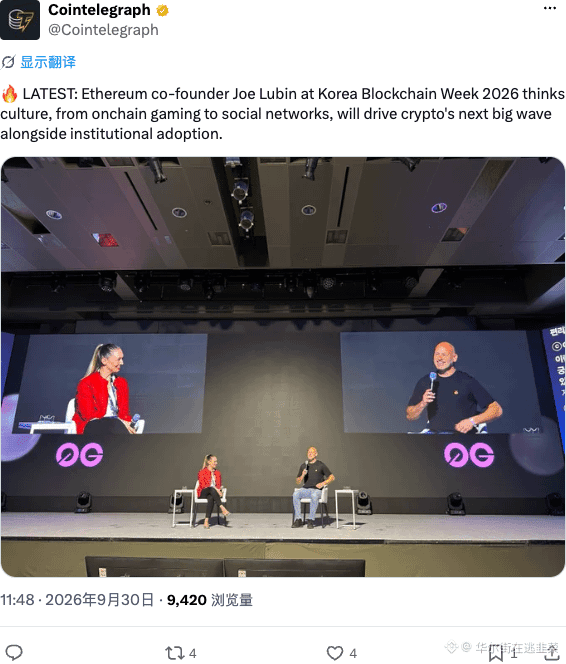
Lubin makes waves in South Korea crypto circles: the next big wave will be powered by culture, not just institutions. On-chain games plus social networking are what give retail investors adrenaline—institutions are only fit to be long-term core holdings. Think about NFTs and memes: cultural narratives always move faster than technical narratives. There’s no soul in just pumping with an ETF. It’s still not too late to get in now.
$ETH #GameFi #SocialFi
Lubin makes waves in South Korea crypto circles: the next big wave will be powered by culture, not just institutions. On-chain games plus social networking are what give retail investors adrenaline—institutions are only fit to be long-term core holdings. Think about NFTs and memes: cultural narratives always move faster than technical narratives. There’s no soul in just pumping with an ETF. It’s still not too late to get in now.
$ETH #GameFi #SocialFi
$ETH #GameFi #SocialFi
71
·
--
Japan can handle this wave—Binance Pay directly connects with PayPay, and millions of offline stores are now collecting USDT. Don’t underestimate this step. Japan has traditionally been cautious about crypto payments; this is basically opening a proper channel. Stablecoins are moving from exchanges into everyday spending, and the value anchor is getting more solid. BUSD doesn’t really get affected—it's the real boost for USDT’s circulation use cases. In the payments space, don’t hype concepts—watch who implements first.
$BNB $USDT #BinancePay #stablecoins
Japan can handle this wave—Binance Pay directly connects with PayPay, and millions of offline stores are now collecting USDT. Don’t underestimate this step. Japan has traditionally been cautious about crypto payments; this is basically opening a proper channel. Stablecoins are moving from exchanges into everyday spending, and the value anchor is getting more solid. BUSD doesn’t really get affected—it's the real boost for USDT’s circulation use cases. In the payments space, don’t hype concepts—watch who implements first.
$BNB $USDT #BinancePay #stablecoins
$BNB $USDT #BinancePay #stablecoins

33
·
--
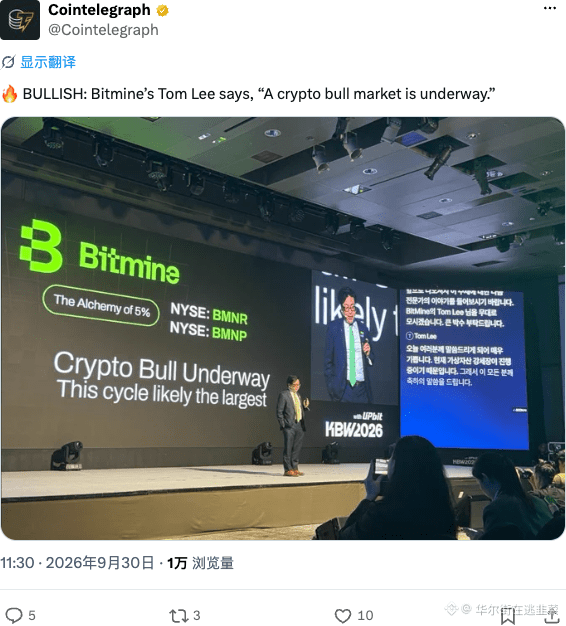
Bitmine’s Tom Lee directly speaks on mic: a bull market is underway. Wow, once this slogan is out, the whole internet is going to hype again. But from historical experience, when these big shots give buy/sell calls like this, it’s often either the starting point or the ending point. So what’s the current situation with funding rates and the long/short ratio? If it’s all longs patting themselves on the back, be careful.
$BTC
Bitmine’s Tom Lee directly speaks on mic: a bull market is underway. Wow, once this slogan is out, the whole internet is going to hype again. But from historical experience, when these big shots give buy/sell calls like this, it’s often either the starting point or the ending point. So what’s the current situation with funding rates and the long/short ratio? If it’s all longs patting themselves on the back, be careful.
$BTC
$BTC
123
·
--
Arthur Hayes goes on a rant in the South Korea blockchain scene: Bitcoin and stablecoins—none of them can serve as the “native language” for AI agents right now. Crude as it sounds, it’s not nonsense: when AI talks about money, what it needs is an automated, programmable payments layer that machines can settle with—not the human-driven transfer process. His newly created Flop Network aims to fill this gap, focusing specifically on a payment network for AI-to-AI transactions. Is this new narrative again? AI payments are indeed still a blank spot, but don’t rush to chase it—first, see whether it actually works.
$BTC #AI #payment network
Arthur Hayes goes on a rant in the South Korea blockchain scene: Bitcoin and stablecoins—none of them can serve as the “native language” for AI agents right now. Crude as it sounds, it’s not nonsense: when AI talks about money, what it needs is an automated, programmable payments layer that machines can settle with—not the human-driven transfer process. His newly created Flop Network aims to fill this gap, focusing specifically on a payment network for AI-to-AI transactions. Is this new narrative again? AI payments are indeed still a blank spot, but don’t rush to chase it—first, see whether it actually works.
$BTC #AI #payment network
$BTC #AI #payment network

45
·
--
Brazilian Securities Depository Receipts (CSD) CSD BR directly moves fund share records onto the XRP Ledger. The first release is BTG Pactual’s product. This isn’t a test—it’s real assets being tokenized on-chain, and security settlement efficiency is about to be transformed. Ripple is also stuck at a key checkpoint in the compliance track again; XRP’s practical value is accumulating—don’t just watch the candlestick chart.
$XRP #Ripple
Brazilian Securities Depository Receipts (CSD) CSD BR directly moves fund share records onto the XRP Ledger. The first release is BTG Pactual’s product. This isn’t a test—it’s real assets being tokenized on-chain, and security settlement efficiency is about to be transformed. Ripple is also stuck at a key checkpoint in the compliance track again; XRP’s practical value is accumulating—don’t just watch the candlestick chart.
$XRP #Ripple
$XRP #Ripple
81
·
--
“The Wood Sister” Speaks: This round of interest rates rising isn’t about inflation—it’s real yields that are moving. The tech revolution has lifted real-growth expectations; money is voting with its feet.
Put into plain language: The market isn’t afraid of rate hikes; it’s afraid that growth will disappear. With growth surprises still strong, higher rates can’t stop risk assets. Don’t use the old script for a new cycle.👀
$BTC #Macroeconomics
“The Wood Sister” Speaks: This round of interest rates rising isn’t about inflation—it’s real yields that are moving. The tech revolution has lifted real-growth expectations; money is voting with its feet.
Put into plain language: The market isn’t afraid of rate hikes; it’s afraid that growth will disappear. With growth surprises still strong, higher rates can’t stop risk assets. Don’t use the old script for a new cycle.👀
$BTC #Macroeconomics
Put into plain language: The market isn’t afraid of rate hikes; it’s afraid that growth will disappear. With growth surprises still strong, higher rates can’t stop risk assets. Don’t use the old script for a new cycle.👀
$BTC #Macroeconomics

73
·
--
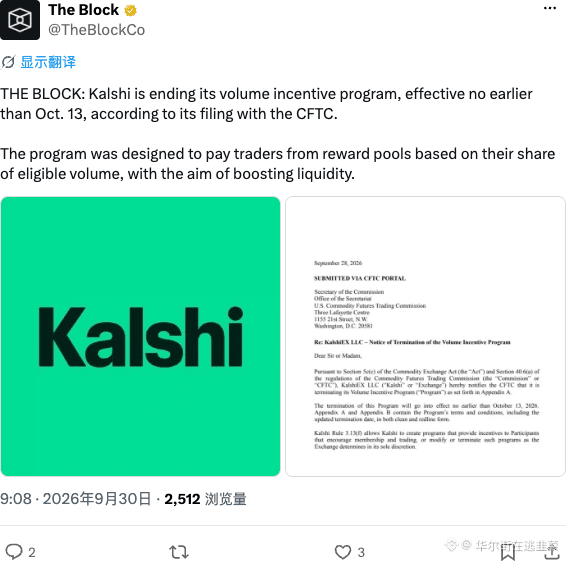
Kalshi cut the trading-volume incentives itself, effective after October 13. In plain terms, the more you traded before, the less chance there was of getting a share of the rewards pool—those who tried to game the system by pumping volume to skim the wool should have run by now. The CFTC filings are already submitted; this isn’t a joke. Whether the prediction market can still hold up liquidity without incentives—let’s wait and see.
$KALSHI #predictionmarket
Kalshi cut the trading-volume incentives itself, effective after October 13. In plain terms, the more you traded before, the less chance there was of getting a share of the rewards pool—those who tried to game the system by pumping volume to skim the wool should have run by now. The CFTC filings are already submitted; this isn’t a joke. Whether the prediction market can still hold up liquidity without incentives—let’s wait and see.
$KALSHI #predictionmarket
$KALSHI #predictionmarket
30
·
--
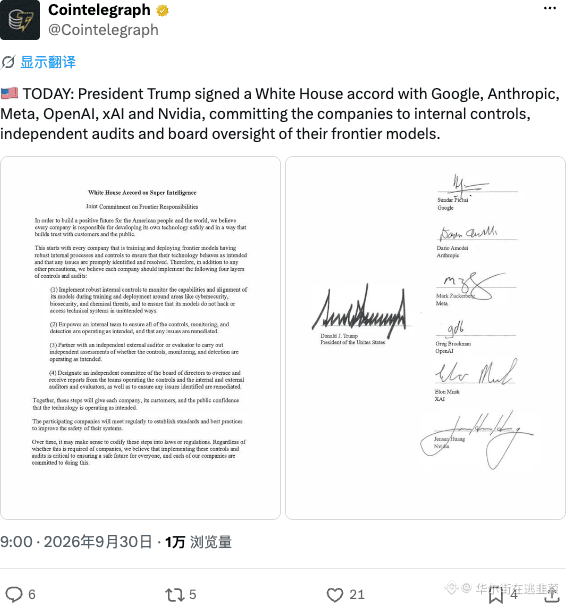
Trump put six major AI giants onto one table to sign an agreement—internal control + independent audits + the board keeping a close watch. On the surface, it’s a safety play, but in reality it’s putting a bridle on the AI track.
Tech stocks will have to keep an eye on regulators again. Risk appetite for capital is under pressure. As for BTC’s rebound—wanting to go further—watch what other moves Washington makes.
Don’t think AI regulation has nothing to do with the crypto world. When liquidity expectations tighten, no one gets away.😏
$BTC #AI #Crypto Macro
Trump put six major AI giants onto one table to sign an agreement—internal control + independent audits + the board keeping a close watch. On the surface, it’s a safety play, but in reality it’s putting a bridle on the AI track.
Tech stocks will have to keep an eye on regulators again. Risk appetite for capital is under pressure. As for BTC’s rebound—wanting to go further—watch what other moves Washington makes.
Don’t think AI regulation has nothing to do with the crypto world. When liquidity expectations tighten, no one gets away.😏
$BTC #AI #Crypto Macro
Tech stocks will have to keep an eye on regulators again. Risk appetite for capital is under pressure. As for BTC’s rebound—wanting to go further—watch what other moves Washington makes.
Don’t think AI regulation has nothing to do with the crypto world. When liquidity expectations tighten, no one gets away.😏
$BTC #AI #Crypto Macro
108
·
--
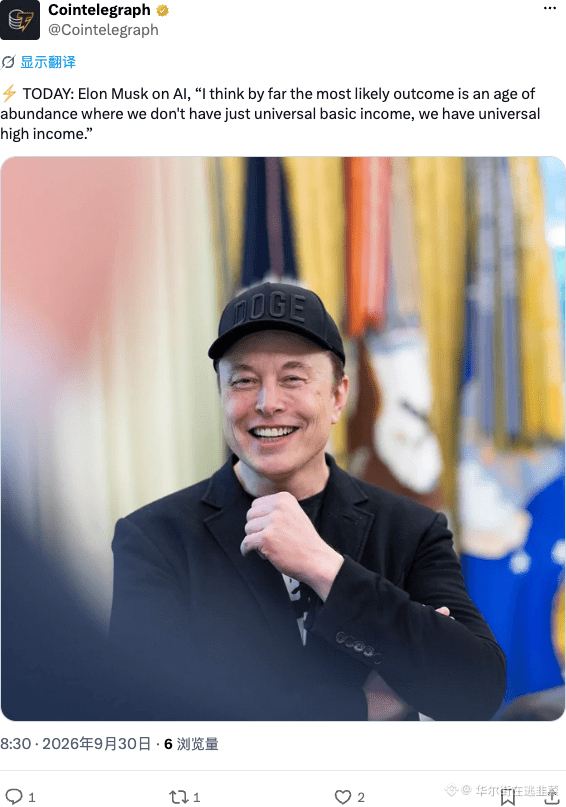
Musk makes a statement: the future isn’t a universal basic income, but a universal high income. The implication is—once productivity explodes, money won’t really be the issue anymore. But to achieve this kind of “abundance,” the underlying settlement and allocation of computing power will most likely have to rely on decentralized networks to hold up. Now looking back, the profit-to-loss ratio of AI and DePIN is way better than chasing MEMEs. This wave is a technological revolution—don’t treat it like an emotional trade.
$AI $RENDER $TAO
Musk makes a statement: the future isn’t a universal basic income, but a universal high income. The implication is—once productivity explodes, money won’t really be the issue anymore. But to achieve this kind of “abundance,” the underlying settlement and allocation of computing power will most likely have to rely on decentralized networks to hold up. Now looking back, the profit-to-loss ratio of AI and DePIN is way better than chasing MEMEs. This wave is a technological revolution—don’t treat it like an emotional trade.
$AI $RENDER $TAO
$AI $RENDER $TAO
460
·
--
Trump just signed an order: in federal agencies’ official documents, “AI” must be renamed “Super Intelligence/SI.” The wording is juiced to the max—technology unchanged. This is a pure name change, not a luck change. The narrative is flying ahead for a bit, but don’t get carried away—there’s still no sign of any real, funded projects yet; for now, let’s see who can ride the wave and produce actual applications.👀
$AI $BTC #AI #Trump
Trump just signed an order: in federal agencies’ official documents, “AI” must be renamed “Super Intelligence/SI.” The wording is juiced to the max—technology unchanged. This is a pure name change, not a luck change. The narrative is flying ahead for a bit, but don’t get carried away—there’s still no sign of any real, funded projects yet; for now, let’s see who can ride the wave and produce actual applications.👀
$AI $BTC #AI #Trump
$AI $BTC #AI #Trump

168
·
--
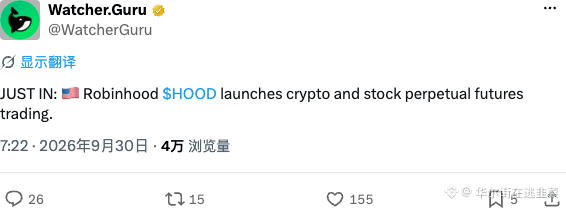
Robinhood just jumped straight into running a casino—stocks and crypto perpetual futures are both going up, and retail traders now have another liquidation trap.
When compliant platforms start getting into high leverage, it shows that traditional brokerages are beginning to fight for the crypto derivatives cake. That puts real competitive pressure on the current perpetual contract giants. In the short term, it’s good for HOOD trading volume, but in the long run, we’ll see who survives.
Anyway, don’t rush to charge in—check liquidity depth first.
$HOOD $BTC #Robinhood
Robinhood just jumped straight into running a casino—stocks and crypto perpetual futures are both going up, and retail traders now have another liquidation trap.
When compliant platforms start getting into high leverage, it shows that traditional brokerages are beginning to fight for the crypto derivatives cake. That puts real competitive pressure on the current perpetual contract giants. In the short term, it’s good for HOOD trading volume, but in the long run, we’ll see who survives.
Anyway, don’t rush to charge in—check liquidity depth first.
$HOOD $BTC #Robinhood
When compliant platforms start getting into high leverage, it shows that traditional brokerages are beginning to fight for the crypto derivatives cake. That puts real competitive pressure on the current perpetual contract giants. In the short term, it’s good for HOOD trading volume, but in the long run, we’ll see who survives.
Anyway, don’t rush to charge in—check liquidity depth first.
$HOOD $BTC #Robinhood
155
·
--
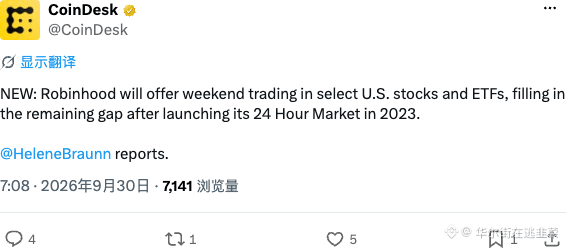
Can you trade US stocks on weekends too? Robinhood is taking the traditional market and pushing it into a 7x24-hour mode. But that’s not enough—after the 24-hour market opens, they still don’t leave weekends out.
Retail investors are loving it, but who will fill the hole of fragmented liquidity? With traditional finance getting this competitive, is BTC’s crypto-native advantage still worth hyping—or is this actually paving the way for crypto? 🍿
#美股 #Robinhood #BTC
Can you trade US stocks on weekends too? Robinhood is taking the traditional market and pushing it into a 7x24-hour mode. But that’s not enough—after the 24-hour market opens, they still don’t leave weekends out.
Retail investors are loving it, but who will fill the hole of fragmented liquidity? With traditional finance getting this competitive, is BTC’s crypto-native advantage still worth hyping—or is this actually paving the way for crypto? 🍿
#美股 #Robinhood #BTC
Retail investors are loving it, but who will fill the hole of fragmented liquidity? With traditional finance getting this competitive, is BTC’s crypto-native advantage still worth hyping—or is this actually paving the way for crypto? 🍿
#美股 #Robinhood #BTC
165
·
--
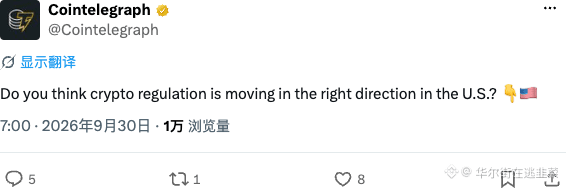
Is the direction of US crypto regulation right? If you ask, it’s still driving through the fog. The SEC and CFTC are grabbing the steering wheel, Congress is doing toothpaste-squeezed legislation, the ETF has been approved, but the stablecoin bill has stalled again. There is a direction, but it’s just circling around. Where do you think this car will end up? 👀
#加密监管 #US
Is the direction of US crypto regulation right? If you ask, it’s still driving through the fog. The SEC and CFTC are grabbing the steering wheel, Congress is doing toothpaste-squeezed legislation, the ETF has been approved, but the stablecoin bill has stalled again. There is a direction, but it’s just circling around. Where do you think this car will end up? 👀
#加密监管 #US
#加密监管 #US
66
·
--
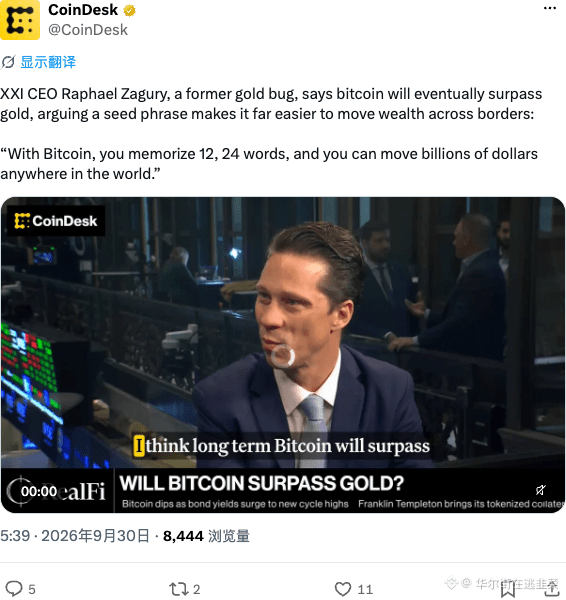
Former gold death long positions have all defected, saying that BTC will ultimately surpass gold. And the reason is just one sentence: remember 12 words, and hundreds of billions of dollars can be moved around casually.
Indeed, gold crossing borders requires security checks and declarations, while Bitcoin crossing borders relies on brains. This wave is about physical assets losing to mathematical assets, and the old-school way of thinking finally caught up with the pace.
Consensus is forming; the rest is just a matter of time.🚬
$BTC
Former gold death long positions have all defected, saying that BTC will ultimately surpass gold. And the reason is just one sentence: remember 12 words, and hundreds of billions of dollars can be moved around casually.
Indeed, gold crossing borders requires security checks and declarations, while Bitcoin crossing borders relies on brains. This wave is about physical assets losing to mathematical assets, and the old-school way of thinking finally caught up with the pace.
Consensus is forming; the rest is just a matter of time.🚬
$BTC
Indeed, gold crossing borders requires security checks and declarations, while Bitcoin crossing borders relies on brains. This wave is about physical assets losing to mathematical assets, and the old-school way of thinking finally caught up with the pace.
Consensus is forming; the rest is just a matter of time.🚬
$BTC
147
·
--
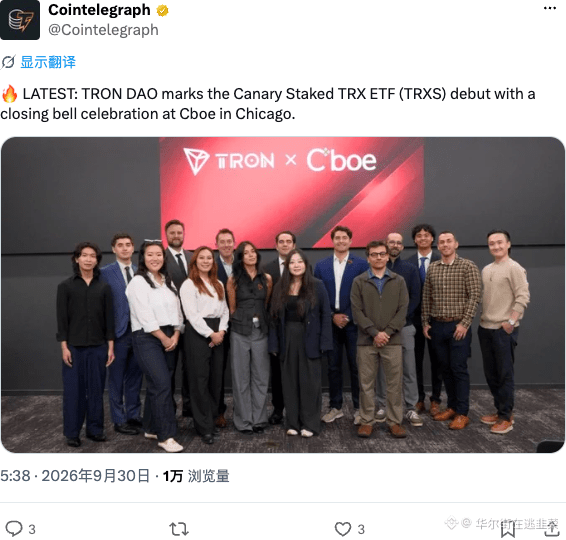
The TRX ETF is now ringing the bell at Cboe—it's also the kind with staking included. Traditional capital can finally comply and earn staking returns. This narrative adds an extra layer of “meat” compared to a spot ETF alone. But don’t get too excited yet—liquidity is the key. Let’s see what the trading volume is on day one.
$TRX #TRX #ETF
The TRX ETF is now ringing the bell at Cboe—it's also the kind with staking included. Traditional capital can finally comply and earn staking returns. This narrative adds an extra layer of “meat” compared to a spot ETF alone. But don’t get too excited yet—liquidity is the key. Let’s see what the trading volume is on day one.
$TRX #TRX #ETF
$TRX #TRX #ETF
101
·
--
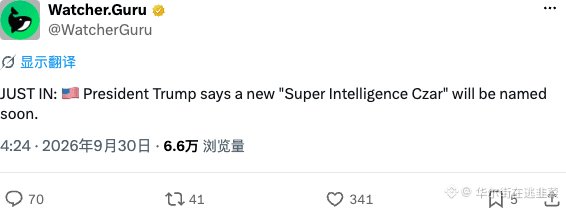
Trump announces plans for a “super-intelligent czar,” and it sounds like something straight out of a sci-fi film. But this isn’t small— the White House has officially elevated AI to a national-level strategy, and next up, regulation and industrial policy will likely accelerate. For the crypto world, AI narratives have been traded for so long; now, real government resources are entering the scene. In the short term, it could ignite sentiment, but in the long run, it may divert capital. Let’s see which direction it takes once the name and details are out.
$BTC $AI
Trump announces plans for a “super-intelligent czar,” and it sounds like something straight out of a sci-fi film. But this isn’t small— the White House has officially elevated AI to a national-level strategy, and next up, regulation and industrial policy will likely accelerate. For the crypto world, AI narratives have been traded for so long; now, real government resources are entering the scene. In the short term, it could ignite sentiment, but in the long run, it may divert capital. Let’s see which direction it takes once the name and details are out.
$BTC $AI
$BTC $AI
177
·
--
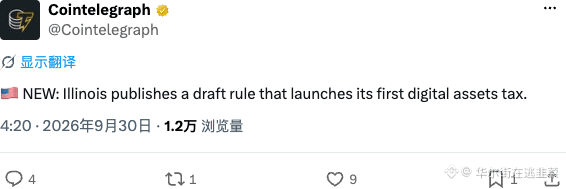
Illinois releases the first digital asset tax proposal; the state government is finally cutting into the crypto world. From now on, trading, mining, and even on-chain interactions could all be defined as taxable events. Compliance costs are set to rise—short-term sentiment may feel like a cold breeze, but in the long run, being taxed is better than being treated like a pyramid scheme—provided it doesn’t end up with something that discourages people. In the draft stage, there’s still room for changes.
$BTC #加密税务 #US regulation
Illinois releases the first digital asset tax proposal; the state government is finally cutting into the crypto world. From now on, trading, mining, and even on-chain interactions could all be defined as taxable events. Compliance costs are set to rise—short-term sentiment may feel like a cold breeze, but in the long run, being taxed is better than being treated like a pyramid scheme—provided it doesn’t end up with something that discourages people. In the draft stage, there’s still room for changes.
$BTC #加密税务 #US regulation
$BTC #加密税务 #US regulation
135
·
--
Privacy chains have long been criticized for having regulatory gaps. Canton just took this opportunity to catch up and address it. After Intercepta is integrated, it can perform sanctions screening, transaction monitoring, and fund tracing—and it can also trace private deployments across chains. Institutions no longer have to stare at a black box.
With compliance tools keeping up, that’s the prerequisite for institutions to dare to enter the privacy chain. Otherwise, the KYC that works on transparent chains fails outright on Canton’s selective-disclosure model. This direction is right.
$Canton #合规 #Privacy Computing
Privacy chains have long been criticized for having regulatory gaps. Canton just took this opportunity to catch up and address it. After Intercepta is integrated, it can perform sanctions screening, transaction monitoring, and fund tracing—and it can also trace private deployments across chains. Institutions no longer have to stare at a black box.
With compliance tools keeping up, that’s the prerequisite for institutions to dare to enter the privacy chain. Otherwise, the KYC that works on transparent chains fails outright on Canton’s selective-disclosure model. This direction is right.
$Canton #合规 #Privacy Computing
With compliance tools keeping up, that’s the prerequisite for institutions to dare to enter the privacy chain. Otherwise, the KYC that works on transparent chains fails outright on Canton’s selective-disclosure model. This direction is right.
$Canton #合规 #Privacy Computing

12
Log in to explore more content
Join global crypto users on Binance Square
⚡️ Get latest and useful information about crypto.
💬 Trusted by the world’s largest crypto exchange.
👍 Discover real insights from verified creators.
Email / Phone number
Trending Topics
TrumpRejectsAIRulesForVoluntaryAudits
1,956 views
141 Discussing
Super Intelligence" & The AI Policy Shift: Self-Policing or a Risky Gamble?
Nurul Hasnat Samir
·0 Likes
·341 views
BitgetHotWalletBreachTiedToThirdPartySecurityFlaw
905 views
102 Discussing
OpenAIUnveilsAlwaysOnAgentDots
2,002 views
152 Discussing