

Having several positions in a portfolio does not necessarily mean you are diversified. The number of assets matters less when different companies and sectors respond to the same economic factors.
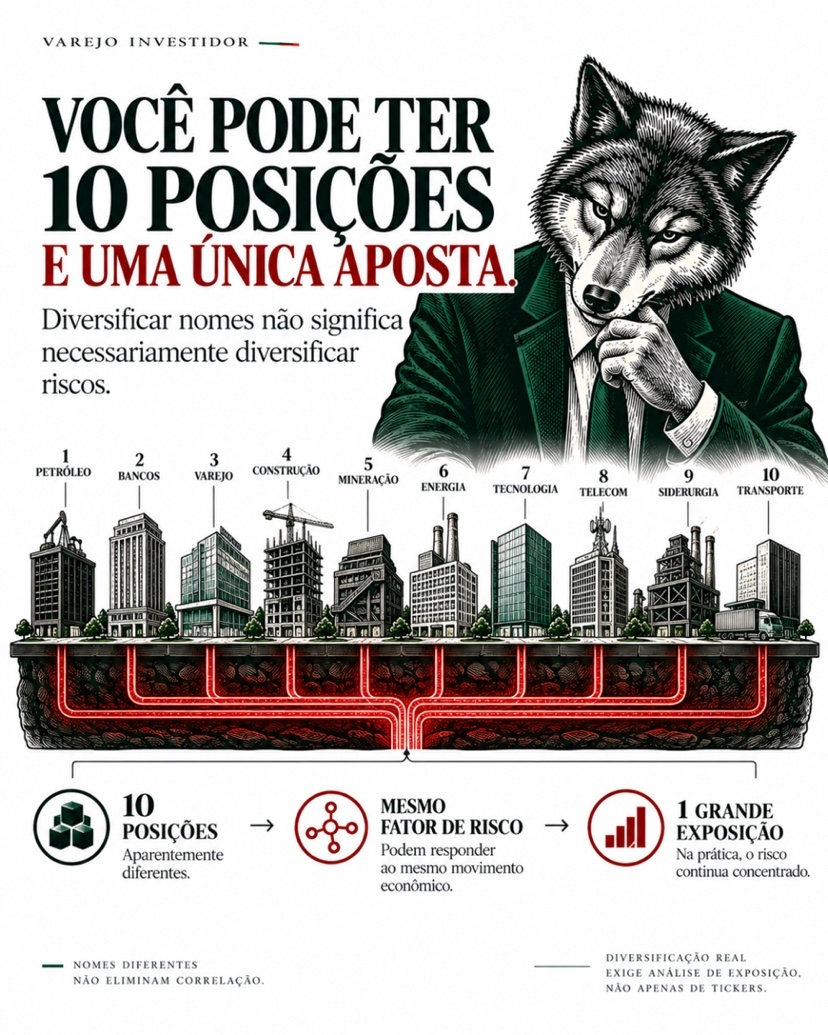
Oil, banks, retail, construction, mining, energy, technology, telecommunications, steelmaking, and transportation may seem like completely different exposures. However, interest rates, economic growth, inflation, credit, commodities, and industrial activity can affect several of these sectors at the same time.
That is the risk of invisible concentration.
A portfolio can contain ten positions, but if they all depend on the same macroeconomic scenario, a change in that scenario can affect a large portion of the portfolio at the same time.
True diversification requires analyzing more than tickers. It is necessary to look at correlation, risk factors, economic sensitivity, sector concentration, liquidity, and the share each position has in total equity.
It is also important to distinguish the quantity of assets from risk independence. Adding new positions that have similar behavior can increase the portfolio’s complexity without necessarily reducing its vulnerability.
Building a portfolio therefore starts with a deeper question: how many truly different sources of risk and return are there within the portfolio?
The better this structure is understood, the clearer the role of each position becomes.
Follow the related assets to observe different classes and factors that can make up a portfolio analysis.
#Market #trading #trader #grafico