Oh man, this is not looking good... Does the Federal Reserve have to raise rates again?
Bitcoin plunges 4,000 points, the Nasdaq falls 1.13%—and yesterday the market had one word: disastrous. But the real storm center isn’t in the stock market; it’s in the bond market.
On Wednesday, the 10-year U.S. Treasury yield surged by about 15 basis points in a single day, closing at 5.113%, the first time it has been above this level since 2007. In nearly two decades—first time!
A four-pronged barrage hits the market:
First strike: PMI blows out the roof. The initial reading of the U.S. composite PMI for September jumped to 58.4, the fastest expansion in more than five years. The pace of new orders is the highest since March 2022, and employment growth is the fastest in over four years.
Translation: The data is strong, and rate hikes are more likely.
Second strike: Oil prices come back to deliver the finishing blow. In remarks at the UN General Assembly, Iran’s president made it crystal clear: talks can happen, but they won’t accept “bullying.” Sanctions won’t be lifted, and the Strait of Hormuz won’t be fully opened. Brent jumps on the news. When energy prices rise, inflation expectations climb right along with them—bond investors fear this most.
Third strike: Fed governor Bahl puts it plainly. Inflation is above 2%, and there’s no clear timely trend back toward the target. Further policy adjustments may be needed. The Fed just raised rates last week—and this is effectively putting “we may raise again” right on the table.
Fourth strike: The 5-year Treasury auction “blows up.” In a $70 billion offering, the winning yield was 3 basis points higher than market levels before the auction, and the share forced onto primary dealers was the highest since 2024.
Translation: Nobody wants to buy U.S. government bonds anymore. In a market of this size, a weak auction for Treasuries is a panic signal.
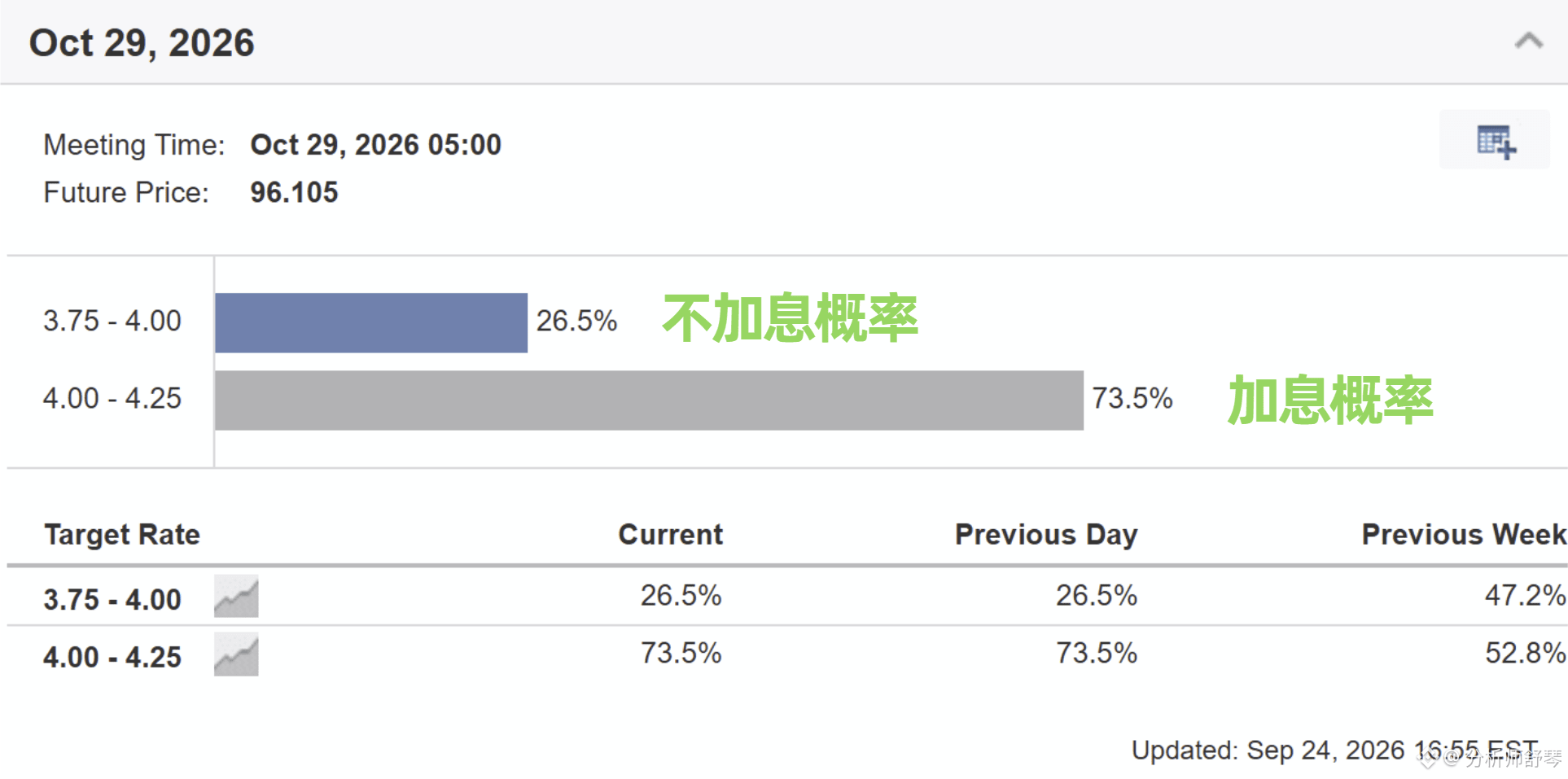
With these four blows in a row, as shown, the market’s odds for additional rate hikes shot up from 55% a day earlier to 73%. At the same time, with the positive news from a U.S.-China meeting now already “spent,” this created the pullback seen today.
And even more worrying: pricing for further rate hikes this year keeps heating up. Is an additional hike in October already unstoppable?
Actually, there’s still a turn! As long as the CPI data released in October is mild, or the U.S. and Iran reach an agreement as soon as possible, then none of this is really a problem. It’s just that there isn’t much time left for the market…
Bitcoin plunges 4,000 points, the Nasdaq falls 1.13%—and yesterday the market had one word: disastrous. But the real storm center isn’t in the stock market; it’s in the bond market.
On Wednesday, the 10-year U.S. Treasury yield surged by about 15 basis points in a single day, closing at 5.113%, the first time it has been above this level since 2007. In nearly two decades—first time!
A four-pronged barrage hits the market:
First strike: PMI blows out the roof. The initial reading of the U.S. composite PMI for September jumped to 58.4, the fastest expansion in more than five years. The pace of new orders is the highest since March 2022, and employment growth is the fastest in over four years.
Translation: The data is strong, and rate hikes are more likely.
Second strike: Oil prices come back to deliver the finishing blow. In remarks at the UN General Assembly, Iran’s president made it crystal clear: talks can happen, but they won’t accept “bullying.” Sanctions won’t be lifted, and the Strait of Hormuz won’t be fully opened. Brent jumps on the news. When energy prices rise, inflation expectations climb right along with them—bond investors fear this most.
Third strike: Fed governor Bahl puts it plainly. Inflation is above 2%, and there’s no clear timely trend back toward the target. Further policy adjustments may be needed. The Fed just raised rates last week—and this is effectively putting “we may raise again” right on the table.
Fourth strike: The 5-year Treasury auction “blows up.” In a $70 billion offering, the winning yield was 3 basis points higher than market levels before the auction, and the share forced onto primary dealers was the highest since 2024.
Translation: Nobody wants to buy U.S. government bonds anymore. In a market of this size, a weak auction for Treasuries is a panic signal.
With these four blows in a row, as shown, the market’s odds for additional rate hikes shot up from 55% a day earlier to 73%. At the same time, with the positive news from a U.S.-China meeting now already “spent,” this created the pullback seen today.
And even more worrying: pricing for further rate hikes this year keeps heating up. Is an additional hike in October already unstoppable?
Actually, there’s still a turn! As long as the CPI data released in October is mild, or the U.S. and Iran reach an agreement as soon as possible, then none of this is really a problem. It’s just that there isn’t much time left for the market…