


I battled with Grok 4.6 for half a day over the BP token. He told me to cash out, and then it dropped before I even finished unfreezing—lol.
First, get the numbers straight: this past week, the one that's been rising fast is BP, not BNB, OKB, or HYPE. That long post uses them as a measuring stick, saying “the scale is dozens to hundreds of times larger,” not “they’ve been surging against BP these past few days.”
Approximate numbers (mid-September to September 23):
About a week, about a month: roughly what kind of market cap $BP **+70%~90%** ($0.45→$0.85, it even touched $0.98 in between); roughly doubled. Circulating market cap about $200 million; daily trading about several million to 10–20 million U. $HYPE about **+16%~24%** ($78→$96, just created an ATH); roughly +17%~21%. Circulating market cap about $21 billion; daily trading about 1 billion U. $OKB about +12%~13%; about +9%~10%. Market cap about $2.6 billion; circulating supply only 21 million coins. $BNB about **+6%~8%** ($726→$783); about +12%. One coin about $780. The 52-week high is still around $1,370—still far from the peak.
BP is hotter than all of them this week. You think, “They’re rising fast—why can’t BP do the same?” Most likely you’re mixing two things together:
One is that, these days, who’s pulling hardest is the one with the steep move; one is that someone has already grown into a big beast, so it looks like it’s “always going up.”
Put in plain terms, these four coins are not the same job category.
BNB is like the membership card from the biggest supermarket.
Every day, people worldwide buy and sell on Binance, and that card can offset trading fees—and also burns tokens. There are already so many people coming in, and the pool is already huge. A card like this is hard to double in a single week. To rise another 50%, you’d have to pump in hundreds of billions of dollars more. So lately it’s been slowly crawling—just a few points per week. It’s not that it can’t—it’s that it’s already too big and can’t do a short sprint anymore.
OKB is like a card from a second-tier mall—and there are especially few of these cards.
There are only 21 million in total. If it rises by $10, the market cap jumps a lot immediately. But it also hasn’t had “a double every week.” Recently it’s just been moving along with the broader market by ten-odd percentage points. Its prior high a year ago was around $250; now it’s about $125—not something that suddenly flew up just recently.
HYPE is like the casino in this neighborhood that’s best at making money—its own chips.
Perpetual futures trading fees are very high—an enormous portion of that gets used to buy its own coins. In effect, the casino turns profits into buy pressure every day. That’s why it can make new highs (around $98) and still climb another twenty-odd points over a week. This is real money flowing back into the coin—not just us saying, “We’re benchmarking HYPE.”
BP is like a newly opened mid-sized store on this street, specializing in “on-chain U.S. stocks.”
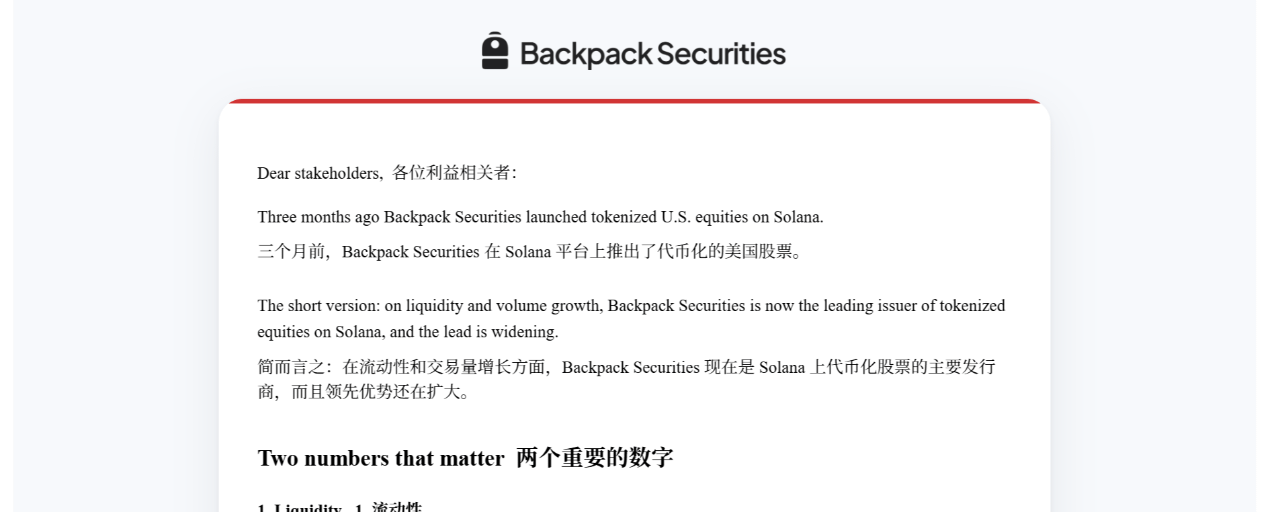
The store can get better and better (that letter to stakeholders was reporting this achievement), but the number of people walking in every day, the fees collected, and whether those fees are used to buy $BP still don’t match among the other three. BP going from 0.45 to 0.85 this week is exactly because the “pot” is small: a few tens of millions of U of hot money can push up a small market cap by a big chunk. The same logic applies—on September 22nd, it could also drop more than ten points in a single day. A small shop can surge fast, and it can also fall fast.
So: it’s not that “BP is banned from rising so fast.”
In just a few short days, it already outpaces BNB, OKB, and HYPE.
Those three that “look like they’ve been going up all the time” are doing so because:
There is continuous buy pressure: HYPE has profitable repurchases; BNB has the largest fee demand across the entire market. BP mainly offers discounts and the notion of “maybe we can swap for equity later.” It doesn’t have a daily forced buy of the same magnitude.
The scale is already there: HYPE’s market cap is about 100 times that of BP. BP needs to “become like HYPE,” not just come back with another week of +80%, but rise by roughly 100 times—meaning it would need to become just like Hyperliquid: attract trading fees, and then feed those fees into the token.
BP’s 80% this week is using the catalyst from that long article: the “U.S. stock tokenization” angle that hadn’t been priced in yet in July. After using the catalyst once, to get the same slope again, you’d need another event of equal weight—not an automatic copy of BNB/HYPE’s trajectory.
To put it another way: when a bicycle starts, it can quickly get ahead of a truck—but that doesn’t mean the bicycle can get onto the highway and compare fuel economy and cargo capacity with the truck. The truck is slow because it’s already carrying the world’s cargo.
For your 2,000 coins: what you should admit this week is that the small-cap already gave you a satisfying chunk of upside; you shouldn’t assume, “Since HYPE can make new highs, BP should come another 11x.” HYPE makes new highs based on daily trading volumes in the hundreds of millions and repurchases on the order of billions. For BP to do that, it would first need to become that kind of business—not lock itself up for a year waiting for multipliers.