
WOLF 狼
10.6k Posts

WOLF 狼
The Market Hunter | KOL | Crypto Trader | Technical Analyst | Write2Earn Specialist | X: @Wolf_Official17
Open Trade
High-Frequency Trader
2 Years
1.1K+ Following
46.8K+ Followers
31.7K+ Liked
Posts
Portfolio
All
Quotes
Videos
Live



Dream Spicer 梦想家
·
--
[Ended] 🎙️ Let's start Pala Pala
392 listens

Lisa丽萨
·
--
[Replay] 🎙️ New and old friends join us for a chat live tonight
01 h 59 m 52 s · 435 listens
Cryptology_7
·
--
𝑪 𝑹 𝒀 𝑷 𝑻 𝑶 𝑳 𝑶 𝑮 𝒀 💙
Every candle tells a story. Every failure teaches us a lesson. Every comeback strengthens our determination.💯📜
$ONE
#BinanceSquareFamily #Cryptology_7
Every candle tells a story. Every failure teaches us a lesson. Every comeback strengthens our determination.💯📜
$ONE
#BinanceSquareFamily #Cryptology_7


Leo - F0
·
--
Bullish🧧🧧🔥GOOD MORNING FROM DUBAİ, FAMİLY.🔥🧧🧧
I told you to buy $ZEC 💛 when it was at $30.
As I told you before, $ZEC 💛 will be 3K.💎
BTTC🔥🔥🧧🧧
#1688家族family 💚 @周周1688 #AIStocksWhatNext #ZECBreaksAbove$1600AtRecordHigh #DogecoinRises15% #BNBMarketCapPassesBNYMellon $BTC
I told you to buy $ZEC 💛 when it was at $30.
As I told you before, $ZEC 💛 will be 3K.💎
BTTC🔥🔥🧧🧧
#1688家族family 💚 @周周1688 #AIStocksWhatNext #ZECBreaksAbove$1600AtRecordHigh #DogecoinRises15% #BNBMarketCapPassesBNYMellon $BTC


DK短线复刻
·
--
关注红包🎁

BLOCK Rayne
·
--
🎁🎁Reply today to receive the red envelope 🎁🎁$SOL
🌹Thank you for helping to share and spread the word THS🌹
🌹Thank you for helping to share and spread the word THS🌹


Muzamil Abbas⁷⁵ 穆扎米尔_阿巴斯
·
--
Bullish$DOGE
50$ DOGE GIVEAWAY! 🎁
Let’s make today a little more fun
I’m giving away $50 worth of DOGE to 2500 lucky winner 🐶💰
To participate:
✅ Follow me
❤️ Like this post
🔁 Repost this post
💬 Comment “1” below
That’s it! 😎
2500 lucky winners will receive $50 in DOGE 🎁🔥
Good luck everyone
Let’s see who gets the DOGE bag today🐕
#MuzammilAbbas⁷⁵穆扎米拉巴斯
50$ DOGE GIVEAWAY! 🎁
Let’s make today a little more fun
I’m giving away $50 worth of DOGE to 2500 lucky winner 🐶💰
To participate:
✅ Follow me
❤️ Like this post
🔁 Repost this post
💬 Comment “1” below
That’s it! 😎
2500 lucky winners will receive $50 in DOGE 🎁🔥
Good luck everyone
Let’s see who gets the DOGE bag today🐕
#MuzammilAbbas⁷⁵穆扎米拉巴斯


Z O N E P R I M E
·
--
Bullish🎁 ZONE PRIME BNB SURPRISE DROP! 🎁
✨ The Red Packet is full and ready to open! ✨
👇 Simple Steps to Participate 👇
❤️ Follow ZONE PRIME
🔁 Like & Share
💬 Comment “BNB”
🔔 Stay connected and active for upcoming surprise drops!
#BNB #Crypto #ZONEPRIME #RedPacket #Binance
✨ The Red Packet is full and ready to open! ✨
👇 Simple Steps to Participate 👇
❤️ Follow ZONE PRIME
🔁 Like & Share
💬 Comment “BNB”
🔔 Stay connected and active for upcoming surprise drops!
#BNB #Crypto #ZONEPRIME #RedPacket #Binance

BLOCK Rayne
·
--
🎁🎁Reply today to receive the red envelope 🎁🎁$SOL
🌹Thank you for helping to share and spread the word THS🌹
🌹Thank you for helping to share and spread the word THS🌹

圣克斯Lucky1688
·
--
🧧🎁🌹🧧🎁🌹
September 23: On-chain giant whale holdings and chip (position) structure
Exchange spot holdings fall to a low level: The amount of BTC spot reserves held by exchanges continues to decline, and liquidity supply (Liquid Supply) tightens further, forming a typical “Supply Squeeze.”
Long-term holders (LTH) remain firmly locked: “Long-term holder” addresses holding for more than 1 year showed no large-scale profit-taking sell-off during the breakout of $87,000, with chips/holdings remaining extremely concentrated.
Chips concentrate toward large holders: The number of whale addresses holding 1,000 BTC or more shows net growth, and chips are accelerating in their shift from retail traders and short-term leveraged traders toward institutional custody accounts and on-chain giant whales.
Follow me—comment to answer 1 and take away the $SOL red envelope!
🧧🎁🌹🧧🎁🌹
September 23: On-chain giant whale holdings and chip (position) structure
Exchange spot holdings fall to a low level: The amount of BTC spot reserves held by exchanges continues to decline, and liquidity supply (Liquid Supply) tightens further, forming a typical “Supply Squeeze.”
Long-term holders (LTH) remain firmly locked: “Long-term holder” addresses holding for more than 1 year showed no large-scale profit-taking sell-off during the breakout of $87,000, with chips/holdings remaining extremely concentrated.
Chips concentrate toward large holders: The number of whale addresses holding 1,000 BTC or more shows net growth, and chips are accelerating in their shift from retail traders and short-term leveraged traders toward institutional custody accounts and on-chain giant whales.
Follow me—comment to answer 1 and take away the $SOL red envelope!
🧧🎁🌹🧧🎁🌹



生蚝哥Oyster
·
--
May all be well
Harmony be with you
Peace and joy
Smooth sailing without worries
Harmony be with you
Peace and joy
Smooth sailing without worries


灼见
·
--
Bullish🚨 BNB is quietly strengthening, but what’s really worth watching may not be how much it’s going up.
It’s that—
the market is re-pricing the ecosystem value of $BNB.
One clear recent change is:
🟡 BNB trend keeps strengthening
🔥 BNB Chain on-chain activity is rebounding
🌐 Applications like DeFi, RWA, and more continue to expand
👥 Users, capital, and developers are re-concentrating
So the question now isn’t:
“Can BNB still go up?”
It’s:
Is this just a price rally driven by sentiment—or an ecosystem revaluation?
If it’s only emotion driving the move, the heat will fade.
But if on-chain activity, capital, and applications keep growing, this BNB trend could be more worth关注 than you might expect.
Next, I’ll only watch three signals:
On-chain activity → capital inflows → ecosystem growth.
👇 What do you think?
Short-term price action 🔴 / ecosystem revaluation 🟢?
#BTC #ETH #BNB
It’s that—
the market is re-pricing the ecosystem value of $BNB.
One clear recent change is:
🟡 BNB trend keeps strengthening
🔥 BNB Chain on-chain activity is rebounding
🌐 Applications like DeFi, RWA, and more continue to expand
👥 Users, capital, and developers are re-concentrating
So the question now isn’t:
“Can BNB still go up?”
It’s:
Is this just a price rally driven by sentiment—or an ecosystem revaluation?
If it’s only emotion driving the move, the heat will fade.
But if on-chain activity, capital, and applications keep growing, this BNB trend could be more worth关注 than you might expect.
Next, I’ll only watch three signals:
On-chain activity → capital inflows → ecosystem growth.
👇 What do you think?
Short-term price action 🔴 / ecosystem revaluation 🟢?
#BTC #ETH #BNB


Crypto_Athlete 7
·
--
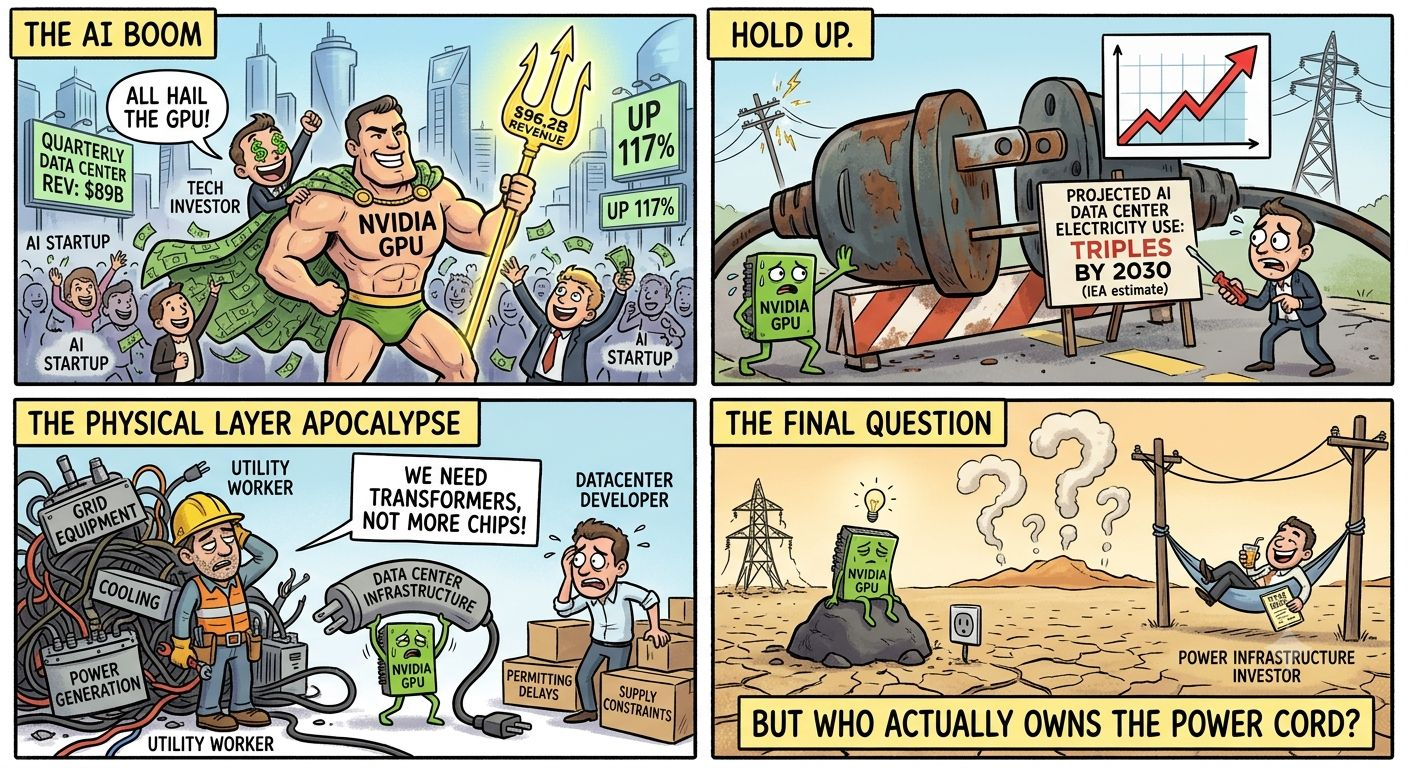
Everyone is watching Nvidia and the AI chip race.
I’m watching what has to sit underneath it.
Nvidia just reported $96.2B in quarterly revenue, with Data Center revenue reaching $89B, up 117% year over year.
Hold up.
The next constraint may not be the GPU. It may be the infrastructure required to keep those GPUs running.
The IEA estimates global data-center electricity consumption could nearly double from 485 TWh in 2025 to 950 TWh by 2030, while electricity use from AI-focused data centers could triple.
That changes how I look at the AI trade.
The opportunity isn’t necessarily another company making faster chips. It could be the businesses supplying the physical layer underneath them: transformers, grid equipment, power generation, cooling, storage and data-center infrastructure.
But there’s a catch.
Projected demand doesn’t guarantee every planned data center gets built. Financing, permitting, grid connections and supply constraints can slow the entire buildout. And AI efficiency is improving quickly.
So I’m not saying power replaces chips as the AI trade.
I’m saying the bottleneck can move.
When AI demand meets the physical limits of the grid, the question becomes much more interesting:
Who owns the infrastructure everyone suddenly needs?
#AIStocksWhatNext
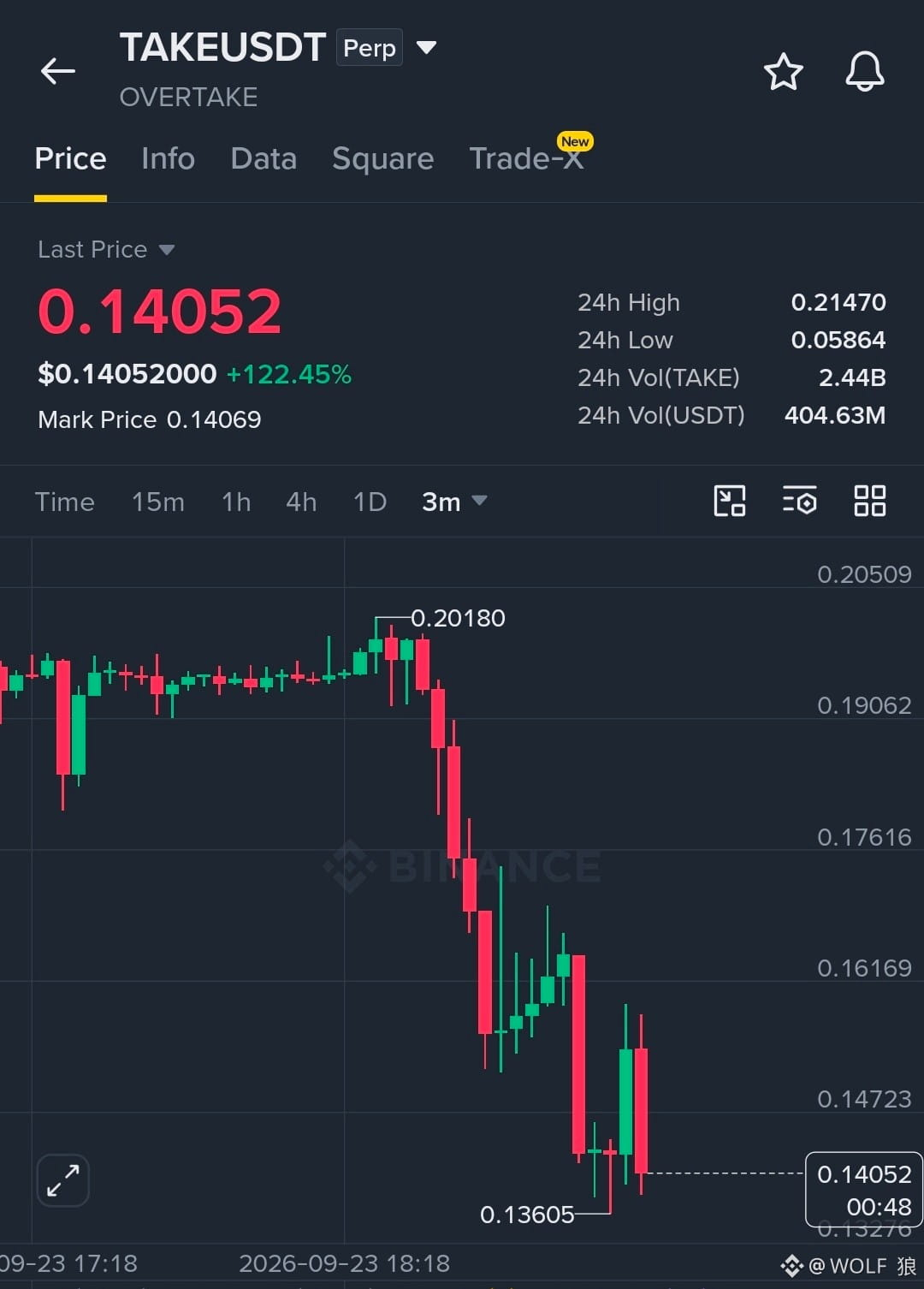
$TAKE
$NVDA
$NVDAB
#aistockswhatnext #nvidia
I’m watching what has to sit underneath it.
Nvidia just reported $96.2B in quarterly revenue, with Data Center revenue reaching $89B, up 117% year over year.
Hold up.
The next constraint may not be the GPU. It may be the infrastructure required to keep those GPUs running.
The IEA estimates global data-center electricity consumption could nearly double from 485 TWh in 2025 to 950 TWh by 2030, while electricity use from AI-focused data centers could triple.
That changes how I look at the AI trade.
The opportunity isn’t necessarily another company making faster chips. It could be the businesses supplying the physical layer underneath them: transformers, grid equipment, power generation, cooling, storage and data-center infrastructure.
But there’s a catch.
Projected demand doesn’t guarantee every planned data center gets built. Financing, permitting, grid connections and supply constraints can slow the entire buildout. And AI efficiency is improving quickly.
So I’m not saying power replaces chips as the AI trade.
I’m saying the bottleneck can move.
When AI demand meets the physical limits of the grid, the question becomes much more interesting:
Who owns the infrastructure everyone suddenly needs?
#AIStocksWhatNext
$TAKE
$NVDA
$NVDAB
#aistockswhatnext #nvidia

Suadagar Ali
·
--
#BNB ETH BTC$
friends be happy
🌹☘️🥀🌹
follow like and
comments
friends be happy
🌹☘️🥀🌹
follow like and
comments

Log in to explore more content