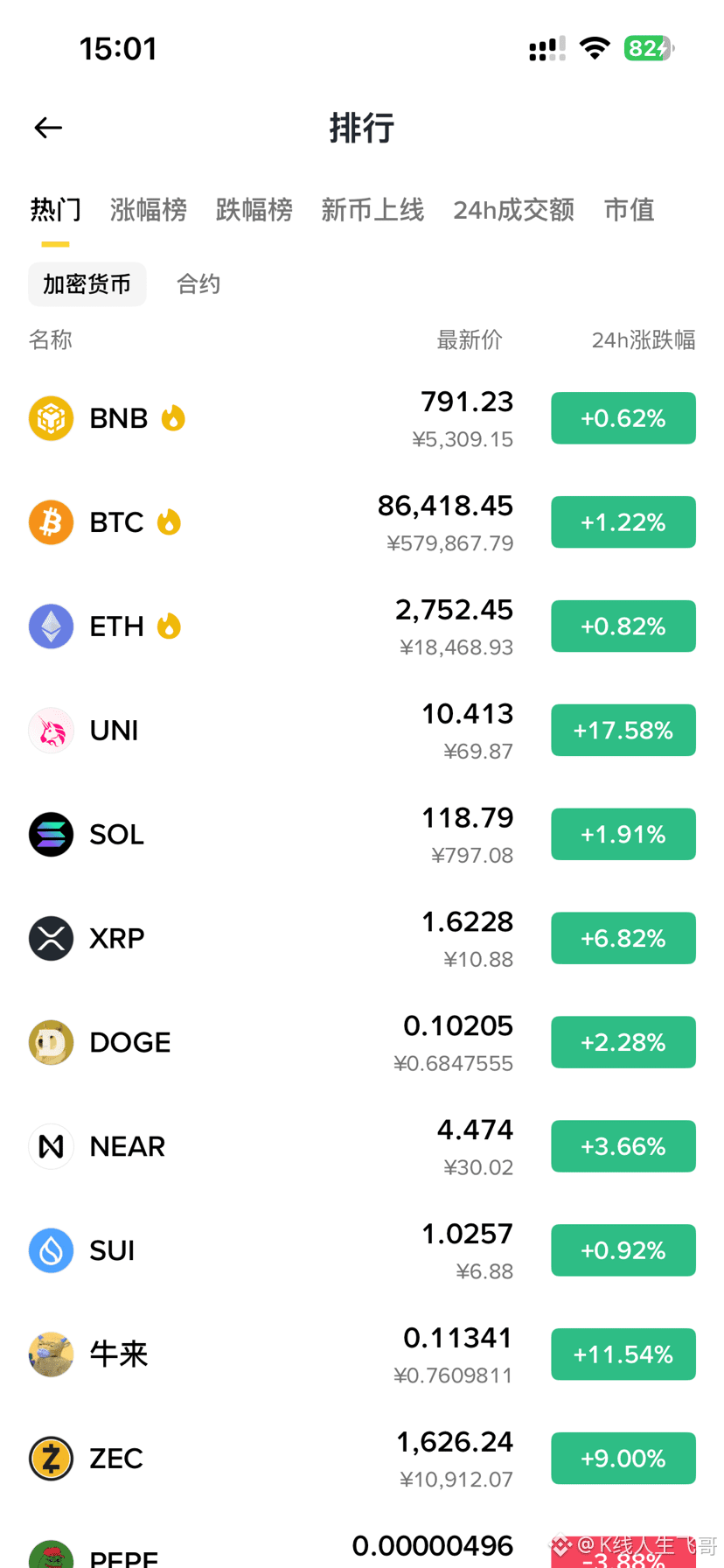
What opportunities are left in this bull run for the privacy coin track???
Let’s first talk about the underlying logic that I see behind privacy coins
Pursuing freedom has always been the foundational color of blockchain
A group of early technical idealists, one generation after another, kept doing the same thing. From pushing cryptography technology from military use into civilian applications, to publishing the Cypherpunk manifesto, and later to the birth of Bitcoin—this line has always been clear: they wanted to build a world that is freer, more egalitarian, and better protects privacy.
This isn’t just some kind of idealism. For many people, a free institutional environment is itself the basis for economic vitality and technological innovation. But in the real world, there are too many constraints. So they choose to look for breakthroughs at the technical level—when the internet gradually became dominated by centralized control, they tried to rebuild a set of rules using blockchain.
In real society, people like this have always been in the minority. Even among those who push for this, many may not end up making the most money. But it is precisely these people who pushed the technology one step higher.
They aren’t just promoting an industry; it’s more like a value orientation: beyond the boundaries of human society, there will always be people trying to raise the ceiling of freedom a little further.
Why ZEC can make it through this cycle is actually due to several factors.
First is the supply of coins. After all, ZEC is an old coin that has existed since 2016. The selling pressure held by the early team and big holders, after all these years of market digestion, has already been washed out to a large extent. Now the coin supply is relatively lighter. If real capital comes in, the price elasticity will naturally be greater.
For assets of this size, to break out into a major trend, it definitely can’t be done without big money. After Navaral’s calls, more institutions began paying attention to and allocating ZEC. Related institutional products and ETFs also gradually appeared. This change is definitely worth noting.
Privacy is becoming the mainstream narrative of Crypto again.
Since February, projects like NEAR and ZAMA have also shown clear upward moves.
Put simply, NEAR is more like the public chain building its own privacy capabilities. ZAMA, on the other hand, is more like a privacy technology service provider—it can provide privacy solutions for different public chains.
If you missed ZEC, you can take a look at NEAR and ZAMA
Let’s first talk about the underlying logic that I see behind privacy coins
Pursuing freedom has always been the foundational color of blockchain
A group of early technical idealists, one generation after another, kept doing the same thing. From pushing cryptography technology from military use into civilian applications, to publishing the Cypherpunk manifesto, and later to the birth of Bitcoin—this line has always been clear: they wanted to build a world that is freer, more egalitarian, and better protects privacy.
This isn’t just some kind of idealism. For many people, a free institutional environment is itself the basis for economic vitality and technological innovation. But in the real world, there are too many constraints. So they choose to look for breakthroughs at the technical level—when the internet gradually became dominated by centralized control, they tried to rebuild a set of rules using blockchain.
In real society, people like this have always been in the minority. Even among those who push for this, many may not end up making the most money. But it is precisely these people who pushed the technology one step higher.
They aren’t just promoting an industry; it’s more like a value orientation: beyond the boundaries of human society, there will always be people trying to raise the ceiling of freedom a little further.
Why ZEC can make it through this cycle is actually due to several factors.
First is the supply of coins. After all, ZEC is an old coin that has existed since 2016. The selling pressure held by the early team and big holders, after all these years of market digestion, has already been washed out to a large extent. Now the coin supply is relatively lighter. If real capital comes in, the price elasticity will naturally be greater.
For assets of this size, to break out into a major trend, it definitely can’t be done without big money. After Navaral’s calls, more institutions began paying attention to and allocating ZEC. Related institutional products and ETFs also gradually appeared. This change is definitely worth noting.
Privacy is becoming the mainstream narrative of Crypto again.
Since February, projects like NEAR and ZAMA have also shown clear upward moves.
Put simply, NEAR is more like the public chain building its own privacy capabilities. ZAMA, on the other hand, is more like a privacy technology service provider—it can provide privacy solutions for different public chains.
If you missed ZEC, you can take a look at NEAR and ZAMA