


For teams building DeFi, staking, or chain-game DApp projects, after finalizing the development plan, the most关心 issue is monthly server maintenance cost. Based on hands-on operational experience from hundreds of overseas DApp deployments, we share a transparent, no-surprises pricing range for 2026. All pricing uses overseas compliant cloud servers, suitable for various Web3 project scenarios. No inflated configurations, and no hidden charges.
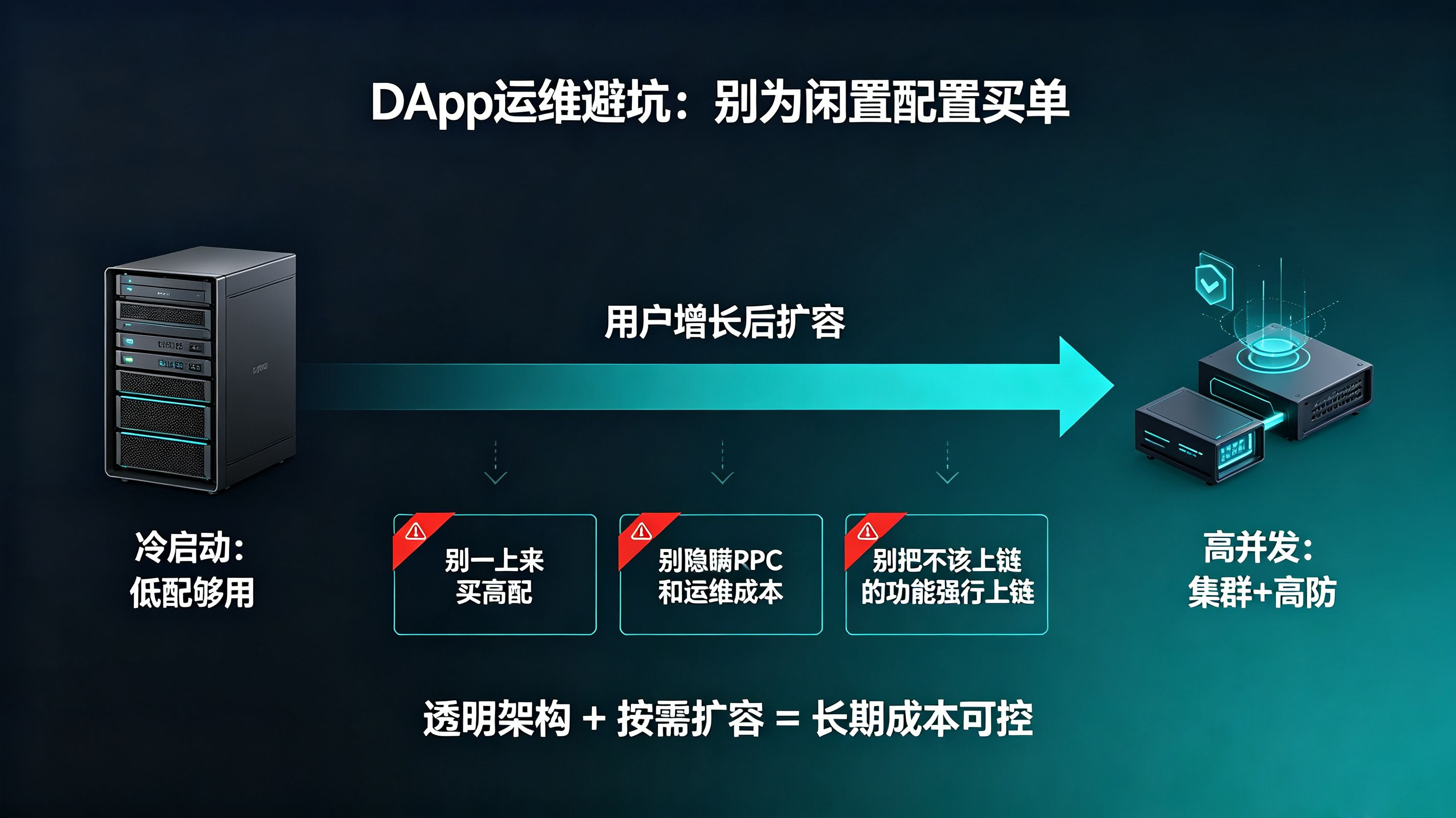
Many startup projects fall into a major cost pit: they don’t know how to match server specifications with project traffic. Instead of careful planning, they immediately purchase high-end cluster servers and waste large amounts of operational budget every month. Here we first clarify the core principle: for commercial DApp servers, start with lower specs and scale up as needed. Upgrade computing power and bandwidth according to the number of online users, precisely matching the project’s current size, and compress operational costs to the maximum extent.
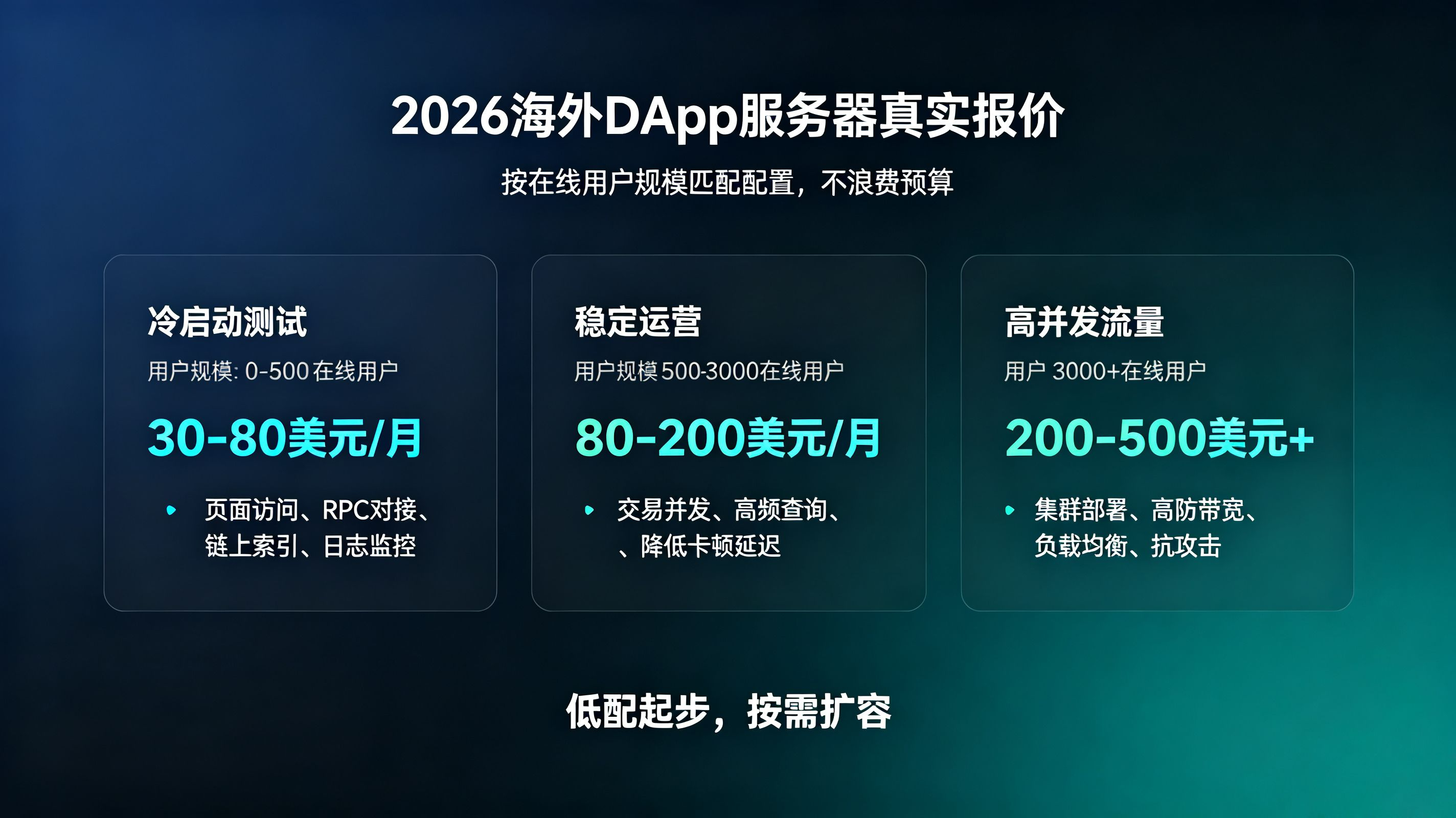
Below are three phases—clear cost references for everyone:
First phase: project testing / cold-start stage (0–500 online users). Monthly cost: USD 30–80. Basic configurations are sufficient to support front-end page access, regular RPC node connections, on-chain data indexing, back-office risk control reconciliation, and log monitoring. Suitable for newly launched projects, cold starts, and new projects with no large-scale traffic yet. Stable performance without lag, low budget consumption—this is the preferred option for most early-stage startups. In this phase, the project’s core goal is to validate the product and accumulate early users; there is no need for a high-protection cluster—basic cloud servers can meet all requirements.
Second phase: stable operations stage (500–3,000 online users). Monthly cost: USD 80–200. Upgrade bandwidth and compute resources to handle daily transaction concurrency, high-frequency data queries, and large-scale user interactions. This effectively addresses common issues during peak hours such as page lag, transaction delays, and index timeouts, meeting the business operation needs of typical DeFi and staking DApp use cases. System stability increases significantly. When your community starts to gain traction and your daily number of transactions steadily rises, you can upgrade to this tier.
Third phase: high-concurrency traffic stage (3,000+ online users). Monthly cost: USD 200–500. Uses clustered deployment, high-capacity anti-DDoS bandwidth, and multi-node load-balancing architecture to withstand risks such as bot-driven order fraud, high-frequency network attacks, and high-concurrency system crashes. Suitable for large-scale traffic scenarios for top-tier chain games and top-tier DeFi projects. Only when the project experiences explosive growth and a large number of users access simultaneously do you need to invest in infrastructure at this tier.
Key takeaways from real industry practice to avoid pitfalls: For a new project launch, there is absolutely no need to buy high-end, high-protection, cluster servers all at once. Many outsourcing service providers, to profit from hardware price differences, will forcibly recommend expensive servers for a new project at cold start, causing budget waste. The truly professional deployment approach is to expand gradually as user demand grows: scale resources according to how much traffic you have.
In addition to server hardware costs, project teams should also watch for hidden supporting expenses: RPC node services, database backups, security monitoring, and 24/7 operational alerting. Some providers’ quotes include only the servers themselves; later, monitoring and security protection are charged separately. Before signing, be sure to confirm the complete operations checklist.
Architecture design directly affects server costs. If the initial architecture plan is unreasonable and the design of off-chain query logic is overly redundant, it will continuously consume server compute power and drive up monthly costs. A professional development team will perform performance optimization during the project architecture design stage—simplifying off-chain modules and controlling long-term operational expenses.
Many project teams confuse development costs with operational/maintenance costs. Development is a one-time investment, while servers and operational monitoring are ongoing operating expenses. They are independent of each other, and during budget planning you should list them separately to avoid budget gaps after launch.