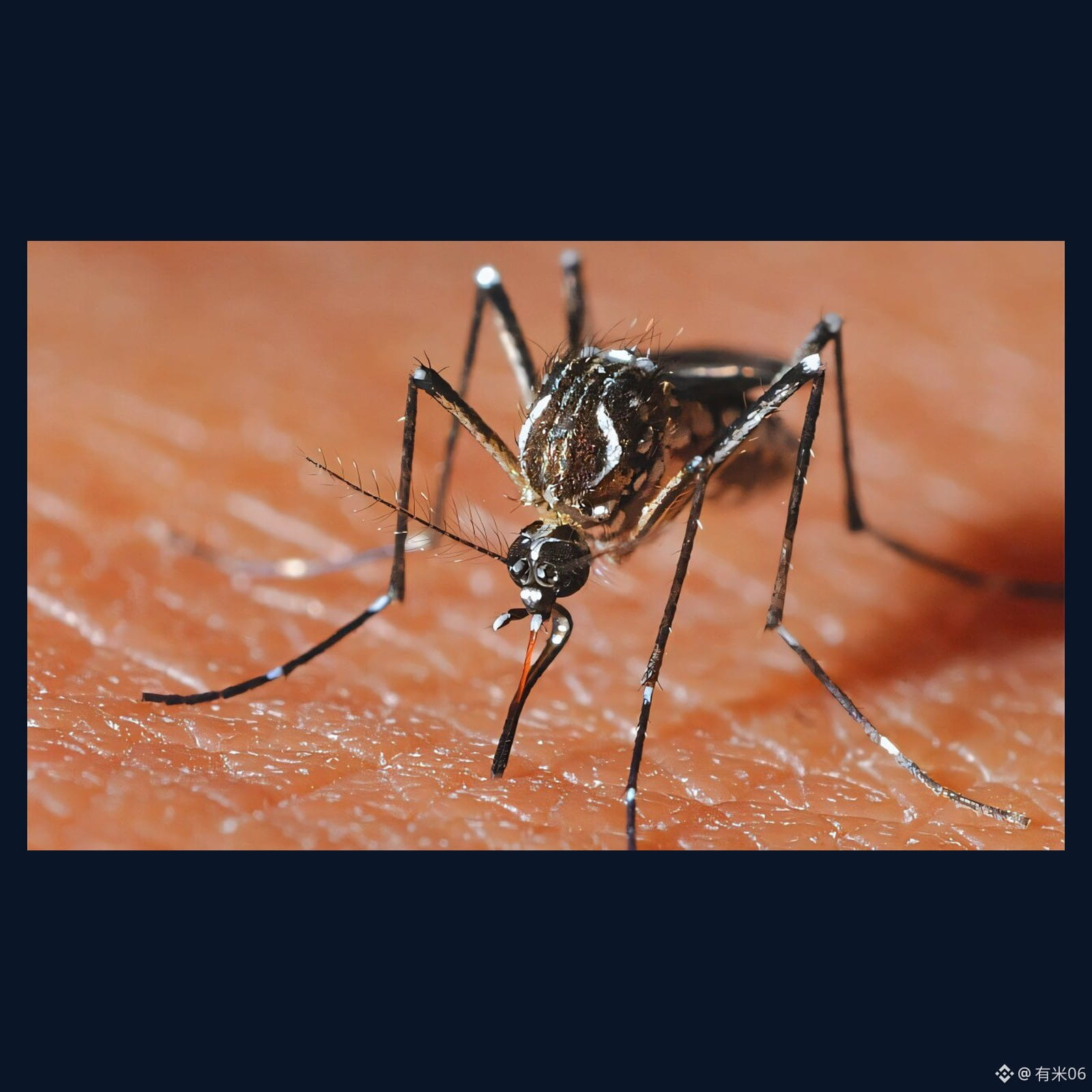
A female mosquito just emerging from its pupa actually starts out as a “vegetarian party”: it builds up energy by drinking flower nectar, only switching to blood a few days later—after mating.
A team from the Swedish University of Agricultural Sciences nailed down a scent receptor, Or117, in Current Biology—one that’s specifically tuned to smell camphor-like floral notes (the kind commonly found in plants like lantana).
Young, unmated female mosquitoes use it to locate flowers; as they get older and after mating, their sensitivity to camphor drops, and their urge to seek out flowers fizzles out too.
One receptor can flip the feeding pattern from “chasing flowers” to “chasing humans.” In the future, for mosquito repellents and attractants, it might be possible to work on this very switch.
Image: Aedes aegypti (photographed by Rickard Ignell)
#科学趣闻 #生物学 #mosquitoes
A team from the Swedish University of Agricultural Sciences nailed down a scent receptor, Or117, in Current Biology—one that’s specifically tuned to smell camphor-like floral notes (the kind commonly found in plants like lantana).
Young, unmated female mosquitoes use it to locate flowers; as they get older and after mating, their sensitivity to camphor drops, and their urge to seek out flowers fizzles out too.
One receptor can flip the feeding pattern from “chasing flowers” to “chasing humans.” In the future, for mosquito repellents and attractants, it might be possible to work on this very switch.
Image: Aedes aegypti (photographed by Rickard Ignell)
#科学趣闻 #生物学 #mosquitoes