
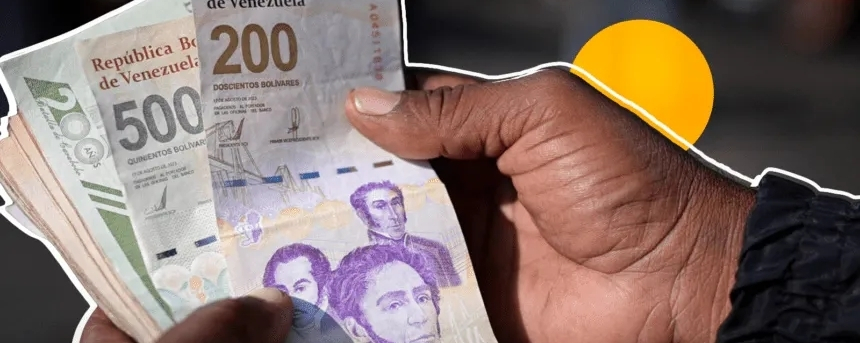

Economists explained what the advantages and risks of implementing the U.S. currency in the country would be.
The debate over the direction of Venezuela’s monetary system adds viewpoints among analysts, academic associations, and political actors, because the loss of value of the national currency and exchange-rate volatility have strengthened the informal use of foreign currencies in the domestic market, opening up discussion on the possibility of implementing full dollarization in the country.
In an interview with El Diario, the financial advisor and president of Titularizadora Activos TVZ, Guillermo García, explained the factors that have driven the everyday use of the U.S. currency in national territory.
He stated that dollarization is a decision made by the citizens themselves in response to the accelerated loss of trust in the bolívar.
“In the Venezuelan case, it is on the demand side, and it essentially comes down to the decision of individuals and companies to use the dollar due to the loss of confidence in the bolívar, in scenarios of persistent and increasing inflation and the volatility that has been seen,” the expert said.
With regard to proposals to apply a bimonetary model like Peru’s, García argued that this formula does not fit Venezuelan reality.
“The case of Peru is very particular. The president of the Central Bank of Peru is a well-respected economist and he has guaranteed that trust despite political instability—something that is not easily replicable in Venezuela,” he clarified.
Conditions for official adoption
Regarding the impact of making the North American currency official, the specialist indicated that the measure would make it possible to stabilize prices in the short term and reduce inflation to a single digit.
García added that eliminating exchange-rate risk would create a favorable environment for attracting investment and for the return of Venezuelan capital from abroad.
“One of the benefits of a dollarization scheme is that it achieves—short term—monetary stability, including a drastic reduction of inflation to a single digit. The risk of devaluation of the bolívar and uncertainty for investing are eliminated,” the expert emphasized.
To make this process feasible, the analyst outlined a roadmap focused on placing assets on the Caracas Stock Exchange.
In that regard, he suggested that the State could issue shares in joint companies of Petróleos de Venezuela (PDVSA) to attract private investment and use those securities to progressively settle labor debts of the public sector.
“I have raised the possibility of placing 10% or 20% of the shares that PDVSA has in joint companies in the national securities market, on the Caracas Stock Exchange, including the possibility of making payments on labor liabilities using these shares,” García specified.
Scope of dollarization on wages
In the context of discussions on monetary policy, economist Asdrúbal Oliveros clarified that the full adoption of the U.S. currency is not a definitive decision in the current situation.
However, he acknowledged that the debate remains active among economic analysts and did not rule out that its implementation could be evaluated through different schemes.
“It’s not yet a decision that’s been made; however, it cannot be denied that it is under discussion and something that could happen in the medium term. There is no single dollarization scheme that can be applied in the country; it’s not only like what happened in Ecuador or Panama—there could also be a partial process,” Oliveros said in his Instagram account on September 9.
Likewise, the business consultant emphasized that implementing the dollar as an official currency will not automatically increase people’s salaries.
“The big advantage of dollarization is the ability to reduce inflation quickly, but it is not a magic totem that increases wages and salaries. As long as we have productivity problems, we won’t attract investment and different sectors won’t develop; salaries in Venezuela will be low,” added the economist.
The position of the National Academy of Economic Sciences
For its part, the National Academy of Economic Sciences (ANCE) took a position on the debate through a statement on September 7 and rejected the abrupt replacement of the national monetary sign.
The institution warned that opting for full dollarization would mean giving up key tools of economic policy and suggested focusing on a structural adjustment program to stabilize the system.
“The challenge is to confront the reality that the current context must change and be able to select and carry out the changes most beneficial to Venezuelan society,” ANCE said.
In its report, signed by academics Urbi Garay Lluch and Roberto Briceño-León, the academy analyzed the costs and limitations that would be involved in doing away with the local currency:
– Loss of monetary autonomy: the national economy would be exposed to variations in the interest rates set by the U.S. Federal Reserve, with no room to maneuver to carry out its own adjustments in response to external shocks.
– Impact on competitiveness: the permanent fixing of the exchange rate would affect domestic producers in relation to imports and reduce the potential for diversification of the productive apparatus.
– Cessation of BCV functions: the Central Bank of Venezuela (BCV) would lose its ability to act as a lender of last resort in liquidity crises and would stop receiving revenues derived from seigniorage.
– Risk of recessionary adjustments: without the ability to devalue the currency, economic imbalances would need to be absorbed through a reduction in GDP, a drop in real wages, or an increase in unemployment.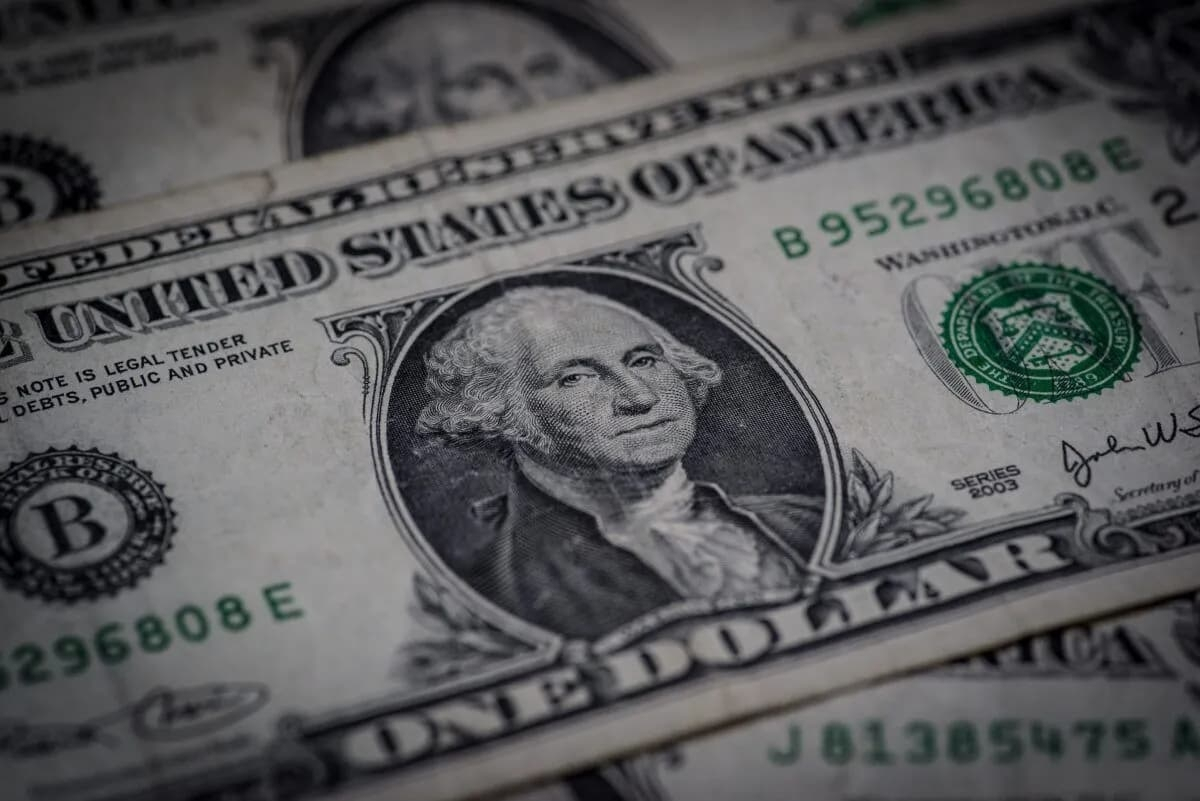
Parliamentary initiative
On the political front, deputy and former presidential candidate Antonio Ecarri reported on his efforts in the United States with economist Steve Hanke, with the aim of working on a formal strategy that would allow adopting the U.S. currency as a mechanism to control inflation in the country.
“Our goal is clear: stop inflation once and for all to protect wages, recover credit, and attract investment!” Ecarri wrote on his X account on September 15.
The deputy recalled that since 2017 he has argued that dollarization is an alternative to fight inflation in Venezuela and said he would work to promote a national debate to take the proposal “from debate to law.”
He also said that Venezuela is already “dollarized in practice,” but noted that workers, teachers, nurses, and pensioners who receive their incomes in bolívars continue to be exposed to the loss of value of the currency.
The parliamentarian’s proposal led to institutional measures within the National Assembly.
In August, the head of the Legislative Branch, Jorge Rodríguez, announced Ecarri’s removal from the presidency of the Parliamentary Friendship Group Venezuela–United States and the opening of a disciplinary procedure to assess responsibilities, due to his dollarization proposal.
#DolarizacionDigital #venezuela #dollar #Bolivares #dolar $BTC $CL