
币圈小贝贝
82 Posts

币圈小贝贝
Report
Block User
6年市场经验,公众号.比特柠檬,记录市场真实逻辑,研究下一步会去哪
12 Following
1.6K+ Followers
678 Liked
Posts
All
Live
·
--
#比特币突破8万美元大关
This news is actually a bit strange.. Bitcoin is almost touching 83,000, but the thing that’s really lifting it has nothing to do with the crypto circle at all..
Most people see “BTC is up again.” In the past 24 hours it’s up by roughly 2%, so there doesn’t seem to be much to get excited about..
Group chat: [领取每日策略](https://app.binance.com/uni-qr/6d5gRrvm)
But if you pull up the arrangement of all assets over that night, the focus isn’t really on Bitcoin..
What’s moving is crude oil.. Brent crude has now fallen for the fourth consecutive trading day, marking the longest streak of declines in three months.. When oil loosens, inflation expectations ease as well, and that heaviest stone weighing on risk assets gets lighter.. So first respond are Nasdaq futures and S&P futures, and then the money follows liquidity outward, spilling over into crypto..
And this is where things start to look different..
Now look at the structure.. What’s rising the most isn’t BTC at all—Monero jumped 13% overnight, DOGE added 5%, and XRP rose 4%.. Ethereum, SOL, and HYPE are all up around 3%, while Bitcoin, the largest by market cap, only got the average return..
This structure actually points to the issue.. This move isn’t driven by a “Bitcoin narrative” leading the charge; it’s external liquidity flowing back, with money being scattered toward places with higher beta.. If the money were driven by circulation within crypto, Bitcoin should be running ahead, not being left behind by a bunch of smaller coins..
What’s even more interesting is the timing.. In the past few days, there have been signs of cooling in geopolitics. The market is already pricing in that supply disruptions in the Middle East will ease, meaning the foundation of this rally is essentially “uncertainty decreasing.”..
But here’s the problem.. This foundation is thin..
The oil price decline itself is built on the assumption that “the cooling will continue.” If that assumption fails, or if any unexpected event shows up in this week’s macro window, the first thing to get pulled back will be those high-beta assets that have been rising the most—rather than Bitcoin..
So what’s really worth watching isn’t whether Bitcoin can hold above 83,000.. It’s whether this round of oil price pullback will stop, and whether the money is rotating within crypto or being poured in from outside.. These two scenarios lead to completely different paths afterward..
That’s where it gets a little intriguing..
#比特币突破8万美元大关
#比特币突破8万美元大关
This news is actually a bit strange.. Bitcoin is almost touching 83,000, but the thing that’s really lifting it has nothing to do with the crypto circle at all..
Most people see “BTC is up again.” In the past 24 hours it’s up by roughly 2%, so there doesn’t seem to be much to get excited about..
Group chat: 领取每日策略
But if you pull up the arrangement of all assets over that night, the focus isn’t really on Bitcoin..
What’s moving is crude oil.. Brent crude has now fallen for the fourth consecutive trading day, marking the longest streak of declines in three months.. When oil loosens, inflation expectations ease as well, and that heaviest stone weighing on risk assets gets lighter.. So first respond are Nasdaq futures and S&P futures, and then the money follows liquidity outward, spilling over into crypto..
And this is where things start to look different..
Now look at the structure.. What’s rising the most isn’t BTC at all—Monero jumped 13% overnight, DOGE added 5%, and XRP rose 4%.. Ethereum, SOL, and HYPE are all up around 3%, while Bitcoin, the largest by market cap, only got the average return..
This structure actually points to the issue.. This move isn’t driven by a “Bitcoin narrative” leading the charge; it’s external liquidity flowing back, with money being scattered toward places with higher beta.. If the money were driven by circulation within crypto, Bitcoin should be running ahead, not being left behind by a bunch of smaller coins..
What’s even more interesting is the timing.. In the past few days, there have been signs of cooling in geopolitics. The market is already pricing in that supply disruptions in the Middle East will ease, meaning the foundation of this rally is essentially “uncertainty decreasing.”..
But here’s the problem.. This foundation is thin..
The oil price decline itself is built on the assumption that “the cooling will continue.” If that assumption fails, or if any unexpected event shows up in this week’s macro window, the first thing to get pulled back will be those high-beta assets that have been rising the most—rather than Bitcoin..
So what’s really worth watching isn’t whether Bitcoin can hold above 83,000.. It’s whether this round of oil price pullback will stop, and whether the money is rotating within crypto or being poured in from outside.. These two scenarios lead to completely different paths afterward..
That’s where it gets a little intriguing..
#比特币突破8万美元大关
This news is actually a bit strange.. Bitcoin is almost touching 83,000, but the thing that’s really lifting it has nothing to do with the crypto circle at all..
Most people see “BTC is up again.” In the past 24 hours it’s up by roughly 2%, so there doesn’t seem to be much to get excited about..
Group chat: 领取每日策略
But if you pull up the arrangement of all assets over that night, the focus isn’t really on Bitcoin..
What’s moving is crude oil.. Brent crude has now fallen for the fourth consecutive trading day, marking the longest streak of declines in three months.. When oil loosens, inflation expectations ease as well, and that heaviest stone weighing on risk assets gets lighter.. So first respond are Nasdaq futures and S&P futures, and then the money follows liquidity outward, spilling over into crypto..
And this is where things start to look different..
Now look at the structure.. What’s rising the most isn’t BTC at all—Monero jumped 13% overnight, DOGE added 5%, and XRP rose 4%.. Ethereum, SOL, and HYPE are all up around 3%, while Bitcoin, the largest by market cap, only got the average return..
This structure actually points to the issue.. This move isn’t driven by a “Bitcoin narrative” leading the charge; it’s external liquidity flowing back, with money being scattered toward places with higher beta.. If the money were driven by circulation within crypto, Bitcoin should be running ahead, not being left behind by a bunch of smaller coins..
What’s even more interesting is the timing.. In the past few days, there have been signs of cooling in geopolitics. The market is already pricing in that supply disruptions in the Middle East will ease, meaning the foundation of this rally is essentially “uncertainty decreasing.”..
But here’s the problem.. This foundation is thin..
The oil price decline itself is built on the assumption that “the cooling will continue.” If that assumption fails, or if any unexpected event shows up in this week’s macro window, the first thing to get pulled back will be those high-beta assets that have been rising the most—rather than Bitcoin..
So what’s really worth watching isn’t whether Bitcoin can hold above 83,000.. It’s whether this round of oil price pullback will stop, and whether the money is rotating within crypto or being poured in from outside.. These two scenarios lead to completely different paths afterward..
That’s where it gets a little intriguing..
#比特币突破8万美元大关
3.5k
·
--
In this China-US meeting, there’s one detail that’s actually worth paying more attention to than the trade negotiations.
U.S. Treasury Secretary Bessent said the U.S. has proposed establishing a China-U.S. AI incident notification mechanism, focusing on AI incidents that could escalate to the level of national security. The aim is for both sides to increase communication and transparency on shared risks and potential threats.
Group chat: [加入公开粉丝群](https://app.binance.com/uni-qr/6d5gRrvm)
In simple terms, if a major AI safety risk arises during the development of AI in the future, both sides may set up a more direct communication channel—rather than waiting until after something happens to start discussing it.
The significance behind this is actually considerable.
Right now, both the U.S. and China are core driving forces in global AI development. The AI race is no longer just competition between models and computing power; it also involves chips, data, infrastructure, the military, and national security.
So this proposal for an AI dialogue mechanism is more like adding a “risk management and control” framework on top of competition.
That said, at this stage we still can’t interpret it as meaning both sides have already reached a complete AI regulation agreement.
Reports show that both sides only agreed to continue setting up an AI dialogue and to discuss notification mechanisms related to national security matters. China’s response to the specific proposal is currently unclear, and further negotiations are still needed.
Moreover, this round of talks also covers tariffs, rare earths, and trade in non-sensitive goods, indicating that AI is already tied into the broader China-US economic and technological relationship.
For the market, this shift is also worth watching.
Because AI is moving from being purely a technology investment theme into the realms of national security and industrial policy. In the future, chips, computing power, and even AI infrastructure may all be affected by policy changes.
And the flow of funding within the AI industry may further influence tech stocks, U.S. dollar liquidity, and the valuation logic for risk assets.
What’s really worth watching now isn’t just whether China and the U.S. will continue talks on AI, but whether this notification mechanism can ultimately move from “proposing an idea” to a genuinely operational framework 👀 #BTC #ETH
In this China-US meeting, there’s one detail that’s actually worth paying more attention to than the trade negotiations.
U.S. Treasury Secretary Bessent said the U.S. has proposed establishing a China-U.S. AI incident notification mechanism, focusing on AI incidents that could escalate to the level of national security. The aim is for both sides to increase communication and transparency on shared risks and potential threats.
Group chat: 加入公开粉丝群
In simple terms, if a major AI safety risk arises during the development of AI in the future, both sides may set up a more direct communication channel—rather than waiting until after something happens to start discussing it.
The significance behind this is actually considerable.
Right now, both the U.S. and China are core driving forces in global AI development. The AI race is no longer just competition between models and computing power; it also involves chips, data, infrastructure, the military, and national security.
So this proposal for an AI dialogue mechanism is more like adding a “risk management and control” framework on top of competition.
That said, at this stage we still can’t interpret it as meaning both sides have already reached a complete AI regulation agreement.
Reports show that both sides only agreed to continue setting up an AI dialogue and to discuss notification mechanisms related to national security matters. China’s response to the specific proposal is currently unclear, and further negotiations are still needed.
Moreover, this round of talks also covers tariffs, rare earths, and trade in non-sensitive goods, indicating that AI is already tied into the broader China-US economic and technological relationship.
For the market, this shift is also worth watching.
Because AI is moving from being purely a technology investment theme into the realms of national security and industrial policy. In the future, chips, computing power, and even AI infrastructure may all be affected by policy changes.
And the flow of funding within the AI industry may further influence tech stocks, U.S. dollar liquidity, and the valuation logic for risk assets.
What’s really worth watching now isn’t just whether China and the U.S. will continue talks on AI, but whether this notification mechanism can ultimately move from “proposing an idea” to a genuinely operational framework 👀 #BTC #ETH
U.S. Treasury Secretary Bessent said the U.S. has proposed establishing a China-U.S. AI incident notification mechanism, focusing on AI incidents that could escalate to the level of national security. The aim is for both sides to increase communication and transparency on shared risks and potential threats.
Group chat: 加入公开粉丝群
In simple terms, if a major AI safety risk arises during the development of AI in the future, both sides may set up a more direct communication channel—rather than waiting until after something happens to start discussing it.
The significance behind this is actually considerable.
Right now, both the U.S. and China are core driving forces in global AI development. The AI race is no longer just competition between models and computing power; it also involves chips, data, infrastructure, the military, and national security.
So this proposal for an AI dialogue mechanism is more like adding a “risk management and control” framework on top of competition.
That said, at this stage we still can’t interpret it as meaning both sides have already reached a complete AI regulation agreement.
Reports show that both sides only agreed to continue setting up an AI dialogue and to discuss notification mechanisms related to national security matters. China’s response to the specific proposal is currently unclear, and further negotiations are still needed.
Moreover, this round of talks also covers tariffs, rare earths, and trade in non-sensitive goods, indicating that AI is already tied into the broader China-US economic and technological relationship.
For the market, this shift is also worth watching.
Because AI is moving from being purely a technology investment theme into the realms of national security and industrial policy. In the future, chips, computing power, and even AI infrastructure may all be affected by policy changes.
And the flow of funding within the AI industry may further influence tech stocks, U.S. dollar liquidity, and the valuation logic for risk assets.
What’s really worth watching now isn’t just whether China and the U.S. will continue talks on AI, but whether this notification mechanism can ultimately move from “proposing an idea” to a genuinely operational framework 👀 #BTC #ETH

334
·
--
Verified
Another important time point for Ethereum has been set.
The “Glamsterdam” upgrade plan will land on the Sepolia testnet on October 6 for testing—this is also one of the more important steps in this year’s Ethereum scaling roadmap.
Fan group: [加入聊天室](https://app.binance.com/uni-qr/6d5gRrvm)
October 6 is only for testnet nodes and does not mean the mainnet will be officially upgraded on October 6.
Currently, Ethereum’s official roadmap still targets the Glamsterdam mainnet for Q4 2026; the exact date hasn’t been finalized yet. The development team is also continuing Devnet testing and client adaptation.
What’s truly worth paying attention to with this upgrade is that it’s not just a simple increase in transaction throughput. It involves re-optimizing Ethereum L1’s block processing approach from the ground up.
One key change is ePBS—pushing responsibilities related to block proposal and block building deeper into the protocol layer. This reduces reliance on external relays and additional trust mechanisms, while paving the way for larger block capacity and subsequent parallel processing.
In addition, Glamsterdam also touches multiple areas such as state data costs, transaction Gas, and node synchronization. The goal is to increase Ethereum’s capacity without letting hardware pressure on nodes run out of control.
However, for now, you can’t directly interpret this as “Upgrade confirmed = ETH will rise immediately.”
Because even in the testing phase, there are still some technical issues. The development team needs to continue validating compatibility across different clients and ensuring network stability. The Sepolia plan for October 6 also depends on the results of subsequent tests.
So for ETH, in the short term the market may focus on upgrade expectations. Over the long term, what really matters is whether this upgrade can be rolled out smoothly—and whether it can truly unlock Ethereum’s L1 scaling capacity in the future.
If later testing goes smoothly, market attention may shift back to Ethereum’s throughput, Gas costs, the L2 ecosystem, and the overall network demand.
Technical upgrades are a process, not a date.
October 6 can be treated first as a viewing window. What’s truly important is the test results and the subsequent mainnet progress 👀 #ETH
Another important time point for Ethereum has been set.
The “Glamsterdam” upgrade plan will land on the Sepolia testnet on October 6 for testing—this is also one of the more important steps in this year’s Ethereum scaling roadmap.
Fan group: 加入聊天室
October 6 is only for testnet nodes and does not mean the mainnet will be officially upgraded on October 6.
Currently, Ethereum’s official roadmap still targets the Glamsterdam mainnet for Q4 2026; the exact date hasn’t been finalized yet. The development team is also continuing Devnet testing and client adaptation.
What’s truly worth paying attention to with this upgrade is that it’s not just a simple increase in transaction throughput. It involves re-optimizing Ethereum L1’s block processing approach from the ground up.
One key change is ePBS—pushing responsibilities related to block proposal and block building deeper into the protocol layer. This reduces reliance on external relays and additional trust mechanisms, while paving the way for larger block capacity and subsequent parallel processing.
In addition, Glamsterdam also touches multiple areas such as state data costs, transaction Gas, and node synchronization. The goal is to increase Ethereum’s capacity without letting hardware pressure on nodes run out of control.
However, for now, you can’t directly interpret this as “Upgrade confirmed = ETH will rise immediately.”
Because even in the testing phase, there are still some technical issues. The development team needs to continue validating compatibility across different clients and ensuring network stability. The Sepolia plan for October 6 also depends on the results of subsequent tests.
So for ETH, in the short term the market may focus on upgrade expectations. Over the long term, what really matters is whether this upgrade can be rolled out smoothly—and whether it can truly unlock Ethereum’s L1 scaling capacity in the future.
If later testing goes smoothly, market attention may shift back to Ethereum’s throughput, Gas costs, the L2 ecosystem, and the overall network demand.
Technical upgrades are a process, not a date.
October 6 can be treated first as a viewing window. What’s truly important is the test results and the subsequent mainnet progress 👀 #ETH
The “Glamsterdam” upgrade plan will land on the Sepolia testnet on October 6 for testing—this is also one of the more important steps in this year’s Ethereum scaling roadmap.
Fan group: 加入聊天室
October 6 is only for testnet nodes and does not mean the mainnet will be officially upgraded on October 6.
Currently, Ethereum’s official roadmap still targets the Glamsterdam mainnet for Q4 2026; the exact date hasn’t been finalized yet. The development team is also continuing Devnet testing and client adaptation.
What’s truly worth paying attention to with this upgrade is that it’s not just a simple increase in transaction throughput. It involves re-optimizing Ethereum L1’s block processing approach from the ground up.
One key change is ePBS—pushing responsibilities related to block proposal and block building deeper into the protocol layer. This reduces reliance on external relays and additional trust mechanisms, while paving the way for larger block capacity and subsequent parallel processing.
In addition, Glamsterdam also touches multiple areas such as state data costs, transaction Gas, and node synchronization. The goal is to increase Ethereum’s capacity without letting hardware pressure on nodes run out of control.
However, for now, you can’t directly interpret this as “Upgrade confirmed = ETH will rise immediately.”
Because even in the testing phase, there are still some technical issues. The development team needs to continue validating compatibility across different clients and ensuring network stability. The Sepolia plan for October 6 also depends on the results of subsequent tests.
So for ETH, in the short term the market may focus on upgrade expectations. Over the long term, what really matters is whether this upgrade can be rolled out smoothly—and whether it can truly unlock Ethereum’s L1 scaling capacity in the future.
If later testing goes smoothly, market attention may shift back to Ethereum’s throughput, Gas costs, the L2 ecosystem, and the overall network demand.
Technical upgrades are a process, not a date.
October 6 can be treated first as a viewing window. What’s truly important is the test results and the subsequent mainnet progress 👀 #ETH

3
2.2k
·
--
This Bank of Japan rate hike may be even more worth paying attention to than simply looking at the “25 basis points”
On September 18, the Bank of Japan raised its policy rate from 1% to 1.25%, the highest level in 31 years. And this hike was approved 7 to 2, meaning Japan is further moving away from the long period of ultra-low interest rates.
Trending news: [领取策略](https://app.binance.com/uni-qr/6d5gRrvm)
The signals released by Kazuo Ueda are not exactly mild.
He said that if Japan faces a clear risk of inflation overshooting, consecutive rate hikes—or even larger hikes—cannot be ruled out. However, the specific pace will still depend on the subsequent inflation, wage growth, energy prices, and changes in the financial environment.
In the past, a lot of capital was accustomed to using low-cost yen financing, and then investing in overseas stocks, bonds, and various risk assets. This is what the market often refers to as the yen carry trade.
Now that Japan’s interest rates continue to rise, the cost of this kind of financing is starting to increase. If the yen also strengthens at the same time, some carry-trade funding may reassess its positions in overseas assets, and even trigger a return of funds to Japan.
For “big pie” and “small pie,” this logic is also worth keeping an eye on.
The U.S. Federal Reserve has just raised rates, and the Bank of Japan is now continuing to tighten. The global interest-rate environment for major central banks is changing. If the yen carry trade further contracts later on, liquidity in risk assets may be affected.
But for now, it also can’t be simply understood as “Japan rate hikes = big pie must fall.”
The Bank of Japan itself has also emphasized that it does not want the financial environment to tighten too quickly, nor will it mechanically adjust policy in order to control the exchange rate. So what is truly worth watching is the pace of subsequent rate hikes, and whether the yen and global capital flows will show more obvious changes.
Next, there is an important variable for the market: whether the Bank of Japan will continue pushing the rate to 1.5% or even higher.
If Japan really enters a sustained rate-hiking phase, the impact may not be limited to Japan’s economy—it could also affect the financing costs of global carry-trade funds and risk-asset capital.
That’s the real part of this Japan rate hike that deserves attention.
Every day, follow the market for a round—see how the trends change, how money moves, and where opportunities might be hiding. #BTC
This Bank of Japan rate hike may be even more worth paying attention to than simply looking at the “25 basis points”
On September 18, the Bank of Japan raised its policy rate from 1% to 1.25%, the highest level in 31 years. And this hike was approved 7 to 2, meaning Japan is further moving away from the long period of ultra-low interest rates.
Trending news: 领取策略
The signals released by Kazuo Ueda are not exactly mild.
He said that if Japan faces a clear risk of inflation overshooting, consecutive rate hikes—or even larger hikes—cannot be ruled out. However, the specific pace will still depend on the subsequent inflation, wage growth, energy prices, and changes in the financial environment.
In the past, a lot of capital was accustomed to using low-cost yen financing, and then investing in overseas stocks, bonds, and various risk assets. This is what the market often refers to as the yen carry trade.
Now that Japan’s interest rates continue to rise, the cost of this kind of financing is starting to increase. If the yen also strengthens at the same time, some carry-trade funding may reassess its positions in overseas assets, and even trigger a return of funds to Japan.
For “big pie” and “small pie,” this logic is also worth keeping an eye on.
The U.S. Federal Reserve has just raised rates, and the Bank of Japan is now continuing to tighten. The global interest-rate environment for major central banks is changing. If the yen carry trade further contracts later on, liquidity in risk assets may be affected.
But for now, it also can’t be simply understood as “Japan rate hikes = big pie must fall.”
The Bank of Japan itself has also emphasized that it does not want the financial environment to tighten too quickly, nor will it mechanically adjust policy in order to control the exchange rate. So what is truly worth watching is the pace of subsequent rate hikes, and whether the yen and global capital flows will show more obvious changes.
Next, there is an important variable for the market: whether the Bank of Japan will continue pushing the rate to 1.5% or even higher.
If Japan really enters a sustained rate-hiking phase, the impact may not be limited to Japan’s economy—it could also affect the financing costs of global carry-trade funds and risk-asset capital.
That’s the real part of this Japan rate hike that deserves attention.
Every day, follow the market for a round—see how the trends change, how money moves, and where opportunities might be hiding. #BTC
On September 18, the Bank of Japan raised its policy rate from 1% to 1.25%, the highest level in 31 years. And this hike was approved 7 to 2, meaning Japan is further moving away from the long period of ultra-low interest rates.
Trending news: 领取策略
The signals released by Kazuo Ueda are not exactly mild.
He said that if Japan faces a clear risk of inflation overshooting, consecutive rate hikes—or even larger hikes—cannot be ruled out. However, the specific pace will still depend on the subsequent inflation, wage growth, energy prices, and changes in the financial environment.
In the past, a lot of capital was accustomed to using low-cost yen financing, and then investing in overseas stocks, bonds, and various risk assets. This is what the market often refers to as the yen carry trade.
Now that Japan’s interest rates continue to rise, the cost of this kind of financing is starting to increase. If the yen also strengthens at the same time, some carry-trade funding may reassess its positions in overseas assets, and even trigger a return of funds to Japan.
For “big pie” and “small pie,” this logic is also worth keeping an eye on.
The U.S. Federal Reserve has just raised rates, and the Bank of Japan is now continuing to tighten. The global interest-rate environment for major central banks is changing. If the yen carry trade further contracts later on, liquidity in risk assets may be affected.
But for now, it also can’t be simply understood as “Japan rate hikes = big pie must fall.”
The Bank of Japan itself has also emphasized that it does not want the financial environment to tighten too quickly, nor will it mechanically adjust policy in order to control the exchange rate. So what is truly worth watching is the pace of subsequent rate hikes, and whether the yen and global capital flows will show more obvious changes.
Next, there is an important variable for the market: whether the Bank of Japan will continue pushing the rate to 1.5% or even higher.
If Japan really enters a sustained rate-hiking phase, the impact may not be limited to Japan’s economy—it could also affect the financing costs of global carry-trade funds and risk-asset capital.
That’s the real part of this Japan rate hike that deserves attention.
Every day, follow the market for a round—see how the trends change, how money moves, and where opportunities might be hiding. #BTC

955
·
--
$ETH $ZEC $DOGE $SHIB
In the past few days, the fake/duplicate coin market has a fairly clear characteristic.
It’s not that there’s no momentum—rather, many coins are stuck around key levels. To move stronger, they need to break through; to turn weaker, they first need to break below support. So right now is actually a stage where big volatility is more likely.
Chat room 🍀[看懂各大新闻](https://app.binance.com/uni-qr/6d5gRrvm)
First, look at 2“bǐng”/Binance?—ETH is currently consolidating around $2,450. $2,400 is an important support in the short term. The main resistance zone is above $2,500–$2,560.
If it can regain and hold above $2,500, then after that it can test $2,560—the chart would have a chance to reopen room for upside. Conversely, if $2,400 keeps failing, the market needs to watch for a pullback to even lower levels. ETH’s core right now is still consolidation, waiting for a directional breakout.
ZEC’s走势 (price action) is clearly much stronger. After breaking above $1,250–$1,300 earlier, it continued pushing up to around $1,376. Now the real psychological level has become $1,400.
If it continues to break out with increased volume here, it may enter a new phase of price discovery—but the issue is also obvious: the prior rally was too fast, and the RSI is already nearing a relatively hot/excessive zone. So after the breakout, you also need to guard against sharp oscillations.
DOGE isn’t as strong. Recently it’s been capped by $0.09–$0.095, and it’s currently around $0.083.
For the short term, first watch whether $0.081–$0.082 can hold. Only if it regains $0.084–$0.085 will there be a chance to challenge above $0.09 again. Otherwise, if support breaks, the earlier upside structure will weaken noticeably.
Now look at SHIB. Currently the price is around $0.0000051. $0.0000050–$0.0000051 is an important support. Above that, around $0.0000055, is the most obvious breakout level right now.
So these coins all share a common point.
The market has already moved to a critical area. What’s really worth watching isn’t how many percentage points a coin gained today, but whether it can turn key resistance into support—or whether key support ultimately gets broken down.
Next, if the market shows a volume-backed breakout, the volatility of these coins may increase significantly.
Every day the market brings new developments. I’ll help you filter out the truly meaningful signals, and then we’ll look at what might happen next 👀 #zec #SHIN
$ETH $ZEC $DOGE $SHIB
In the past few days, the fake/duplicate coin market has a fairly clear characteristic.
It’s not that there’s no momentum—rather, many coins are stuck around key levels. To move stronger, they need to break through; to turn weaker, they first need to break below support. So right now is actually a stage where big volatility is more likely.
Chat room 🍀看懂各大新闻
First, look at 2“bǐng”/Binance?—ETH is currently consolidating around $2,450. $2,400 is an important support in the short term. The main resistance zone is above $2,500–$2,560.
If it can regain and hold above $2,500, then after that it can test $2,560—the chart would have a chance to reopen room for upside. Conversely, if $2,400 keeps failing, the market needs to watch for a pullback to even lower levels. ETH’s core right now is still consolidation, waiting for a directional breakout.
ZEC’s走势 (price action) is clearly much stronger. After breaking above $1,250–$1,300 earlier, it continued pushing up to around $1,376. Now the real psychological level has become $1,400.
If it continues to break out with increased volume here, it may enter a new phase of price discovery—but the issue is also obvious: the prior rally was too fast, and the RSI is already nearing a relatively hot/excessive zone. So after the breakout, you also need to guard against sharp oscillations.
DOGE isn’t as strong. Recently it’s been capped by $0.09–$0.095, and it’s currently around $0.083.
For the short term, first watch whether $0.081–$0.082 can hold. Only if it regains $0.084–$0.085 will there be a chance to challenge above $0.09 again. Otherwise, if support breaks, the earlier upside structure will weaken noticeably.
Now look at SHIB. Currently the price is around $0.0000051. $0.0000050–$0.0000051 is an important support. Above that, around $0.0000055, is the most obvious breakout level right now.
So these coins all share a common point.
The market has already moved to a critical area. What’s really worth watching isn’t how many percentage points a coin gained today, but whether it can turn key resistance into support—or whether key support ultimately gets broken down.
Next, if the market shows a volume-backed breakout, the volatility of these coins may increase significantly.
Every day the market brings new developments. I’ll help you filter out the truly meaningful signals, and then we’ll look at what might happen next 👀 #zec #SHIN
In the past few days, the fake/duplicate coin market has a fairly clear characteristic.
It’s not that there’s no momentum—rather, many coins are stuck around key levels. To move stronger, they need to break through; to turn weaker, they first need to break below support. So right now is actually a stage where big volatility is more likely.
Chat room 🍀看懂各大新闻
First, look at 2“bǐng”/Binance?—ETH is currently consolidating around $2,450. $2,400 is an important support in the short term. The main resistance zone is above $2,500–$2,560.
If it can regain and hold above $2,500, then after that it can test $2,560—the chart would have a chance to reopen room for upside. Conversely, if $2,400 keeps failing, the market needs to watch for a pullback to even lower levels. ETH’s core right now is still consolidation, waiting for a directional breakout.
ZEC’s走势 (price action) is clearly much stronger. After breaking above $1,250–$1,300 earlier, it continued pushing up to around $1,376. Now the real psychological level has become $1,400.
If it continues to break out with increased volume here, it may enter a new phase of price discovery—but the issue is also obvious: the prior rally was too fast, and the RSI is already nearing a relatively hot/excessive zone. So after the breakout, you also need to guard against sharp oscillations.
DOGE isn’t as strong. Recently it’s been capped by $0.09–$0.095, and it’s currently around $0.083.
For the short term, first watch whether $0.081–$0.082 can hold. Only if it regains $0.084–$0.085 will there be a chance to challenge above $0.09 again. Otherwise, if support breaks, the earlier upside structure will weaken noticeably.
Now look at SHIB. Currently the price is around $0.0000051. $0.0000050–$0.0000051 is an important support. Above that, around $0.0000055, is the most obvious breakout level right now.
So these coins all share a common point.
The market has already moved to a critical area. What’s really worth watching isn’t how many percentage points a coin gained today, but whether it can turn key resistance into support—or whether key support ultimately gets broken down.
Next, if the market shows a volume-backed breakout, the volatility of these coins may increase significantly.
Every day the market brings new developments. I’ll help you filter out the truly meaningful signals, and then we’ll look at what might happen next 👀 #zec #SHIN

1
463
·
--
Verified
The Bank of Japan’s latest rate hike has largely already been priced in by the market in advance—
At present, the market basically has a 25-basis-point hike in September priced in. If the policy rate rises from 1% to 1.25%, it would reach the highest level in 31 years. So what’s really worth watching isn’t whether they hike or not, but what the Bank of Japan plans to do after the hike.
Breaking news 🤖 [每日行情实时策略](https://app.binance.com/uni-qr/6d5gRrvm)
If, for example, they only follow market expectations and raise rates by 25 basis points, but Ueda and Kazuo don’t, in their subsequent remarks, give a clearer signal that further hikes are coming, then this rate hike could actually trigger a “good news, sell the fact” scenario.
Recently, the yen has been clearly influenced by policy expectations. Meanwhile, the U.S. has just entered a new hiking cycle, and the interest rate differential between the U.S. and Japan remains large. If the Bank of Japan’s pace of further hikes is relatively slow, the yen could still face pressure.
On the other hand, if the Bank of Japan starts emphasizing inflation risks, a weaker yen, and import costs—and hints that tightening will continue—then what the market is trading won’t be a single rate hike. Instead, it would be that Japan’s entire monetary policy is moving into a faster normalization cycle.
This is also something the global markets should pay attention to.
Because the yen has long been an important funding currency for global capital. If Japanese rates keep moving higher, some investors’ borrowing costs will rise, and it could even affect carry trades and the flow of capital into global risk assets.
For “the big picture” and “the next picture,” this impact usually doesn’t show up directly on a single candlestick chart, but rather filters through gradually via the U.S. dollar, global liquidity, and risk appetite.
So what the market should truly focus on this time isn’t the 25 basis points themselves.
It’s the few key sentences after the hike—what they’re telling the market: “Let’s see after one hike,” or are they preparing to open the space for another round of sustained rate hikes? 👀
The market changes every day. Let me help you filter out the signals that truly matter, and then see what might happen next. 👀 #BTC #ETH
The Bank of Japan’s latest rate hike has largely already been priced in by the market in advance—
At present, the market basically has a 25-basis-point hike in September priced in. If the policy rate rises from 1% to 1.25%, it would reach the highest level in 31 years. So what’s really worth watching isn’t whether they hike or not, but what the Bank of Japan plans to do after the hike.
Breaking news 🤖 每日行情实时策略
If, for example, they only follow market expectations and raise rates by 25 basis points, but Ueda and Kazuo don’t, in their subsequent remarks, give a clearer signal that further hikes are coming, then this rate hike could actually trigger a “good news, sell the fact” scenario.
Recently, the yen has been clearly influenced by policy expectations. Meanwhile, the U.S. has just entered a new hiking cycle, and the interest rate differential between the U.S. and Japan remains large. If the Bank of Japan’s pace of further hikes is relatively slow, the yen could still face pressure.
On the other hand, if the Bank of Japan starts emphasizing inflation risks, a weaker yen, and import costs—and hints that tightening will continue—then what the market is trading won’t be a single rate hike. Instead, it would be that Japan’s entire monetary policy is moving into a faster normalization cycle.
This is also something the global markets should pay attention to.
Because the yen has long been an important funding currency for global capital. If Japanese rates keep moving higher, some investors’ borrowing costs will rise, and it could even affect carry trades and the flow of capital into global risk assets.
For “the big picture” and “the next picture,” this impact usually doesn’t show up directly on a single candlestick chart, but rather filters through gradually via the U.S. dollar, global liquidity, and risk appetite.
So what the market should truly focus on this time isn’t the 25 basis points themselves.
It’s the few key sentences after the hike—what they’re telling the market: “Let’s see after one hike,” or are they preparing to open the space for another round of sustained rate hikes? 👀
The market changes every day. Let me help you filter out the signals that truly matter, and then see what might happen next. 👀 #BTC #ETH
At present, the market basically has a 25-basis-point hike in September priced in. If the policy rate rises from 1% to 1.25%, it would reach the highest level in 31 years. So what’s really worth watching isn’t whether they hike or not, but what the Bank of Japan plans to do after the hike.
Breaking news 🤖 每日行情实时策略
If, for example, they only follow market expectations and raise rates by 25 basis points, but Ueda and Kazuo don’t, in their subsequent remarks, give a clearer signal that further hikes are coming, then this rate hike could actually trigger a “good news, sell the fact” scenario.
Recently, the yen has been clearly influenced by policy expectations. Meanwhile, the U.S. has just entered a new hiking cycle, and the interest rate differential between the U.S. and Japan remains large. If the Bank of Japan’s pace of further hikes is relatively slow, the yen could still face pressure.
On the other hand, if the Bank of Japan starts emphasizing inflation risks, a weaker yen, and import costs—and hints that tightening will continue—then what the market is trading won’t be a single rate hike. Instead, it would be that Japan’s entire monetary policy is moving into a faster normalization cycle.
This is also something the global markets should pay attention to.
Because the yen has long been an important funding currency for global capital. If Japanese rates keep moving higher, some investors’ borrowing costs will rise, and it could even affect carry trades and the flow of capital into global risk assets.
For “the big picture” and “the next picture,” this impact usually doesn’t show up directly on a single candlestick chart, but rather filters through gradually via the U.S. dollar, global liquidity, and risk appetite.
So what the market should truly focus on this time isn’t the 25 basis points themselves.
It’s the few key sentences after the hike—what they’re telling the market: “Let’s see after one hike,” or are they preparing to open the space for another round of sustained rate hikes? 👀
The market changes every day. Let me help you filter out the signals that truly matter, and then see what might happen next. 👀 #BTC #ETH

979
·
--
Verified
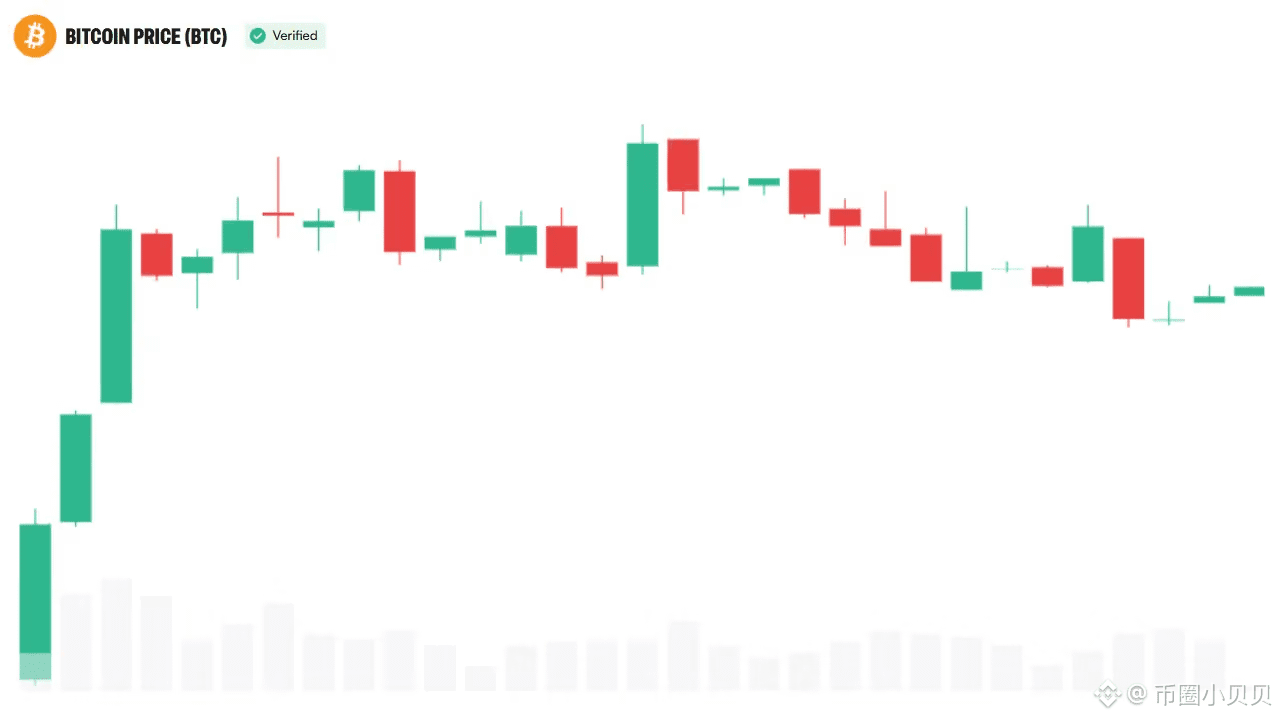
$BTC $ETH The most obvious recent problem with the “big pie” (BTC) isn’t a sudden crash—it’s that it keeps failing to break through the $80,000 level again and again
After the rally in August, BTC has repeatedly tried to push above $80,000, but every time it gets close to that area, sell pressure noticeably increases. Now the Federal Reserve has entered another rate-hike cycle, and market worries about future liquidity have picked up again.
Trading plan 🍑 [快乐聊天室](https://app.binance.com/uni-qr/6d5gRrvm)
On September 16, the Federal Reserve will raise interest rates by 25 basis points to 3.75%–4%. This will be the first rate hike in more than three years, and among 18 officials, 16 expect at least one more hike in 2026.
What the market is worried about isn’t just whether this hike happens, but whether the subsequent rate path will remain tight. If high rates stay in place for longer, they will weigh on the valuation and risk appetite for high-volatility assets like BTC.
Procedural voting on the CLARITY Act has also been blocked, making funds that had been hoping for clearer U.S. crypto regulation more cautious again.
The bill didn’t pass its procedural step—not a final rejection of the entire crypto regulatory framework. Negotiations between parties may continue, and there is still a chance that the SEC and CFTC could push rules forward under their existing authorities. So this is more like a slowdown in regulatory progress, not a complete end.
Previously, when BTC neared $80,000, there were multiple instances of sharp rallies that then reversed. In addition, ETF flows have recently shown volatility. On the day of the Fed’s rate decision, U.S. spot BTC ETFs recorded about $296 million in net outflows, suggesting that some capital chose to reduce exposure after macro uncertainty increased.
Above $80,000, you need fresh buying to absorb the earlier profit-taking, and you also need ETF flows to stabilize again with renewed net inflows. If these two conditions don’t appear, it’s not surprising for BTC to keep churning between $76,000 and $80,000.
If, going forward, ETFs show sustained net inflows again, Treasury yields and inflation pressures begin to ease—and on top of that, regulatory expectations start to heat up again—then the $80,000 level may finally have a chance to slowly turn from a pressure point into a new support.
Don’t just watch a single candlestick in the short term.
What really matters is whether the funds are back—and whether these two suppressing factors, macro conditions and regulation, have started to loosen 👀
There’s a lot of market news, but the truly important things aren’t that many. Every day, I help you filter for the key points worth paying attention to 🔎 #BTC
$BTC $ETH The most obvious recent problem with the “big pie” (BTC) isn’t a sudden crash—it’s that it keeps failing to break through the $80,000 level again and again
After the rally in August, BTC has repeatedly tried to push above $80,000, but every time it gets close to that area, sell pressure noticeably increases. Now the Federal Reserve has entered another rate-hike cycle, and market worries about future liquidity have picked up again.
Trading plan 🍑 快乐聊天室
On September 16, the Federal Reserve will raise interest rates by 25 basis points to 3.75%–4%. This will be the first rate hike in more than three years, and among 18 officials, 16 expect at least one more hike in 2026.
What the market is worried about isn’t just whether this hike happens, but whether the subsequent rate path will remain tight. If high rates stay in place for longer, they will weigh on the valuation and risk appetite for high-volatility assets like BTC.
Procedural voting on the CLARITY Act has also been blocked, making funds that had been hoping for clearer U.S. crypto regulation more cautious again.
The bill didn’t pass its procedural step—not a final rejection of the entire crypto regulatory framework. Negotiations between parties may continue, and there is still a chance that the SEC and CFTC could push rules forward under their existing authorities. So this is more like a slowdown in regulatory progress, not a complete end.
Previously, when BTC neared $80,000, there were multiple instances of sharp rallies that then reversed. In addition, ETF flows have recently shown volatility. On the day of the Fed’s rate decision, U.S. spot BTC ETFs recorded about $296 million in net outflows, suggesting that some capital chose to reduce exposure after macro uncertainty increased.
Above $80,000, you need fresh buying to absorb the earlier profit-taking, and you also need ETF flows to stabilize again with renewed net inflows. If these two conditions don’t appear, it’s not surprising for BTC to keep churning between $76,000 and $80,000.
If, going forward, ETFs show sustained net inflows again, Treasury yields and inflation pressures begin to ease—and on top of that, regulatory expectations start to heat up again—then the $80,000 level may finally have a chance to slowly turn from a pressure point into a new support.
Don’t just watch a single candlestick in the short term.
What really matters is whether the funds are back—and whether these two suppressing factors, macro conditions and regulation, have started to loosen 👀
There’s a lot of market news, but the truly important things aren’t that many. Every day, I help you filter for the key points worth paying attention to 🔎 #BTC
After the rally in August, BTC has repeatedly tried to push above $80,000, but every time it gets close to that area, sell pressure noticeably increases. Now the Federal Reserve has entered another rate-hike cycle, and market worries about future liquidity have picked up again.
Trading plan 🍑 快乐聊天室
On September 16, the Federal Reserve will raise interest rates by 25 basis points to 3.75%–4%. This will be the first rate hike in more than three years, and among 18 officials, 16 expect at least one more hike in 2026.
What the market is worried about isn’t just whether this hike happens, but whether the subsequent rate path will remain tight. If high rates stay in place for longer, they will weigh on the valuation and risk appetite for high-volatility assets like BTC.
Procedural voting on the CLARITY Act has also been blocked, making funds that had been hoping for clearer U.S. crypto regulation more cautious again.
The bill didn’t pass its procedural step—not a final rejection of the entire crypto regulatory framework. Negotiations between parties may continue, and there is still a chance that the SEC and CFTC could push rules forward under their existing authorities. So this is more like a slowdown in regulatory progress, not a complete end.
Previously, when BTC neared $80,000, there were multiple instances of sharp rallies that then reversed. In addition, ETF flows have recently shown volatility. On the day of the Fed’s rate decision, U.S. spot BTC ETFs recorded about $296 million in net outflows, suggesting that some capital chose to reduce exposure after macro uncertainty increased.
Above $80,000, you need fresh buying to absorb the earlier profit-taking, and you also need ETF flows to stabilize again with renewed net inflows. If these two conditions don’t appear, it’s not surprising for BTC to keep churning between $76,000 and $80,000.
If, going forward, ETFs show sustained net inflows again, Treasury yields and inflation pressures begin to ease—and on top of that, regulatory expectations start to heat up again—then the $80,000 level may finally have a chance to slowly turn from a pressure point into a new support.
Don’t just watch a single candlestick in the short term.
What really matters is whether the funds are back—and whether these two suppressing factors, macro conditions and regulation, have started to loosen 👀
There’s a lot of market news, but the truly important things aren’t that many. Every day, I help you filter for the key points worth paying attention to 🔎 #BTC
787
·
--
$BTC $ETH After the Fed’s rate hike was implemented this time, the market’s first reaction was indeed quite intense. However, the assessment from Grayscale is worth paying attention to.
They believe this rate hike is closer to a policy adjustment within a cycle rather than the restart of a prolonged tightening cycle similar to 2022.
Public group 🔥[看懂各大新闻](https://app.binance.com/uni-qr/6d5gRrvm)
Starting in March 2022, the Fed raised rates steadily. By July 2023, the cumulative increase totaled 525 basis points. This truly changed the market’s liquidity environment, and it also clearly raised the opportunity cost of holding non-yielding assets like BTC.
Now, the situation is different. In September, this move was only 25 basis points, pushing the interest rate range to 3.75%–4%. If, afterward, there are only one or two more hikes, that doesn’t necessarily mean the market is about to enter another long-term,持续 tightening cycle right away.
That’s also why Grayscale thinks there’s no need to simply interpret this rate hike as a “replay of 2022.”
Of course, this doesn’t mean BTC has nothing to fear from interest rates.
What really needs to be watched is whether the Fed will continue hiking, and whether inflation and U.S. Treasury yields will keep moving upward.
If rates are adjusted only slightly and the market has already priced it in early, the impact may be limited.
But if inflation re-accelerates, and the 10-year U.S. Treasury yield stays at a high level, with the cost of capital continuing to rise, risk assets will still face pressure.
So, looking at #BTC now, you shouldn’t focus only on the words “rate hike.”
More importantly, determine whether this is just one or two policy adjustments—or the beginning of a new round of long-term tightening.
Grayscale’s view is fairly clear for now: don’t directly equate this rate hike with the major tightening cycle of 2022.
What’s worth keeping an eye on next is the policy path in October, inflation data, and changes in Treasury yields.
Every day, I’ll help you break down new market developments—looking not only at surface-level gains and losses, but also at what capital and sentiment are really doing 👀
$BTC $ETH After the Fed’s rate hike was implemented this time, the market’s first reaction was indeed quite intense. However, the assessment from Grayscale is worth paying attention to.
They believe this rate hike is closer to a policy adjustment within a cycle rather than the restart of a prolonged tightening cycle similar to 2022.
Public group 🔥看懂各大新闻
Starting in March 2022, the Fed raised rates steadily. By July 2023, the cumulative increase totaled 525 basis points. This truly changed the market’s liquidity environment, and it also clearly raised the opportunity cost of holding non-yielding assets like BTC.
Now, the situation is different. In September, this move was only 25 basis points, pushing the interest rate range to 3.75%–4%. If, afterward, there are only one or two more hikes, that doesn’t necessarily mean the market is about to enter another long-term,持续 tightening cycle right away.
That’s also why Grayscale thinks there’s no need to simply interpret this rate hike as a “replay of 2022.”
Of course, this doesn’t mean BTC has nothing to fear from interest rates.
What really needs to be watched is whether the Fed will continue hiking, and whether inflation and U.S. Treasury yields will keep moving upward.
If rates are adjusted only slightly and the market has already priced it in early, the impact may be limited.
But if inflation re-accelerates, and the 10-year U.S. Treasury yield stays at a high level, with the cost of capital continuing to rise, risk assets will still face pressure.
So, looking at #BTC now, you shouldn’t focus only on the words “rate hike.”
More importantly, determine whether this is just one or two policy adjustments—or the beginning of a new round of long-term tightening.
Grayscale’s view is fairly clear for now: don’t directly equate this rate hike with the major tightening cycle of 2022.
What’s worth keeping an eye on next is the policy path in October, inflation data, and changes in Treasury yields.
Every day, I’ll help you break down new market developments—looking not only at surface-level gains and losses, but also at what capital and sentiment are really doing 👀
They believe this rate hike is closer to a policy adjustment within a cycle rather than the restart of a prolonged tightening cycle similar to 2022.
Public group 🔥看懂各大新闻
Starting in March 2022, the Fed raised rates steadily. By July 2023, the cumulative increase totaled 525 basis points. This truly changed the market’s liquidity environment, and it also clearly raised the opportunity cost of holding non-yielding assets like BTC.
Now, the situation is different. In September, this move was only 25 basis points, pushing the interest rate range to 3.75%–4%. If, afterward, there are only one or two more hikes, that doesn’t necessarily mean the market is about to enter another long-term,持续 tightening cycle right away.
That’s also why Grayscale thinks there’s no need to simply interpret this rate hike as a “replay of 2022.”
Of course, this doesn’t mean BTC has nothing to fear from interest rates.
What really needs to be watched is whether the Fed will continue hiking, and whether inflation and U.S. Treasury yields will keep moving upward.
If rates are adjusted only slightly and the market has already priced it in early, the impact may be limited.
But if inflation re-accelerates, and the 10-year U.S. Treasury yield stays at a high level, with the cost of capital continuing to rise, risk assets will still face pressure.
So, looking at #BTC now, you shouldn’t focus only on the words “rate hike.”
More importantly, determine whether this is just one or two policy adjustments—or the beginning of a new round of long-term tightening.
Grayscale’s view is fairly clear for now: don’t directly equate this rate hike with the major tightening cycle of 2022.
What’s worth keeping an eye on next is the policy path in October, inflation data, and changes in Treasury yields.
Every day, I’ll help you break down new market developments—looking not only at surface-level gains and losses, but also at what capital and sentiment are really doing 👀

1
428
·
--
Verified
$ZEC After the Fed rate hike is implemented, the market didn’t follow the script many people had written
On September 16, the Federal Reserve announced a 25-basis-point rate hike, raising the interest-rate range to 3.75%–4%. This was the first hike since July 2023, and the market had largely priced in this move in advance
Hot news [看懂各大新闻](https://app.binance.com/uni-qr/6d5gRrvm)
US equities tech stocks strengthened. Big BTC (the first coin) has once again moved above the $76,000 area, and second coin is rebounding as well. Meanwhile, the altcoin market has been more active; among them, ZEC directly surged to a new all-time high, briefly approaching $1,400 during the day, and its 24-hour gain at one point exceeded 20%
The rate hike itself did not surprise expectations. What truly affected market sentiment was whether the Fed will keep tightening further
Currently, the Fed’s dot plot shows that among 18 officials, 16 expect at least one more rate hike by the end of 2026, meaning rate pressure has not fully disappeared
However, the market is also seeing the other side: this is not like a freshly restarted aggressive tightening cycle. The policy path looks more like modest adjustments going forward, rather than continuous, large-scale tightening
So this time, BTC didn’t drop sharply just because the rate was hiked. That doesn’t mean “the rate-hike bearishness has become ineffective.”
A more accurate interpretation is: after the anticipated bearish move was already priced in, capital began to look for new dominant trading themes
ZEC is a clear example
Beyond an overall recovery in risk assets, Paradigm co-founder Matt Huang publicly disclosed that institutions hold ZEC and described Zcash as a “privacy complement to Bitcoin.” Add to that Zcash’s recent network upgrades and governance changes—when these storylines stack together, they further amplified ZEC’s rally
So going forward, what’s really worth watching isn’t simply judging whether “it can still rise after the rate hike.”
Instead, watch whether capital continues to spread from BTC to the second coin and into altcoins, and whether strong names like ZEC can have their upside broaden from a single narrative into wider capital rotation
If US Treasury yields keep falling afterward, pressure on risk assets may ease further
But if inflation starts to reaccelerate, and the Fed continues to release stronger tightening signals, the market will still have to face rate pressure again
Today’s market focus has already been laid out. Less chasing news, and more understanding the impact behind the news 👀 #zec #zcash
$ZEC After the Fed rate hike is implemented, the market didn’t follow the script many people had written
On September 16, the Federal Reserve announced a 25-basis-point rate hike, raising the interest-rate range to 3.75%–4%. This was the first hike since July 2023, and the market had largely priced in this move in advance
Hot news 看懂各大新闻
US equities tech stocks strengthened. Big BTC (the first coin) has once again moved above the $76,000 area, and second coin is rebounding as well. Meanwhile, the altcoin market has been more active; among them, ZEC directly surged to a new all-time high, briefly approaching $1,400 during the day, and its 24-hour gain at one point exceeded 20%
The rate hike itself did not surprise expectations. What truly affected market sentiment was whether the Fed will keep tightening further
Currently, the Fed’s dot plot shows that among 18 officials, 16 expect at least one more rate hike by the end of 2026, meaning rate pressure has not fully disappeared
However, the market is also seeing the other side: this is not like a freshly restarted aggressive tightening cycle. The policy path looks more like modest adjustments going forward, rather than continuous, large-scale tightening
So this time, BTC didn’t drop sharply just because the rate was hiked. That doesn’t mean “the rate-hike bearishness has become ineffective.”
A more accurate interpretation is: after the anticipated bearish move was already priced in, capital began to look for new dominant trading themes
ZEC is a clear example
Beyond an overall recovery in risk assets, Paradigm co-founder Matt Huang publicly disclosed that institutions hold ZEC and described Zcash as a “privacy complement to Bitcoin.” Add to that Zcash’s recent network upgrades and governance changes—when these storylines stack together, they further amplified ZEC’s rally
So going forward, what’s really worth watching isn’t simply judging whether “it can still rise after the rate hike.”
Instead, watch whether capital continues to spread from BTC to the second coin and into altcoins, and whether strong names like ZEC can have their upside broaden from a single narrative into wider capital rotation
If US Treasury yields keep falling afterward, pressure on risk assets may ease further
But if inflation starts to reaccelerate, and the Fed continues to release stronger tightening signals, the market will still have to face rate pressure again
Today’s market focus has already been laid out. Less chasing news, and more understanding the impact behind the news 👀 #zec #zcash
On September 16, the Federal Reserve announced a 25-basis-point rate hike, raising the interest-rate range to 3.75%–4%. This was the first hike since July 2023, and the market had largely priced in this move in advance
Hot news 看懂各大新闻
US equities tech stocks strengthened. Big BTC (the first coin) has once again moved above the $76,000 area, and second coin is rebounding as well. Meanwhile, the altcoin market has been more active; among them, ZEC directly surged to a new all-time high, briefly approaching $1,400 during the day, and its 24-hour gain at one point exceeded 20%
The rate hike itself did not surprise expectations. What truly affected market sentiment was whether the Fed will keep tightening further
Currently, the Fed’s dot plot shows that among 18 officials, 16 expect at least one more rate hike by the end of 2026, meaning rate pressure has not fully disappeared
However, the market is also seeing the other side: this is not like a freshly restarted aggressive tightening cycle. The policy path looks more like modest adjustments going forward, rather than continuous, large-scale tightening
So this time, BTC didn’t drop sharply just because the rate was hiked. That doesn’t mean “the rate-hike bearishness has become ineffective.”
A more accurate interpretation is: after the anticipated bearish move was already priced in, capital began to look for new dominant trading themes
ZEC is a clear example
Beyond an overall recovery in risk assets, Paradigm co-founder Matt Huang publicly disclosed that institutions hold ZEC and described Zcash as a “privacy complement to Bitcoin.” Add to that Zcash’s recent network upgrades and governance changes—when these storylines stack together, they further amplified ZEC’s rally
So going forward, what’s really worth watching isn’t simply judging whether “it can still rise after the rate hike.”
Instead, watch whether capital continues to spread from BTC to the second coin and into altcoins, and whether strong names like ZEC can have their upside broaden from a single narrative into wider capital rotation
If US Treasury yields keep falling afterward, pressure on risk assets may ease further
But if inflation starts to reaccelerate, and the Fed continues to release stronger tightening signals, the market will still have to face rate pressure again
Today’s market focus has already been laid out. Less chasing news, and more understanding the impact behind the news 👀 #zec #zcash
1
479
·
--
SOL reclaims the $100 mark
After the Federal Reserve raised rates by 25 basis points, SOL came under pressure at one point, but then managed to regain the $100 level. At this position again, it has become a key area of focus for the market.
Group chat [每日行情实时策略](https://app.binance.com/uni-qr/6d5gRrvm)
The latest analysis suggests that the $95–$100 range has formed an important support zone. If SOL can continue to hold this area, the short-term structure still has a chance to remain intact.
But there’s a concern here: this rate hike is the first since 2023. The Fed has lifted the target interest-rate range to 3.75%–4%, and the market is also watching whether further tightening will follow.
For an asset like SOL, which tends to be highly volatile, once the interest-rate environment turns back toward tighter conditions, market pressure on risk assets will likely be more pronounced.
So at $100, the significance is no longer just about a round-number level.
If SOL can hold steady in the $95–$100 zone and then push back toward the $109–$110 area, the market will need to reassess whether upward momentum can recover.
On the other hand, if the $100 level is lost again, and if $95 can’t be held either, then the structure of this rebound would need to be re-evaluated.
In addition, Solana has also shown some relatively positive ecosystem signals recently, including continued growth in the number of RWA holders and the integration of SOL-related products into traditional markets. Whether these fundamental changes can offset macro pressure is also something worth watching going forward.
So right now, the key things to watch for SOL are simple:
Support at $95–$100.
Resistance overhead at $109–$110.
And whether risk appetite in the market continues to fall after the rate hike may be the most important variable in determining SOL’s next phase of momentum.
SOL reclaiming $100 is only the first step. What’s really worth watching is whether this level can turn a short-term rebound into a new market consensus 👀 #solana
SOL reclaims the $100 mark
After the Federal Reserve raised rates by 25 basis points, SOL came under pressure at one point, but then managed to regain the $100 level. At this position again, it has become a key area of focus for the market.
Group chat 每日行情实时策略
The latest analysis suggests that the $95–$100 range has formed an important support zone. If SOL can continue to hold this area, the short-term structure still has a chance to remain intact.
But there’s a concern here: this rate hike is the first since 2023. The Fed has lifted the target interest-rate range to 3.75%–4%, and the market is also watching whether further tightening will follow.
For an asset like SOL, which tends to be highly volatile, once the interest-rate environment turns back toward tighter conditions, market pressure on risk assets will likely be more pronounced.
So at $100, the significance is no longer just about a round-number level.
If SOL can hold steady in the $95–$100 zone and then push back toward the $109–$110 area, the market will need to reassess whether upward momentum can recover.
On the other hand, if the $100 level is lost again, and if $95 can’t be held either, then the structure of this rebound would need to be re-evaluated.
In addition, Solana has also shown some relatively positive ecosystem signals recently, including continued growth in the number of RWA holders and the integration of SOL-related products into traditional markets. Whether these fundamental changes can offset macro pressure is also something worth watching going forward.
So right now, the key things to watch for SOL are simple:
Support at $95–$100.
Resistance overhead at $109–$110.
And whether risk appetite in the market continues to fall after the rate hike may be the most important variable in determining SOL’s next phase of momentum.
SOL reclaiming $100 is only the first step. What’s really worth watching is whether this level can turn a short-term rebound into a new market consensus 👀 #solana
After the Federal Reserve raised rates by 25 basis points, SOL came under pressure at one point, but then managed to regain the $100 level. At this position again, it has become a key area of focus for the market.
Group chat 每日行情实时策略
The latest analysis suggests that the $95–$100 range has formed an important support zone. If SOL can continue to hold this area, the short-term structure still has a chance to remain intact.
But there’s a concern here: this rate hike is the first since 2023. The Fed has lifted the target interest-rate range to 3.75%–4%, and the market is also watching whether further tightening will follow.
For an asset like SOL, which tends to be highly volatile, once the interest-rate environment turns back toward tighter conditions, market pressure on risk assets will likely be more pronounced.
So at $100, the significance is no longer just about a round-number level.
If SOL can hold steady in the $95–$100 zone and then push back toward the $109–$110 area, the market will need to reassess whether upward momentum can recover.
On the other hand, if the $100 level is lost again, and if $95 can’t be held either, then the structure of this rebound would need to be re-evaluated.
In addition, Solana has also shown some relatively positive ecosystem signals recently, including continued growth in the number of RWA holders and the integration of SOL-related products into traditional markets. Whether these fundamental changes can offset macro pressure is also something worth watching going forward.
So right now, the key things to watch for SOL are simple:
Support at $95–$100.
Resistance overhead at $109–$110.
And whether risk appetite in the market continues to fall after the rate hike may be the most important variable in determining SOL’s next phase of momentum.
SOL reclaiming $100 is only the first step. What’s really worth watching is whether this level can turn a short-term rebound into a new market consensus 👀 #solana

1
441
·
--
SOL has fallen below $100 ‼️‼️
This pullback is related to market pressure brought by recent U.S. regulatory news. SOL once dropped from above $101 to around $96, and then saw a certain degree of rebound; in the short term, market sentiment has clearly weakened.
Hot spot news 👉🏻[每日行情实时策略](https://app.binance.com/uni-qr/6d5gRrvm)
What really needs to be watched now isn’t the $100 whole-number level itself, but whether SOL can reclaim it after breaking below.
Because if $100 turns from support into resistance, the market’s focus will shift to lower price areas.
A key support the market is watching right now is around $93. If this zone can hold, SOL still has a chance to reorganize and attempt to recover $100.
But if $93 is also lost, more room may open up to the downside in the short term, and market attention will continue to move toward the area around $90.
Of course, SOL’s fundamentals themselves haven’t changed just because of a price pullback.
Institutional demand for Solana-related products, network activity, and the trading ecosystem are still a few of the variables the market watches long term. So what’s more worth observing this time is whether there will be a clear divergence between short-term fund sentiment and long-term fundamentals.
Watch whether $100 can be reclaimed.
Watch whether $93 can be held.
And what truly determines the pace of the next phase is whether trading volume and capital return.
#sol You’re now entering a key observation zone—next, don’t just watch up or down; also check whether money flow and market sentiment will change again 👀
SOL has fallen below $100 ‼️‼️
This pullback is related to market pressure brought by recent U.S. regulatory news. SOL once dropped from above $101 to around $96, and then saw a certain degree of rebound; in the short term, market sentiment has clearly weakened.
Hot spot news 👉🏻每日行情实时策略
What really needs to be watched now isn’t the $100 whole-number level itself, but whether SOL can reclaim it after breaking below.
Because if $100 turns from support into resistance, the market’s focus will shift to lower price areas.
A key support the market is watching right now is around $93. If this zone can hold, SOL still has a chance to reorganize and attempt to recover $100.
But if $93 is also lost, more room may open up to the downside in the short term, and market attention will continue to move toward the area around $90.
Of course, SOL’s fundamentals themselves haven’t changed just because of a price pullback.
Institutional demand for Solana-related products, network activity, and the trading ecosystem are still a few of the variables the market watches long term. So what’s more worth observing this time is whether there will be a clear divergence between short-term fund sentiment and long-term fundamentals.
Watch whether $100 can be reclaimed.
Watch whether $93 can be held.
And what truly determines the pace of the next phase is whether trading volume and capital return.
#sol You’re now entering a key observation zone—next, don’t just watch up or down; also check whether money flow and market sentiment will change again 👀
This pullback is related to market pressure brought by recent U.S. regulatory news. SOL once dropped from above $101 to around $96, and then saw a certain degree of rebound; in the short term, market sentiment has clearly weakened.
Hot spot news 👉🏻每日行情实时策略
What really needs to be watched now isn’t the $100 whole-number level itself, but whether SOL can reclaim it after breaking below.
Because if $100 turns from support into resistance, the market’s focus will shift to lower price areas.
A key support the market is watching right now is around $93. If this zone can hold, SOL still has a chance to reorganize and attempt to recover $100.
But if $93 is also lost, more room may open up to the downside in the short term, and market attention will continue to move toward the area around $90.
Of course, SOL’s fundamentals themselves haven’t changed just because of a price pullback.
Institutional demand for Solana-related products, network activity, and the trading ecosystem are still a few of the variables the market watches long term. So what’s more worth observing this time is whether there will be a clear divergence between short-term fund sentiment and long-term fundamentals.
Watch whether $100 can be reclaimed.
Watch whether $93 can be held.
And what truly determines the pace of the next phase is whether trading volume and capital return.
#sol You’re now entering a key observation zone—next, don’t just watch up or down; also check whether money flow and market sentiment will change again 👀
773
·
--
Verified
The CLARITY Act didn’t move forward, but XRP instead showed a signal worth paying attention to
Earlier, the U.S. Senate failed to advance the CLARITY Act with a procedural vote of 49–50. XRP then briefly dropped noticeably, but liquidity did not weaken in full synchronization. On September 16, the spot XRP ETF still recorded net inflows of about $3.5 million, and inflows have already appeared for 10 straight trading days.
Fan group 👉🏻[免费策略](https://app.binance.com/uni-qr/6d5gRrvm)
On the same day, spot ETFs #BTC and #ETH saw net outflows of about $295 million and $224 million, respectively. However, ETF #xrp became one of the categories with the largest inflow size among crypto ETFs that day. This suggests that some institutional attention to XRP has not completely disappeared just because the bill was blocked.
Regulatory developments are also worth watching
SEC Chair Paul Atkins said that even if the CLARITY Act does not pass, the SEC will continue to push forward crypto regulation within its existing statutory authority. CFTC Chair Michael Selig also said institutions are ready to continue drafting relevant rules.
This implies the market may be gradually shifting from waiting for congressional legislation to first seeing how regulators move forward.
However, XRP currently has one fairly clear pressure point.
XRP open interest has fallen from about $1.128 billion in August to roughly $871 million. OI on both Binance and Bybit has declined in tandem.
This indicates that leverage in the derivatives market is being reduced significantly. So XRP’s rise can’t be understood purely as money fully returning; more importantly, we need to watch whether spot ETF inflows can keep up, and when derivatives capital will return.
On the technical side, XRP is still in a fairly key position.
According to the article, XRP is around $1.30—still below the 200-week EMA of about $1.36. If it can reclaim $1.36, attention can again be placed on the $1.52 area above.
Conversely, if the price action keeps weakening, the market should watch the support region around $1.04.
So what’s most worth watching for XRP right now isn’t whether the CLARITY Act will pass immediately, but rather three things: whether ETF capital inflows can continue, whether the SEC and CFTC can continue advancing regulation within existing authority, and whether XRP’s price can reclaim $1.36.
If all three signals start improving at the same time, the market’s XRP pricing logic may change again.
The CLARITY Act didn’t move forward, but XRP instead showed a signal worth paying attention to
Earlier, the U.S. Senate failed to advance the CLARITY Act with a procedural vote of 49–50. XRP then briefly dropped noticeably, but liquidity did not weaken in full synchronization. On September 16, the spot XRP ETF still recorded net inflows of about $3.5 million, and inflows have already appeared for 10 straight trading days.
Fan group 👉🏻免费策略
On the same day, spot ETFs #BTC and #ETH saw net outflows of about $295 million and $224 million, respectively. However, ETF #xrp became one of the categories with the largest inflow size among crypto ETFs that day. This suggests that some institutional attention to XRP has not completely disappeared just because the bill was blocked.
Regulatory developments are also worth watching
SEC Chair Paul Atkins said that even if the CLARITY Act does not pass, the SEC will continue to push forward crypto regulation within its existing statutory authority. CFTC Chair Michael Selig also said institutions are ready to continue drafting relevant rules.
This implies the market may be gradually shifting from waiting for congressional legislation to first seeing how regulators move forward.
However, XRP currently has one fairly clear pressure point.
XRP open interest has fallen from about $1.128 billion in August to roughly $871 million. OI on both Binance and Bybit has declined in tandem.
This indicates that leverage in the derivatives market is being reduced significantly. So XRP’s rise can’t be understood purely as money fully returning; more importantly, we need to watch whether spot ETF inflows can keep up, and when derivatives capital will return.
On the technical side, XRP is still in a fairly key position.
According to the article, XRP is around $1.30—still below the 200-week EMA of about $1.36. If it can reclaim $1.36, attention can again be placed on the $1.52 area above.
Conversely, if the price action keeps weakening, the market should watch the support region around $1.04.
So what’s most worth watching for XRP right now isn’t whether the CLARITY Act will pass immediately, but rather three things: whether ETF capital inflows can continue, whether the SEC and CFTC can continue advancing regulation within existing authority, and whether XRP’s price can reclaim $1.36.
If all three signals start improving at the same time, the market’s XRP pricing logic may change again.
Earlier, the U.S. Senate failed to advance the CLARITY Act with a procedural vote of 49–50. XRP then briefly dropped noticeably, but liquidity did not weaken in full synchronization. On September 16, the spot XRP ETF still recorded net inflows of about $3.5 million, and inflows have already appeared for 10 straight trading days.
Fan group 👉🏻免费策略
On the same day, spot ETFs #BTC and #ETH saw net outflows of about $295 million and $224 million, respectively. However, ETF #xrp became one of the categories with the largest inflow size among crypto ETFs that day. This suggests that some institutional attention to XRP has not completely disappeared just because the bill was blocked.
Regulatory developments are also worth watching
SEC Chair Paul Atkins said that even if the CLARITY Act does not pass, the SEC will continue to push forward crypto regulation within its existing statutory authority. CFTC Chair Michael Selig also said institutions are ready to continue drafting relevant rules.
This implies the market may be gradually shifting from waiting for congressional legislation to first seeing how regulators move forward.
However, XRP currently has one fairly clear pressure point.
XRP open interest has fallen from about $1.128 billion in August to roughly $871 million. OI on both Binance and Bybit has declined in tandem.
This indicates that leverage in the derivatives market is being reduced significantly. So XRP’s rise can’t be understood purely as money fully returning; more importantly, we need to watch whether spot ETF inflows can keep up, and when derivatives capital will return.
On the technical side, XRP is still in a fairly key position.
According to the article, XRP is around $1.30—still below the 200-week EMA of about $1.36. If it can reclaim $1.36, attention can again be placed on the $1.52 area above.
Conversely, if the price action keeps weakening, the market should watch the support region around $1.04.
So what’s most worth watching for XRP right now isn’t whether the CLARITY Act will pass immediately, but rather three things: whether ETF capital inflows can continue, whether the SEC and CFTC can continue advancing regulation within existing authority, and whether XRP’s price can reclaim $1.36.
If all three signals start improving at the same time, the market’s XRP pricing logic may change again.
1
457
·
--
$BTC $ETH CLARITY Act hasn’t been fully concluded, but U.S. crypto regulation may take another path
After a procedural vote of 49 to 50 in the Senate, #CLARITYAct was temporarily unable to move forward, and the previously expected U.S. crypto market-structure legislation has once again stalled
Group chat 👉🏻[每日行情实时策略](https://app.binance.com/uni-qr/6d5gRrvm)
Seven Democratic lawmakers—including Mark Warner, Kirsten Gillibrand, and Cory Booker—have publicly stated that they still support moving this bill forward and hope to get back to the bipartisan negotiating table
At the moment, this version hasn’t secured enough votes. Next, the team will need to revisit core disputes such as the ethics provisions, stablecoins, and regulatory authority
The problem is that time is getting increasingly tight
If the market-structure bill continues to get stuck in Congress, regulators may use existing powers to advance their own rules first
The SEC and CFTC have already sent very clear signals: even if Congress fails to pass legislation, both agencies will continue to use their existing legal authority to push forward crypto regulatory rules
For BTC and ETH, this is actually a change worth paying close attention to
Because the “regulatory clarity” the market has long been waiting for may not only be achieved through a congressional bill
If the SEC and the CFTC next roll out more specific rules on digital-asset classification, DeFi, self-custody, and tokenized assets, some regulatory uncertainty may still be alleviated
But the biggest difference between the two routes is obvious
Once the bill passes, the rules’ legal stability will be stronger
Whereas rules issued by the SEC and the CFTC under existing authority could still be modified as administrations change, and may also face legal challenges
So what the market really needs to watch next isn’t just when the CLARITY Act will be brought back for another vote
Instead, it’s what rules the SEC and CFTC will put out first—and whether these seven Democratic lawmakers can successfully restart bipartisan negotiations
U.S. crypto regulation may not be heading to an endpoint
It may be shifting—for now—from “congressional legislation” to “regulatory agencies acting first”
And that also means that going forward, #BTC #ETH and the entire U.S. crypto market will still face new policy variables
Join me every day to break down new market developments—not just looking at surface-level gains and losses, but also what’s really happening with funds and sentiment 👀
$BTC $ETH CLARITY Act hasn’t been fully concluded, but U.S. crypto regulation may take another path
After a procedural vote of 49 to 50 in the Senate, #CLARITYAct was temporarily unable to move forward, and the previously expected U.S. crypto market-structure legislation has once again stalled
Group chat 👉🏻每日行情实时策略
Seven Democratic lawmakers—including Mark Warner, Kirsten Gillibrand, and Cory Booker—have publicly stated that they still support moving this bill forward and hope to get back to the bipartisan negotiating table
At the moment, this version hasn’t secured enough votes. Next, the team will need to revisit core disputes such as the ethics provisions, stablecoins, and regulatory authority
The problem is that time is getting increasingly tight
If the market-structure bill continues to get stuck in Congress, regulators may use existing powers to advance their own rules first
The SEC and CFTC have already sent very clear signals: even if Congress fails to pass legislation, both agencies will continue to use their existing legal authority to push forward crypto regulatory rules
For BTC and ETH, this is actually a change worth paying close attention to
Because the “regulatory clarity” the market has long been waiting for may not only be achieved through a congressional bill
If the SEC and the CFTC next roll out more specific rules on digital-asset classification, DeFi, self-custody, and tokenized assets, some regulatory uncertainty may still be alleviated
But the biggest difference between the two routes is obvious
Once the bill passes, the rules’ legal stability will be stronger
Whereas rules issued by the SEC and the CFTC under existing authority could still be modified as administrations change, and may also face legal challenges
So what the market really needs to watch next isn’t just when the CLARITY Act will be brought back for another vote
Instead, it’s what rules the SEC and CFTC will put out first—and whether these seven Democratic lawmakers can successfully restart bipartisan negotiations
U.S. crypto regulation may not be heading to an endpoint
It may be shifting—for now—from “congressional legislation” to “regulatory agencies acting first”
And that also means that going forward, #BTC #ETH and the entire U.S. crypto market will still face new policy variables
Join me every day to break down new market developments—not just looking at surface-level gains and losses, but also what’s really happening with funds and sentiment 👀
After a procedural vote of 49 to 50 in the Senate, #CLARITYAct was temporarily unable to move forward, and the previously expected U.S. crypto market-structure legislation has once again stalled
Group chat 👉🏻每日行情实时策略
Seven Democratic lawmakers—including Mark Warner, Kirsten Gillibrand, and Cory Booker—have publicly stated that they still support moving this bill forward and hope to get back to the bipartisan negotiating table
At the moment, this version hasn’t secured enough votes. Next, the team will need to revisit core disputes such as the ethics provisions, stablecoins, and regulatory authority
The problem is that time is getting increasingly tight
If the market-structure bill continues to get stuck in Congress, regulators may use existing powers to advance their own rules first
The SEC and CFTC have already sent very clear signals: even if Congress fails to pass legislation, both agencies will continue to use their existing legal authority to push forward crypto regulatory rules
For BTC and ETH, this is actually a change worth paying close attention to
Because the “regulatory clarity” the market has long been waiting for may not only be achieved through a congressional bill
If the SEC and the CFTC next roll out more specific rules on digital-asset classification, DeFi, self-custody, and tokenized assets, some regulatory uncertainty may still be alleviated
But the biggest difference between the two routes is obvious
Once the bill passes, the rules’ legal stability will be stronger
Whereas rules issued by the SEC and the CFTC under existing authority could still be modified as administrations change, and may also face legal challenges
So what the market really needs to watch next isn’t just when the CLARITY Act will be brought back for another vote
Instead, it’s what rules the SEC and CFTC will put out first—and whether these seven Democratic lawmakers can successfully restart bipartisan negotiations
U.S. crypto regulation may not be heading to an endpoint
It may be shifting—for now—from “congressional legislation” to “regulatory agencies acting first”
And that also means that going forward, #BTC #ETH and the entire U.S. crypto market will still face new policy variables
Join me every day to break down new market developments—not just looking at surface-level gains and losses, but also what’s really happening with funds and sentiment 👀

2
518
·
--
$DOGE Giant whales buy 240 million DOGE in a week, but the real key is here
On-chain data recently shows that large holders have cumulatively increased their holdings by more than 240 million DOGE within a week. This suggests that even as prices weaken, there is still capital continuously stepping in.
But there’s one easy-to-overlook issue here.
Check the fan group ❤️[了解最新行情分析](https://app.binance.com/uni-qr/6d5gRrvm)
A giant whale purchase only indicates that the available supply (tokens/chips) is changing hands—it does not directly mean that DOGE will start a rally immediately.
What the market truly needs to pay attention to is the pressure zone around $0.093.
If DOGE can break through effectively and hold above this level, then the significance of the whales’ continued accumulation will become much more pronounced—because that would mean buying pressure is no longer just appearing at low prices, but is actively pushing the price beyond a key resistance area.
On the other hand, if the price keeps failing to break $0.093, then this round of whale accumulation is more likely just premature positioning, or gradually building a position at lower levels.
What’s even more worth noting is that DOGE’s recent on-chain capital activity is not the first time this has happened.
Back in June this year, there was also a case where large addresses accumulated more than 200 million—up to 240 million—DOGE in a short period. At that time, the market was also debating whether this type of capital behavior suggested that the price was nearing a cyclical bottom.
So this time, what’s truly worth watching isn’t simply “how much the whales bought.”
Instead, it’s whether, after the buying, DOGE can turn its chip advantage into a real price breakout.
If $0.093 is taken out, market sentiment could improve significantly.
But if continuous retests still can’t break through, that would indicate sell pressure overhead remains heavy, and whale accumulation may need more time to show its effect.
The most interesting part about DOGE right now is right here.
Capital has started moving, but the price hasn’t fully answered yet 👀
The market has new developments every day. Let us filter out the signals that really matter, and see what might happen next 👀
$DOGE Giant whales buy 240 million DOGE in a week, but the real key is here
On-chain data recently shows that large holders have cumulatively increased their holdings by more than 240 million DOGE within a week. This suggests that even as prices weaken, there is still capital continuously stepping in.
But there’s one easy-to-overlook issue here.
Check the fan group ❤️了解最新行情分析
A giant whale purchase only indicates that the available supply (tokens/chips) is changing hands—it does not directly mean that DOGE will start a rally immediately.
What the market truly needs to pay attention to is the pressure zone around $0.093.
If DOGE can break through effectively and hold above this level, then the significance of the whales’ continued accumulation will become much more pronounced—because that would mean buying pressure is no longer just appearing at low prices, but is actively pushing the price beyond a key resistance area.
On the other hand, if the price keeps failing to break $0.093, then this round of whale accumulation is more likely just premature positioning, or gradually building a position at lower levels.
What’s even more worth noting is that DOGE’s recent on-chain capital activity is not the first time this has happened.
Back in June this year, there was also a case where large addresses accumulated more than 200 million—up to 240 million—DOGE in a short period. At that time, the market was also debating whether this type of capital behavior suggested that the price was nearing a cyclical bottom.
So this time, what’s truly worth watching isn’t simply “how much the whales bought.”
Instead, it’s whether, after the buying, DOGE can turn its chip advantage into a real price breakout.
If $0.093 is taken out, market sentiment could improve significantly.
But if continuous retests still can’t break through, that would indicate sell pressure overhead remains heavy, and whale accumulation may need more time to show its effect.
The most interesting part about DOGE right now is right here.
Capital has started moving, but the price hasn’t fully answered yet 👀
The market has new developments every day. Let us filter out the signals that really matter, and see what might happen next 👀
On-chain data recently shows that large holders have cumulatively increased their holdings by more than 240 million DOGE within a week. This suggests that even as prices weaken, there is still capital continuously stepping in.
But there’s one easy-to-overlook issue here.
Check the fan group ❤️了解最新行情分析
A giant whale purchase only indicates that the available supply (tokens/chips) is changing hands—it does not directly mean that DOGE will start a rally immediately.
What the market truly needs to pay attention to is the pressure zone around $0.093.
If DOGE can break through effectively and hold above this level, then the significance of the whales’ continued accumulation will become much more pronounced—because that would mean buying pressure is no longer just appearing at low prices, but is actively pushing the price beyond a key resistance area.
On the other hand, if the price keeps failing to break $0.093, then this round of whale accumulation is more likely just premature positioning, or gradually building a position at lower levels.
What’s even more worth noting is that DOGE’s recent on-chain capital activity is not the first time this has happened.
Back in June this year, there was also a case where large addresses accumulated more than 200 million—up to 240 million—DOGE in a short period. At that time, the market was also debating whether this type of capital behavior suggested that the price was nearing a cyclical bottom.
So this time, what’s truly worth watching isn’t simply “how much the whales bought.”
Instead, it’s whether, after the buying, DOGE can turn its chip advantage into a real price breakout.
If $0.093 is taken out, market sentiment could improve significantly.
But if continuous retests still can’t break through, that would indicate sell pressure overhead remains heavy, and whale accumulation may need more time to show its effect.
The most interesting part about DOGE right now is right here.
Capital has started moving, but the price hasn’t fully answered yet 👀
The market has new developments every day. Let us filter out the signals that really matter, and see what might happen next 👀

2
2.1k
·
--
$BTC $ETH CLARITY Act is set for a key vote today
The U.S. Senate will hold a crucial procedural vote on the CLARITY Act today, expected at 2:15 PM ET.
Learn the latest strategy 👇🏻
[快乐聊天室](https://app.binance.com/uni-qr/6d5gRrvm)
This time, at least 60 votes are needed to end debate and move the bill forward. Republicans currently hold only 53 seats, so whether they can secure support from Democratic lawmakers is the biggest storyline of the day 😶
Just hours before the vote, both sides still hadn’t fully reached an agreement. The Republicans have released a revised version, adding 126 amendments, including stricter limits on political figures’ interests in digital assets, and allowing state attorneys general to participate in related enforcement.
But Democrats believe the ethics provisions still don’t fully meet the requirements and have prepared their own counterproposal.
So today’s vote isn’t really about whether the CLARITY Act will immediately become law.
It’s about whether it still has the right to move forward. If 60 votes are secured, the market may interpret it as U.S. political parties getting closer to a formal digital-asset regulatory framework, which would be positively significant for long-term regulatory expectations for major assets like BTC, ETH, and XRP 🫨
However, if the vote count falls short and the bill gets stuck, the market may resume trading the expectation that “U.S. crypto regulation will continue to be delayed.”
Even more noteworthy is that #BTC is also hovering near a critical level today. If the vote result surprises beyond market expectations, short-term sentiment could see a noticeable swing.
So what’s truly worth watching today isn’t just a line like “#CLARITYAct passes,”
but whether the 60 votes can actually be reached.
This vote will very likely determine the pace of the next phase of U.S. crypto regulation. Today’s market focus is already laid out. Spend a little less time chasing headlines, and a little more time understanding the impact behind the news 👀
$BTC $ETH CLARITY Act is set for a key vote today
The U.S. Senate will hold a crucial procedural vote on the CLARITY Act today, expected at 2:15 PM ET.
Learn the latest strategy 👇🏻
快乐聊天室
This time, at least 60 votes are needed to end debate and move the bill forward. Republicans currently hold only 53 seats, so whether they can secure support from Democratic lawmakers is the biggest storyline of the day 😶
Just hours before the vote, both sides still hadn’t fully reached an agreement. The Republicans have released a revised version, adding 126 amendments, including stricter limits on political figures’ interests in digital assets, and allowing state attorneys general to participate in related enforcement.
But Democrats believe the ethics provisions still don’t fully meet the requirements and have prepared their own counterproposal.
So today’s vote isn’t really about whether the CLARITY Act will immediately become law.
It’s about whether it still has the right to move forward. If 60 votes are secured, the market may interpret it as U.S. political parties getting closer to a formal digital-asset regulatory framework, which would be positively significant for long-term regulatory expectations for major assets like BTC, ETH, and XRP 🫨
However, if the vote count falls short and the bill gets stuck, the market may resume trading the expectation that “U.S. crypto regulation will continue to be delayed.”
Even more noteworthy is that #BTC is also hovering near a critical level today. If the vote result surprises beyond market expectations, short-term sentiment could see a noticeable swing.
So what’s truly worth watching today isn’t just a line like “#CLARITYAct passes,”
but whether the 60 votes can actually be reached.
This vote will very likely determine the pace of the next phase of U.S. crypto regulation. Today’s market focus is already laid out. Spend a little less time chasing headlines, and a little more time understanding the impact behind the news 👀
The U.S. Senate will hold a crucial procedural vote on the CLARITY Act today, expected at 2:15 PM ET.
Learn the latest strategy 👇🏻
快乐聊天室
This time, at least 60 votes are needed to end debate and move the bill forward. Republicans currently hold only 53 seats, so whether they can secure support from Democratic lawmakers is the biggest storyline of the day 😶
Just hours before the vote, both sides still hadn’t fully reached an agreement. The Republicans have released a revised version, adding 126 amendments, including stricter limits on political figures’ interests in digital assets, and allowing state attorneys general to participate in related enforcement.
But Democrats believe the ethics provisions still don’t fully meet the requirements and have prepared their own counterproposal.
So today’s vote isn’t really about whether the CLARITY Act will immediately become law.
It’s about whether it still has the right to move forward. If 60 votes are secured, the market may interpret it as U.S. political parties getting closer to a formal digital-asset regulatory framework, which would be positively significant for long-term regulatory expectations for major assets like BTC, ETH, and XRP 🫨
However, if the vote count falls short and the bill gets stuck, the market may resume trading the expectation that “U.S. crypto regulation will continue to be delayed.”
Even more noteworthy is that #BTC is also hovering near a critical level today. If the vote result surprises beyond market expectations, short-term sentiment could see a noticeable swing.
So what’s truly worth watching today isn’t just a line like “#CLARITYAct passes,”
but whether the 60 votes can actually be reached.
This vote will very likely determine the pace of the next phase of U.S. crypto regulation. Today’s market focus is already laid out. Spend a little less time chasing headlines, and a little more time understanding the impact behind the news 👀

3
1.1k
·
--
$BTC 77900 US dollars nearby: high-level consolidation is not over yet
#BTC What’s most worth watching now is no longer how much the price can pump in a short-term trade, but whether it can continue to hold steady around 78,000 US dollars
If this level can continue to hold firm, and if buy orders keep increasing, then the market will naturally retest the psychological level at 80,000 US dollars
Group chat 🫶🏻 [每天分享交易计划](https://app.binance.com/uni-qr/6d5gRrvm)
But if 78,000 US dollars keeps failing to hold—falling back below 77,000—then it means the sell pressure from above is still obvious, and the short-term trend may continue to stay in a range
At this stage, the most common scenario is that the price looks like it’s about to break out, only for it to suddenly get pushed back
So rather than guessing the next candlestick, it’s better to watch whether the key levels are truly confirmed by price action
Above: look at 80,000 US dollars
Below: first look at 77,000 US dollars
Whichever of these two levels gets broken out of first and effectively will make the next leg’s direction much clearer
I’ll take you along to track market hotspots, explain the impact behind the news, and lay out what changes may happen next 🔍
$BTC 77900 US dollars nearby: high-level consolidation is not over yet
#BTC What’s most worth watching now is no longer how much the price can pump in a short-term trade, but whether it can continue to hold steady around 78,000 US dollars
If this level can continue to hold firm, and if buy orders keep increasing, then the market will naturally retest the psychological level at 80,000 US dollars
Group chat 🫶🏻 每天分享交易计划
But if 78,000 US dollars keeps failing to hold—falling back below 77,000—then it means the sell pressure from above is still obvious, and the short-term trend may continue to stay in a range
At this stage, the most common scenario is that the price looks like it’s about to break out, only for it to suddenly get pushed back
So rather than guessing the next candlestick, it’s better to watch whether the key levels are truly confirmed by price action
Above: look at 80,000 US dollars
Below: first look at 77,000 US dollars
Whichever of these two levels gets broken out of first and effectively will make the next leg’s direction much clearer
I’ll take you along to track market hotspots, explain the impact behind the news, and lay out what changes may happen next 🔍
#BTC What’s most worth watching now is no longer how much the price can pump in a short-term trade, but whether it can continue to hold steady around 78,000 US dollars
If this level can continue to hold firm, and if buy orders keep increasing, then the market will naturally retest the psychological level at 80,000 US dollars
Group chat 🫶🏻 每天分享交易计划
But if 78,000 US dollars keeps failing to hold—falling back below 77,000—then it means the sell pressure from above is still obvious, and the short-term trend may continue to stay in a range
At this stage, the most common scenario is that the price looks like it’s about to break out, only for it to suddenly get pushed back
So rather than guessing the next candlestick, it’s better to watch whether the key levels are truly confirmed by price action
Above: look at 80,000 US dollars
Below: first look at 77,000 US dollars
Whichever of these two levels gets broken out of first and effectively will make the next leg’s direction much clearer
I’ll take you along to track market hotspots, explain the impact behind the news, and lay out what changes may happen next 🔍
15
1.1k
·
--
$DASH Surge 165% then suddenly retraces 31%—now at a critical level
DASH rallied from $29.62 on August 19 to $78.68 on September 6 in less than three weeks—an increase of 165%. But then it started cooling off rapidly. It has already retraced about 31% from the high and is now testing the important area around $55.
Join the group chat: [加入免费聊天室](https://app.binance.com/uni-qr/6d5gRrvm)
What’s truly worth watching here isn’t how much it surged earlier, but whether after this run-up, the price can hold the prior breakout zone.
Right now, the $52 to $55 area has become the core battleground between bulls and bears. Among them, $52.13 is also close to both the prior stage high and the 61.8% retracement level. If this area can hold, DASH still has room to repair higher again.
But if support continues to fail, the next level worth watching would be $45.85.
On the other hand, if price can reclaim above $57 to $58 and continue pushing toward the $60 zone, then it would indicate that this retracement may just be a consolidation within an uptrend—not a complete end to the trend.
So the #DASH at this moment is already at a rather interesting point. It rose too fast earlier, so a retracement now is completely normal. What will really determine the next leg of the market is whether the $52 to $55 area can hold.
Join the group chat—every day I’ll take you to follow the biggest highlights in the crypto world. Not just what news happens, but also helping you understand the logic and opportunities behind it 👀🚀
$DASH Surge 165% then suddenly retraces 31%—now at a critical level
DASH rallied from $29.62 on August 19 to $78.68 on September 6 in less than three weeks—an increase of 165%. But then it started cooling off rapidly. It has already retraced about 31% from the high and is now testing the important area around $55.
Join the group chat: 加入免费聊天室
What’s truly worth watching here isn’t how much it surged earlier, but whether after this run-up, the price can hold the prior breakout zone.
Right now, the $52 to $55 area has become the core battleground between bulls and bears. Among them, $52.13 is also close to both the prior stage high and the 61.8% retracement level. If this area can hold, DASH still has room to repair higher again.
But if support continues to fail, the next level worth watching would be $45.85.
On the other hand, if price can reclaim above $57 to $58 and continue pushing toward the $60 zone, then it would indicate that this retracement may just be a consolidation within an uptrend—not a complete end to the trend.
So the #DASH at this moment is already at a rather interesting point. It rose too fast earlier, so a retracement now is completely normal. What will really determine the next leg of the market is whether the $52 to $55 area can hold.
Join the group chat—every day I’ll take you to follow the biggest highlights in the crypto world. Not just what news happens, but also helping you understand the logic and opportunities behind it 👀🚀
DASH rallied from $29.62 on August 19 to $78.68 on September 6 in less than three weeks—an increase of 165%. But then it started cooling off rapidly. It has already retraced about 31% from the high and is now testing the important area around $55.
Join the group chat: 加入免费聊天室
What’s truly worth watching here isn’t how much it surged earlier, but whether after this run-up, the price can hold the prior breakout zone.
Right now, the $52 to $55 area has become the core battleground between bulls and bears. Among them, $52.13 is also close to both the prior stage high and the 61.8% retracement level. If this area can hold, DASH still has room to repair higher again.
But if support continues to fail, the next level worth watching would be $45.85.
On the other hand, if price can reclaim above $57 to $58 and continue pushing toward the $60 zone, then it would indicate that this retracement may just be a consolidation within an uptrend—not a complete end to the trend.
So the #DASH at this moment is already at a rather interesting point. It rose too fast earlier, so a retracement now is completely normal. What will really determine the next leg of the market is whether the $52 to $55 area can hold.
Join the group chat—every day I’ll take you to follow the biggest highlights in the crypto world. Not just what news happens, but also helping you understand the logic and opportunities behind it 👀🚀
1.4k
·
--
$BTC $ETH Institutional funds begin to show clear differentiation ‼️
Recently, there has been a noteworthy shift in the flow of U.S. spot ETF funds
In the most recent four-trading-day period, Bitcoin spot ETFs recorded a net outflow of $462.7 million, with funds withdrawing for four consecutive days. In contrast, Ethereum spot ETFs, over the same period, recorded about a $196.9 million net inflow
This suggests institutional funds are not simply leaving the crypto market—instead, they are beginning to rotate among assets
Chat room 👇🏻
:[加入免费聊天室](https://app.binance.com/uni-qr/6d5gRrvm)
Among all of this, the most striking point is September 11
On that day, Ethereum ETF saw a single-day net inflow of $216.4 million, becoming the key day that helped push the entire cycle back into positive territory. BlackRock’s ETHA alone pulled in about $148.8 million in one day
On the flip side for BTC: on September 11, there was only about a $13.2 million net outflow, but the day before saw a single-day outflow of $282.7 million—one of the largest capital withdrawals since July
So now the market is showing a very interesting picture: BTC ETF fund flow is cooling down
#ETH ETF funds, however, are starting to attract institutions again
This doesn’t necessarily mean institutions are broadly bearish on BTC. More likely, some funds are looking for opportunities in the next phase of performance
Especially since ETH recently experienced a clear rally, and market attention to the Ethereum ecosystem, staking yields, and ETF products has been rising 🙊
But here, too, it’s important to note that ETF fund flows don’t necessarily mean prices will definitely go up. Asset rotation could also simply reflect short-term position adjustments
If#BTC ETFs continue to see outflows, but ETH ETFs are able to maintain net inflows for multiple consecutive weeks, that would be the part worth paying closer attention to
Because then it wouldn’t just be one or two days of fund-flow fluctuations—it could indicate that institutions’ allocation logic between BTC and ETH is changing
What’s really worth watching now is the next few trading days
Whether BTC funds can return
and whether ETH’s ETF inflows can keep up
If BTC’s outflow stabilizes and ETH continues to pull in funds, overall market risk appetite could heat up again
But if BTC continues to see large-scale withdrawals, the short-term price pressure on “big pie” cannot be ignored
Join the fan group—every day I’ll help you track crypto market hotspots. Not only will we look at what happened in the news, but we’ll also help you understand the underlying logic and opportunities 👀🚀
$BTC $ETH Institutional funds begin to show clear differentiation ‼️
Recently, there has been a noteworthy shift in the flow of U.S. spot ETF funds
In the most recent four-trading-day period, Bitcoin spot ETFs recorded a net outflow of $462.7 million, with funds withdrawing for four consecutive days. In contrast, Ethereum spot ETFs, over the same period, recorded about a $196.9 million net inflow
This suggests institutional funds are not simply leaving the crypto market—instead, they are beginning to rotate among assets
Chat room 👇🏻
:加入免费聊天室
Among all of this, the most striking point is September 11
On that day, Ethereum ETF saw a single-day net inflow of $216.4 million, becoming the key day that helped push the entire cycle back into positive territory. BlackRock’s ETHA alone pulled in about $148.8 million in one day
On the flip side for BTC: on September 11, there was only about a $13.2 million net outflow, but the day before saw a single-day outflow of $282.7 million—one of the largest capital withdrawals since July
So now the market is showing a very interesting picture: BTC ETF fund flow is cooling down
#ETH ETF funds, however, are starting to attract institutions again
This doesn’t necessarily mean institutions are broadly bearish on BTC. More likely, some funds are looking for opportunities in the next phase of performance
Especially since ETH recently experienced a clear rally, and market attention to the Ethereum ecosystem, staking yields, and ETF products has been rising 🙊
But here, too, it’s important to note that ETF fund flows don’t necessarily mean prices will definitely go up. Asset rotation could also simply reflect short-term position adjustments
If#BTC ETFs continue to see outflows, but ETH ETFs are able to maintain net inflows for multiple consecutive weeks, that would be the part worth paying closer attention to
Because then it wouldn’t just be one or two days of fund-flow fluctuations—it could indicate that institutions’ allocation logic between BTC and ETH is changing
What’s really worth watching now is the next few trading days
Whether BTC funds can return
and whether ETH’s ETF inflows can keep up
If BTC’s outflow stabilizes and ETH continues to pull in funds, overall market risk appetite could heat up again
But if BTC continues to see large-scale withdrawals, the short-term price pressure on “big pie” cannot be ignored
Join the fan group—every day I’ll help you track crypto market hotspots. Not only will we look at what happened in the news, but we’ll also help you understand the underlying logic and opportunities 👀🚀
Recently, there has been a noteworthy shift in the flow of U.S. spot ETF funds
In the most recent four-trading-day period, Bitcoin spot ETFs recorded a net outflow of $462.7 million, with funds withdrawing for four consecutive days. In contrast, Ethereum spot ETFs, over the same period, recorded about a $196.9 million net inflow
This suggests institutional funds are not simply leaving the crypto market—instead, they are beginning to rotate among assets
Chat room 👇🏻
:加入免费聊天室
Among all of this, the most striking point is September 11
On that day, Ethereum ETF saw a single-day net inflow of $216.4 million, becoming the key day that helped push the entire cycle back into positive territory. BlackRock’s ETHA alone pulled in about $148.8 million in one day
On the flip side for BTC: on September 11, there was only about a $13.2 million net outflow, but the day before saw a single-day outflow of $282.7 million—one of the largest capital withdrawals since July
So now the market is showing a very interesting picture: BTC ETF fund flow is cooling down
#ETH ETF funds, however, are starting to attract institutions again
This doesn’t necessarily mean institutions are broadly bearish on BTC. More likely, some funds are looking for opportunities in the next phase of performance
Especially since ETH recently experienced a clear rally, and market attention to the Ethereum ecosystem, staking yields, and ETF products has been rising 🙊
But here, too, it’s important to note that ETF fund flows don’t necessarily mean prices will definitely go up. Asset rotation could also simply reflect short-term position adjustments
If#BTC ETFs continue to see outflows, but ETH ETFs are able to maintain net inflows for multiple consecutive weeks, that would be the part worth paying closer attention to
Because then it wouldn’t just be one or two days of fund-flow fluctuations—it could indicate that institutions’ allocation logic between BTC and ETH is changing
What’s really worth watching now is the next few trading days
Whether BTC funds can return
and whether ETH’s ETF inflows can keep up
If BTC’s outflow stabilizes and ETH continues to pull in funds, overall market risk appetite could heat up again
But if BTC continues to see large-scale withdrawals, the short-term price pressure on “big pie” cannot be ignored
Join the fan group—every day I’ll help you track crypto market hotspots. Not only will we look at what happened in the news, but we’ll also help you understand the underlying logic and opportunities 👀🚀

1.1k
·
--
#DOGE Recently a very strange signal appeared..
The price didn’t really give face, but on-chain things suddenly got busy
According to the latest data, DOGE active addresses have jumped by 35%, and the daily number of transactions has even broken 1.2 million...
Group chat: [加入公开粉丝群](https://app.binance.com/uni-qr/DXaccF5q)
Now, the DOGE price is actually still weakening, with a drop of more than 6% over the past 7 days
If the price rises while active addresses surge, then it can, well, be understood as money coming in..
But now the price is weak while on-chain activity suddenly increases, and that’s starting to get interesting..
Because an increase in active addresses doesn’t necessarily mean people are crazily buying DOGE
It could also be exchange rebalancing, wallet transfers, bot activity, or other on-chain operations..
So what’s truly worth keeping an eye on isn’t the 1.2 million number itself
but whether this kind of on-chain activity can continue to hold up..
If DOGE price keeps trading sideways or even falls, yet active addresses and transaction counts keep rising
then the market may be quietly going through something—chips are starting to become active again..
And once market sentiment suddenly turns warmer
this network activity that’s already heated up in advance may, in fact, become a reason for capital to refocus on DOGE..
#DOGE Recently a very strange signal appeared..
The price didn’t really give face, but on-chain things suddenly got busy
According to the latest data, DOGE active addresses have jumped by 35%, and the daily number of transactions has even broken 1.2 million...
Group chat: 加入公开粉丝群
Now, the DOGE price is actually still weakening, with a drop of more than 6% over the past 7 days
If the price rises while active addresses surge, then it can, well, be understood as money coming in..
But now the price is weak while on-chain activity suddenly increases, and that’s starting to get interesting..
Because an increase in active addresses doesn’t necessarily mean people are crazily buying DOGE
It could also be exchange rebalancing, wallet transfers, bot activity, or other on-chain operations..
So what’s truly worth keeping an eye on isn’t the 1.2 million number itself
but whether this kind of on-chain activity can continue to hold up..
If DOGE price keeps trading sideways or even falls, yet active addresses and transaction counts keep rising
then the market may be quietly going through something—chips are starting to become active again..
And once market sentiment suddenly turns warmer
this network activity that’s already heated up in advance may, in fact, become a reason for capital to refocus on DOGE..
The price didn’t really give face, but on-chain things suddenly got busy
According to the latest data, DOGE active addresses have jumped by 35%, and the daily number of transactions has even broken 1.2 million...
Group chat: 加入公开粉丝群
Now, the DOGE price is actually still weakening, with a drop of more than 6% over the past 7 days
If the price rises while active addresses surge, then it can, well, be understood as money coming in..
But now the price is weak while on-chain activity suddenly increases, and that’s starting to get interesting..
Because an increase in active addresses doesn’t necessarily mean people are crazily buying DOGE
It could also be exchange rebalancing, wallet transfers, bot activity, or other on-chain operations..
So what’s truly worth keeping an eye on isn’t the 1.2 million number itself
but whether this kind of on-chain activity can continue to hold up..
If DOGE price keeps trading sideways or even falls, yet active addresses and transaction counts keep rising
then the market may be quietly going through something—chips are starting to become active again..
And once market sentiment suddenly turns warmer
this network activity that’s already heated up in advance may, in fact, become a reason for capital to refocus on DOGE..

636
·
--
Musk is at it again, finding a new track for #SpaceX ..
This time it’s not rockets, and not Starlink either—it’s AI.
At the G20 technology meeting, Musk publicly called for reducing AI regulation, arguing that too much oversight could slow down the pace of innovation..
Group chat: [加入公开粉丝群](https://app.binance.com/uni-qr/DXaccF5q)
At first glance, this looks like a straightforward piece of good news for AI. But what’s really interesting is the second half..
Musk also warned that once AI and robots continue to develop, the biggest bottleneck might not be chips, but electricity.
Without power, AI servers are just a pile of expensive metal.
And then things get even wilder..
He even hinted that in the future, SpaceX might move into the power equipment sector and manufacture power-generation turbines.
SpaceX is gradually transforming—from an aerospace company into a weird, ever-expanding super-tech conglomerate..
Rockets handle space, Starlink handles communications, AI handles computing power and software.
Now it’s even starting to touch power infrastructure.
If SpaceX really keeps expanding into these areas..
then its valuation logic in the future may become less and less like that of a traditional aerospace firm..
On September 1, SpaceX’s stock price fell by about 1%.
That suggests investors haven’t fully bought into these grand narratives yet.
So what exactly is Musk talking about—an AI story, or is he quietly telling the market what the real shortage will be in the next AI battle?
If it’s really power, then the next batch of targets for capital may not be AI software companies at all.
It could be power generation, the power grid, data centers, and energy infrastructure 👀
Musk is at it again, finding a new track for #SpaceX ..
This time it’s not rockets, and not Starlink either—it’s AI.
At the G20 technology meeting, Musk publicly called for reducing AI regulation, arguing that too much oversight could slow down the pace of innovation..
Group chat: 加入公开粉丝群
At first glance, this looks like a straightforward piece of good news for AI. But what’s really interesting is the second half..
Musk also warned that once AI and robots continue to develop, the biggest bottleneck might not be chips, but electricity.
Without power, AI servers are just a pile of expensive metal.
And then things get even wilder..
He even hinted that in the future, SpaceX might move into the power equipment sector and manufacture power-generation turbines.
SpaceX is gradually transforming—from an aerospace company into a weird, ever-expanding super-tech conglomerate..
Rockets handle space, Starlink handles communications, AI handles computing power and software.
Now it’s even starting to touch power infrastructure.
If SpaceX really keeps expanding into these areas..
then its valuation logic in the future may become less and less like that of a traditional aerospace firm..
On September 1, SpaceX’s stock price fell by about 1%.
That suggests investors haven’t fully bought into these grand narratives yet.
So what exactly is Musk talking about—an AI story, or is he quietly telling the market what the real shortage will be in the next AI battle?
If it’s really power, then the next batch of targets for capital may not be AI software companies at all.
It could be power generation, the power grid, data centers, and energy infrastructure 👀
This time it’s not rockets, and not Starlink either—it’s AI.
At the G20 technology meeting, Musk publicly called for reducing AI regulation, arguing that too much oversight could slow down the pace of innovation..
Group chat: 加入公开粉丝群
At first glance, this looks like a straightforward piece of good news for AI. But what’s really interesting is the second half..
Musk also warned that once AI and robots continue to develop, the biggest bottleneck might not be chips, but electricity.
Without power, AI servers are just a pile of expensive metal.
And then things get even wilder..
He even hinted that in the future, SpaceX might move into the power equipment sector and manufacture power-generation turbines.
SpaceX is gradually transforming—from an aerospace company into a weird, ever-expanding super-tech conglomerate..
Rockets handle space, Starlink handles communications, AI handles computing power and software.
Now it’s even starting to touch power infrastructure.
If SpaceX really keeps expanding into these areas..
then its valuation logic in the future may become less and less like that of a traditional aerospace firm..
On September 1, SpaceX’s stock price fell by about 1%.
That suggests investors haven’t fully bought into these grand narratives yet.
So what exactly is Musk talking about—an AI story, or is he quietly telling the market what the real shortage will be in the next AI battle?
If it’s really power, then the next batch of targets for capital may not be AI software companies at all.
It could be power generation, the power grid, data centers, and energy infrastructure 👀

588
Log in to explore more content
Join global crypto users on Binance Square
⚡️ Get latest and useful information about crypto.
💬 Trusted by the world’s largest crypto exchange.
👍 Discover real insights from verified creators.
Email / Phone number
Trending Topics
SouthAfricaProposesCryptoExchangeControls
119 views
68 Discussing
#southafricaproposescryptoexchangecontrols 🇿🇦 South Africa Proposes New Capital Flow Regulations for Crypto Assets
South Africa is taking a major step in digital asset regulation. The National Treasury has introduced draft rules that formally bring crypto assets under the country’s exchange control framework.
📜 The Core Update
• The National Treasury has published the draft Capital Flow Management Regulations, 2026, which will replace the decades-old Exchange Control Regulations of 1961 [[35]].
• For the first time, these draft regulations explicitly include crypto assets within the national exchange control regime [[31]].
• The proposal introduces new authorization and reporting requirements for cross-border crypto transactions, aiming to enhance financial surveillance through a risk-based framework [[2]].
📊 Potential Market Impact
• Regulatory Clarity Formally including crypto in exchange controls provides a clearer legal framework, which can support long-term institutional adoption and legitimacy.
• Exchange Compliance Local crypto exchanges and custodians may need to upgrade their systems to handle stricter cross-border reporting and authorization protocols to remain compliant.
• Capital Flows While the rules aim to monitor capital movement and prevent unmonitored outflows, a well-defined regulatory framework could ultimately attract institutional investment by reducing long-term regulatory ambiguity [[15]].
💬 Join the Discussion
How do you think clearer cross-border reporting rules will impact crypto adoption in emerging markets? Share your perspective in the comments below!
#SouthAfrica #CryptoRegulation #BlockchainNews #CryptoCompliance #BinanceSquare
This is for educational purposes only. Not Financial Advice (NFA). Always Do Your Own Research (DYOR).
$SAGA $FTT $NIL
piknkkk
·0 Likes
·69 views
SolanaCutsTargetSlotTimeTo250ms
1,567 views
106 Discussing
EthereumSurpasses$2700
5,910 views
148 Discussing