
圣克斯Lucky1688
393 Posts

圣克斯Lucky1688
适当风险与适当收益中寻找更多幸运值,最爱风险小并且含确定性的套利
Open Trade
Frequent Trader
2 Years
459 Following
24.2K+ Followers
8.2K+ Liked
Posts
Portfolio
All
Quotes
Live
PINNED


PINNED



Aria Daisy 阿莉娅_黛西
·
--
BullishA night filled with ambition, elegance, and endless possibilities. ✨🌃
Dubai’s skyline is a reminder that big dreams are built one step at a time.
In the world of crypto, consistency, patience, and learning matter more than ever. 🚀
Keep building. Keep learning. Keep moving forward. 💎
#Binance #Web3 #crypto
$BTC $1000SATS
Dubai’s skyline is a reminder that big dreams are built one step at a time.
In the world of crypto, consistency, patience, and learning matter more than ever. 🚀
Keep building. Keep learning. Keep moving forward. 💎
#Binance #Web3 #crypto
$BTC $1000SATS

Cryptology_7
·
--
𝙒𝙃𝙀𝙉 𝙏𝙃𝙀 𝙈𝘼𝙍𝙆𝙀𝙏 𝙂𝙀𝙏𝙎 𝙇𝙊𝙐𝘿, 𝙎𝙏𝘼𝙔 𝙌𝙐𝙄𝙀𝙏. 🤍🎀
𝘾𝙇𝘼𝙍𝙄𝙏𝙔 𝘾𝙊𝙈𝙀𝙎 𝙁𝙍𝙊𝙈 𝙋𝘼𝙏𝙄𝙀𝙉𝘾𝙀, 𝙉𝙊𝙏 𝙋𝙍𝙀𝙎𝙎𝙐𝙍𝙀. 🔥
#BinanceSquareFamily #CryptoPatience #Cryptology_7
$LSK
𝘾𝙇𝘼𝙍𝙄𝙏𝙔 𝘾𝙊𝙈𝙀𝙎 𝙁𝙍𝙊𝙈 𝙋𝘼𝙏𝙄𝙀𝙉𝘾𝙀, 𝙉𝙊𝙏 𝙋𝙍𝙀𝙎𝙎𝙐𝙍𝙀. 🔥
#BinanceSquareFamily #CryptoPatience #Cryptology_7
$LSK


Muzamil Abbas⁷⁵ 穆扎米尔_阿巴斯
·
--
Bullish$IOST
🎁 $50 IOST GIVEAWAY 🎁
Want to claim your share? 👀
Follow Muzamil Abbas
❤️ Like this post
🔄 Repost this post
💬 Comment “1”
🎁 Claim!
That’s it. Simple and easy.
Good luck everyone 🔥
Let’s make some noise for IOST 🔥
#MuzammilAbbas⁷⁵穆扎米拉巴斯
$ONE
$MARSCOIN
🎁 $50 IOST GIVEAWAY 🎁
Want to claim your share? 👀
Follow Muzamil Abbas
❤️ Like this post
🔄 Repost this post
💬 Comment “1”
🎁 Claim!
That’s it. Simple and easy.
Good luck everyone 🔥
Let’s make some noise for IOST 🔥
#MuzammilAbbas⁷⁵穆扎米拉巴斯
$ONE
$MARSCOIN

Fabi_4043
·
--
There will always be more beautiful places than others 🎁🎁🥰
Follow and stay
$NVDAB
#StellarActivatesProtocol28At211TPS
Follow and stay
$NVDAB
#StellarActivatesProtocol28At211TPS


@周周1688
is speaking[LIVE] 🎙️ Let's talk about trading and investing in BNB regularly!
2.6k listens

周周1688
·
--
🇨🇳 September 18|Crypto Market
Brief$BNB🧧
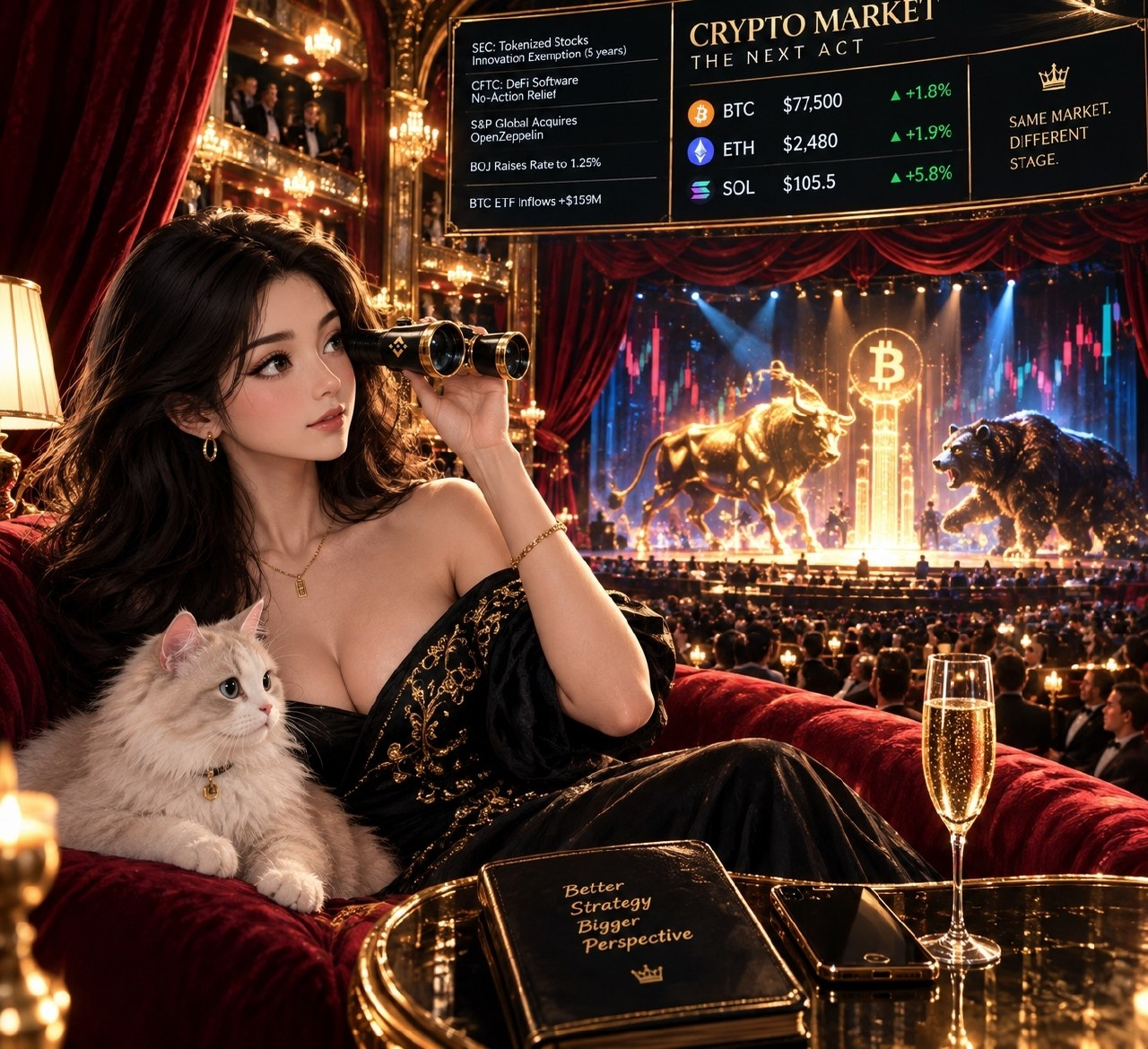
🔥 Regulatory Risk-On: The SEC acts, BTC returns above $77K
The Fed and the Bank of Japan tightened policy in succession this week,
but the Crypto market turns green today instead.
BTC has reclaimed $77K, SOL breaks through $105, and DeFi, RWA, and some L2s clearly outperform the broader market.
🏛 SEC: Tokenized Stocks receive a 5-year “innovation exemption”
The SEC introduces an Innovation Exemption, allowing qualifying Tokenized Securities Venues to trade a portion of tokenized NMS stocks in a permissioned environment via AMMs and liquidity pools.
Key conditions:
• Must represent real stock ownership interests
• Includes shareholder rights such as dividends and voting
• Synthetic Stocks are not covered
• Issuers can raise objections before listing
• Trading volume, trading instruments, and transparency are restricted
This isn’t a complete overhaul of market-structure legislation, but it means stock trading is truly starting to move On-Chain.
⚡ CFTC simultaneously eases DeFi software restrictions
Yesterday, the CFTC expanded its No-Action scope: qualifying “Passive Software” providers, including some DeFi interfaces and self-custody wallet software, may avoid enforcement for having to register as an Introducing Broker for related activities, provided certain conditions are met—such as not custodying users’ assets.
The two regulatory actions appeared almost at the same time.
CLARITY is holding things up, but the On-Chain market isn’t stopping.
🏦 S&P Global to acquire OpenZeppelin
S&P Global announced the acquisition of OpenZeppelin.
OpenZeppelin’s smart contract infrastructure has supported transfers worth more than $37T in total, completed 900+ security projects, and uncovered 10,000+ potential vulnerabilities.
Traditional finance isn’t just buying Crypto assets,
but the security infrastructure of the On-Chain market itself.
🇯🇵 Bank of Japan: Rate hike to 1.25%
The BOJ raised interest rates by 25 bps to 1.25%, the highest level since 1995.
But the yen actually weakened instead, with no obvious reversal of the carry trade in the market for now.
Meanwhile, BTC is back above $77K.
📈 ETF finally sees inflows
On September 17, U.S. spot BTC ETFs recorded net inflows of about $159M, ending two straight days of large outflows.
The prior two days saw cumulative outflows of about $746M,
so what’s happening now looks more like funds are trying again to step in and absorb supply, rather than the trend having fully reversed.
🎯 What really changed today isn’t the interest rate—it’s “where the market is trading.”
The Fed raised rates,
so did the BOJ,
#1688家族family
Brief$BNB🧧
🔥 Regulatory Risk-On: The SEC acts, BTC returns above $77K
The Fed and the Bank of Japan tightened policy in succession this week,
but the Crypto market turns green today instead.
BTC has reclaimed $77K, SOL breaks through $105, and DeFi, RWA, and some L2s clearly outperform the broader market.
🏛 SEC: Tokenized Stocks receive a 5-year “innovation exemption”
The SEC introduces an Innovation Exemption, allowing qualifying Tokenized Securities Venues to trade a portion of tokenized NMS stocks in a permissioned environment via AMMs and liquidity pools.
Key conditions:
• Must represent real stock ownership interests
• Includes shareholder rights such as dividends and voting
• Synthetic Stocks are not covered
• Issuers can raise objections before listing
• Trading volume, trading instruments, and transparency are restricted
This isn’t a complete overhaul of market-structure legislation, but it means stock trading is truly starting to move On-Chain.
⚡ CFTC simultaneously eases DeFi software restrictions
Yesterday, the CFTC expanded its No-Action scope: qualifying “Passive Software” providers, including some DeFi interfaces and self-custody wallet software, may avoid enforcement for having to register as an Introducing Broker for related activities, provided certain conditions are met—such as not custodying users’ assets.
The two regulatory actions appeared almost at the same time.
CLARITY is holding things up, but the On-Chain market isn’t stopping.
🏦 S&P Global to acquire OpenZeppelin
S&P Global announced the acquisition of OpenZeppelin.
OpenZeppelin’s smart contract infrastructure has supported transfers worth more than $37T in total, completed 900+ security projects, and uncovered 10,000+ potential vulnerabilities.
Traditional finance isn’t just buying Crypto assets,
but the security infrastructure of the On-Chain market itself.
🇯🇵 Bank of Japan: Rate hike to 1.25%
The BOJ raised interest rates by 25 bps to 1.25%, the highest level since 1995.
But the yen actually weakened instead, with no obvious reversal of the carry trade in the market for now.
Meanwhile, BTC is back above $77K.
📈 ETF finally sees inflows
On September 17, U.S. spot BTC ETFs recorded net inflows of about $159M, ending two straight days of large outflows.
The prior two days saw cumulative outflows of about $746M,
so what’s happening now looks more like funds are trying again to step in and absorb supply, rather than the trend having fully reversed.
🎯 What really changed today isn’t the interest rate—it’s “where the market is trading.”
The Fed raised rates,
so did the BOJ,
#1688家族family

@Anna-汤圆
is speaking[LIVE] 🎙️ Money comes in like the wind! Wake up and you’ve made money again
3.7k listens


静静Amily
·
--
#美联储加息是否已成定局 9月本次加息已经落地(定局):美联储9月议息会议加息25bp,联邦基金利率来到3.75%-4.00%,2023年7月之后首次重启加息。
This hike has already taken effect. Now the market is looking at another rate hike by the end of the year—it’s all about expectations. Will $BTC Bitcoin go up or go down?
This hike has already taken effect. Now the market is looking at another rate hike by the end of the year—it’s all about expectations. Will $BTC Bitcoin go up or go down?
静静Amily
·
--
[Ended] 🎙️ Dark Friday, or Happy Friday?
6.1k listens

正乾商学--四条2
·
--
Are you really suited to make a living by trading?
Part Six
⑥ Finally, ask yourself one more question
Do you really spend a lot of time every day learning and analyzing?
Many people ask me:
“Why don’t I have results even after trading for a year?”
But if you dig in carefully:
How many hours do you actually spend learning every day?
Do you do a review afterward?
Do you keep a trading log?
Do you track your win rate, profit-to-loss ratio, and maximum drawdown?
Do you analyze what kinds of market conditions you are most likely to make mistakes in?
In the end, you’ll find that:
In fact, many people don’t really do it.
So some people say:
“I’m not good at trading, so trading isn’t for me.”
I think that conclusion was reached too quickly.
You should first ask yourself:
Have I really built a trading environment that suits me?
Have I really found a trading approach that fits my personality?
Have I really put in enough time to learn?
Have I systematically verified my method?
If these questions still haven’t been resolved,
then it’s time to say:
“Trading isn’t working.”
Actually, it’s still too early.
Finally, what I want to say is:
Many people understand “successful trading” as:
Finding a magical indicator.
But in reality, truly long-term, stable trading is more like a complete system:
your income structure
+your lifestyle
+your trading
+your personality
+a trading style that suits you
+knowledge
+risk management
+mental resilience
As long as any one of these elements has been a problem for a long time,
it may eventually show up in your trading results.
So before asking:
“Can I get rich by trading?”
first ask yourself:
“Is my current life really already prepared for me to become a trader?”
This may be far more important than learning another indicator.
If you’re interested in trading, feel free to leave a comment in the comment section or join the chat room to exchange ideas and learn together and grow together!
#Paradigm披露持有ZEC #Paradigm披露持有ZEC
Part Six
⑥ Finally, ask yourself one more question
Do you really spend a lot of time every day learning and analyzing?
Many people ask me:
“Why don’t I have results even after trading for a year?”
But if you dig in carefully:
How many hours do you actually spend learning every day?
Do you do a review afterward?
Do you keep a trading log?
Do you track your win rate, profit-to-loss ratio, and maximum drawdown?
Do you analyze what kinds of market conditions you are most likely to make mistakes in?
In the end, you’ll find that:
In fact, many people don’t really do it.
So some people say:
“I’m not good at trading, so trading isn’t for me.”
I think that conclusion was reached too quickly.
You should first ask yourself:
Have I really built a trading environment that suits me?
Have I really found a trading approach that fits my personality?
Have I really put in enough time to learn?
Have I systematically verified my method?
If these questions still haven’t been resolved,
then it’s time to say:
“Trading isn’t working.”
Actually, it’s still too early.
Finally, what I want to say is:
Many people understand “successful trading” as:
Finding a magical indicator.
But in reality, truly long-term, stable trading is more like a complete system:
your income structure
+your lifestyle
+your trading
+your personality
+a trading style that suits you
+knowledge
+risk management
+mental resilience
As long as any one of these elements has been a problem for a long time,
it may eventually show up in your trading results.
So before asking:
“Can I get rich by trading?”
first ask yourself:
“Is my current life really already prepared for me to become a trader?”
This may be far more important than learning another indicator.
If you’re interested in trading, feel free to leave a comment in the comment section or join the chat room to exchange ideas and learn together and grow together!
#Paradigm披露持有ZEC #Paradigm披露持有ZEC
灼见
·
--
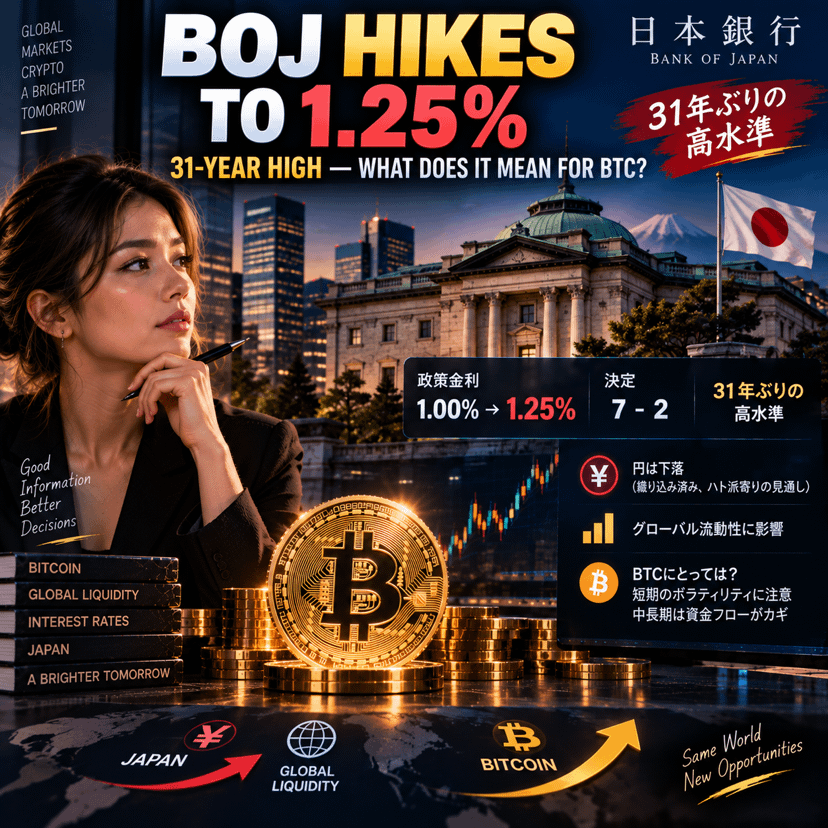
🚨 Bank of Japan raises rates to a 31-year high—what should BTC watch out for?
The Bank of Japan has raised its policy rate from 1.00% to 1.25%, reaching about the highest level in roughly 31 years.
Many people think:
Japan hikes rates—what does that have to do with BTC?
In fact, the connection could be bigger than you might imagine.
For many years, Japan has been one of the world’s key sources of low-cost funding.
Now that Japan’s interest rates continue to rise, it means:
💴 The cost of JPY funding increases
💧 Global liquidity at the margin tightens
📉 Carry trades may adjust further
⚡ Short-term volatility in risk assets like BTC could be amplified
But what the market truly needs to watch isn’t just this one +25 bps move.
It’s:
Whether Japan is entering a sustained rate-hike cycle.
If Japan’s rates keep normalizing, on top of the high-rate environment in the U.S., global funding costs may rise further.
For $BTC, the truly big variable is always:
Global liquidity.
So next, I’ll focus on monitoring—
JPY + U.S. Treasury yields + BTC’s reaction.
👇 Do you think Japan’s rate hike has on Crypto:
Little impact 🟢 / underestimated impact 🔴?
#BTC #ETH #BNB
The Bank of Japan has raised its policy rate from 1.00% to 1.25%, reaching about the highest level in roughly 31 years.
Many people think:
Japan hikes rates—what does that have to do with BTC?
In fact, the connection could be bigger than you might imagine.
For many years, Japan has been one of the world’s key sources of low-cost funding.
Now that Japan’s interest rates continue to rise, it means:
💴 The cost of JPY funding increases
💧 Global liquidity at the margin tightens
📉 Carry trades may adjust further
⚡ Short-term volatility in risk assets like BTC could be amplified
But what the market truly needs to watch isn’t just this one +25 bps move.
It’s:
Whether Japan is entering a sustained rate-hike cycle.
If Japan’s rates keep normalizing, on top of the high-rate environment in the U.S., global funding costs may rise further.
For $BTC, the truly big variable is always:
Global liquidity.
So next, I’ll focus on monitoring—
JPY + U.S. Treasury yields + BTC’s reaction.
👇 Do you think Japan’s rate hike has on Crypto:
Little impact 🟢 / underestimated impact 🔴?
#BTC #ETH #BNB
饼哥HODL
·
--
Alone, trading coins, drinking tea ☕️
No small talk, no gossip
I only care about whether it’s going up or down, the Golden Dog x100 B-tokens
I don’t splurge—I save for adding to positions
Stable emotions; only a limit-down can beat me 📈
No small talk, no gossip
I only care about whether it’s going up or down, the Golden Dog x100 B-tokens
I don’t splurge—I save for adding to positions
Stable emotions; only a limit-down can beat me 📈

Bilverse
·
--
🧧 $ETH believers, where you at? 👀🔥
Markets test your conviction.
Real communities strengthen it. 🧡
If you’ve been building, supporting, and holding through the highs & lows, this one’s for you.
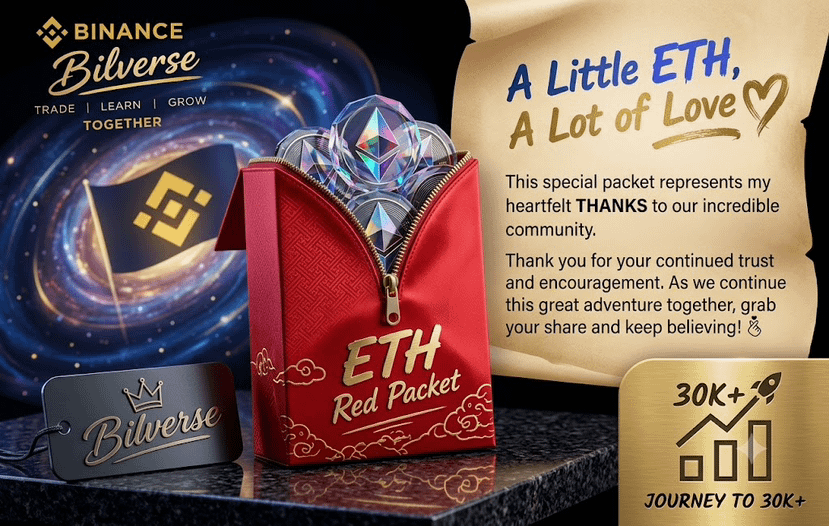
🎁 $ETH Red Packet is BACK!
💬 Comment “5000”
❤️ Like + Repost
✅ Follow @Bilverse
No complicated quests.
Just a little ETH love for the community. 🧧
Still bullish? 🚀
#ETH #Bilverse #RedPacketMission
Markets test your conviction.
Real communities strengthen it. 🧡
If you’ve been building, supporting, and holding through the highs & lows, this one’s for you.
🎁 $ETH Red Packet is BACK!
💬 Comment “5000”
❤️ Like + Repost
✅ Follow @Bilverse
No complicated quests.
Just a little ETH love for the community. 🧧
Still bullish? 🚀
#ETH #Bilverse #RedPacketMission
币圈现货小旋风
·
--
Spring, summer, autumn, and winter are full of worries over money; I roam everywhere in the four directions—east, south, west, and north. 🔥 I’ve tasted every kind of hardship in the coin world, just to never bow my head in front of people. 🔥 There is no way back in life—once the principal is gone, who can keep it? 🔥 Hoping the market will turn warm again, more take-profits and fewer worries. 🔥


VeronX143
·
--
🧧✨ WHO’S READY FOR A USDT RED PACKET? 💸
The Red Packet is waiting for the crypto community! 🔥👀
To join:
💬 Comment 999
❤️ Hit Like
🔄 Repost & share
➕ Follow
That’s all! Keep an eye out and don’t miss the drop. 🧧🚀
Best of luck, everyone! 💚💰
#USDT #RedPacket #Crypto
The Red Packet is waiting for the crypto community! 🔥👀
To join:
💬 Comment 999
❤️ Hit Like
🔄 Repost & share
➕ Follow
That’s all! Keep an eye out and don’t miss the drop. 🧧🚀
Best of luck, everyone! 💚💰
#USDT #RedPacket #Crypto

楠楠nannan势不可挡
·
--
🧧🧧🧧🧧🧧🧧🧧🧧🧧🧧🧧
The market rises and falls, yet people’s hearts remain steady. It’s okay to go slower—long-term thinking, and time will deliver the answer. $BNB
The market rises and falls, yet people’s hearts remain steady. It’s okay to go slower—long-term thinking, and time will deliver the answer. $BNB


SabTheTrader
·
--
After the Fed raised rates by 25bp last night, the market surprisingly didn’t keep selling off.👀
Yesterday, the three major U.S. stock indexes all rebounded: the Nasdaq rose 1.69%, the S&P 500 rose 1.14%, and the Dow rose 0.62%. At the same time, U.S. Treasury yields fell back and oil prices dropped, giving risk assets some breathing room.
BTC also moved back above $76,000, with a slight 24H uptick.
So, news is news, and price is price.
Rate hikes ≠ the market will definitely fall.😂
As always:
Price action has the final say.🧡
Yesterday, the three major U.S. stock indexes all rebounded: the Nasdaq rose 1.69%, the S&P 500 rose 1.14%, and the Dow rose 0.62%. At the same time, U.S. Treasury yields fell back and oil prices dropped, giving risk assets some breathing room.
BTC also moved back above $76,000, with a slight 24H uptick.
So, news is news, and price is price.
Rate hikes ≠ the market will definitely fall.😂
As always:
Price action has the final say.🧡


奋斗Hustle-1688
·
--
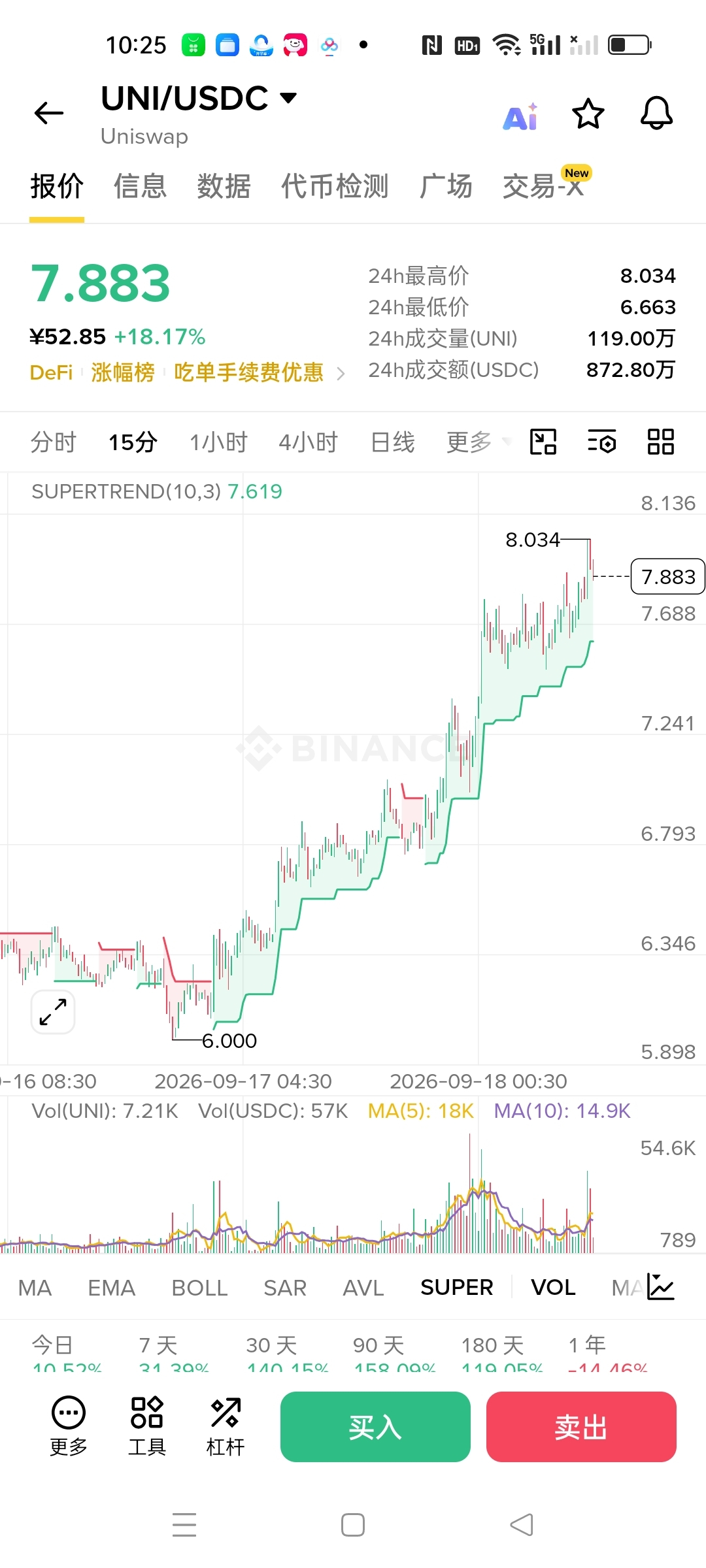
$UNI I’m going to hold it tight and never let go
Log in to explore more content