Everyone wants the next Nvidia. I’m asking what happens when AI gets a pair of hands.
I’m building my portfolio from a salary. I can’t buy every exciting story, so “what comes after the AI rally?” is a real question for me.
My answer: robotics and the infrastructure that makes it useful.
I’m bullish on AI over the long term. $NVDA reported roughly $89 billion in quarterly data-center revenue in its latest results, up 117% year over year. That’s real spending. But strong demand doesn’t automatically make every AI stock a good buy.
Tesla’s Optimus is what really gets my attention. Tesla describes its goal as an autonomous humanoid capable of handling unsafe, repetitive or boring tasks.
If robots can perform useful work reliably and at a competitive cost, I believe they could eventually become as indispensable as computers.
That’s the opportunity I’m watching beyond chips: machines turning intelligence into physical work, plus the power systems and components behind them.
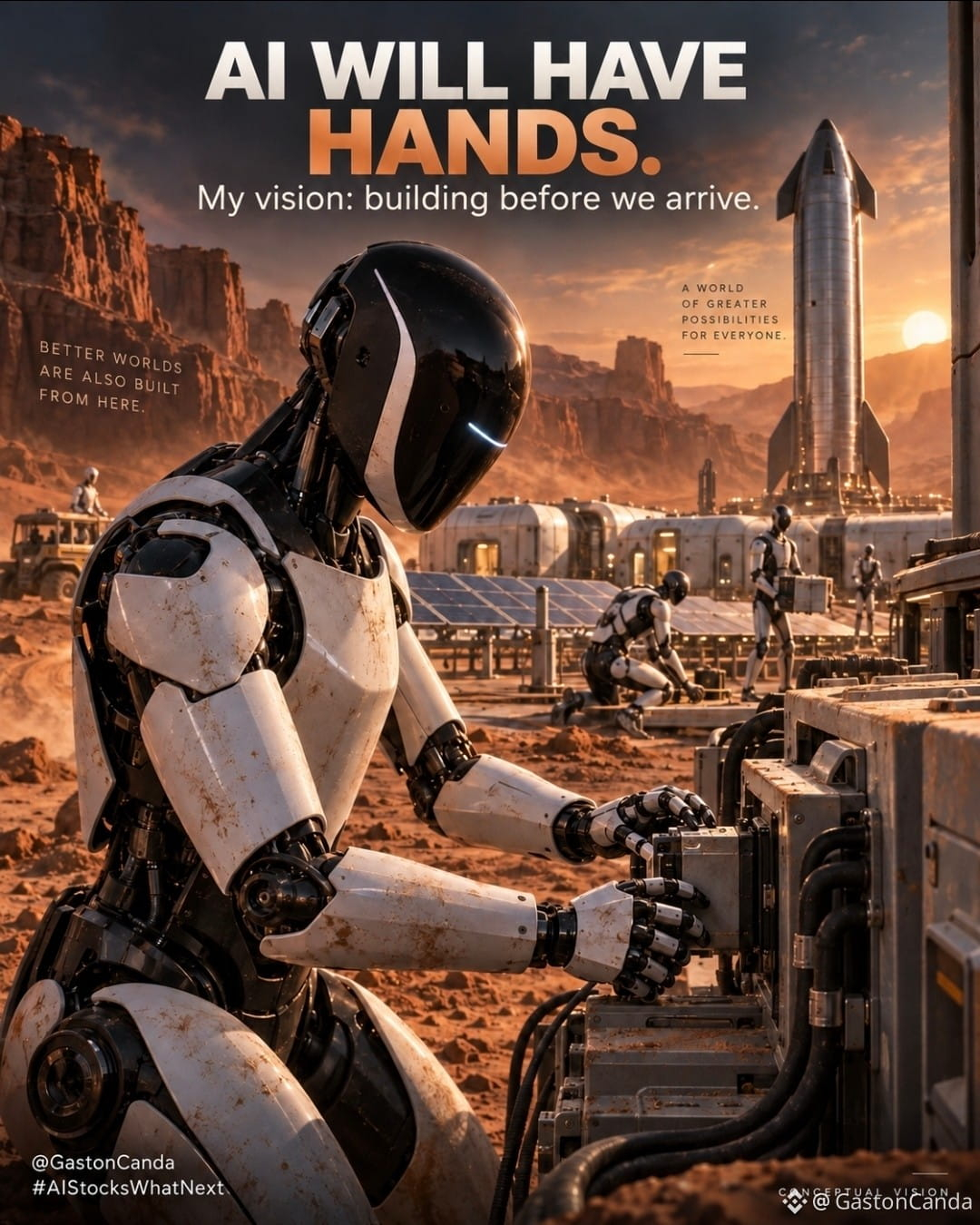
It also connects to my longer-term space thesis. I can imagine robots preparing infrastructure before humans arrive. That’s my hypothesis—not a confirmed $TSLA or SpaceX deployment plan.
Before putting more of my salary behind this theme, I want evidence: useful autonomous work, production costs, paying customers and a valuation that leaves room for mistakes.
Musk’s ambition gets my attention. Execution will earn my conviction.
Which would you rather own for the next decade: the AI chips, the robots, or the companies supplying their power—and why?
@GastonCanda
#AIStocksWhatNext
$NVDA
I’m building my portfolio from a salary. I can’t buy every exciting story, so “what comes after the AI rally?” is a real question for me.
My answer: robotics and the infrastructure that makes it useful.
I’m bullish on AI over the long term. $NVDA reported roughly $89 billion in quarterly data-center revenue in its latest results, up 117% year over year. That’s real spending. But strong demand doesn’t automatically make every AI stock a good buy.
Tesla’s Optimus is what really gets my attention. Tesla describes its goal as an autonomous humanoid capable of handling unsafe, repetitive or boring tasks.
If robots can perform useful work reliably and at a competitive cost, I believe they could eventually become as indispensable as computers.
That’s the opportunity I’m watching beyond chips: machines turning intelligence into physical work, plus the power systems and components behind them.
It also connects to my longer-term space thesis. I can imagine robots preparing infrastructure before humans arrive. That’s my hypothesis—not a confirmed $TSLA or SpaceX deployment plan.
Before putting more of my salary behind this theme, I want evidence: useful autonomous work, production costs, paying customers and a valuation that leaves room for mistakes.
Musk’s ambition gets my attention. Execution will earn my conviction.
Which would you rather own for the next decade: the AI chips, the robots, or the companies supplying their power—and why?
@GastonCanda
#AIStocksWhatNext
$NVDA