#amd市值首破1万亿美元
👉 万亿门槛跨过去了
AMD’s market cap first crossed the $1 trillion mark.
The stock has been rising for five straight days.
What’s lifting it is AI and data center orders.
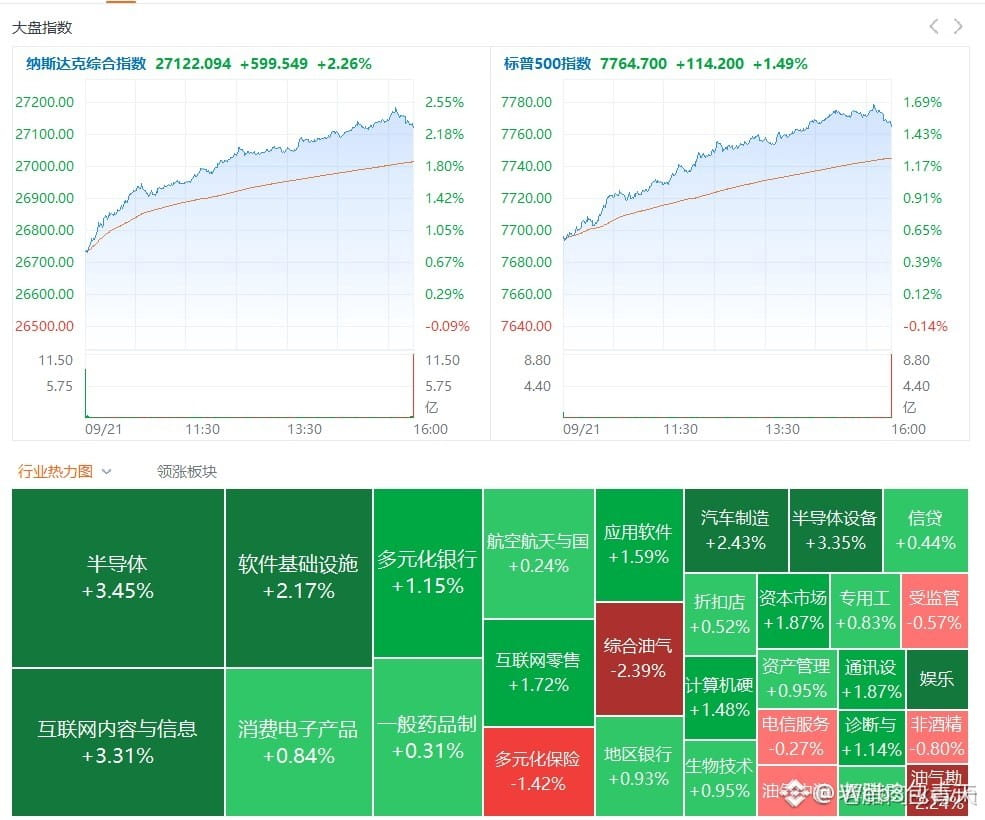
In this rally for semiconductor stocks, capital has pushed it to record levels.
During the same period, Nvidia didn’t quite follow.
Bloomberg attributes the valuation to this product line.
Its longtime rival, Intel, has fallen behind—widening the gap between the two companies.
As for the $1 trillion threshold, until now only a handful of chip companies had managed to cross it.
Behind the valuation are expectations for orders and capacity.
Rising chip prices will filter through to cloud providers, and then into the pricing of AI services.
The pressure will be felt first in compute costs.
Measured in market cap, it has crossed the $1 trillion threshold in one jump.
On the demand side, AI training and inference are both pulling along chip demand.
The money spent on buying the cards will ultimately be factored into the cost of using the models.
The stock’s upside elasticity comes from expectations for orders—not current-period profits.
For crypto, pricing power along the compute chain is shifting from miners to chipmakers.
How far do you think this chip rally can still go? Let’s discuss in the comments.
👉 万亿门槛跨过去了
AMD’s market cap first crossed the $1 trillion mark.
The stock has been rising for five straight days.
What’s lifting it is AI and data center orders.
In this rally for semiconductor stocks, capital has pushed it to record levels.
During the same period, Nvidia didn’t quite follow.
Bloomberg attributes the valuation to this product line.
Its longtime rival, Intel, has fallen behind—widening the gap between the two companies.
As for the $1 trillion threshold, until now only a handful of chip companies had managed to cross it.
Behind the valuation are expectations for orders and capacity.
Rising chip prices will filter through to cloud providers, and then into the pricing of AI services.
The pressure will be felt first in compute costs.
Measured in market cap, it has crossed the $1 trillion threshold in one jump.
On the demand side, AI training and inference are both pulling along chip demand.
The money spent on buying the cards will ultimately be factored into the cost of using the models.
The stock’s upside elasticity comes from expectations for orders—not current-period profits.
For crypto, pricing power along the compute chain is shifting from miners to chipmakers.
How far do you think this chip rally can still go? Let’s discuss in the comments.