
灼见
891 Posts
灼见
灼见|K线只是表象,人心才是博弈的终点。
13年实战沉淀,拒绝废话,只做最硬核的技术拆解与宏观透视。帮你看清下一步。如果你厌倦了噪音,这里是你的最后一站。
Open Trade

BTC Holder
Occasional Trader
8.5 Years
507 Following
25.9K+ Followers
8.3K+ Liked
Posts
Portfolio
All
Quotes
Videos
PINNED
Cryptology_7
·
--
𝑪 𝑹 𝒀 𝑷 𝑻 𝑶 𝑳 𝑶 𝑮 𝒀 💙
Every candle tells a story. Every failure teaches us a lesson. Every comeback strengthens our determination.💯📜
$ONE
#BinanceSquareFamily #Cryptology_7
Every candle tells a story. Every failure teaches us a lesson. Every comeback strengthens our determination.💯📜
$ONE
#BinanceSquareFamily #Cryptology_7



Baoluo币商资本
·
--
#Canary二次修订质押SEI现货ETF申请 #黑客利用SingularityNET漏洞增发代币
In fact, a lot of recent news is closely related to the market; it mainly depends on where the hot money goes after the rate hike.
$BTC $GOOGL.US
In fact, a lot of recent news is closely related to the market; it mainly depends on where the hot money goes after the rate hike.
$BTC $GOOGL.US


路人1688luren
·
--
Institutions can now borrow money using large pancakes (BTC) without having to sell.
Circle launched a new service today: institutions can use Bitcoin as collateral to borrow $USDC . The process isn’t complicated—first convert BTC into its own cirBTC (1:1 wrapped), then stake it as collateral. The loan goes through lending protocols like Morpho, and afterward it will be connected to Aave. Custody is handled by Circle National Trust, and the chain used is its own $ARC plus Ethereum.
My first reaction: this is basically opening another door for institutions that don’t want to sell their coins. Previously, if they needed cash, they had to sell; now they can pledge the coins and borrow instead. Pair that with today’s BTC price crossing 85,000 and everyone scrambling to buy—it’s a pretty delicate timing. #Circle推出机构比特币抵押借贷
Circle launched a new service today: institutions can use Bitcoin as collateral to borrow $USDC . The process isn’t complicated—first convert BTC into its own cirBTC (1:1 wrapped), then stake it as collateral. The loan goes through lending protocols like Morpho, and afterward it will be connected to Aave. Custody is handled by Circle National Trust, and the chain used is its own $ARC plus Ethereum.
My first reaction: this is basically opening another door for institutions that don’t want to sell their coins. Previously, if they needed cash, they had to sell; now they can pledge the coins and borrow instead. Pair that with today’s BTC price crossing 85,000 and everyone scrambling to buy—it’s a pretty delicate timing. #Circle推出机构比特币抵押借贷




SabTheTrader
·
--
BullishMondays’ move is way stronger than the weekend.😂
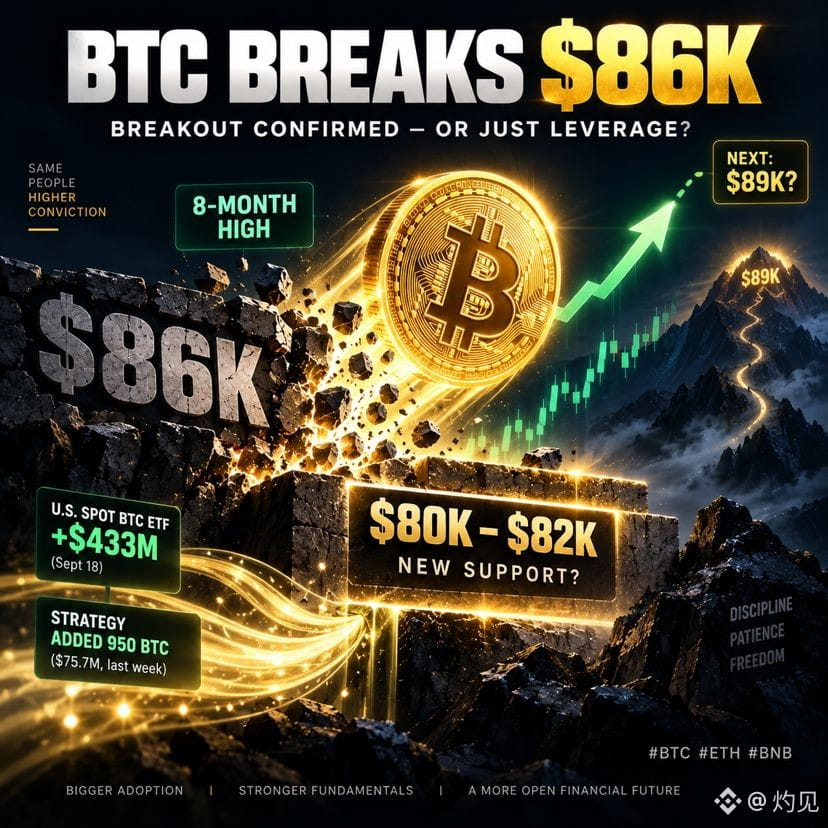
$BTC surged all the way from around $81,000 to break through $86,000; $ETH is up about 5.6%. SOL and XRP are both up around 7%. On the U.S. stock side, $QQQB also hit a record closing high. Oil prices pulled back, and the 10Y U.S. Treasury yield slipped back below 5%—overall risk appetite is clearly back.
Next week won’t be quiet either: on Tuesday and Wednesday, several Fed officials are scheduled to speak; on Wednesday, watch the U.S. PMI. On Thursday there are initial jobless claims for the week, plus a meeting between Trump and Xi Jinping. On Friday, there are durable goods orders and the University of Michigan consumer sentiment.
If the data is strong and the Fed remains more hawkish, Treasury yields and the dollar could move higher again, which may put pressure on BTC and tech stocks. On the other hand, if the data cools off or expectations for China–U.S. trade improve, risk-asset sentiment could continue to get support.
And as usual, I’ll remind everyone once more: before and after major news breaks, try to avoid jumping in. Let the market work out its structure on its own—enter only after you can see it clearly, yeah~
#比特币突破8.5万美元
$BTC surged all the way from around $81,000 to break through $86,000; $ETH is up about 5.6%. SOL and XRP are both up around 7%. On the U.S. stock side, $QQQB also hit a record closing high. Oil prices pulled back, and the 10Y U.S. Treasury yield slipped back below 5%—overall risk appetite is clearly back.
Next week won’t be quiet either: on Tuesday and Wednesday, several Fed officials are scheduled to speak; on Wednesday, watch the U.S. PMI. On Thursday there are initial jobless claims for the week, plus a meeting between Trump and Xi Jinping. On Friday, there are durable goods orders and the University of Michigan consumer sentiment.
If the data is strong and the Fed remains more hawkish, Treasury yields and the dollar could move higher again, which may put pressure on BTC and tech stocks. On the other hand, if the data cools off or expectations for China–U.S. trade improve, risk-asset sentiment could continue to get support.
And as usual, I’ll remind everyone once more: before and after major news breaks, try to avoid jumping in. Let the market work out its structure on its own—enter only after you can see it clearly, yeah~
#比特币突破8.5万美元

分析师尤斯1688
·
--
🎁 Claim your Gift 🎁
🧧🧧🧧🧧🧧
🧧🧧🧧🧧🧧
🧧🧧🧧🧧🧧
🧧🧧🧧🧧🧧

圣克斯Lucky1688
·
--
🧧🎁🌹🧧🎁🌹
Xiaomo is bullish on a Bitcoin short-squeeze scenario: In its latest report, JPMorgan Chase noted that BlackRock’s Bitcoin spot ETF (IBIT) has short positions nearing this year’s high point. This imbalance in open-contract ratios may create more upside for Bitcoin, because once the price rises, the short squeeze will further accelerate its rebound.
ZetaChain proposal approved—transitioning to Solana: With an overwhelming 99.4% support rate, the ZetaChain community passed Proposal No. 68. The vote will close its original Layer 1 blockchain and migrate and convert the ZETA token on a 1:1 basis into Solana-native SPL tokens. In the future, the team will focus on AI applications.
Follow me and answer to take away the $SOL red envelope!
🧧🎁🌹🧧🎁🌹
Xiaomo is bullish on a Bitcoin short-squeeze scenario: In its latest report, JPMorgan Chase noted that BlackRock’s Bitcoin spot ETF (IBIT) has short positions nearing this year’s high point. This imbalance in open-contract ratios may create more upside for Bitcoin, because once the price rises, the short squeeze will further accelerate its rebound.
ZetaChain proposal approved—transitioning to Solana: With an overwhelming 99.4% support rate, the ZetaChain community passed Proposal No. 68. The vote will close its original Layer 1 blockchain and migrate and convert the ZETA token on a 1:1 basis into Solana-native SPL tokens. In the future, the team will focus on AI applications.
Follow me and answer to take away the $SOL red envelope!
🧧🎁🌹🧧🎁🌹



慢就是快Mike
·
--
$DOGE This wave, brothers—are you feeling comfortable?!
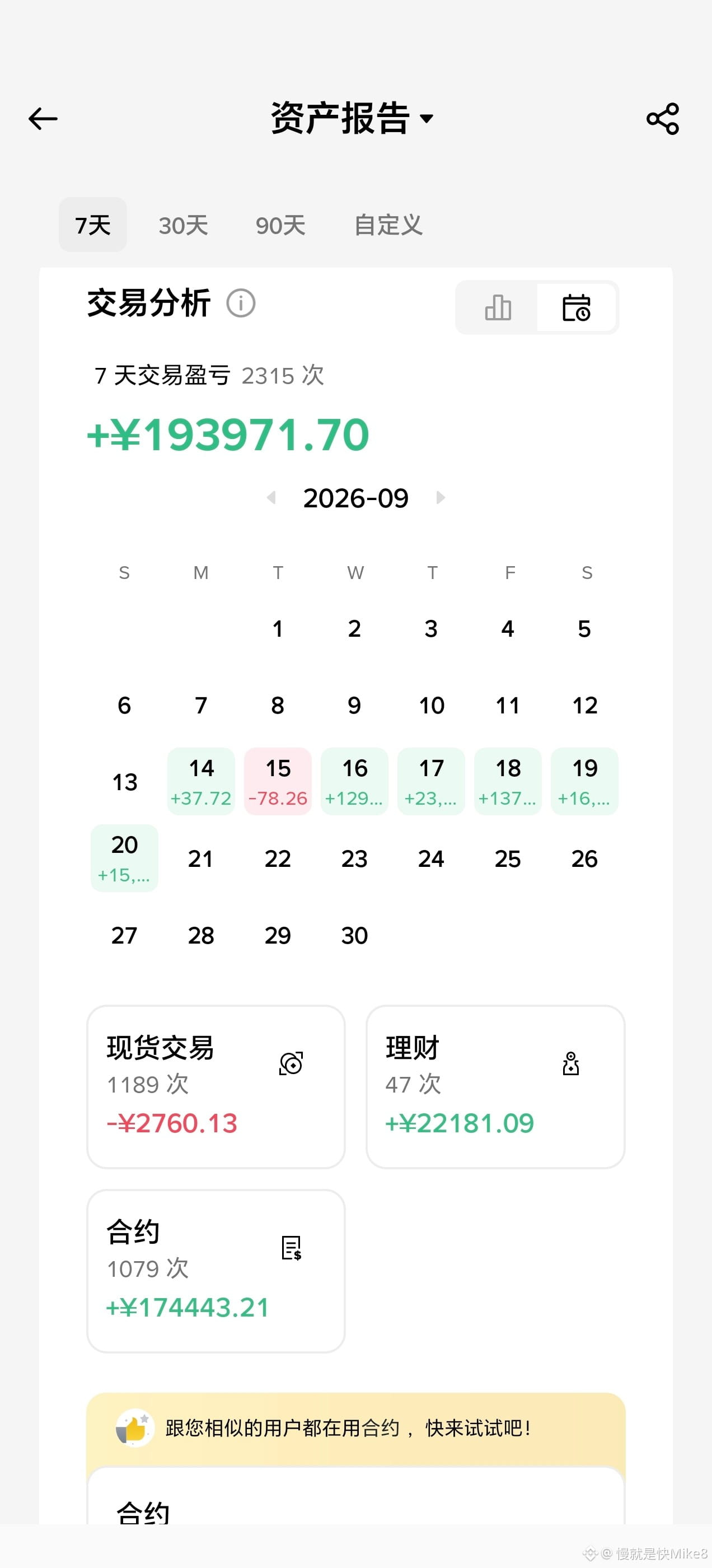


@辛迪cindy
is speaking[LIVE] 🎙️ Did the bull really come? Mainstream has been surging all the way
1k listens

灰s1688
·
--
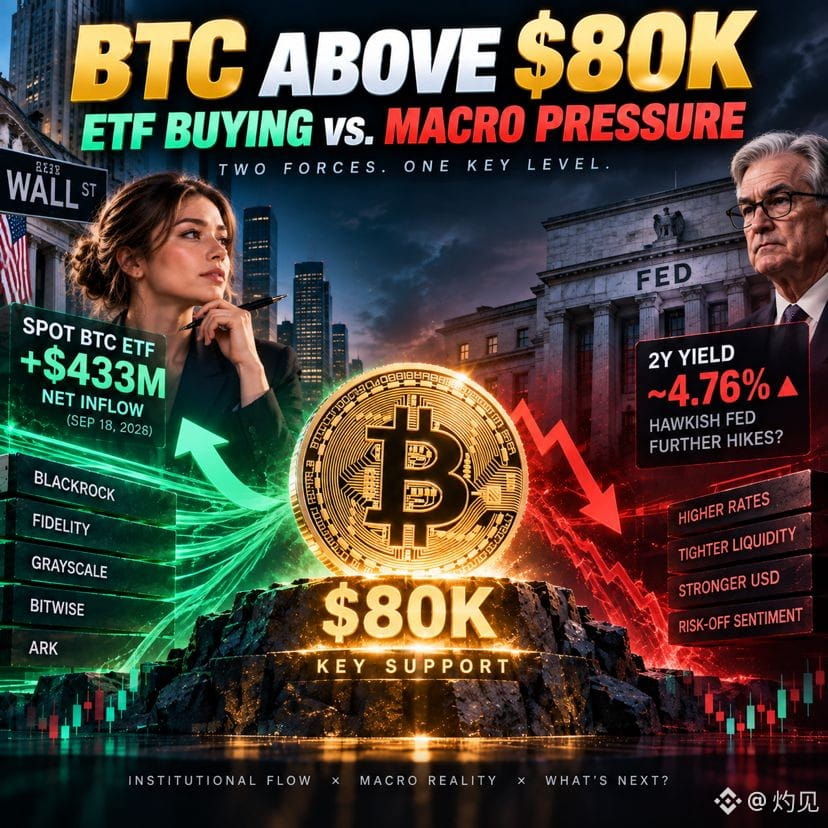
$BTC Just experienced a strong bullish surge; the price briefly broke through the $80,000 mark, shifting market sentiment from “bad news can’t move it” to “bulls have regained control.”
🧧🧧🧧
As of September 21, BTC has been trading in the $80,500–$82,000 range, with short-term pressure below $82,000.
The first support below is at $80,000; if it breaks, a pullback to $79,000 and even $78,000 is possible.
Spot inflows first pushed the price up to $80,000, and then stop-loss triggering by shorts further amplified the rally—within one hour, liquidations of short positions totaled about $130 million.
🧧🧧🧧
As of September 21, BTC has been trading in the $80,500–$82,000 range, with short-term pressure below $82,000.
The first support below is at $80,000; if it breaks, a pullback to $79,000 and even $78,000 is possible.
Spot inflows first pushed the price up to $80,000, and then stop-loss triggering by shorts further amplified the rally—within one hour, liquidations of short positions totaled about $130 million.
SabTheTrader
·
--
BullishOn Monday, the coin circle keeps pushing through. 👀
$BTC climbed from around 81,000 over the weekend all the way to $85,000, while $ETH came in at $2,720+; $SOL and XRP’s gains today are also around 6%.
Overall, the total crypto market cap rose about 5% at one point during the day.
Over the weekend, I was still watching whether 80,000 can hold. On Monday, I’ve already started looking at 85,000! 😆
Don’t rush to guess the top in this market—just keep watching how the price moves.
#比特币突破8.5万美元
$BTC climbed from around 81,000 over the weekend all the way to $85,000, while $ETH came in at $2,720+; $SOL and XRP’s gains today are also around 6%.
Overall, the total crypto market cap rose about 5% at one point during the day.
Over the weekend, I was still watching whether 80,000 can hold. On Monday, I’ve already started looking at 85,000! 😆
Don’t rush to guess the top in this market—just keep watching how the price moves.
#比特币突破8.5万美元

慢就是快Mike
·
--
【Limited-time referral commission link for new and old users】
Binance has launched a feature to rebind your referral invitation code. If you previously forgot to enter your invite code and missed out on 0 commission, you’re in luck.
Many users accidentally registered (or registered too early and didn’t know about invitation codes) and failed to enter an invite code, which resulted in no commission being returned. Today, Binance rolled out a new feature to bind the invitation code retroactively, solving this issue.
Invitation code: ETHNEW
We suggest that anyone who didn’t receive commission checks whether they qualify.
【Rules for rebinding an invitation code】
1. You have never bound an invitation code before.
2. Your trading volume in the past 3 months is less than 5000.
Access the page directly: 返佣链接
Referral commission for new users unconditionally: 返佣链接
X (Twitter): @zhngq318294
Or use my referral code to contact customer service and ask to bind this referral code. BCTNEW123
Live streaming on weekdays: 22:00–01:00
Weekends: 14:00–00:00
Binance has launched a feature to rebind your referral invitation code. If you previously forgot to enter your invite code and missed out on 0 commission, you’re in luck.
Many users accidentally registered (or registered too early and didn’t know about invitation codes) and failed to enter an invite code, which resulted in no commission being returned. Today, Binance rolled out a new feature to bind the invitation code retroactively, solving this issue.
Invitation code: ETHNEW
We suggest that anyone who didn’t receive commission checks whether they qualify.
【Rules for rebinding an invitation code】
1. You have never bound an invitation code before.
2. Your trading volume in the past 3 months is less than 5000.
Access the page directly: 返佣链接
Referral commission for new users unconditionally: 返佣链接
X (Twitter): @zhngq318294
Or use my referral code to contact customer service and ask to bind this referral code. BCTNEW123
Live streaming on weekdays: 22:00–01:00
Weekends: 14:00–00:00

只会呐喊的尖刀手
·
--
A painful truth:
Many people don’t have the patience to spend 3 years building their own career
but they do have the patience to work for someone else for 40 years
Many people don’t have the patience to spend 3 years building their own career
but they do have the patience to work for someone else for 40 years


长得帅不如跑的快1688
·
--
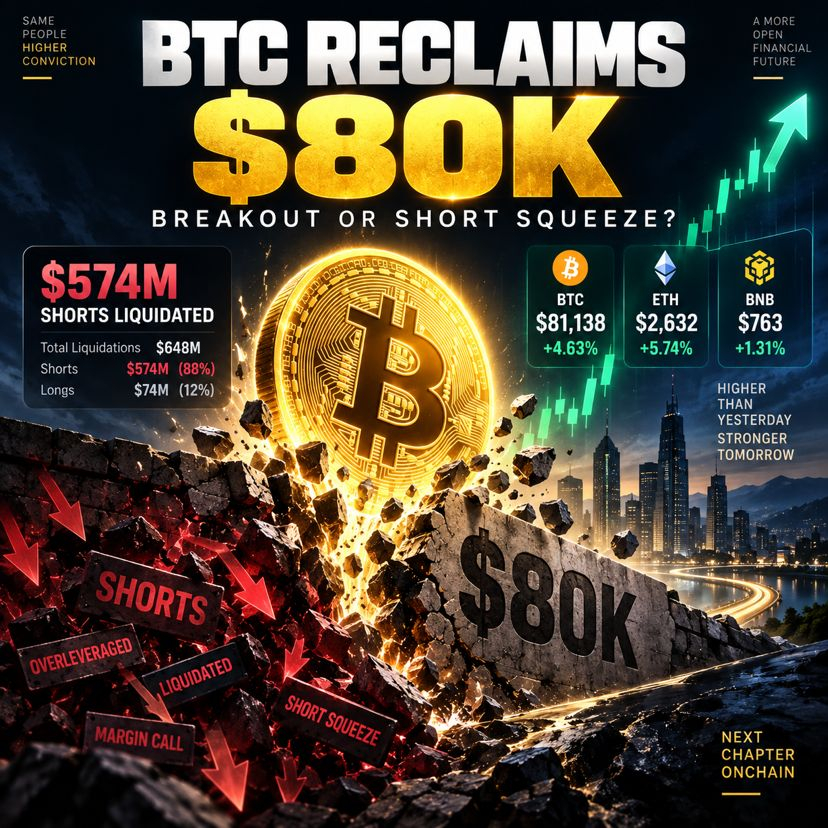
🚨 BITCOIN IS BACK ABOVE $81K.
But don’t call it a new bull run just yet.
The biggest story today isn’t just price.
It’s this:
SHORTS ARE GETTING WIPED OUT.
Over the past 24 hours:
₿ BTC → $81K+
Ξ ETH → $2,629, +5.7%
🔶 BNB → around $763
Meanwhile:
💥 ~$648M total liquidations
🔴 ~$574M shorts liquidated
⚡ Nearly 89% of liquidations were SHORTS
That tells us one thing:
SHORT SQUEEZE momentum is clearly helping this move.
So the real question isn’t:
“Can BTC break $80K?”
It already did.
The real question is:
CAN BTC HOLD $80K?
If $80K flips from resistance into support,
this rally could start becoming something much bigger.
But if BTC quickly falls back below $80K,
today’s move may have been driven more by forced short covering than sustainable demand.
Now I’m watching:
📍 BTC $80K support
💰 Spot buying after the squeeze
🔥 Leverage rebuilding
Ξ Whether ETH keeps outperforming BTC
👇 Your take?
$80K HOLDS — NEXT LEG 🟢
or
SHORT SQUEEZE THEN FADE 🔴?
#BTC #ETH #BNB
But don’t call it a new bull run just yet.
The biggest story today isn’t just price.
It’s this:
SHORTS ARE GETTING WIPED OUT.
Over the past 24 hours:
₿ BTC → $81K+
Ξ ETH → $2,629, +5.7%
🔶 BNB → around $763
Meanwhile:
💥 ~$648M total liquidations
🔴 ~$574M shorts liquidated
⚡ Nearly 89% of liquidations were SHORTS
That tells us one thing:
SHORT SQUEEZE momentum is clearly helping this move.
So the real question isn’t:
“Can BTC break $80K?”
It already did.
The real question is:
CAN BTC HOLD $80K?
If $80K flips from resistance into support,
this rally could start becoming something much bigger.
But if BTC quickly falls back below $80K,
today’s move may have been driven more by forced short covering than sustainable demand.
Now I’m watching:
📍 BTC $80K support
💰 Spot buying after the squeeze
🔥 Leverage rebuilding
Ξ Whether ETH keeps outperforming BTC
👇 Your take?
$80K HOLDS — NEXT LEG 🟢
or
SHORT SQUEEZE THEN FADE 🔴?
#BTC #ETH #BNB



Log in to explore more content