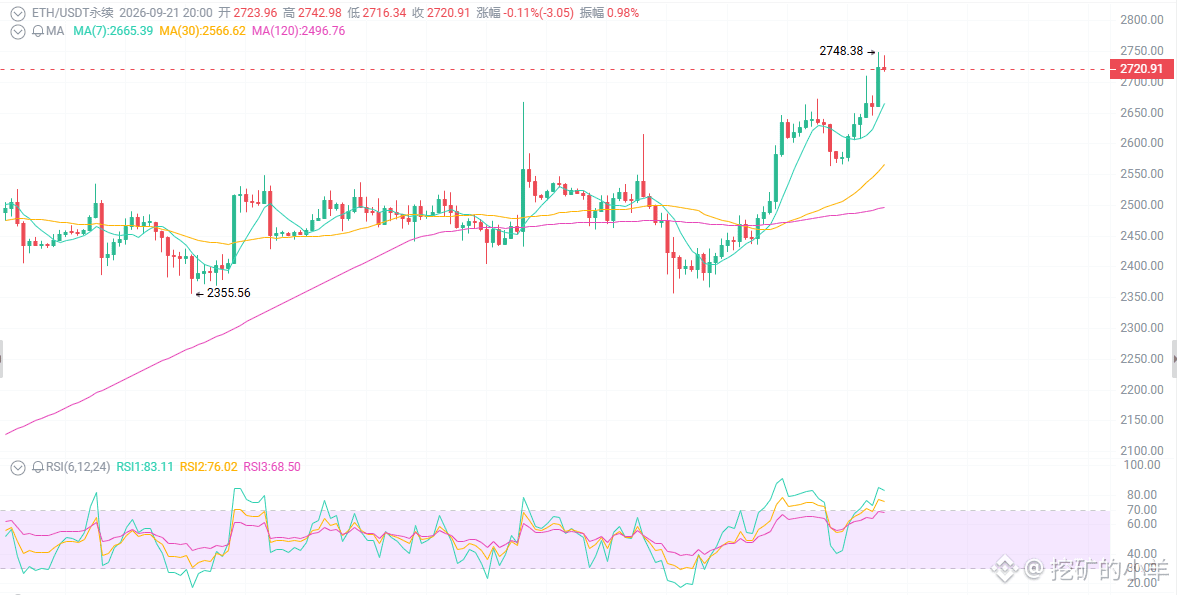
2720 US dollars’ worth of ETH—are you chasing it?
First, look at the surface: up 10% over the past week, up 3% in the last 24 hours, and it even touched 2749—OKX Perps at 2720. On the daily chart, volume broke out above 2550–2600, then a pullback confirmed it; the structure really has turned bullish. But the RSI is close to 70, and the number of 1-hour upper wicks is increasing. The sell pressure at 2745–2750 is clearly visible. The trend has turned bullish, but chasing highs in the short term is handing your head to the market.
First thing: rate hike is getting finalized—so why are you panicking about ETH not collapsing?
On September 16, the Fed raised rates by 25 bp, the first hike since 2023. Chair Warsh is relatively hawkish, and the dot plot could mean another increase. In the past, ETH would have dumped hard. But this time? ETH’s volatility is smaller than BTC, SOL, and XRP. After the hike, it actually moved along with ETF inflows and short squeezes. The negative news is priced in—the market isn’t buying the fear. The real ones that should be nervous are the shorts, not the longs.
Second thing: 35% of the circulating supply is being pulled via staking—whales and ETFs are buying, and you’re waiting for a crash
43.2 million ETH have been staked, accounting for 35.4% of supply. Into the queue: 1.75 million. Exits are only 131,000, and activation requires a wait time of more than 30 days. There is less and less ETH available in the market—and much of it is locked up. Meanwhile, BitMine increased holdings by 27.6k ETH last week; total holdings are 5.98 million ETH, about 4.9% of circulating supply, most of which is staked. On September 18, ETF net inflow was 143.8 million, with BlackRock contributing 114 million—ending three straight days of outflows.
Third thing: the Glamsterdam upgrade is in testing—don’t confuse testnet with the mainnet
Glamsterdam is entering a critical test phase. The Sepolia testnet runs until October 6, and the mainnet is scheduled for Q4. The core is ePBS, and the gas limit moving from 60 million toward 200 million—lowering fees and improving parallel processing. Plus the SEC’s five-year innovation exemption, which allows tokenization of U.S. stock trades on public chains; ETH as the RWA settlement layer benefits directly.
But note: this is a mid-term narrative, not a reason for a pump “tomorrow.”
Trading strategy
For short-term traders:
First buy zone: 2680–2700 on a pullback and stabilization (1H does not make new lows, then after a volume drop you get a volume expansion and price closes back).
Second buy zone: 2640–2655.
Stop loss: 2615–2630.
Targets: 2760 → 2800. If it can stand above 2760 on volume, then chase the second leg; move the stop loss to below 2700.
For swing traders:
Wait for a pullback between 2640–2680 to build positions in batches. Targets: 2950–3000. If the daily close breaks below 2550 and the mid-term structure weakens, exit first.
How to do shorts:
There are only two situations to try a small-size short—1) multiple failed breakouts from 2745–2760, with 1H showing engulfing candles/long upper wicks; targets 2680/2640; or 2) a break below 2640 followed by a failed retest. Otherwise, don’t try to top-tick counter-trend—right now the main trend is still an upside rebound.
First, look at the surface: up 10% over the past week, up 3% in the last 24 hours, and it even touched 2749—OKX Perps at 2720. On the daily chart, volume broke out above 2550–2600, then a pullback confirmed it; the structure really has turned bullish. But the RSI is close to 70, and the number of 1-hour upper wicks is increasing. The sell pressure at 2745–2750 is clearly visible. The trend has turned bullish, but chasing highs in the short term is handing your head to the market.
First thing: rate hike is getting finalized—so why are you panicking about ETH not collapsing?
On September 16, the Fed raised rates by 25 bp, the first hike since 2023. Chair Warsh is relatively hawkish, and the dot plot could mean another increase. In the past, ETH would have dumped hard. But this time? ETH’s volatility is smaller than BTC, SOL, and XRP. After the hike, it actually moved along with ETF inflows and short squeezes. The negative news is priced in—the market isn’t buying the fear. The real ones that should be nervous are the shorts, not the longs.
Second thing: 35% of the circulating supply is being pulled via staking—whales and ETFs are buying, and you’re waiting for a crash
43.2 million ETH have been staked, accounting for 35.4% of supply. Into the queue: 1.75 million. Exits are only 131,000, and activation requires a wait time of more than 30 days. There is less and less ETH available in the market—and much of it is locked up. Meanwhile, BitMine increased holdings by 27.6k ETH last week; total holdings are 5.98 million ETH, about 4.9% of circulating supply, most of which is staked. On September 18, ETF net inflow was 143.8 million, with BlackRock contributing 114 million—ending three straight days of outflows.
Third thing: the Glamsterdam upgrade is in testing—don’t confuse testnet with the mainnet
Glamsterdam is entering a critical test phase. The Sepolia testnet runs until October 6, and the mainnet is scheduled for Q4. The core is ePBS, and the gas limit moving from 60 million toward 200 million—lowering fees and improving parallel processing. Plus the SEC’s five-year innovation exemption, which allows tokenization of U.S. stock trades on public chains; ETH as the RWA settlement layer benefits directly.
But note: this is a mid-term narrative, not a reason for a pump “tomorrow.”
Trading strategy
For short-term traders:
First buy zone: 2680–2700 on a pullback and stabilization (1H does not make new lows, then after a volume drop you get a volume expansion and price closes back).
Second buy zone: 2640–2655.
Stop loss: 2615–2630.
Targets: 2760 → 2800. If it can stand above 2760 on volume, then chase the second leg; move the stop loss to below 2700.
For swing traders:
Wait for a pullback between 2640–2680 to build positions in batches. Targets: 2950–3000. If the daily close breaks below 2550 and the mid-term structure weakens, exit first.
How to do shorts:
There are only two situations to try a small-size short—1) multiple failed breakouts from 2745–2760, with 1H showing engulfing candles/long upper wicks; targets 2680/2640; or 2) a break below 2640 followed by a failed retest. Otherwise, don’t try to top-tick counter-trend—right now the main trend is still an upside rebound.