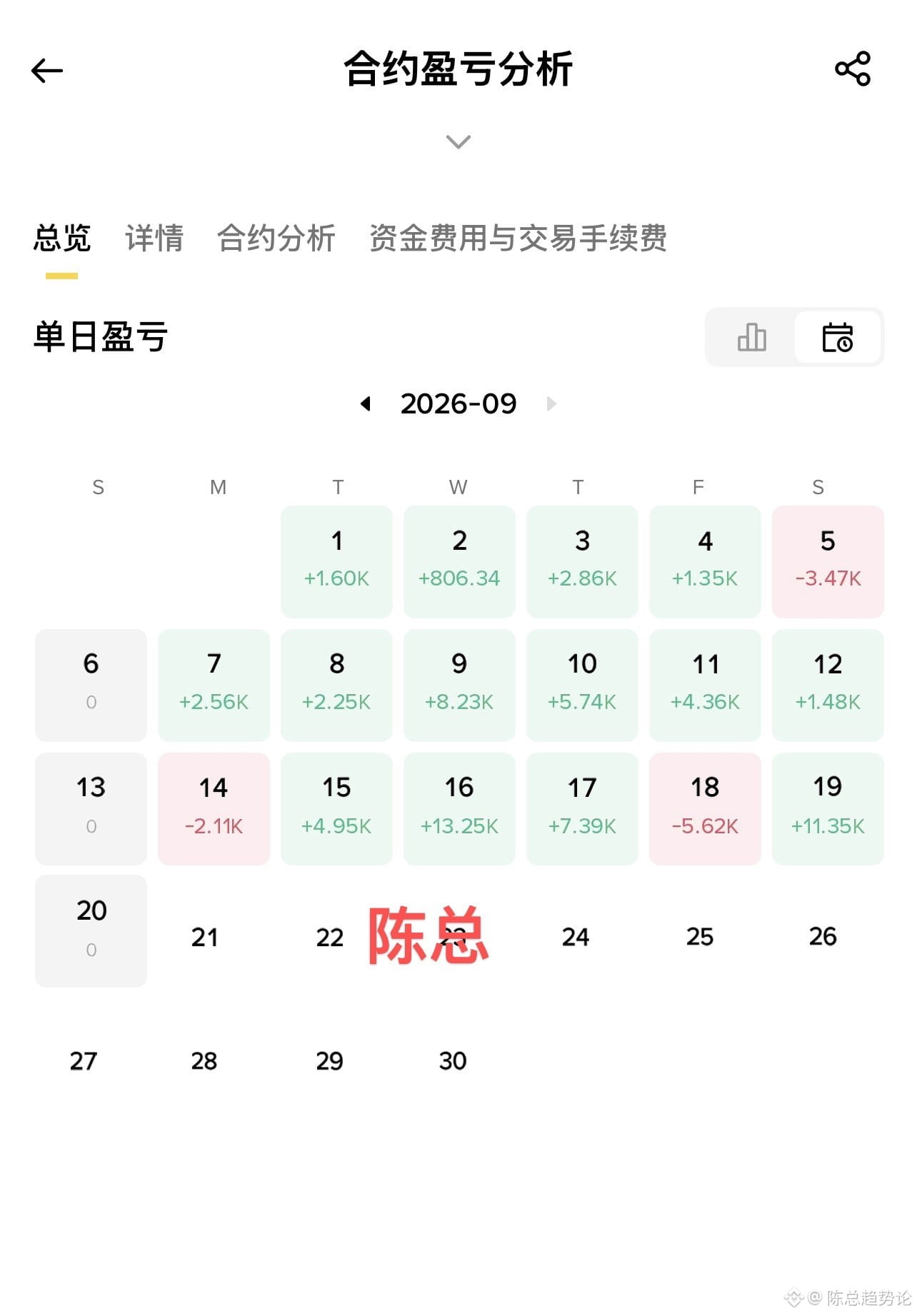
The less principal you have, the easier it is to fall into a vicious cycle: you’re so convinced that the next trade will be a direct turnaround.
Many people ask me: if they clearly know the market conditions are not right, why can’t they control themselves and still feel compelled to place trades?
It’s not really a lack of self-control. The root cause is that the principal is too small—so their whole mind is consumed with rushing to grow the account quickly.
When you only have a few thousand U, any small fluctuation feels like an opportunity delivered to your door. When it goes up, you fear missing out; when it goes down, you fear you’ll never catch the bottom. You end up placing a dozen or more trades a day, nonstop—busy as can be, but the account shows no real improvement.
I have a friend who used to be just like that. He would stay in the charts all day—when he made a little profit, he immediately opened the next trade; when he lost a bit, he desperately tried to recoup the principal right away. Later, after reviewing his trades, he finally saw it: the real reason his account was dragged down wasn’t any single massive loss. It was those pointless trades—no plan, no logic—that slowly and steadily ate away at his principal.
After that, he completely changed his approach. He no longer traded just to trade. He waited in dead certainty for opportunities.
If the trend hadn’t unfolded, he stayed flat. If the entry wasn’t right, he kept waiting. Only when a real opportunity that met his standards appeared did he use a small position to test. When the direction was correct, he stayed patient and held. When the direction was wrong, he cut losses immediately—never allowing one wrong trade to throw off the rhythm of everything that followed.
The number of trades became visibly fewer, and the account steadied step by step.
Many people constantly hope to catch a big move and flip the account in one go—but they forget the most critical thing: market opportunities are never scarce. The only limitation is that your principal is just one share. By the time a big opportunity actually arrives, you’ve already burned through most of your funds. Even the best opportunity has nothing to do with you then.
Trading is never about who opens more trades. It’s about who can stay calm and hold their nerve.
First learn not to keep stepping into traps, then talk about making big money. First protect your principal, then wait for the market that truly belongs to you.
People who can grow small capital little by little don’t rely on luck. They rely on being willing to wait for opportunities, being decisive about stopping losses, and sticking firmly to their own trading rules.
Many people ask me: if they clearly know the market conditions are not right, why can’t they control themselves and still feel compelled to place trades?
It’s not really a lack of self-control. The root cause is that the principal is too small—so their whole mind is consumed with rushing to grow the account quickly.
When you only have a few thousand U, any small fluctuation feels like an opportunity delivered to your door. When it goes up, you fear missing out; when it goes down, you fear you’ll never catch the bottom. You end up placing a dozen or more trades a day, nonstop—busy as can be, but the account shows no real improvement.
I have a friend who used to be just like that. He would stay in the charts all day—when he made a little profit, he immediately opened the next trade; when he lost a bit, he desperately tried to recoup the principal right away. Later, after reviewing his trades, he finally saw it: the real reason his account was dragged down wasn’t any single massive loss. It was those pointless trades—no plan, no logic—that slowly and steadily ate away at his principal.
After that, he completely changed his approach. He no longer traded just to trade. He waited in dead certainty for opportunities.
If the trend hadn’t unfolded, he stayed flat. If the entry wasn’t right, he kept waiting. Only when a real opportunity that met his standards appeared did he use a small position to test. When the direction was correct, he stayed patient and held. When the direction was wrong, he cut losses immediately—never allowing one wrong trade to throw off the rhythm of everything that followed.
The number of trades became visibly fewer, and the account steadied step by step.
Many people constantly hope to catch a big move and flip the account in one go—but they forget the most critical thing: market opportunities are never scarce. The only limitation is that your principal is just one share. By the time a big opportunity actually arrives, you’ve already burned through most of your funds. Even the best opportunity has nothing to do with you then.
Trading is never about who opens more trades. It’s about who can stay calm and hold their nerve.
First learn not to keep stepping into traps, then talk about making big money. First protect your principal, then wait for the market that truly belongs to you.
People who can grow small capital little by little don’t rely on luck. They rely on being willing to wait for opportunities, being decisive about stopping losses, and sticking firmly to their own trading rules.