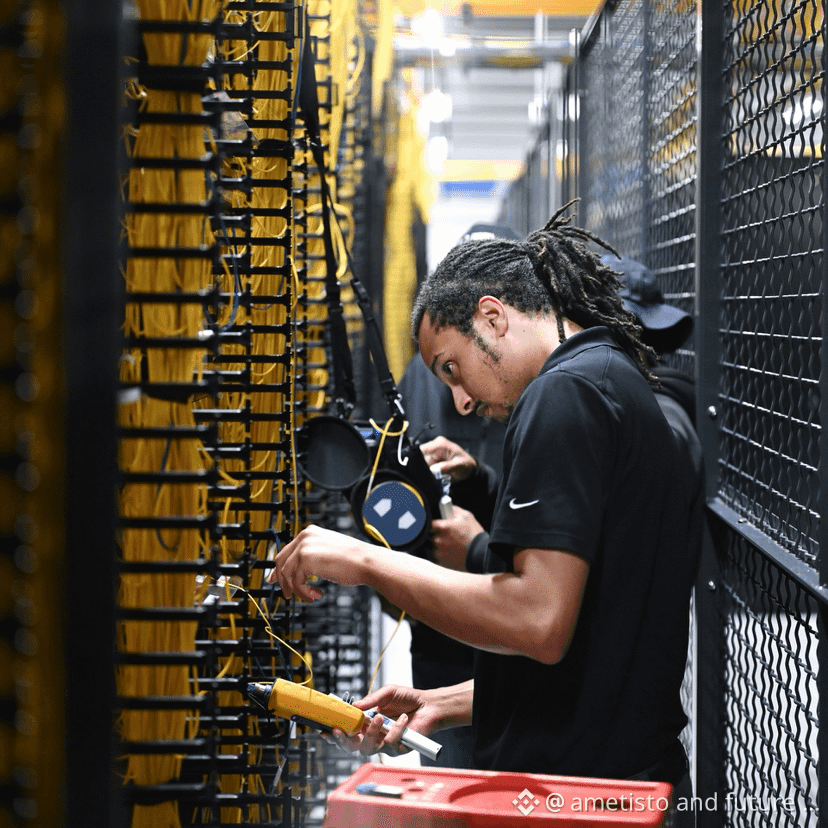
🤖⚡ THIS IS HOW IT’S DONE IN ONE OF THE LARGEST DATA CENTERS IN THE U.S.
Behind the AI revolution there’s a world we almost never see: massive data centers that operate 24 hours a day, 365 days a year.
In Ashburn, Virginia, an engineer can walk up to 30,000 steps a day while touring a data center of approximately 1 million square feet. Their job includes checking servers, cooling systems, transformers, and electrical equipment to detect any sign of failure.
🏢 What’s inside?
🔹 Endless rows of servers
🔹 Thousands of cables and connections
🔹 Giant cooling systems
🔹 Transformers and electrical equipment
🔹 Break areas for workers who must stay on site during extreme weather emergencies
🔹 Facilities that can house operations for tech giants like Oracle, Meta, and IBM
🇺🇸 And the sector is growing fast.
There are currently around 2,700 operating data centers in the United States, while hundreds are under construction and many more are in the planning phase.
💰 Well-paying jobs are also emerging.
Salaries can start at around US$66,000 for entry-level engineers and exceed US$120,000 for experienced professionals. The most in-demand specializations include electrical systems, networking, and cooling.
⚠️ But there’s a paradox:
Data centers are essential for AI expansion, but their construction also faces opposition in some communities due to issues related to electricity, infrastructure, environmental impact, and land use.
And keeping them running isn’t optional: some facilities aim to move from 99.999% availability to 99.9999%. The difference seems small, but it means going from about six minutes of downtime per year to just around 30 seconds.
🧠 The AI revolution doesn’t happen only on the screen.
$ORCL $IBMB
Behind the AI revolution there’s a world we almost never see: massive data centers that operate 24 hours a day, 365 days a year.
In Ashburn, Virginia, an engineer can walk up to 30,000 steps a day while touring a data center of approximately 1 million square feet. Their job includes checking servers, cooling systems, transformers, and electrical equipment to detect any sign of failure.
🏢 What’s inside?
🔹 Endless rows of servers
🔹 Thousands of cables and connections
🔹 Giant cooling systems
🔹 Transformers and electrical equipment
🔹 Break areas for workers who must stay on site during extreme weather emergencies
🔹 Facilities that can house operations for tech giants like Oracle, Meta, and IBM
🇺🇸 And the sector is growing fast.
There are currently around 2,700 operating data centers in the United States, while hundreds are under construction and many more are in the planning phase.
💰 Well-paying jobs are also emerging.
Salaries can start at around US$66,000 for entry-level engineers and exceed US$120,000 for experienced professionals. The most in-demand specializations include electrical systems, networking, and cooling.
⚠️ But there’s a paradox:
Data centers are essential for AI expansion, but their construction also faces opposition in some communities due to issues related to electricity, infrastructure, environmental impact, and land use.
And keeping them running isn’t optional: some facilities aim to move from 99.999% availability to 99.9999%. The difference seems small, but it means going from about six minutes of downtime per year to just around 30 seconds.
🧠 The AI revolution doesn’t happen only on the screen.
$ORCL $IBMB