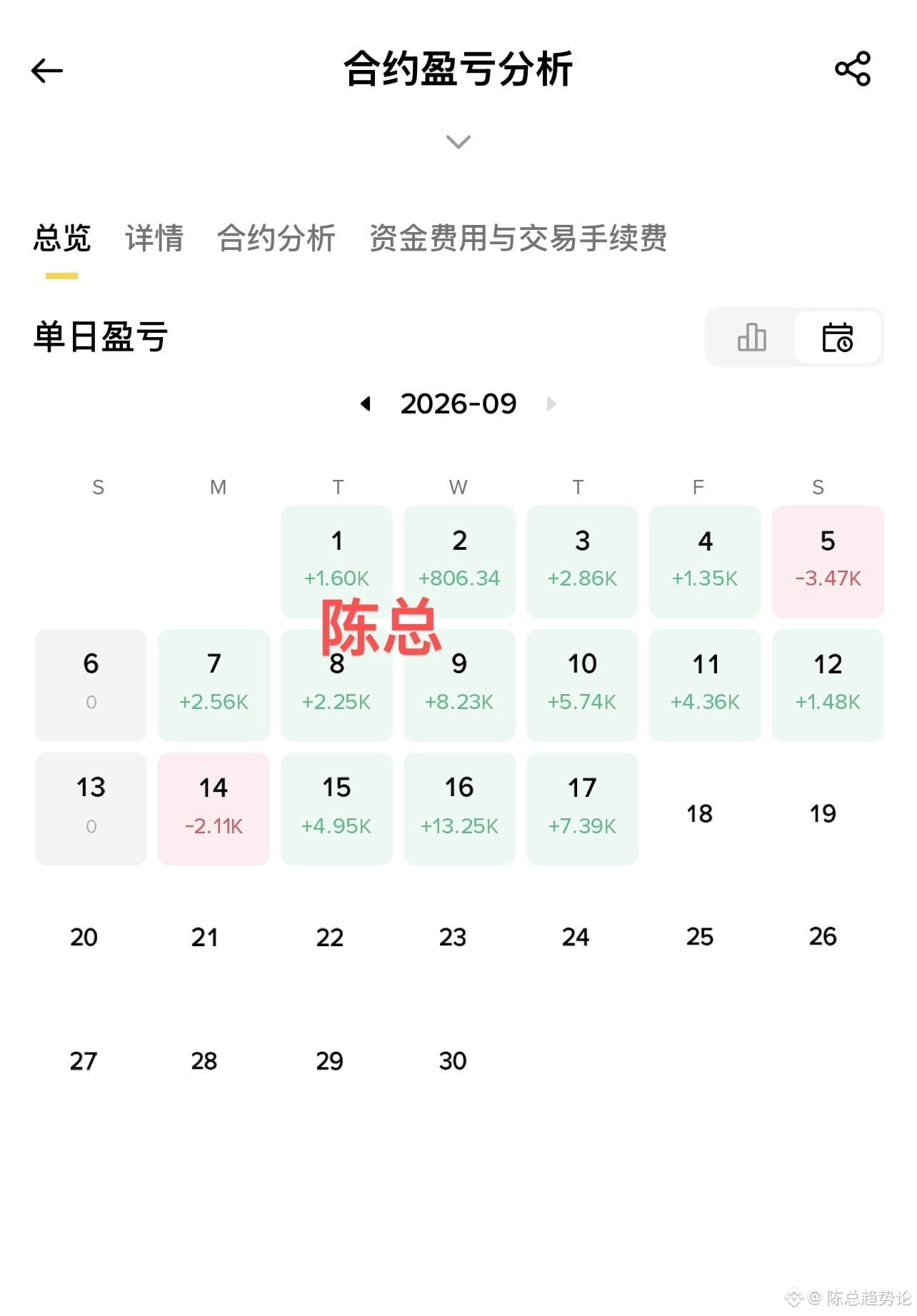
In a one-way market, small capital wants to grow big—not by having big nerve, but by sticking to a few simple rules.
I know a brother who started with 20,000 U. When the trend started, he didn’t rush to go all-in. He first used a small position to test and confirm the direction. Once things went smoothly, he added to the position. When his floating profit hit the target, he took some profit off the table first, and then the rest followed the market.
In the same trend, while others kept chasing and selling in and out and got shaken up and scattered, he steadily built up his account.
Many people lose money not because they didn’t pick the right direction, but because the market led them around: when it rose they chased, when it fell they went short, made a little profit and then ran, got trapped and kept hard-holding—by the end of the whole cycle, they were just paying tuition to the market.
The core of a one-way market comes down to four things:
1. Don’t go full-size right away. When you first enter, you shouldn’t block your own exit; if the trend reverses, you won’t even get a chance to adjust.
2. Only trade along a clear direction. If the trend is up, add more; if it goes bad, wait. Don’t keep guessing long vs. short and trying to outsmart the market.
3. Stop-losses must be decisive. If you’re wrong, admit it immediately. Don’t stubbornly hold out waiting for a rebound—big losses are always dragged out.
4. Take-profit shouldn’t be greedy at the very end. When you touch your target, take part off first. Let the rest be handled by the trend. Don’t fantasize about eating the entire move.
People who can grow small capital don’t play anything fancy. They simply repeat the right execution on position sizing, stop-loss, take-profit, and timing.
Trading isn’t that complicated: get the direction right, control your position size, if you lose then acknowledge it, if you win then take profit—don’t be greedy, don’t panic, and don’t hard-hold. If you do that, your account will naturally grow step by step.
I know a brother who started with 20,000 U. When the trend started, he didn’t rush to go all-in. He first used a small position to test and confirm the direction. Once things went smoothly, he added to the position. When his floating profit hit the target, he took some profit off the table first, and then the rest followed the market.
In the same trend, while others kept chasing and selling in and out and got shaken up and scattered, he steadily built up his account.
Many people lose money not because they didn’t pick the right direction, but because the market led them around: when it rose they chased, when it fell they went short, made a little profit and then ran, got trapped and kept hard-holding—by the end of the whole cycle, they were just paying tuition to the market.
The core of a one-way market comes down to four things:
1. Don’t go full-size right away. When you first enter, you shouldn’t block your own exit; if the trend reverses, you won’t even get a chance to adjust.
2. Only trade along a clear direction. If the trend is up, add more; if it goes bad, wait. Don’t keep guessing long vs. short and trying to outsmart the market.
3. Stop-losses must be decisive. If you’re wrong, admit it immediately. Don’t stubbornly hold out waiting for a rebound—big losses are always dragged out.
4. Take-profit shouldn’t be greedy at the very end. When you touch your target, take part off first. Let the rest be handled by the trend. Don’t fantasize about eating the entire move.
People who can grow small capital don’t play anything fancy. They simply repeat the right execution on position sizing, stop-loss, take-profit, and timing.
Trading isn’t that complicated: get the direction right, control your position size, if you lose then acknowledge it, if you win then take profit—don’t be greedy, don’t panic, and don’t hard-hold. If you do that, your account will naturally grow step by step.