


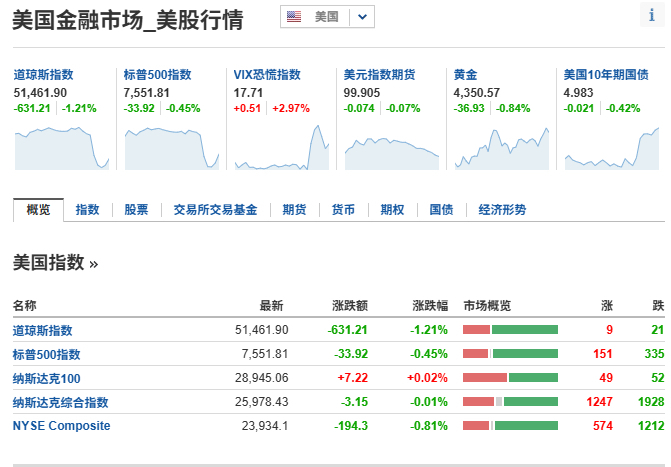
Yesterday, predictions about the event were completely correct. With the rate hike arriving and the passage of the Bitcoin reserve bill, many friends are puzzled: when the news assessment is correct, why is the market still not moving correctly? After the rate hike, the market remains completely unmoved, which leaves many users very disappointed. Let the bullets fly a little longer! The US stock market is more active than the crypto market; all three major indexes closed down, with the deepest drop being the Dow Jones, down 1.21%. Meanwhile, the Nasdaq 100 actually closed up 0.02%. This leaves many people unable to figure out the direction. The closer we get to the market turning point, the calmer it becomes. Most users feel that this round of decline was an early prediction of the coming rate hike. Some friends even insist that bad news having run its course is good news. Lao Cui can address such questions directly: it’s impossible. Everyone, observe carefully—on the market, the big whales seem to be preparing for the financial crisis that is about to come. The 10-year yield on US Treasuries finally fell below 5%, and even gold is under pressure.
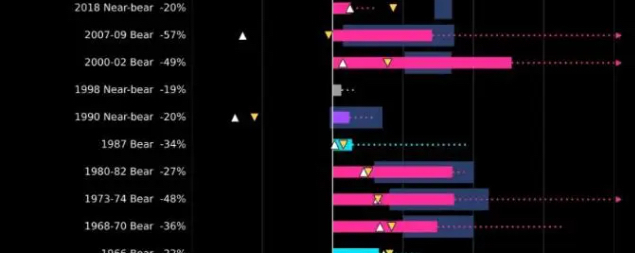
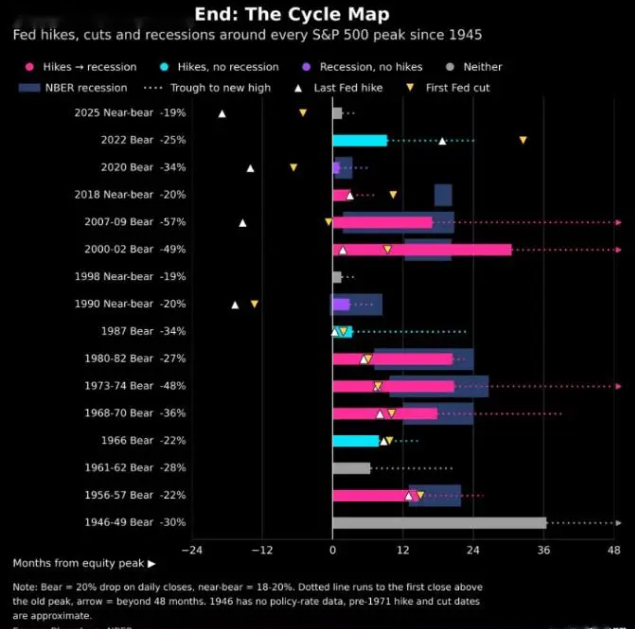
Normally speaking, during the rate-hike stage, gold should be a hard currency, and energy should also see some increase. This time, none of the things we wanted to see happened. The probability before the rate hike was more than 90%. You can treat this rate hike’s impact as limited; the core issue lies here. Yesterday, the Fed’s dot plot showed that among 19 officials, 16 expect one more rate hike in 2026. This also indicates that a cycle of rate hikes has arrived. A chart compiled by institutions (shown below) lays out in detail and accurately the 12 bear markets since 1945 in which the S&P 500 index saw drawdowns of 20% or more, as well as four additional declines between 18% and 20%—close to bear market territory. In this comparison, six bear markets occurred after the rate-hike cycle, and the economy then fell directly into a recession; three occurred after the rate hike but were not accompanied by an economic recession; one occurred at the same time as the economic recession during the COVID-19 period; and only two occurred with neither rate hikes nor an economic recession. In this comparison, the rate-hike cycle is defined as at least two rate hikes, with a cumulative increase of 100 basis points or more. In rate-hike-related cases, the market typically tops out about eight months before the last rate hike. Therefore, if a series of rate hikes begins, historical experience suggests that the stock market doesn’t necessarily top out at the first rate hike.
This is what Old Cui was saying above: let the bullets fly for a while. The S&P 500 index is currently about 3% below the record high it set in August. The economy hasn’t fallen into recession. The Fed’s easing cycle has lasted for two years, and the last rate hike was more than three years ago. The closest comparison is the mid-1990s. After the Fed cut rates in 1995, it raised rates once separately in 1997—after that, there was no rate-hike cycle, and the bull market continued for another three years. After it cut rates again in 1998, the Fed started a new rate-hike cycle in mid-1999. The S&P 500 topped out nine months later, at the height of the internet bubble, and then slid into a bear market related to an economic recession. Putting it all together, the core viewpoint remains the inflation issue. Can this time we truly commit to bringing inflation down to around 2%? If inflation is still set as the primary target at 2%, then this rate hike will definitely form a cyclical bear market. Once the rate hikes reach 100 basis points, a bear market will definitely come!
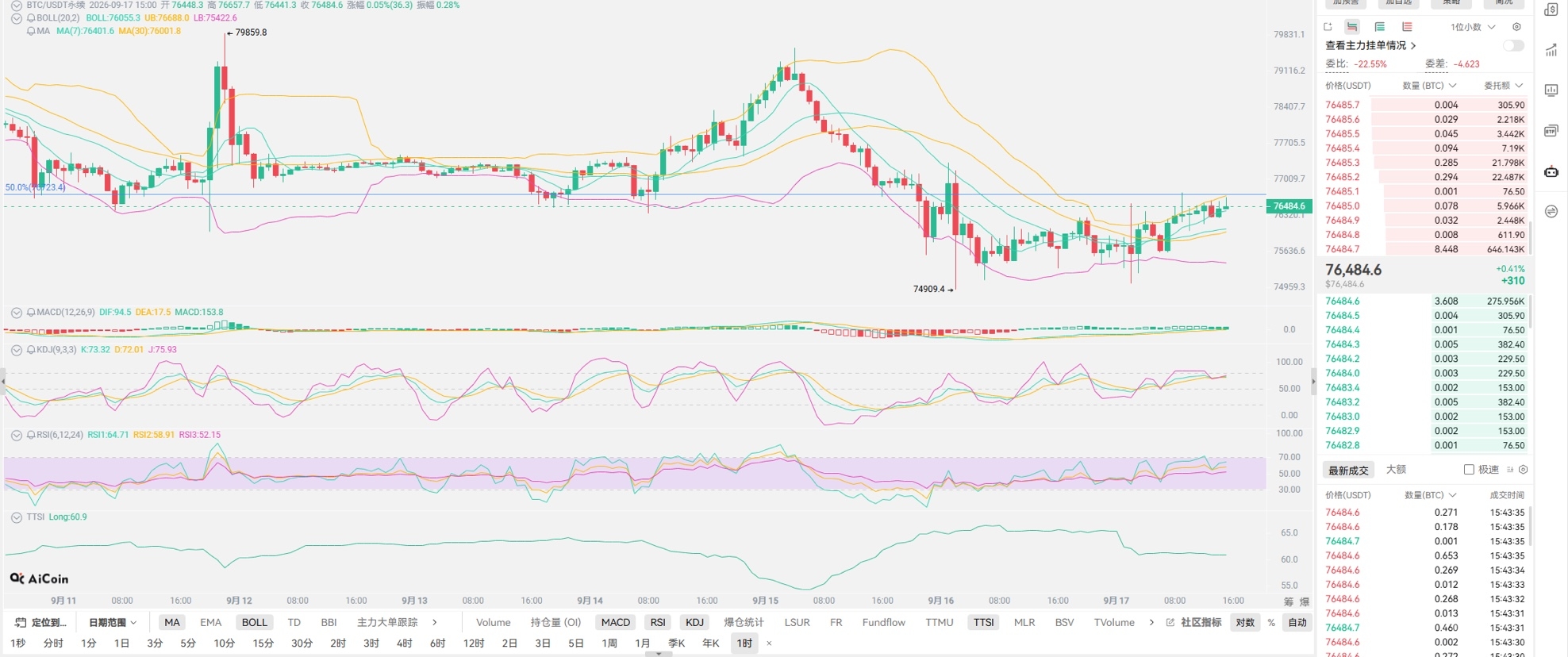
Old Cui summarizes: Looking at the crypto market, shouldn’t everyone be thinking about whether we’re at the beginning of a bull market right now? Instead, you should think about whether the crypto market will form a brand-new bear market cycle. Everyone needs to make some preparations. How deep the downside will go—that is worth everyone thinking about. Old Cui always looks at trends and doesn’t guess price levels. What can be confirmed now is that after the next rate hike, prices will be lower than they are today. That means you can set your stop-loss positions to after the previous new highs. Then, at the current prices, you can short. What we can do is add to positions during the trend, not bet on whether this trade will win or fail. Of course, short positions above 80,000 can be held continuously without being closed. Old Cui still chooses to hold. As for the SOL question, many friends are asking: what price levels is Old Cui planning to redeploy at? Honestly, it’s still hard to say for sure. Regarding how many rate hikes there will be—so far we can only see whether this can continue through this year and next year, and that’s a big issue. Oil prices are the primary concern. Iran clearly does not want to stop the conflict right away; reaching a compromise on conditions also takes time to negotiate. This also includes Trump’s uncertainty, as well as internal problems stemming from factional disputes. The bill is clear, and the margin in the vote count is large enough. Even if Trump has already compromised by 80%, other factions still want more—so it will still require more details to be figured out. The parts Old Cui understands, he will explain. The parts he doesn’t understand, he won’t discuss too much. If you have any useful information on the news flow, you can also talk with Old Cui. Remember: don’t short into longs. Let any bullish rebound just rebound. If there’s a high, then short!