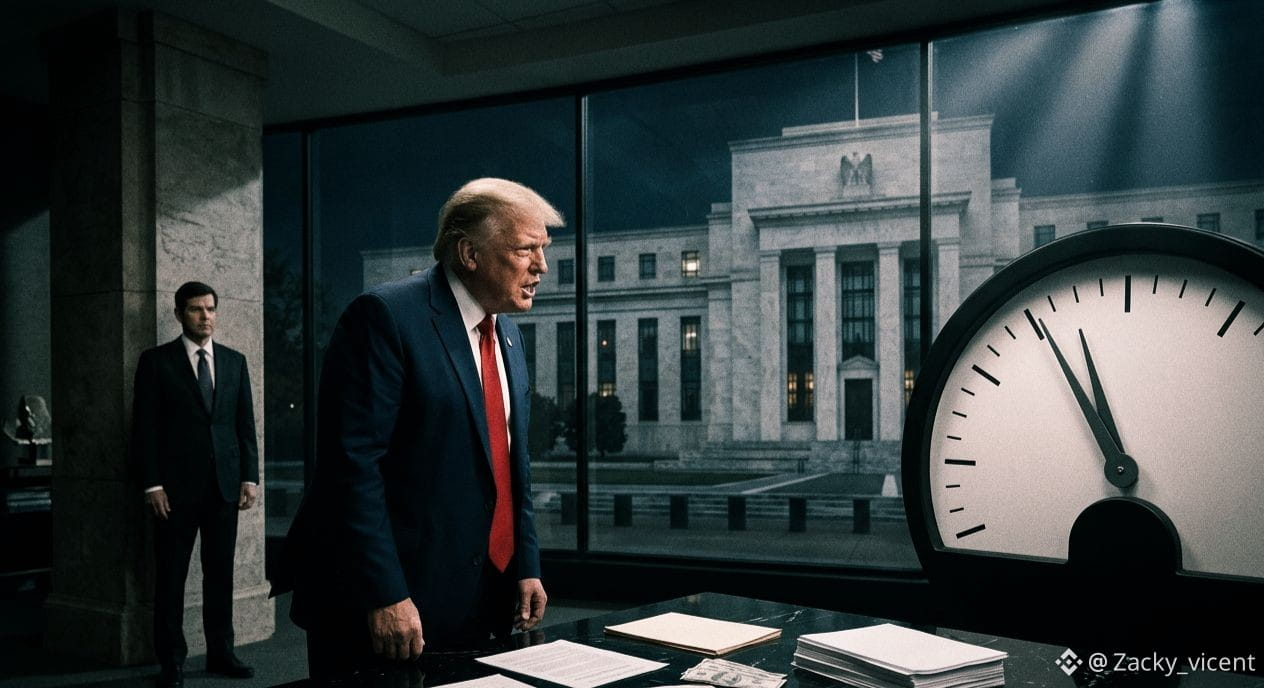
TRUMP WANTS 1% — WHILE THE FED SAYS NO.
Donald Trump says he still trusts Fed Chair Kevin Warsh.
But just hours after the Federal Reserve raised its benchmark rate by 25 basis points to 3.75%–4%, Trump demanded something radically different:
“1% or less.”
That is not a minor disagreement.
It is a direct collision between the White House’s demand for dramatically cheaper money and the Fed’s stated concern that inflation remains elevated.
Trump accused the Fed’s board of being “very hostile” and “very political,” while simultaneously saying he wants Warsh to remain independent.
That contradiction is the real story.
Trump says: “I want him independent.”
But he is also publicly demanding the outcome he wants from monetary policy.
The Fed, meanwhile, unanimously approved the rate hike. Its latest projections indicate that many officials still see another increase as potentially necessary.
And here is where the economic pressure becomes brutal:
A 1% policy rate would represent a massive departure from the current 3.75%–4% target range.
Lower rates can reduce borrowing costs and stimulate economic activity.
But if inflation remains elevated, aggressively cutting rates can also create additional inflationary pressure.
This is the dangerous battlefield:
POLITICAL POWER vs. MONETARY INDEPENDENCE.
Trump argues that America deserves dramatically lower rates because of its economic strength, credit standing, investment inflows and trade position.
But monetary policy does not operate on political slogans.
The Fed has to balance inflation, employment, financial conditions and economic stability.
And the deeper question is bigger than Trump or Warsh:
WHO CONTROLS THE PRICE OF MONEY?
Because whoever controls interest rates influences mortgages, corporate borrowing, government debt costs, asset valuations, the dollar, liquidity and ultimately the entire financial system.
This is not just another headline.
This is a fight over the machinery of money itself.
$BTC
Donald Trump says he still trusts Fed Chair Kevin Warsh.
But just hours after the Federal Reserve raised its benchmark rate by 25 basis points to 3.75%–4%, Trump demanded something radically different:
“1% or less.”
That is not a minor disagreement.
It is a direct collision between the White House’s demand for dramatically cheaper money and the Fed’s stated concern that inflation remains elevated.
Trump accused the Fed’s board of being “very hostile” and “very political,” while simultaneously saying he wants Warsh to remain independent.
That contradiction is the real story.
Trump says: “I want him independent.”
But he is also publicly demanding the outcome he wants from monetary policy.
The Fed, meanwhile, unanimously approved the rate hike. Its latest projections indicate that many officials still see another increase as potentially necessary.
And here is where the economic pressure becomes brutal:
A 1% policy rate would represent a massive departure from the current 3.75%–4% target range.
Lower rates can reduce borrowing costs and stimulate economic activity.
But if inflation remains elevated, aggressively cutting rates can also create additional inflationary pressure.
This is the dangerous battlefield:
POLITICAL POWER vs. MONETARY INDEPENDENCE.
Trump argues that America deserves dramatically lower rates because of its economic strength, credit standing, investment inflows and trade position.
But monetary policy does not operate on political slogans.
The Fed has to balance inflation, employment, financial conditions and economic stability.
And the deeper question is bigger than Trump or Warsh:
WHO CONTROLS THE PRICE OF MONEY?
Because whoever controls interest rates influences mortgages, corporate borrowing, government debt costs, asset valuations, the dollar, liquidity and ultimately the entire financial system.
This is not just another headline.
This is a fight over the machinery of money itself.
$BTC