
Do you know? Lately, quite a few friends around me have been chatting and coming up with the exact same sigh: This is really strange. In the past, people always said that money would lose value—so why does it feel like the money in my hands is actually getting more expensive now?
It’s not an illusion. We may really be going through a shift in the underlying economic logic.
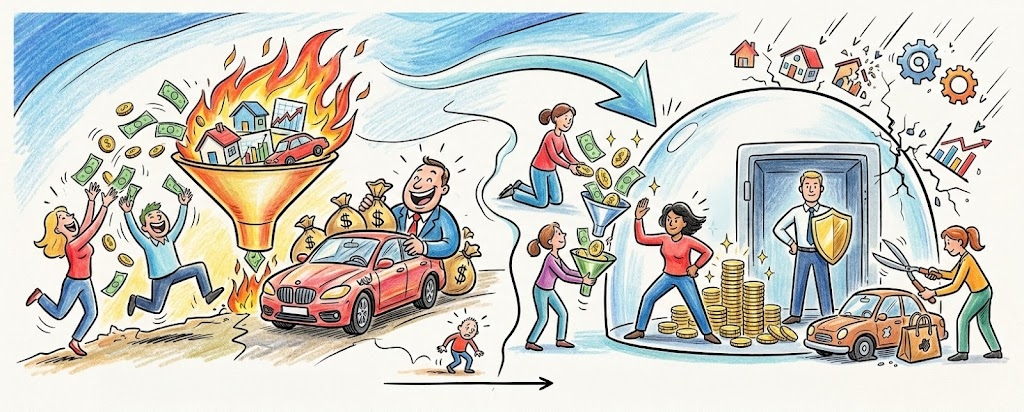
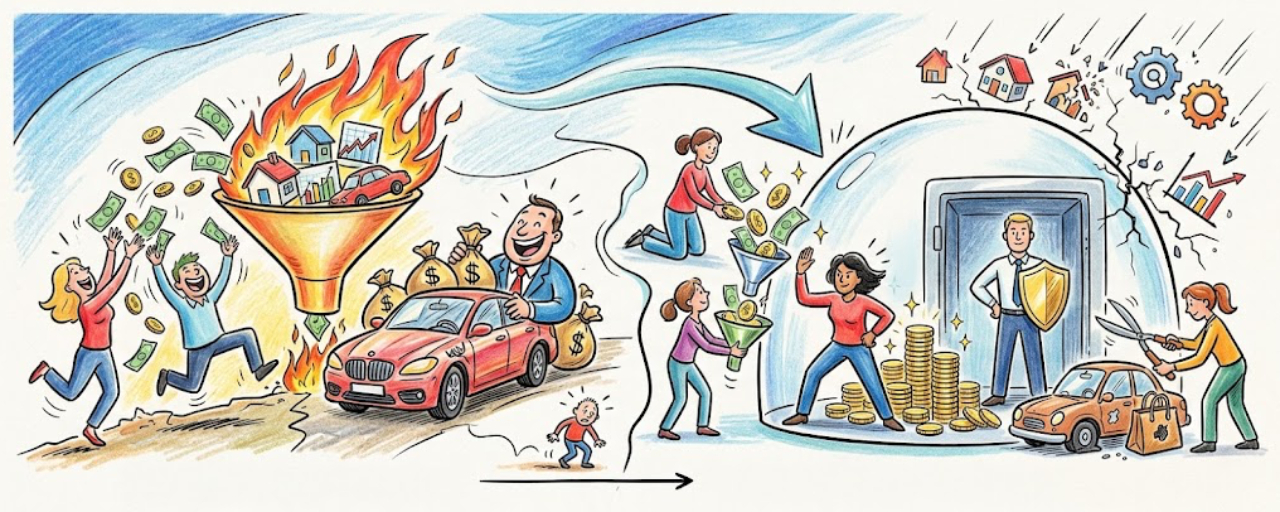
In the past, the familiar playbook was: Put money in the bank and it’s basically a slow death. Hurry up and buy a home with leverage—turn cash into assets! Back then, the overall environment kept rising, and that logic really held. But now the wind has changed. We’re entering a new cycle of asset contraction, where cash is king.
Why do people say the “gold content” of money is higher now? Just look at three real-world situations around you:
1. With the same amount of money, you can buy more—and better—things
A few years ago, buying a decent family car required nearly 200,000 yuan out of pocket. Now that the price war is on, you can drive one home for 120,000 to 130,000—while the configuration is even better. The location that used to be out of reach is now more affordable because housing prices have pulled back. If you didn’t rush into impulsive spending before and kept the money locked in your card, then in reality, that money’s purchasing power has actually increased. In an era when asset prices generally fall, holding cash and not recklessly spending is, by itself, a smart form of financial management.
2. The difficulty of earning money doubles, and the “spiritual” gold content of money is higher
The value of money depends on how hard it is to earn. A few years ago, opportunities were everywhere—job hopping for pay raises or doing a small side business wasn’t that difficult. But now, companies are tightening up, and the difficulty of making money has risen many times over. Every yuan you earn now is mixed with more sweat and emotional costs. It’s no longer a cold, numeric figure—it’s a talisman you earn by trading your life energy, so it naturally feels even more precious.
3. In critical moments, only cash can save the day
It looks like many people have millions of dollars’ worth of property under their names, but when something urgent happens, they can’t even come up with 100,000 yuan in cash. Properties have been on the market for months and still won’t sell. Stocks are deeply trapped, and people are reluctant to cut losses. But when a family member gets sick or faces unemployment, hospitals and supermarkets only accept cash. Liquidity is the ultimate trump card for ordinary people to weather risk.
In the face of this new cycle, how should ordinary people respond? Remember these 3 habits:
Cut off face-based spending: Stop trading your vanity for luxury cars and designer bags. Drive your old car smoothly, quit pointless extravagance—your account balance is the biggest “face” you truly have.
Clear out bad debts: With the forecast that making money will get harder, debt pressure will increase by multiples. If you have spare cash and no high-yield channels, prioritize paying off high-interest mortgages, car loans, and online loans. Being debt-free means you’ve already won more than half the battle.
Quit the fantasy of getting rich: Don’t touch financial products you don’t understand. Don’t join businesses blindly, and don’t borrow money to invest in stocks. Anything promising high returns is mostly targeting your principal. Put your money in a big bank—preserving capital is the way to go.
Money is a tool for enjoyment in good times. But at the bottom of the cycle, it becomes the household’s seawall—the confidence in front of your parents’ hospital beds, and the backbone that lets you firmly refuse unfair treatment at work.
Starting today, respect every single cent you earn. The cash you save will turn into the most solid shield—blocking most of the storms for you and your family.