
小恐龙说趋势
220 Posts

小恐龙说趋势
6 年市场经验,公众号.比特芒果,记录市场的真实逻辑,研究下一步会去哪
12 Following
1.9K+ Followers
1.4K+ Liked
Posts
All
Live
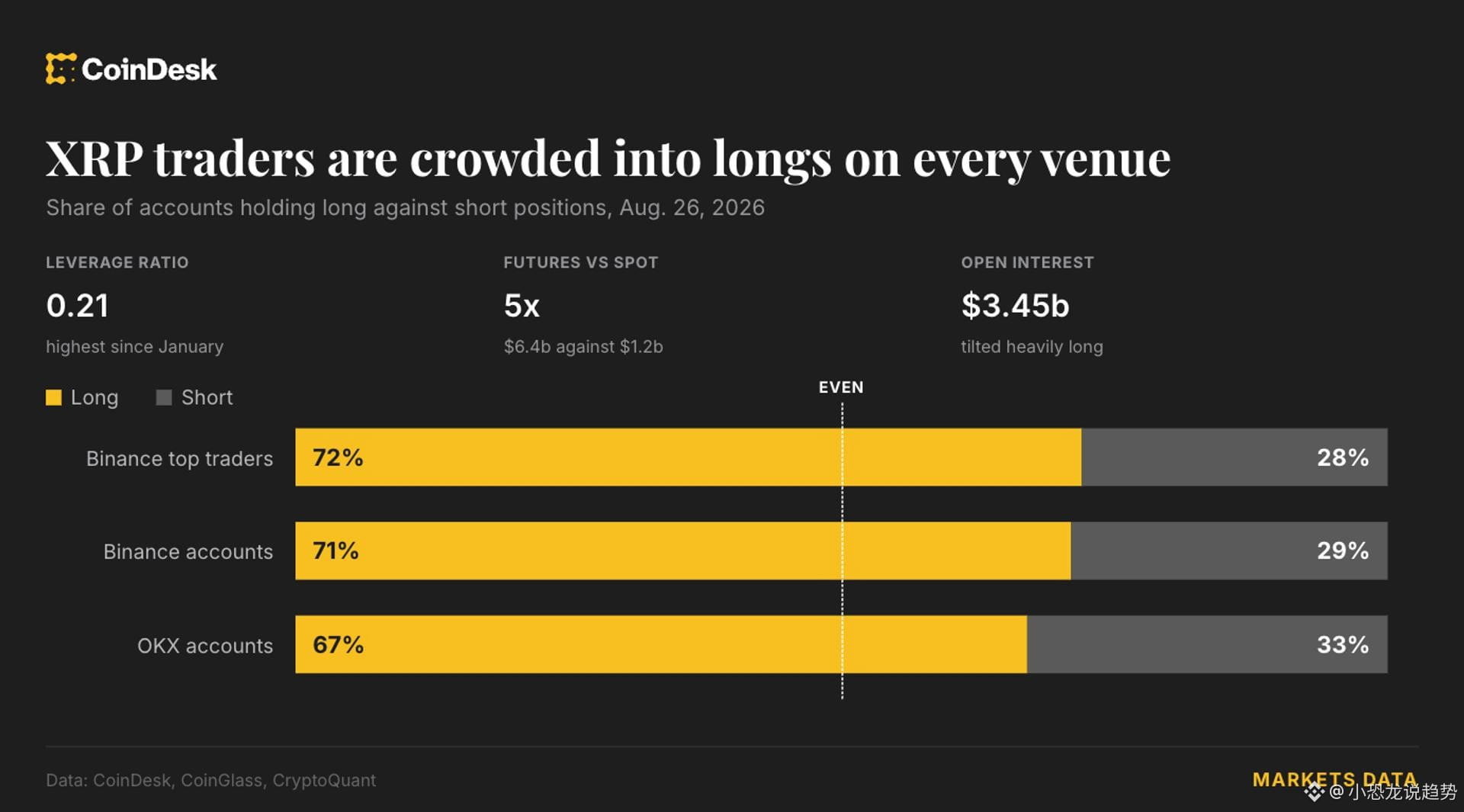
This XRP move is seriously fierce—up 44% in just a week, and people are literally staring with their eyes wide open.
On Binance, the futures leverage has climbed to the highest level since the beginning of the month. The number of longs clearly outweighs the number of shorts.
Futures trading volume has even hit more than 5 times that of the spot market. That ratio would be considered extreme in any market.
The stronger it rises, the more you have to ask: what is pushing it up this time?
If it’s bought up with real spot cash—healthy.
But the current situation is that leverage makes up a huge part of the momentum, and sentiment is wrapped around the capital as it runs.
When leverage is stacked too high, the biggest fear is a change in the wind. A chain liquidation can spit the gains back in an instant.
This kind of script has played out more than once in history. The faster it rallies, the less polite the pullback can be.
I’m not here to short XRP. This round does have fundamentals and news that are backing it.
But risk is determined by position. If you chase at this spot, once volatility kicks in, the first ones tossed off the train will be the high-leverage players.
If you want to get involved, either go in with a small position to test the waters, or wait patiently for a pullback to find an entry.
Watching from the sidelines is actually the easiest—there’s action every day, and you don’t have to keep your heart in your throat.
Whether this move can keep going mainly depends on whether spot buying can keep up.
Futures enthusiasm has never been the end of the story; it’s often the beginning of the test.
If you have a position, do your math carefully. If you don’t, keep your hands off—don’t make the most impulsive decision at the hottest moment.
The market has opportunities every day, but your principal is only one. Whoever can calculate this clearly is the one who laughs last.
Anyway, remember this: the market won’t take care of anyone just because they’re emotional. Only those who can calculate risk deserve to ride the trend.
Chasing hype is fine—but don’t treat hype as a religion. In the futures market, impulsiveness is the most expensive tuition.
Every day, I’ll help you track the XRP hotspots—not only what news is happening, but also the logic and opportunities behind it 👀🚀
Click the link below to follow me 👇🏻加入小恐龙粉丝群
#XRP #Ripple #CryptoMarket #Futures
On Binance, the futures leverage has climbed to the highest level since the beginning of the month. The number of longs clearly outweighs the number of shorts.
Futures trading volume has even hit more than 5 times that of the spot market. That ratio would be considered extreme in any market.
The stronger it rises, the more you have to ask: what is pushing it up this time?
If it’s bought up with real spot cash—healthy.
But the current situation is that leverage makes up a huge part of the momentum, and sentiment is wrapped around the capital as it runs.
When leverage is stacked too high, the biggest fear is a change in the wind. A chain liquidation can spit the gains back in an instant.
This kind of script has played out more than once in history. The faster it rallies, the less polite the pullback can be.
I’m not here to short XRP. This round does have fundamentals and news that are backing it.
But risk is determined by position. If you chase at this spot, once volatility kicks in, the first ones tossed off the train will be the high-leverage players.
If you want to get involved, either go in with a small position to test the waters, or wait patiently for a pullback to find an entry.
Watching from the sidelines is actually the easiest—there’s action every day, and you don’t have to keep your heart in your throat.
Whether this move can keep going mainly depends on whether spot buying can keep up.
Futures enthusiasm has never been the end of the story; it’s often the beginning of the test.
If you have a position, do your math carefully. If you don’t, keep your hands off—don’t make the most impulsive decision at the hottest moment.
The market has opportunities every day, but your principal is only one. Whoever can calculate this clearly is the one who laughs last.
Anyway, remember this: the market won’t take care of anyone just because they’re emotional. Only those who can calculate risk deserve to ride the trend.
Chasing hype is fine—but don’t treat hype as a religion. In the futures market, impulsiveness is the most expensive tuition.
Every day, I’ll help you track the XRP hotspots—not only what news is happening, but also the logic and opportunities behind it 👀🚀
Click the link below to follow me 👇🏻加入小恐龙粉丝群
#XRP #Ripple #CryptoMarket #Futures
BlackRock cuts the conversion threshold for a Bitcoin ETF directly down to $1 million
What does this mean? Big players can convert the BTC they hold in self-custody into ETF shares—so the entry barrier drops dramatically.
Previously, only top-tier “big whales” could afford to play; now mid-tier capital can reach it too.
The signal value of this is much bigger than the amount of money itself.
It indicates that institutional pathways to “mainstream” Bitcoin are being built and refined—keeping getting smoother.
Spot ETFs have been continuously attracting inflows; now there’s another conversion entry point.
In other words, it opens a VIP window for existing large holders.
The underlying logic is actually simple.
Self-custody BTC comes with storage costs and operational risks.
Convert it into ETF shares—clearing and settlement are fully standardized.
Compliance-friendly capital is more willing to touch this kind of vehicle.
The pool grows bigger and bigger, liquidity depth improves, and the price becomes steadier.
Look at it from another angle: this further pushes how Bitcoin is held toward standardization.
Previously, if large funds wanted to enter, they could only go through over-the-counter black boxes—where prices weren’t transparent and counterparty risk was entirely on the buyer.
Now, with a clearly labeled conversion channel, you can see how money goes in and how positions get swapped—everything is out in the open.
One more thing: once the conversion channel opens, Bitcoin’s supply structure will also quietly change.
For coins held long-term, more will gradually settle and accumulate into the ETF custody.
At the same time, the floating supply in the market will actually become smaller.
You can’t really notice this change in the short term, but when you look back after a year or two, the impact is real.
For retail investors, this is a moderately bullish signal over the medium to long term—but don’t get carried away.
Large players swapping positions is a slow process.
In the short run, it may still just be choppy—what needs to shake out will shake out.
Someone else’s position switch isn’t a reason for you to lose your composure.
Your position is always your own decision.
Every day, I’ll take you to follow BTC hotspots—not just what happens in the news, but how to understand the underlying logic and opportunities 👀🚀
Click the links below to follow me 👇🏻加入小恐龙粉丝群
#Bitcoin #BTC #ETF #BlackRock
What does this mean? Big players can convert the BTC they hold in self-custody into ETF shares—so the entry barrier drops dramatically.
Previously, only top-tier “big whales” could afford to play; now mid-tier capital can reach it too.
The signal value of this is much bigger than the amount of money itself.
It indicates that institutional pathways to “mainstream” Bitcoin are being built and refined—keeping getting smoother.
Spot ETFs have been continuously attracting inflows; now there’s another conversion entry point.
In other words, it opens a VIP window for existing large holders.
The underlying logic is actually simple.
Self-custody BTC comes with storage costs and operational risks.
Convert it into ETF shares—clearing and settlement are fully standardized.
Compliance-friendly capital is more willing to touch this kind of vehicle.
The pool grows bigger and bigger, liquidity depth improves, and the price becomes steadier.
Look at it from another angle: this further pushes how Bitcoin is held toward standardization.
Previously, if large funds wanted to enter, they could only go through over-the-counter black boxes—where prices weren’t transparent and counterparty risk was entirely on the buyer.
Now, with a clearly labeled conversion channel, you can see how money goes in and how positions get swapped—everything is out in the open.
One more thing: once the conversion channel opens, Bitcoin’s supply structure will also quietly change.
For coins held long-term, more will gradually settle and accumulate into the ETF custody.
At the same time, the floating supply in the market will actually become smaller.
You can’t really notice this change in the short term, but when you look back after a year or two, the impact is real.
For retail investors, this is a moderately bullish signal over the medium to long term—but don’t get carried away.
Large players swapping positions is a slow process.
In the short run, it may still just be choppy—what needs to shake out will shake out.
Someone else’s position switch isn’t a reason for you to lose your composure.
Your position is always your own decision.
Every day, I’ll take you to follow BTC hotspots—not just what happens in the news, but how to understand the underlying logic and opportunities 👀🚀
Click the links below to follow me 👇🏻加入小恐龙粉丝群
#Bitcoin #BTC #ETF #BlackRock

The world’s 6th largest stablecoin USD1 has now launched natively on the Canton network
A market cap of $4.0 billion, issued with BitGo bank custody. In the future, for derivatives contracts, institutional lending, asset issuance and redemptions—everything can be settled instantly on the spot.
In other words, this is like giving tokenized assets a cash leg—no more waiting for slow traditional transfers that grind on and on.
So what’s the deal with Canton? It’s a public chain designed specifically for institutional finance. In one month it processes $900 billion in tokenized assets. Each day, $350 billion worth of U.S. Treasuries flows on-chain.
Banks are already running real, hard money on this network—now stablecoins have moved in too.
You might be wondering: what does this have to do with me?
It comes down to this: the more stablecoins are used by institutions as settlement tools, the more solid their scale and liquidity become.
Many future opportunities on-chain will grow out of this settlement network.
And unlike traditional systems, this kind of network runs 24/7—365 days a year. There’s no “bank office hours” concept on-chain.
The direction here is very clear: stablecoins are shifting from being “trading hype” to becoming an institutional settlement layer.
Retail users used to think stablecoins were just a peg. Now they’re the door for institutional capital to enter and exit the crypto world.
Where the money flows in, opportunities follow. Don’t just stare at the token price going up and down.
One more thing: I’m not here to hype this kind of news, but it’s worth adding to your watchlist.
Where institutions lay infrastructure, that’s where the ammunition for the next market cycle will pile up.
Every day I’ll take you to track stablecoin hot topics—not only what news happens, but also how to understand the logic and the opportunities behind it 👀🚀
Click the link below to follow me 👇🏻加入小恐龙粉丝群
#stablecoin #Canton #institutionalSettlement
A market cap of $4.0 billion, issued with BitGo bank custody. In the future, for derivatives contracts, institutional lending, asset issuance and redemptions—everything can be settled instantly on the spot.
In other words, this is like giving tokenized assets a cash leg—no more waiting for slow traditional transfers that grind on and on.
So what’s the deal with Canton? It’s a public chain designed specifically for institutional finance. In one month it processes $900 billion in tokenized assets. Each day, $350 billion worth of U.S. Treasuries flows on-chain.
Banks are already running real, hard money on this network—now stablecoins have moved in too.
You might be wondering: what does this have to do with me?
It comes down to this: the more stablecoins are used by institutions as settlement tools, the more solid their scale and liquidity become.
Many future opportunities on-chain will grow out of this settlement network.
And unlike traditional systems, this kind of network runs 24/7—365 days a year. There’s no “bank office hours” concept on-chain.
The direction here is very clear: stablecoins are shifting from being “trading hype” to becoming an institutional settlement layer.
Retail users used to think stablecoins were just a peg. Now they’re the door for institutional capital to enter and exit the crypto world.
Where the money flows in, opportunities follow. Don’t just stare at the token price going up and down.
One more thing: I’m not here to hype this kind of news, but it’s worth adding to your watchlist.
Where institutions lay infrastructure, that’s where the ammunition for the next market cycle will pile up.
Every day I’ll take you to track stablecoin hot topics—not only what news happens, but also how to understand the logic and the opportunities behind it 👀🚀
Click the link below to follow me 👇🏻加入小恐龙粉丝群
#stablecoin #Canton #institutionalSettlement

The main market rebounds—cats and dogs go wild first
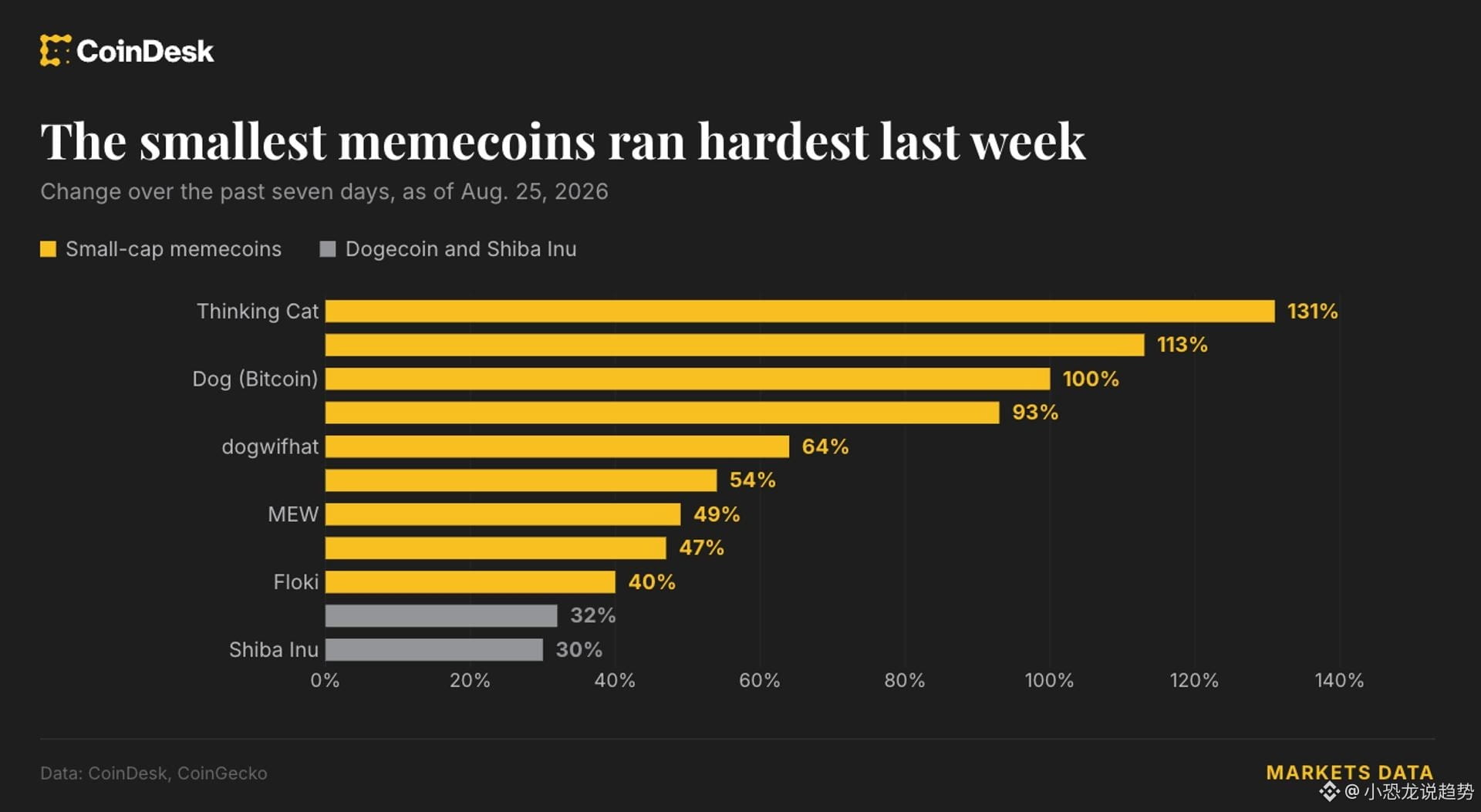
This week, the little animal coins all held a party together: the Cat Coin surged more than 50% in a single day!
Several animal-themed coins rose 50% to 130% over the week; the ones with the biggest gains basically doubled in a week.
As soon as Bitcoin starts to flex, money begins to spill over to find fun
The first ones to rush in are always memes, because nobody talks fundamentals—people only talk emotions
When the mood hits, even dogs can go to the sky—this saying never goes out of style in crypto circles.
The cat coins on the Robinhood chain: up by half in a day—the cuter the name, the more savage the rise
This vibe—you get it if you know
In a bull market, memes are basically the thermometer for sentiment
To see how hot the market is, just look at how fast the cats and dogs are pumping
But Harmon-y has to be straight with you: meme cycles come fast and go even faster
Today it can double—tomorrow it can be cut in half vertically
You’re playing on heartbeats, not faith
In the last bull market, how many people crashed at the peak of the meme mountain—the memory is still fresh
If you can’t help yourself, remember these three things: don’t over-size your position, run when it’s time, and don’t “fall in love” with it
In a bull market, the worst isn’t missing the train—it’s becoming the bag-holder who ends up holding the bag at the summit, getting cooled off by the wind
Winning is luck; losing is a lesson
Don’t confuse luck with ability
If you really want to play, treat it like entertainment—win or lose, it shouldn’t affect your life
Memes are like fireworks—everyone wants to watch, but nobody wants to pick up money from the scraps after they blow up
You can enjoy the excitement, just don’t put all your net worth on the line
Only the clear-minded can make it through to the day the bull market finally wraps up
Memes are an appetizer—don’t make them your main meal
Every day, I’ll bring you coverage of crypto hot topics—not just what’s happening in the news, but also help you understand the logic and the opportunities behind it 👀🚀
Click the link below to follow me👇🏻加入小恐龙粉丝群
#meme coin #crypto market #bull market
This week, the little animal coins all held a party together: the Cat Coin surged more than 50% in a single day!
Several animal-themed coins rose 50% to 130% over the week; the ones with the biggest gains basically doubled in a week.
As soon as Bitcoin starts to flex, money begins to spill over to find fun
The first ones to rush in are always memes, because nobody talks fundamentals—people only talk emotions
When the mood hits, even dogs can go to the sky—this saying never goes out of style in crypto circles.
The cat coins on the Robinhood chain: up by half in a day—the cuter the name, the more savage the rise
This vibe—you get it if you know
In a bull market, memes are basically the thermometer for sentiment
To see how hot the market is, just look at how fast the cats and dogs are pumping
But Harmon-y has to be straight with you: meme cycles come fast and go even faster
Today it can double—tomorrow it can be cut in half vertically
You’re playing on heartbeats, not faith
In the last bull market, how many people crashed at the peak of the meme mountain—the memory is still fresh
If you can’t help yourself, remember these three things: don’t over-size your position, run when it’s time, and don’t “fall in love” with it
In a bull market, the worst isn’t missing the train—it’s becoming the bag-holder who ends up holding the bag at the summit, getting cooled off by the wind
Winning is luck; losing is a lesson
Don’t confuse luck with ability
If you really want to play, treat it like entertainment—win or lose, it shouldn’t affect your life
Memes are like fireworks—everyone wants to watch, but nobody wants to pick up money from the scraps after they blow up
You can enjoy the excitement, just don’t put all your net worth on the line
Only the clear-minded can make it through to the day the bull market finally wraps up
Memes are an appetizer—don’t make them your main meal
Every day, I’ll bring you coverage of crypto hot topics—not just what’s happening in the news, but also help you understand the logic and the opportunities behind it 👀🚀
Click the link below to follow me👇🏻加入小恐龙粉丝群
#meme coin #crypto market #bull market
Korean trade giant POSCO has moved its accounts receivable onto the Avalanche chain
A company with a $22 billion scale has started using the chain to process real, tangible business dealings
In collaboration with Olea and Intain, accounts receivable are directly tokenized
The money sitting trapped on corporate balance sheets can finally be activated and circulated on-chain
Last month LG CNS tested the waters on Injective; this month POSCO has jumped in—Korean conglomerates are piling onto the chain
Note: This isn’t a publicity stunt. It’s a real business scenario
When a trade giant puts receivables on-chain, it’s essentially handing its real-world ledgers over to the blockchain
Faster capital turnover means— for a giant— a difference of tens of millions of dollars
When big companies use blockchain, they don’t rely on slogans—they’ve already done the numbers
Costs go down, efficiency goes up, and capital stays active; one by one, traditional giants end up having that “well, that actually tastes good” moment
This RWA track has already gone from hype concepts to enterprise-level implementation
When assets in the trillion-dollar range start going on-chain, that’s when the real story begins
Follow the footsteps of the giants—at least, you won’t be too far off in terms of direction
Don’t underestimate tokenizing accounts receivable. It’s the old pain point of corporate capital circulation
Only when it can be solved can blockchain truly secure its position in enterprises—from concept to ledgers; once that step is crossed, the industry can’t turn back
This wave of on-chain adoption by Korean enterprises is worth keeping a close eye on
Moves by Asian tech giants are often more convincing than what they say out loud
Every day, I’ll bring you RWA hot spots—not just what’s happening in the news, but also the logic and opportunities behind it 👀🚀
Click the link below to follow me👇🏻加入小恐龙粉丝群
#RWA #Avalanche #tokenization
A company with a $22 billion scale has started using the chain to process real, tangible business dealings
In collaboration with Olea and Intain, accounts receivable are directly tokenized
The money sitting trapped on corporate balance sheets can finally be activated and circulated on-chain
Last month LG CNS tested the waters on Injective; this month POSCO has jumped in—Korean conglomerates are piling onto the chain
Note: This isn’t a publicity stunt. It’s a real business scenario
When a trade giant puts receivables on-chain, it’s essentially handing its real-world ledgers over to the blockchain
Faster capital turnover means— for a giant— a difference of tens of millions of dollars
When big companies use blockchain, they don’t rely on slogans—they’ve already done the numbers
Costs go down, efficiency goes up, and capital stays active; one by one, traditional giants end up having that “well, that actually tastes good” moment
This RWA track has already gone from hype concepts to enterprise-level implementation
When assets in the trillion-dollar range start going on-chain, that’s when the real story begins
Follow the footsteps of the giants—at least, you won’t be too far off in terms of direction
Don’t underestimate tokenizing accounts receivable. It’s the old pain point of corporate capital circulation
Only when it can be solved can blockchain truly secure its position in enterprises—from concept to ledgers; once that step is crossed, the industry can’t turn back
This wave of on-chain adoption by Korean enterprises is worth keeping a close eye on
Moves by Asian tech giants are often more convincing than what they say out loud
Every day, I’ll bring you RWA hot spots—not just what’s happening in the news, but also the logic and opportunities behind it 👀🚀
Click the link below to follow me👇🏻加入小恐龙粉丝群
#RWA #Avalanche #tokenization

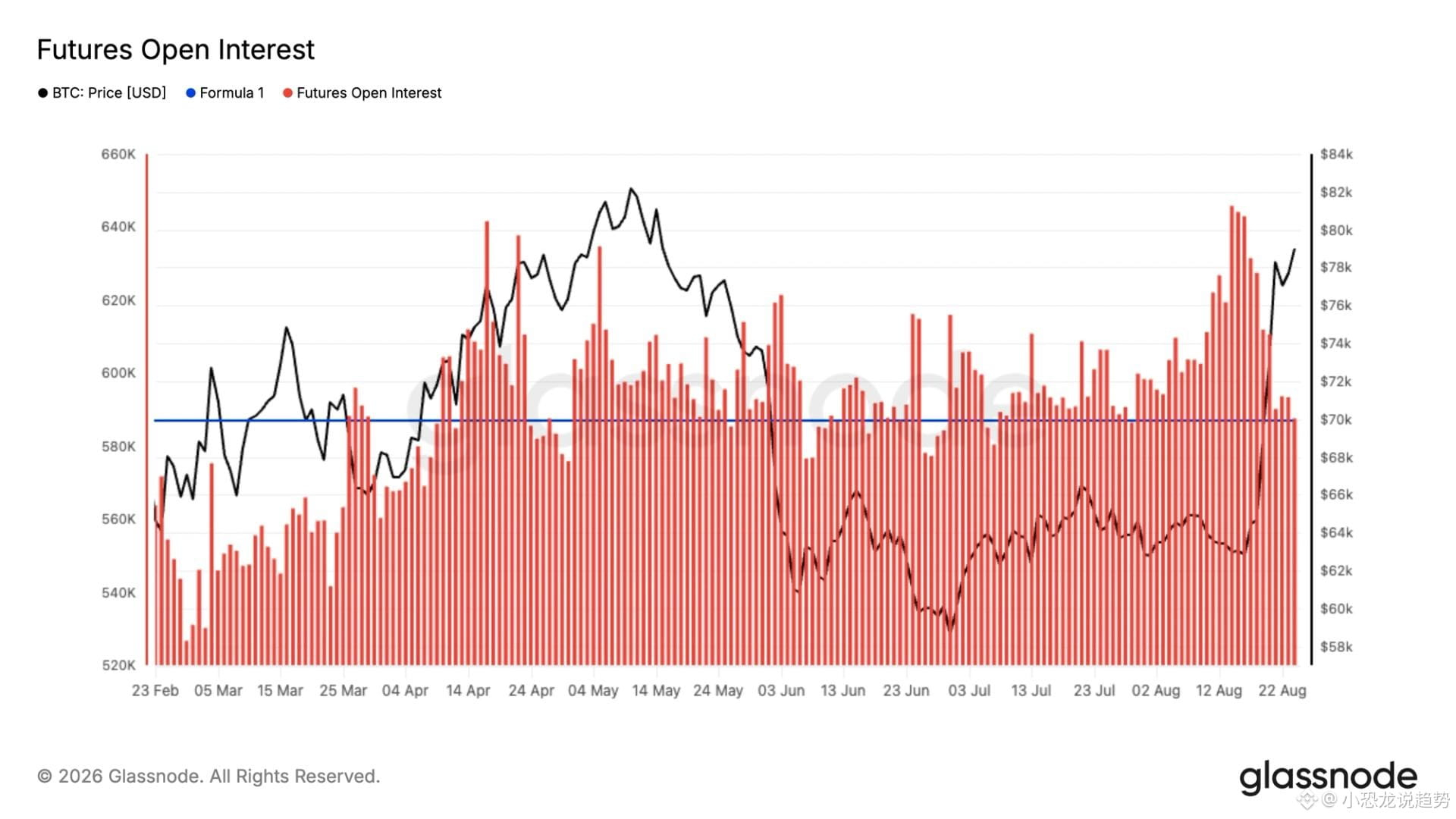
This rally to 80,000+ in Bitcoin was pushed up by getting liquidated short positions.
Margin futures positions hit a 5-month low; the positions using BTC as collateral fell to an all-time low—only 52,000 BTC remain, about 11% of the total market.
Translated, it means: when the price surged hard, open interest actually collapsed. That shows it wasn’t longs piling in—it was shorts疯狂 (frenziedly) closing out, even cutting losses to buy back.
The data is very straightforward: during this upswing, tens of billions of dollars worth of short positions were force-liquidated, literally squeezing the price above 80,000.
This is textbook short-squeeze behavior: the “air force” lined up to get liquidated, and the fuel was entirely their positions.
Most of what got wiped out were aggressive high-leverage shorts; the positions left behind are clearly more resilient.
What’s interesting is that the perpetual funding rate has stayed below 10%, suggesting longs weren’t overly irrational either—everyone is watching from the sidelines, and nobody dares to go heavy here.
This kind of structure is actually a good thing: leverage has been cleared, so the market can move more steadily. It’s less like stepping on the gas and slamming the brakes.
Historically, several major-scale rallies often start right after shorts have been cleared. In the 2019 small bull run and the 2020 big bull run—before takeoff, they all came with something like this first.
Now that the derivatives market has been “lightened,” real money can slowly flow in afterward. Whether it’s a true trend or just an emotion-driven one-day ride depends on whether trading volume can keep up.
Don’t rush to chase price higher. First, see whether this signal can sustain. What the market fears most is charging up in one go and then dispersing.
Every day, I’ll keep you focused on Bitcoin hotspots—not just what happened in the news, but also the underlying logic and opportunities behind it 👀🚀
Click the link below to follow me👇🏻加入小恐龙粉丝群
#Bitcoin #ShortSqueeze #Futures
Margin futures positions hit a 5-month low; the positions using BTC as collateral fell to an all-time low—only 52,000 BTC remain, about 11% of the total market.
Translated, it means: when the price surged hard, open interest actually collapsed. That shows it wasn’t longs piling in—it was shorts疯狂 (frenziedly) closing out, even cutting losses to buy back.
The data is very straightforward: during this upswing, tens of billions of dollars worth of short positions were force-liquidated, literally squeezing the price above 80,000.
This is textbook short-squeeze behavior: the “air force” lined up to get liquidated, and the fuel was entirely their positions.
Most of what got wiped out were aggressive high-leverage shorts; the positions left behind are clearly more resilient.
What’s interesting is that the perpetual funding rate has stayed below 10%, suggesting longs weren’t overly irrational either—everyone is watching from the sidelines, and nobody dares to go heavy here.
This kind of structure is actually a good thing: leverage has been cleared, so the market can move more steadily. It’s less like stepping on the gas and slamming the brakes.
Historically, several major-scale rallies often start right after shorts have been cleared. In the 2019 small bull run and the 2020 big bull run—before takeoff, they all came with something like this first.
Now that the derivatives market has been “lightened,” real money can slowly flow in afterward. Whether it’s a true trend or just an emotion-driven one-day ride depends on whether trading volume can keep up.
Don’t rush to chase price higher. First, see whether this signal can sustain. What the market fears most is charging up in one go and then dispersing.
Every day, I’ll keep you focused on Bitcoin hotspots—not just what happened in the news, but also the underlying logic and opportunities behind it 👀🚀
Click the link below to follow me👇🏻加入小恐龙粉丝群
#Bitcoin #ShortSqueeze #Futures
Verified
US asset management giant Franklin expands its tokenized US dollar fund across Asia
Teaming up with a licensed Hong Kong platform to promote it—it's like opening a legitimate entry point for retail investors across Asia
In the future, if you want to allocate to US Treasury-type assets, you won’t need to go around the world to find a way
Tokenized US Treasuries and money market funds have taken off directly over the past two years
Their scale has grown 15-fold in two years—already one of the fastest-rising tracks in digital assets
With the growth rate laid out in front of you, who wouldn’t feel envious
Previously, if you wanted to access US Treasuries, you had to open an account and exchange currency—barriers so high they discouraged people
Now, on-chain, a single token represents real US Treasury holdings in the form of shares—you can trade anytime
Liquidity is also far more爽快 than traditional channels
One traditional giant after another is jumping in—Franklin, BlackRock, all are racing to claim this first-mover beachhead
This shows that on-chain assets are no longer some back-alley gimmick; it's the next stop in Wall Street's playbook
The old money in asset management is famously steady—and getting them to all move in together proves this is not just a hype concept
The bigger the wheel of on-chain US Treasury funds becomes, the more it indicates that global capital is seeking a safe harbor
Stacking dollar-denominated assets with on-chain share access—these two combined make up the strongest narrative right now
Asia has always been the stronghold of crypto retail investors
With compliance pathways being laid one by one, it’s like moving Wall Street’s shelves right to your doorstep
For ordinary people, this is a tangible benefit
But remember: a legitimate entry doesn’t mean you should blindly rush in
Understand first, then act—never too late
Even if the shelves are moved to your doorstep, you still need to know what you’re buying
Every day I’ll take you through the hotspots in tokenization—not only watching what happens in the news, but helping you understand the logic and opportunities behind it 👀🚀
Click the link below to follow me👇🏻加入小恐龙粉丝群
#tokenization #US_Treasuries #Franklin
Teaming up with a licensed Hong Kong platform to promote it—it's like opening a legitimate entry point for retail investors across Asia
In the future, if you want to allocate to US Treasury-type assets, you won’t need to go around the world to find a way
Tokenized US Treasuries and money market funds have taken off directly over the past two years
Their scale has grown 15-fold in two years—already one of the fastest-rising tracks in digital assets
With the growth rate laid out in front of you, who wouldn’t feel envious
Previously, if you wanted to access US Treasuries, you had to open an account and exchange currency—barriers so high they discouraged people
Now, on-chain, a single token represents real US Treasury holdings in the form of shares—you can trade anytime
Liquidity is also far more爽快 than traditional channels
One traditional giant after another is jumping in—Franklin, BlackRock, all are racing to claim this first-mover beachhead
This shows that on-chain assets are no longer some back-alley gimmick; it's the next stop in Wall Street's playbook
The old money in asset management is famously steady—and getting them to all move in together proves this is not just a hype concept
The bigger the wheel of on-chain US Treasury funds becomes, the more it indicates that global capital is seeking a safe harbor
Stacking dollar-denominated assets with on-chain share access—these two combined make up the strongest narrative right now
Asia has always been the stronghold of crypto retail investors
With compliance pathways being laid one by one, it’s like moving Wall Street’s shelves right to your doorstep
For ordinary people, this is a tangible benefit
But remember: a legitimate entry doesn’t mean you should blindly rush in
Understand first, then act—never too late
Even if the shelves are moved to your doorstep, you still need to know what you’re buying
Every day I’ll take you through the hotspots in tokenization—not only watching what happens in the news, but helping you understand the logic and opportunities behind it 👀🚀
Click the link below to follow me👇🏻加入小恐龙粉丝群
#tokenization #US_Treasuries #Franklin

Zerohash, a crypto custody company, is back at it again—this time it’s going after a U.S. trust bank license.
First time rejected, this time with a more focused plan, they come back swinging.
An OCC trust license sounds like a mouthful, but for the crypto industry it’s essentially an entry ticket.
Get it, and your custody assets receive bank-level treatment—regulatory confidence is instantly maxed out.
It didn’t work the first time; instead, they revised the plan and kept pushing. That kind of resilience says a lot.
Why be so persistent? Because a license is a moat.
The regulatory window is right there—whoever secures it first gets a head start by half a step.
Crypto companies finish competing on technology and now they’re competing on licenses. The industry is genuinely growing up.
Think back a few years ago—crypto was still wildly growing in basements.
Now everyone is lining up to get bank licenses. The “look and feel” has changed way too fast.
In this compliance journey, only those who actually get through become long-term players.
The era of making quick money with shortcuts is quietly being replaced by the license era.
“License” might be the most valuable keyword in the crypto space this year.
Don’t underestimate a single license—it represents the entire industry’s coming-of-age ceremony.
And it’s not just Zerohash eyeing licenses.
During this regulatory window, crypto companies are scrambling to get onshore.
Miss this round, and you may have to wait years again.
The custody threshold is being raised by licenses.
Whoever gets the license first gets to capture the institutional capital upside first.
For users, this is also a good thing.
With bank-backed custody, people feel more at ease.
The more standardized the industry becomes, the more capital will be willing to enter.
Every day I’ll bring you updates on regulatory hotspots— not just reporting what happened, but helping you understand the logic and opportunities behind it 👀🚀
Click the link below to follow me👇🏻加入小恐龙粉丝群
#CryptoCustody #Regulation #Compliance
First time rejected, this time with a more focused plan, they come back swinging.
An OCC trust license sounds like a mouthful, but for the crypto industry it’s essentially an entry ticket.
Get it, and your custody assets receive bank-level treatment—regulatory confidence is instantly maxed out.
It didn’t work the first time; instead, they revised the plan and kept pushing. That kind of resilience says a lot.
Why be so persistent? Because a license is a moat.
The regulatory window is right there—whoever secures it first gets a head start by half a step.
Crypto companies finish competing on technology and now they’re competing on licenses. The industry is genuinely growing up.
Think back a few years ago—crypto was still wildly growing in basements.
Now everyone is lining up to get bank licenses. The “look and feel” has changed way too fast.
In this compliance journey, only those who actually get through become long-term players.
The era of making quick money with shortcuts is quietly being replaced by the license era.
“License” might be the most valuable keyword in the crypto space this year.
Don’t underestimate a single license—it represents the entire industry’s coming-of-age ceremony.
And it’s not just Zerohash eyeing licenses.
During this regulatory window, crypto companies are scrambling to get onshore.
Miss this round, and you may have to wait years again.
The custody threshold is being raised by licenses.
Whoever gets the license first gets to capture the institutional capital upside first.
For users, this is also a good thing.
With bank-backed custody, people feel more at ease.
The more standardized the industry becomes, the more capital will be willing to enter.
Every day I’ll bring you updates on regulatory hotspots— not just reporting what happened, but helping you understand the logic and opportunities behind it 👀🚀
Click the link below to follow me👇🏻加入小恐龙粉丝群
#CryptoCustody #Regulation #Compliance

The U.S. has blacklisted Iran’s entire crypto circle.
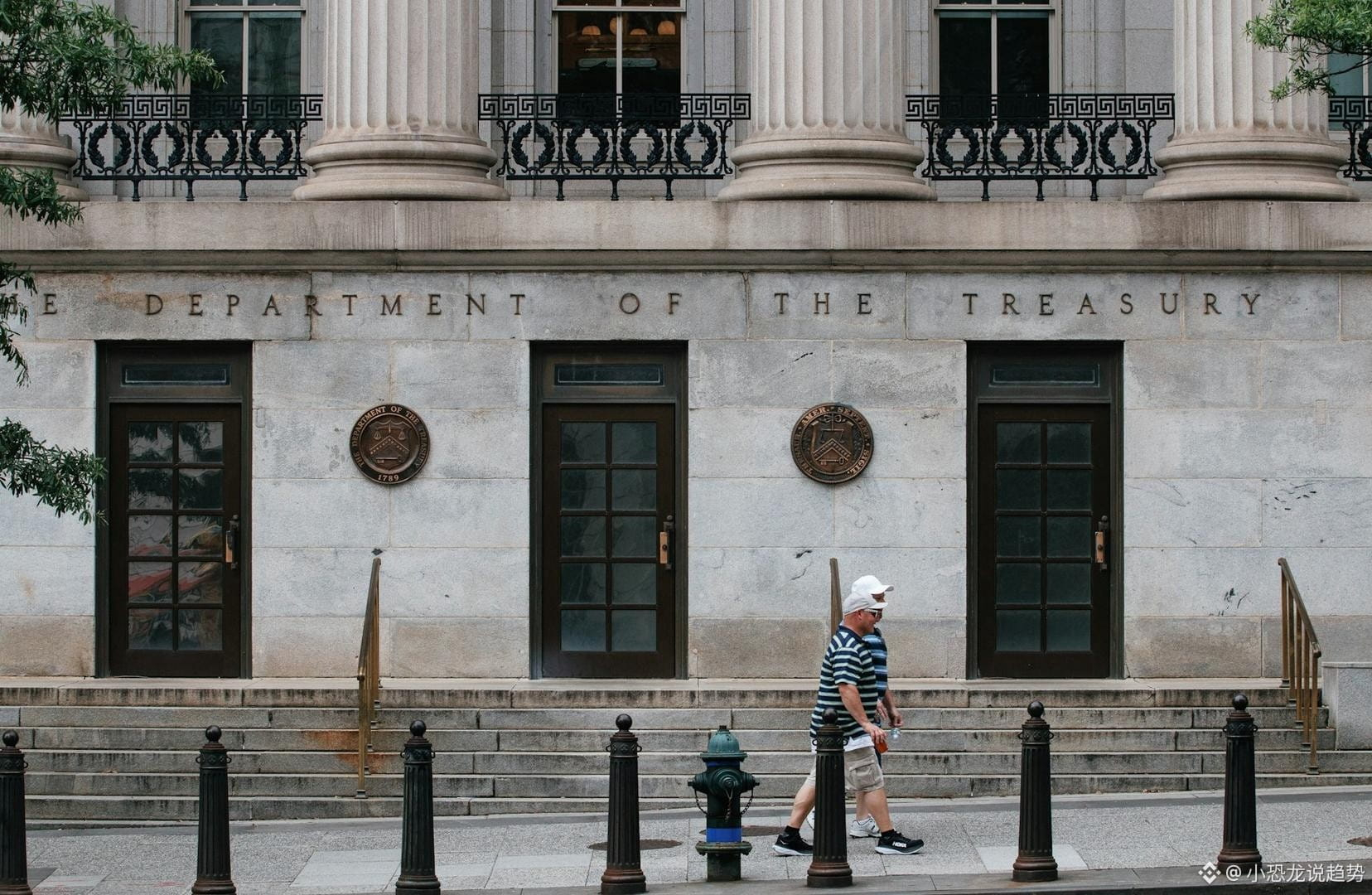
With one round of sanctions, the U.S. Treasury is covering crypto, gold, shipping, aviation, and technology. The Finance Minister has basically declared this is an “economic D-Day.”
They also named an intermediary called Obrakhov, saying that from 2023 to now, more than $100 million in crypto used to settle Iran’s oil payments has gone through his hands.
In plain terms: if you’re involved in crypto business with Iran, you could be swept up too.
I used to think sanctions were only a matter of traditional finance—but on-chain, you can’t really dodge it. Stablecoins, exchanges, market makers… they’re all in the crosshairs.
What’s interesting is that on the other side, the U.S. military also said the Strait of Hormuz will remain open, which is why oil prices didn’t freak out and send everything soaring.
But the sword of sanctions is already on the neck of the crypto industry. Compliance isn’t an elective—it’s a life-or-death requirement.
Think deeper: this is basically drawing a red line for global capital. If you touch Iran’s crypto channel, you pay the price.
Going forward, when doing things like stablecoin issuance, OTC, or trading on exchanges, people will need to ask one question first: where did this money come from?
For the industry, it’s painful—but it’s also a reshuffle. The “clean” players may actually end up lasting longer.
For ordinary users, don’t panic. If you’re just buying and selling mainstream coins normally, this has nothing to do with you.
But institutions will reevaluate risk. When geopolitics gets tense, both safe-haven capital and risk assets tend to shake.
At times like this, control your hand and keep your positions—nothing matters more.
Remember: the messier the news cycle, the less you should act. Wait until the facts come to light—no need to move early.
Every day, I’ll bring you the latest regulatory hotspots. Not just what happened in the news, but the logic and opportunities behind it 👀🚀
Click the link below to follow me👇🏻加入小恐龙粉丝群
#Iran #Regulation #CryptoMarket
With one round of sanctions, the U.S. Treasury is covering crypto, gold, shipping, aviation, and technology. The Finance Minister has basically declared this is an “economic D-Day.”
They also named an intermediary called Obrakhov, saying that from 2023 to now, more than $100 million in crypto used to settle Iran’s oil payments has gone through his hands.
In plain terms: if you’re involved in crypto business with Iran, you could be swept up too.
I used to think sanctions were only a matter of traditional finance—but on-chain, you can’t really dodge it. Stablecoins, exchanges, market makers… they’re all in the crosshairs.
What’s interesting is that on the other side, the U.S. military also said the Strait of Hormuz will remain open, which is why oil prices didn’t freak out and send everything soaring.
But the sword of sanctions is already on the neck of the crypto industry. Compliance isn’t an elective—it’s a life-or-death requirement.
Think deeper: this is basically drawing a red line for global capital. If you touch Iran’s crypto channel, you pay the price.
Going forward, when doing things like stablecoin issuance, OTC, or trading on exchanges, people will need to ask one question first: where did this money come from?
For the industry, it’s painful—but it’s also a reshuffle. The “clean” players may actually end up lasting longer.
For ordinary users, don’t panic. If you’re just buying and selling mainstream coins normally, this has nothing to do with you.
But institutions will reevaluate risk. When geopolitics gets tense, both safe-haven capital and risk assets tend to shake.
At times like this, control your hand and keep your positions—nothing matters more.
Remember: the messier the news cycle, the less you should act. Wait until the facts come to light—no need to move early.
Every day, I’ll bring you the latest regulatory hotspots. Not just what happened in the news, but the logic and opportunities behind it 👀🚀
Click the link below to follow me👇🏻加入小恐龙粉丝群
#Iran #Regulation #CryptoMarket
Verified
Solana ETF funds have flowed in for 5 consecutive days, smashing a historic record
On Monday, inflows hit $33.5 million—still the highest single-day figure since December last year
Cumulative net inflows have surged to $1.22 billion, with trading volume also breaking 166 million
Without saying anything else, once these numbers come out, the faces of those who kept spreading bearish takes are swollen
They said, “No one buys SOL ETFs” and “All the money is running away”
Now the cash is lining up to get in—reality speaks louder than mouth-hard stubbornness
This round is kind of interesting: when the broader market rebounds, the funds specifically target assets with higher elasticity
SOL was always the vanguard of the rebound—climbing back from the bottom all the way up, with one of the strongest gains among major coins
And the ETF keeps adding fuel in the background, like someone constantly stoking the fire
More importantly, the way this money is entering looks like a “allocation trade,” not a “sentiment trade”
The rich don’t make noise—they stay quiet, and only after the data comes out do they shock you
A single day of $33.5 million isn’t “a lot” or “a little,” but it wins on one thing: consistency
Also don’t forget—SOL itself hasn’t been idle either this time
It climbed back from the bottom and has one of the top gain rates among major coins
Price action and fund flows mutually confirm each other—this is what you call solid, grounded movement
An ETF is a litmus test of institutional sentiment
A continuous 5-day streak of net inflows shows that Wall Street is voting for this rally with real money
It’s more effective than a hundred research reports
Heat is building, but chasing at the top always requires you to leave yourself a way out
Watch the data—don’t get carried away
That’s the way to survive to the end of a bull market
After all, these days, lasting longer matters more than getting up first
Every day, I’ll bring you coverage of crypto hotspots—not just what happened in the news, but also how to understand the underlying logic and opportunities 👀🚀
Click the link below to follow me 👇🏻加入小恐龙粉丝群
#Solana #ETF #InstitutionalFunds
On Monday, inflows hit $33.5 million—still the highest single-day figure since December last year
Cumulative net inflows have surged to $1.22 billion, with trading volume also breaking 166 million
Without saying anything else, once these numbers come out, the faces of those who kept spreading bearish takes are swollen
They said, “No one buys SOL ETFs” and “All the money is running away”
Now the cash is lining up to get in—reality speaks louder than mouth-hard stubbornness
This round is kind of interesting: when the broader market rebounds, the funds specifically target assets with higher elasticity
SOL was always the vanguard of the rebound—climbing back from the bottom all the way up, with one of the strongest gains among major coins
And the ETF keeps adding fuel in the background, like someone constantly stoking the fire
More importantly, the way this money is entering looks like a “allocation trade,” not a “sentiment trade”
The rich don’t make noise—they stay quiet, and only after the data comes out do they shock you
A single day of $33.5 million isn’t “a lot” or “a little,” but it wins on one thing: consistency
Also don’t forget—SOL itself hasn’t been idle either this time
It climbed back from the bottom and has one of the top gain rates among major coins
Price action and fund flows mutually confirm each other—this is what you call solid, grounded movement
An ETF is a litmus test of institutional sentiment
A continuous 5-day streak of net inflows shows that Wall Street is voting for this rally with real money
It’s more effective than a hundred research reports
Heat is building, but chasing at the top always requires you to leave yourself a way out
Watch the data—don’t get carried away
That’s the way to survive to the end of a bull market
After all, these days, lasting longer matters more than getting up first
Every day, I’ll bring you coverage of crypto hotspots—not just what happened in the news, but also how to understand the underlying logic and opportunities 👀🚀
Click the link below to follow me 👇🏻加入小恐龙粉丝群
#Solana #ETF #InstitutionalFunds

Verified
The American State Bankers Association is planning to band together to build a nationwide blockchain network
They’ve even picked a name—BankChain Alliance—with plans to launch in 2027
The banking industry can’t sit still this time
They want to push stablecoins, payments, and tokenized deposits—all onto their own regulated turf
Rather than watching the crypto world steal business from them, it’s better to step in and build a network themselves
Note: this isn’t one bank doing it alone—this is a collective effort by state-level associations
In effect, the traditional financial system is finally taking on-chain settlement seriously
If this succeeds, that high wall in traditional payments will start getting pulled down piece by piece
In plain terms, traditional finance doesn’t “not understand” blockchain—it’s afraid of falling behind
Even the bankers’ associations are uniting to build infrastructure; isn’t this signal obvious enough?
Once their network starts running, regulatory standards for stablecoins will likely be established alongside it
The stablecoin track has already shifted from a toy for retail users to a coveted prize banks are fighting for
Whoever can get it working first will secure a position in the next round of the payments revolution
The big money is getting serious—retail investors should also read the direction of the wind before jumping in
If banks really manage to run on-chain settlement, the old cross-border payments route—slow and expensive—may be doomed
Once “efficiency” is clearly compared, there’s no going back
Banks aren’t moving in to take away anyone’s bowl of food—they’re coming to catch up
The moment they acknowledge blockchain, it’s the biggest endorsement the industry could ask for
Every day, I’ll take you to watch crypto hotspots—not just what’s happening in the news, but also the logic and opportunities behind it 👀🚀
Click the link below to follow me👇🏻加入小恐龙粉丝群
#stablecoin #bank #blockchain
They’ve even picked a name—BankChain Alliance—with plans to launch in 2027
The banking industry can’t sit still this time
They want to push stablecoins, payments, and tokenized deposits—all onto their own regulated turf
Rather than watching the crypto world steal business from them, it’s better to step in and build a network themselves
Note: this isn’t one bank doing it alone—this is a collective effort by state-level associations
In effect, the traditional financial system is finally taking on-chain settlement seriously
If this succeeds, that high wall in traditional payments will start getting pulled down piece by piece
In plain terms, traditional finance doesn’t “not understand” blockchain—it’s afraid of falling behind
Even the bankers’ associations are uniting to build infrastructure; isn’t this signal obvious enough?
Once their network starts running, regulatory standards for stablecoins will likely be established alongside it
The stablecoin track has already shifted from a toy for retail users to a coveted prize banks are fighting for
Whoever can get it working first will secure a position in the next round of the payments revolution
The big money is getting serious—retail investors should also read the direction of the wind before jumping in
If banks really manage to run on-chain settlement, the old cross-border payments route—slow and expensive—may be doomed
Once “efficiency” is clearly compared, there’s no going back
Banks aren’t moving in to take away anyone’s bowl of food—they’re coming to catch up
The moment they acknowledge blockchain, it’s the biggest endorsement the industry could ask for
Every day, I’ll take you to watch crypto hotspots—not just what’s happening in the news, but also the logic and opportunities behind it 👀🚀
Click the link below to follow me👇🏻加入小恐龙粉丝群
#stablecoin #bank #blockchain

Verified
Economists warn: the Ministry of Finance is doing a large-scale QE
Bitcoin staged a deep V rebound on Monday, once dropping below 77,000 and then rallying all the way back to 79,989, setting a new August high. Over the past 24 hours, it rose about 3%, and its market value returned to $1.59 trillion. For the first time this year, its decline narrowed to within 10%.
Across the whole internet, $396 million was liquidated. Long story short: shorts got hit the hardest—of the shorts that were wiped out, $222 million were liquidated in just that batch.
The trigger was still that same thing: the Ministry of Finance announced an expansion of its long-term Treasury bond repurchase program to $4.0 billion, effective September 9. The finance minister also hinted that more will be added later. The market immediately treated it as disguised money printing and drove the rally.
Economist Peter Schiff stepped in to warn that this plan would shorten the average duration of Treasuries, making it harder for the Fed to raise rates—an “ingredient list” for large-scale QE and runaway inflation. He even asked whether everyone has been buying gold.
Bitcoin’s “digital gold” narrative was reignited by these macro expectations. Institutions and corporate treasury departments now have another reason to treat BTC as a reserve asset.
A Bitfinex analyst noted that this surge was mainly driven by short-squeeze mechanics, and that it needs real spot buying to take over afterward. Weekly support holding above 73,500 would be the confirmation. The next checkpoint is 86,500. If it falls back below 64,500, the rebound could be invalidated.
Harmony believes inflation anxiety is Bitcoin’s best friend. Every time money-printing expectations flare up, the “digital gold” story automatically loops again. But whether the story can be fulfilled depends on whether the money really comes.
The interactive question: If a real round of massive money-printing hits, would you add to your position? See you in the comments.
Click the profile picture to watch the livestream.
Every day, I’ll take you through macro hotspots—not just what happens in the news, but also how to understand the underlying logic and opportunities 👉🦖
#比特币 #Federal Reserve
Bitcoin staged a deep V rebound on Monday, once dropping below 77,000 and then rallying all the way back to 79,989, setting a new August high. Over the past 24 hours, it rose about 3%, and its market value returned to $1.59 trillion. For the first time this year, its decline narrowed to within 10%.
Across the whole internet, $396 million was liquidated. Long story short: shorts got hit the hardest—of the shorts that were wiped out, $222 million were liquidated in just that batch.
The trigger was still that same thing: the Ministry of Finance announced an expansion of its long-term Treasury bond repurchase program to $4.0 billion, effective September 9. The finance minister also hinted that more will be added later. The market immediately treated it as disguised money printing and drove the rally.
Economist Peter Schiff stepped in to warn that this plan would shorten the average duration of Treasuries, making it harder for the Fed to raise rates—an “ingredient list” for large-scale QE and runaway inflation. He even asked whether everyone has been buying gold.
Bitcoin’s “digital gold” narrative was reignited by these macro expectations. Institutions and corporate treasury departments now have another reason to treat BTC as a reserve asset.
A Bitfinex analyst noted that this surge was mainly driven by short-squeeze mechanics, and that it needs real spot buying to take over afterward. Weekly support holding above 73,500 would be the confirmation. The next checkpoint is 86,500. If it falls back below 64,500, the rebound could be invalidated.
Harmony believes inflation anxiety is Bitcoin’s best friend. Every time money-printing expectations flare up, the “digital gold” story automatically loops again. But whether the story can be fulfilled depends on whether the money really comes.
The interactive question: If a real round of massive money-printing hits, would you add to your position? See you in the comments.
Click the profile picture to watch the livestream.
Every day, I’ll take you through macro hotspots—not just what happens in the news, but also how to understand the underlying logic and opportunities 👉🦖
#比特币 #Federal Reserve
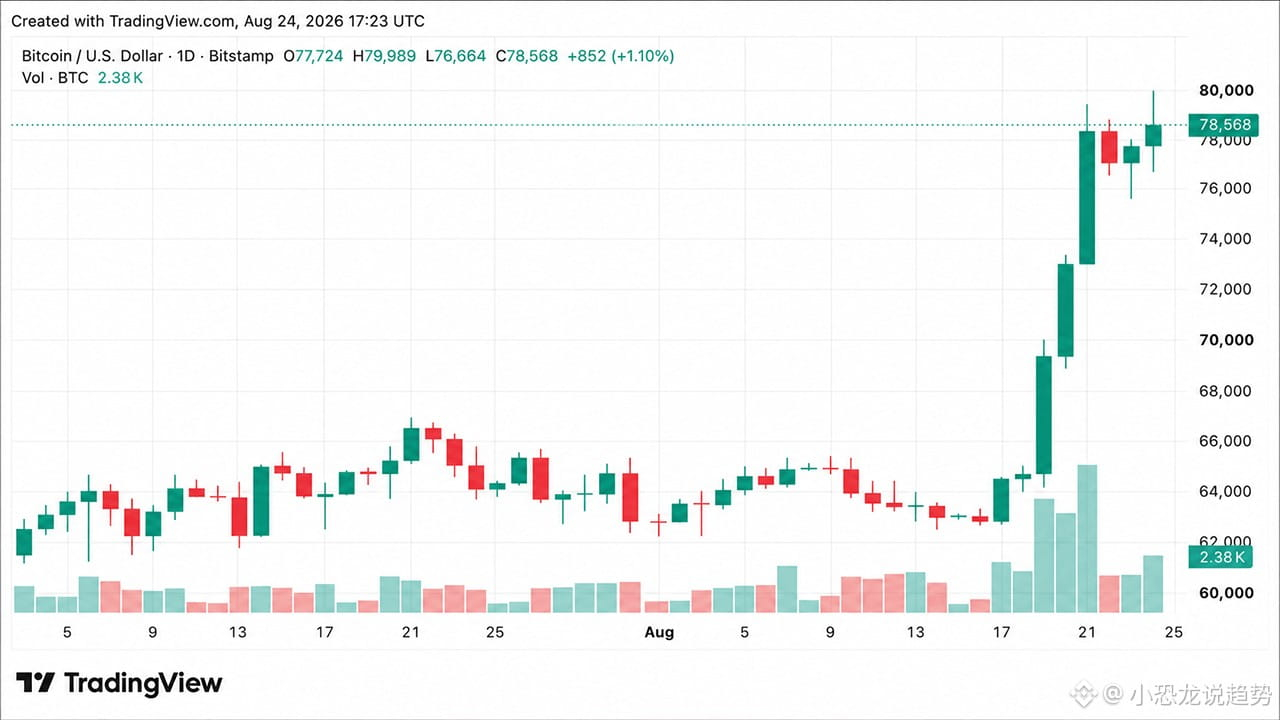
This sudden surge has nothing to do with Bitcoin itself.
In a week, Bitcoin has jumped over 20%, climbing from above 60,000 all the way back to the 80,000 mark. But some people are pouring cold water on it, saying this rally has nothing to do with Bitcoin itself.
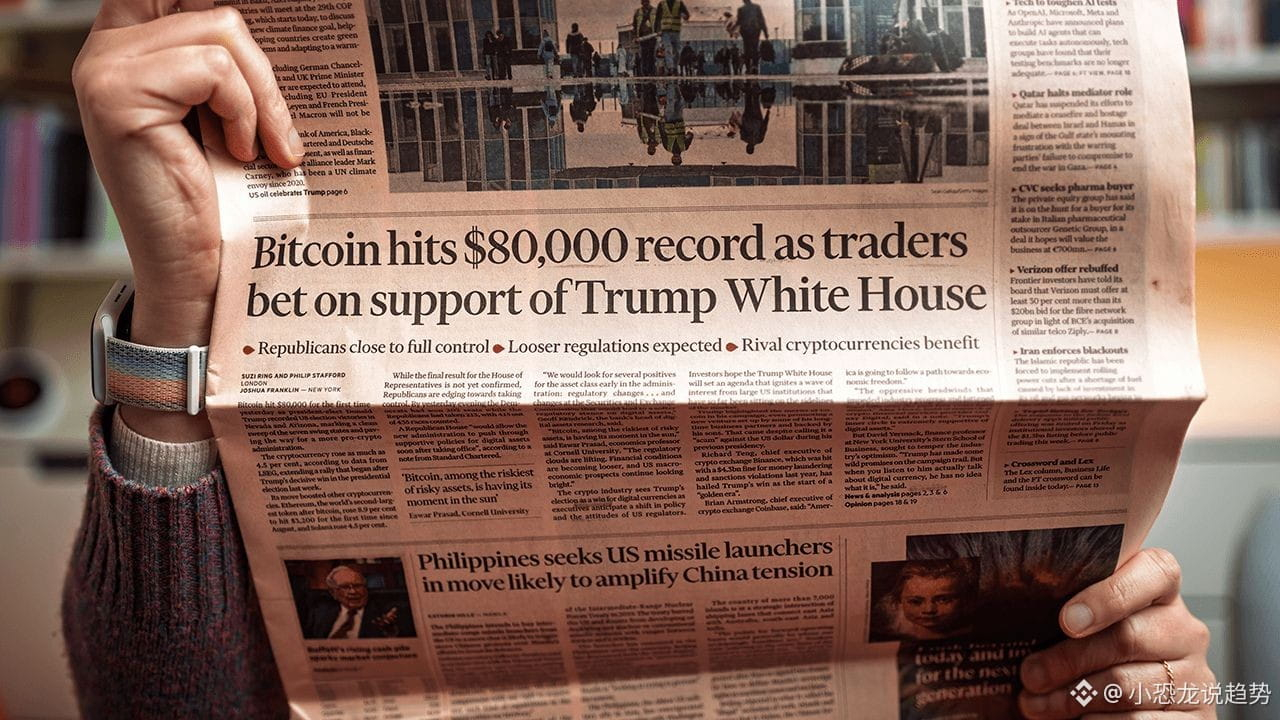
A CoinDesk news article lists a long string of reasons: Treasury buybacks, a weaker U.S. dollar, cooling inflation data, ETF inflows, fiat-currency depreciation anxiety, the return of the “digital gold” narrative, the AI profit boom, renewed institutional demand—everything points to external factors.
As for Bitcoin itself: the Coldcard wallet crisis, the BIP upgrade drama, declining hash rate, and the unresolved quantum-resistance question—these are all ignored by the market. It still goes up; it’s going to go up.
The article also cites research from the Cleveland Fed, saying that many investors treat crypto investments like speculation—when sentiment is hot, they rush in; when sentiment fades, they pull out. That’s why price is especially sensitive to macro news.
The conclusion is painful: Federal Reserve officials may have far more influence on crypto prices than Bitcoin developers do. A dovish shift in monetary policy this autumn could push things further. If inflation once again comes in above expectations, the effect could go the other way. As for any revolutionary self-custody solution— the market basically can’t be bothered to look.
Harmony thinks this round of Bitcoin is looking more and more like a puppet controlled by the macro market. The good news is that easy liquidity will be the first to benefit it. The bad news is that the moment liquidity tightens, it will be the first to take a hit. Instead of studying on-chain data, it’s better to watch the central bank’s mood.
An interactive question: For the next round of surge, who do you think will trigger it? Chat in the comments.
Click the avatar to watch the live stream.
Every day, I’ll take you to follow Bitcoin’s macro highlights—not just what’s happening in the news, but how to understand the logic and opportunities behind it 👉🦖
#比特币 #macroeconomics
In a week, Bitcoin has jumped over 20%, climbing from above 60,000 all the way back to the 80,000 mark. But some people are pouring cold water on it, saying this rally has nothing to do with Bitcoin itself.
A CoinDesk news article lists a long string of reasons: Treasury buybacks, a weaker U.S. dollar, cooling inflation data, ETF inflows, fiat-currency depreciation anxiety, the return of the “digital gold” narrative, the AI profit boom, renewed institutional demand—everything points to external factors.
As for Bitcoin itself: the Coldcard wallet crisis, the BIP upgrade drama, declining hash rate, and the unresolved quantum-resistance question—these are all ignored by the market. It still goes up; it’s going to go up.
The article also cites research from the Cleveland Fed, saying that many investors treat crypto investments like speculation—when sentiment is hot, they rush in; when sentiment fades, they pull out. That’s why price is especially sensitive to macro news.
The conclusion is painful: Federal Reserve officials may have far more influence on crypto prices than Bitcoin developers do. A dovish shift in monetary policy this autumn could push things further. If inflation once again comes in above expectations, the effect could go the other way. As for any revolutionary self-custody solution— the market basically can’t be bothered to look.
Harmony thinks this round of Bitcoin is looking more and more like a puppet controlled by the macro market. The good news is that easy liquidity will be the first to benefit it. The bad news is that the moment liquidity tightens, it will be the first to take a hit. Instead of studying on-chain data, it’s better to watch the central bank’s mood.
An interactive question: For the next round of surge, who do you think will trigger it? Chat in the comments.
Click the avatar to watch the live stream.
Every day, I’ll take you to follow Bitcoin’s macro highlights—not just what’s happening in the news, but how to understand the logic and opportunities behind it 👉🦖
#比特币 #macroeconomics
ZEC surges to $870 — dormant mining rigs have all been awakened
The privacy coin Zcash is a bit wild this time. Over the past three days, its price has been bouncing between $820 and $871. Across the entire network, hashrate has shot up vertically, climbing to 27–29 GSol/s and even pushing to a new all-time high.
The logic is simple: mining profits are outpacing electricity and hosting fees. Idle rigs are being turned from scrap into cash-printing machines. Owners have been booting up overnight, adding more hardware until the difficulty rises enough to erase the profit margins.
Zcash uses the Equihash algorithm, producing one block every 75 seconds—about 1,152 blocks per day. Currently, each block’s subsidy is 1.5625 ZEC. Miners take 80%, which is 1.25 ZEC plus fees. The rest is distributed to community grants and the protocol fund. After the subsidy halves by end of 2028, the subsidy will drop to 0.78125 ZEC.
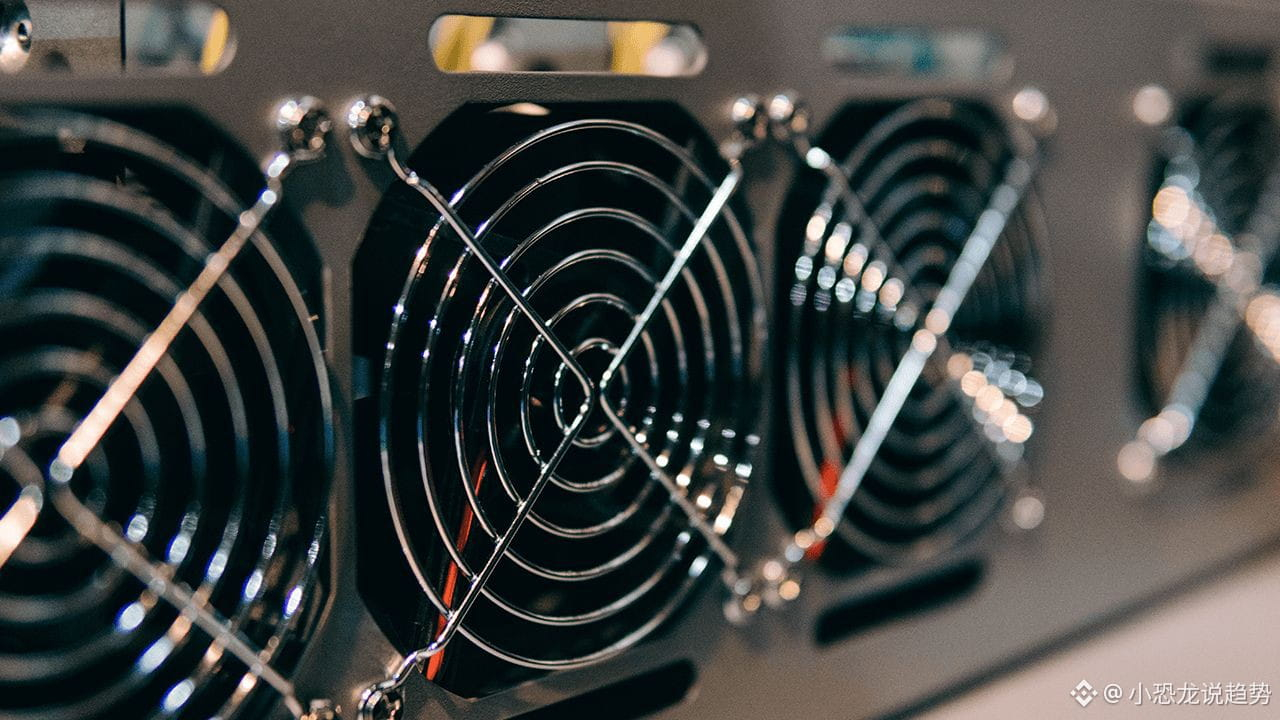
The hardware sector has also been activated. Bitmain’s Antminer Z15 Pro, for example, delivers 840 kSol/s with a power draw of 2,780 watts. It’s a mainstay for professional mining farms. In the network’s total hashrate of 25 GSol/s, one unit accounts for only 0.00336%. To control 1% of the network hashrate, you’d need to buy nearly 300 units—stacking the machines is visible just from the cost alone.
What’s interesting is that different players’ hashrate dashboards don’t show the same numbers. Some display 24 GSol/s, others 28 GSol/s—because of different reporting windows and algorithms, the results naturally differ. Don’t get spooked by a single figure.
Harmony thinks this round of ZEC is “price first, hashrate later.” Miners are voting with their feet—the most honest kind of signal. After such a long period of silence in the privacy coin sector, we finally got a wave of attention backed by real money. But the halving is still more than two years away; enjoy the current heat while it lasts—mine while you can, and cherish it.
A question for engagement: how far can this privacy-coin wave go? Let’s chat in the comments.
Click the avatar to watch the live stream.
Every day, I’ll bring you ZEC hot topics—not just what’s happening, but help you understand the underlying logic and opportunities 👉🦖
#Zcash #隐私币
The privacy coin Zcash is a bit wild this time. Over the past three days, its price has been bouncing between $820 and $871. Across the entire network, hashrate has shot up vertically, climbing to 27–29 GSol/s and even pushing to a new all-time high.
The logic is simple: mining profits are outpacing electricity and hosting fees. Idle rigs are being turned from scrap into cash-printing machines. Owners have been booting up overnight, adding more hardware until the difficulty rises enough to erase the profit margins.
Zcash uses the Equihash algorithm, producing one block every 75 seconds—about 1,152 blocks per day. Currently, each block’s subsidy is 1.5625 ZEC. Miners take 80%, which is 1.25 ZEC plus fees. The rest is distributed to community grants and the protocol fund. After the subsidy halves by end of 2028, the subsidy will drop to 0.78125 ZEC.
The hardware sector has also been activated. Bitmain’s Antminer Z15 Pro, for example, delivers 840 kSol/s with a power draw of 2,780 watts. It’s a mainstay for professional mining farms. In the network’s total hashrate of 25 GSol/s, one unit accounts for only 0.00336%. To control 1% of the network hashrate, you’d need to buy nearly 300 units—stacking the machines is visible just from the cost alone.
What’s interesting is that different players’ hashrate dashboards don’t show the same numbers. Some display 24 GSol/s, others 28 GSol/s—because of different reporting windows and algorithms, the results naturally differ. Don’t get spooked by a single figure.
Harmony thinks this round of ZEC is “price first, hashrate later.” Miners are voting with their feet—the most honest kind of signal. After such a long period of silence in the privacy coin sector, we finally got a wave of attention backed by real money. But the halving is still more than two years away; enjoy the current heat while it lasts—mine while you can, and cherish it.
A question for engagement: how far can this privacy-coin wave go? Let’s chat in the comments.
Click the avatar to watch the live stream.
Every day, I’ll bring you ZEC hot topics—not just what’s happening, but help you understand the underlying logic and opportunities 👉🦖
#Zcash #隐私币
Verified
Asian Coin Hoarder King Has Moved Another 1,000 “Big Pancakes” Into Custody
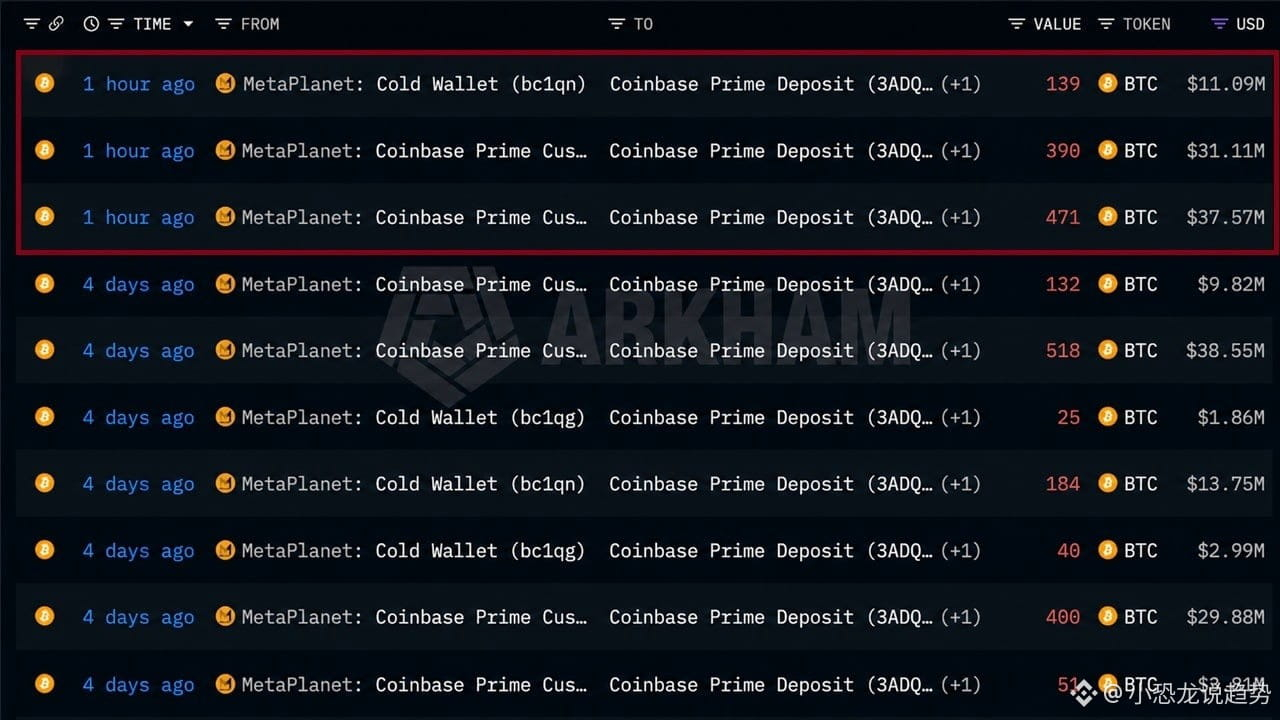
Japanese listed company Metaplanet transferred 1,000 bitcoins to Coinbase Prime custody on August 25. Based on the current price, it’s about US$79.77 million. It recently announced that its holdings have surpassed 43,000 BTC, setting an Asian listed-company record.
Blockchain data firm Lookonchain calculated its average cost at roughly US$96,191 per coin, for total capital of about US$4.09 billion. Meanwhile, the current BTC price is still hovering around US$79,000—meaning the unrealized loss on its books is not small. But the company’s coin-hoarding rhythm hasn’t slipped at all.
The timeline is wild: by the end of 2024 it had only 1,761 BTC; in less than two years it rolled up to 40,177 BTC. Its most recent purchase was another US$225 million for 2,823 BTC, pushing its holdings directly above 43,000. Its target is to hoard 210,000 BTC by the end of 2027.
Transferring coins to Coinbase Prime doesn’t necessarily mean selling. Compliance-focused custody, OTC trading, and setting up for its subsidiary Superplanet platform are all common uses. Previously, it also injected 2,100 BTC into Super League Enterprise, a Nasdaq-listed company, working together to build a U.S. treasury platform.
What’s interesting is that with a cost around 96,000 and a current price around 79,000—this kind of deep unrealized loss—most companies would be criticized by shareholders if they behaved this way in traditional financial reports. But in the coin-hoarding world, this is called “faith.”
Harmonie thinks Metaplanet has turned into an Asia-version “mini Strategy”: buying BTC by issuing shares and structured products, turning the balance sheet into a Bitcoin billboard. Whether this route can truly work depends on whether it can actually gather 210,000 BTC by 2027.
Interactive question: With a 30% unrealized loss still holding and hoarding, are you convinced or not?
Click the avatar to watch the livestream.
Every day, I’ll guide you to track Bitcoin position-holding hotspots—not just what happened in the news, but also help you understand the underlying logic and opportunities 👉🦖
#比特币 #Metaplanet
Japanese listed company Metaplanet transferred 1,000 bitcoins to Coinbase Prime custody on August 25. Based on the current price, it’s about US$79.77 million. It recently announced that its holdings have surpassed 43,000 BTC, setting an Asian listed-company record.
Blockchain data firm Lookonchain calculated its average cost at roughly US$96,191 per coin, for total capital of about US$4.09 billion. Meanwhile, the current BTC price is still hovering around US$79,000—meaning the unrealized loss on its books is not small. But the company’s coin-hoarding rhythm hasn’t slipped at all.
The timeline is wild: by the end of 2024 it had only 1,761 BTC; in less than two years it rolled up to 40,177 BTC. Its most recent purchase was another US$225 million for 2,823 BTC, pushing its holdings directly above 43,000. Its target is to hoard 210,000 BTC by the end of 2027.
Transferring coins to Coinbase Prime doesn’t necessarily mean selling. Compliance-focused custody, OTC trading, and setting up for its subsidiary Superplanet platform are all common uses. Previously, it also injected 2,100 BTC into Super League Enterprise, a Nasdaq-listed company, working together to build a U.S. treasury platform.
What’s interesting is that with a cost around 96,000 and a current price around 79,000—this kind of deep unrealized loss—most companies would be criticized by shareholders if they behaved this way in traditional financial reports. But in the coin-hoarding world, this is called “faith.”
Harmonie thinks Metaplanet has turned into an Asia-version “mini Strategy”: buying BTC by issuing shares and structured products, turning the balance sheet into a Bitcoin billboard. Whether this route can truly work depends on whether it can actually gather 210,000 BTC by 2027.
Interactive question: With a 30% unrealized loss still holding and hoarding, are you convinced or not?
Click the avatar to watch the livestream.
Every day, I’ll guide you to track Bitcoin position-holding hotspots—not just what happened in the news, but also help you understand the underlying logic and opportunities 👉🦖
#比特币 #Metaplanet
Thailand also wants a Bitcoin ETF—retail investors finally get a seat at the table
On August 24, Thailand’s SEC released an announcement to solicit public comments on draft regulations for spot Bitcoin and Ethereum ETFs. This is Thailand’s first time seriously laying down rules for spot crypto ETFs.
The draft requires that crypto ETFs must be established and managed by licensed asset management companies, follow the existing general ETF framework, and can only be traded on the Thailand Stock Exchange (SET). Initially, only BTC and ETH will be approved; “altcoins” will have to wait until performance meets expectations. Packaged funds will not be opened at this stage. Custody must prioritize domestic institutions, and any overseas custody must prove it is necessary and appropriate.
Last June, Thailand approved a ONE Bitcoin ETF, but that product was only a packaged offering—it did not directly hold Bitcoin, and it was open only to wealthy individuals and institutions. Ordinary retail investors couldn’t even reach the door. This time, the direction is completely the opposite: it targets spot funds that truly hold BTC, and it opens the door to retail investors. Overseas products such as BlackRock’s IBIT are also under discussion.
Southeast Asia’s regulatory tone has suddenly shifted from conservative to positive. After Thailand’s move, the map of spot ETFs in Asia has expanded by another significant slice. The compliance pathway for crypto assets is visibly widening. Asset management firms that want licenses will need to lay out their operational arrangements in full for regulators to review. The bar is not low, but the direction is very clear.
Harmoni thinks: the more detailed the rules, the more seriously regulators are taking it. The draft’s line that the ETF “must be managed by a licensed asset management company” sends a clear message to the market—if you want to get on board, first be compliant. This wave is a tangible benefit for Asian retail investors, and it also shows that spot ETFs are no longer exclusive toys for the US and Europe.
Question for you: Which country in Asia do you think will be the next to open up spot ETFs? Chat in the comments.
Click the profile picture to watch the live stream.
Every day, we’ll bring you ETF hot topics. Not just what’s happening in the news—more importantly, we’ll help you understand the logic and opportunities behind it 👉🦖
#比特币 #ETF
On August 24, Thailand’s SEC released an announcement to solicit public comments on draft regulations for spot Bitcoin and Ethereum ETFs. This is Thailand’s first time seriously laying down rules for spot crypto ETFs.
The draft requires that crypto ETFs must be established and managed by licensed asset management companies, follow the existing general ETF framework, and can only be traded on the Thailand Stock Exchange (SET). Initially, only BTC and ETH will be approved; “altcoins” will have to wait until performance meets expectations. Packaged funds will not be opened at this stage. Custody must prioritize domestic institutions, and any overseas custody must prove it is necessary and appropriate.
Last June, Thailand approved a ONE Bitcoin ETF, but that product was only a packaged offering—it did not directly hold Bitcoin, and it was open only to wealthy individuals and institutions. Ordinary retail investors couldn’t even reach the door. This time, the direction is completely the opposite: it targets spot funds that truly hold BTC, and it opens the door to retail investors. Overseas products such as BlackRock’s IBIT are also under discussion.
Southeast Asia’s regulatory tone has suddenly shifted from conservative to positive. After Thailand’s move, the map of spot ETFs in Asia has expanded by another significant slice. The compliance pathway for crypto assets is visibly widening. Asset management firms that want licenses will need to lay out their operational arrangements in full for regulators to review. The bar is not low, but the direction is very clear.
Harmoni thinks: the more detailed the rules, the more seriously regulators are taking it. The draft’s line that the ETF “must be managed by a licensed asset management company” sends a clear message to the market—if you want to get on board, first be compliant. This wave is a tangible benefit for Asian retail investors, and it also shows that spot ETFs are no longer exclusive toys for the US and Europe.
Question for you: Which country in Asia do you think will be the next to open up spot ETFs? Chat in the comments.
Click the profile picture to watch the live stream.
Every day, we’ll bring you ETF hot topics. Not just what’s happening in the news—more importantly, we’ll help you understand the logic and opportunities behind it 👉🦖
#比特币 #ETF
Six straight days of inflows: another $450 million smashed in overnight
Stop saying Wall Street ran away—money will come back on its own
On Monday, the data was released: Bitcoin ETF net inflows hit $338 million, Ethereum ETF added $116 million, totaling about $453 million—marking the 6th consecutive trading day of net inflows
Looking back at last week, there were plenty of people shouting that institutions were retreating, saying the ETF rally was over—yet the funds kept rising for six straight days. The “slap” is louder than thunder
And don’t forget: last month, this same track was still experiencing net outflows. Everyone stared at the outflow numbers every day, sighing and complaining. Now the wind changes direction on a dime. The smartest money always moves ahead of retail traders
The vibe of those entering has also changed. In the past, retail traders surged in from sheer emotion. Now, this kind of consecutive rally looks more like a positioning/accumulation trade building gradually. The wealthy buy like they’re shopping for groceries—by the ton
There’s also a detail: Bitcoin ETFs and Ethereum ETFs are flowing in at the same time, showing that money isn’t just buying one asset—it’s spreading across the entire track. This is often a signal that big funds are laying a base position
What’s interesting is that as this leg of the rally lifted, everyone online started arguing whether it’s a fake breakout. But in terms of hard cash, the market never pays attention to the comment section’s opinions. They say “don’t,” but their bodies are telling the truth
And for context: this rebound climbed from about 58,000 all the way to above 80,000. While retail traders are still hesitating, institutions have already cast their votes with real money. Historically, periods of consecutive ETF inflows often coincide with strong phases in coin prices
When ETFs keep running hot and the price stands above 80,000—those two signals together are tougher than any analyst’s mouth
How many more days do you think this streak can last? Drop your number in the comments—let’s see whose timing is right
Click the avatar to watch the live stream
Every day I’ll bring you updates on Bitcoin ETF hotspots—not just what happened in the news, but how to understand the logic and opportunities behind it 👉🦖
#比特币ETF # Institutional money entering
Stop saying Wall Street ran away—money will come back on its own
On Monday, the data was released: Bitcoin ETF net inflows hit $338 million, Ethereum ETF added $116 million, totaling about $453 million—marking the 6th consecutive trading day of net inflows
Looking back at last week, there were plenty of people shouting that institutions were retreating, saying the ETF rally was over—yet the funds kept rising for six straight days. The “slap” is louder than thunder
And don’t forget: last month, this same track was still experiencing net outflows. Everyone stared at the outflow numbers every day, sighing and complaining. Now the wind changes direction on a dime. The smartest money always moves ahead of retail traders
The vibe of those entering has also changed. In the past, retail traders surged in from sheer emotion. Now, this kind of consecutive rally looks more like a positioning/accumulation trade building gradually. The wealthy buy like they’re shopping for groceries—by the ton
There’s also a detail: Bitcoin ETFs and Ethereum ETFs are flowing in at the same time, showing that money isn’t just buying one asset—it’s spreading across the entire track. This is often a signal that big funds are laying a base position
What’s interesting is that as this leg of the rally lifted, everyone online started arguing whether it’s a fake breakout. But in terms of hard cash, the market never pays attention to the comment section’s opinions. They say “don’t,” but their bodies are telling the truth
And for context: this rebound climbed from about 58,000 all the way to above 80,000. While retail traders are still hesitating, institutions have already cast their votes with real money. Historically, periods of consecutive ETF inflows often coincide with strong phases in coin prices
When ETFs keep running hot and the price stands above 80,000—those two signals together are tougher than any analyst’s mouth
How many more days do you think this streak can last? Drop your number in the comments—let’s see whose timing is right
Click the avatar to watch the live stream
Every day I’ll bring you updates on Bitcoin ETF hotspots—not just what happened in the news, but how to understand the logic and opportunities behind it 👉🦖
#比特币ETF # Institutional money entering
Financial Big Shot Rants at the Ministry of Finance—But Bitcoin Smiles
Drunkenmiller, a seasoned veteran who once helped popularize quantitative funds, is recently firing on all cylinders
Who does he rant about? The U.S. Treasury. A $4 billion long-term bond repurchase plan—he calls it “stop the bleeding by drinking poison.”
Translate this: To keep surging bond yields under control, the Ministry of Finance personally steps in to buy long-term bonds.
It sounds like a bailout. But the big shot says that if this move goes wrong, it’s essentially printing money in disguise—pushing the market back onto the old road of yield-curve control.
Even old retail investors understand it: once the phrase “yield-curve control” shows up, the U.S. dollar’s credit comes under serious question marks.
So Bitcoin smiles: loosened dollar credit means hard assets become the preferred play.
Yesterday, Bitcoin was still stuck worrying about the $80,000 level. Today it goes straight through and holds above it—funds are voting with their feet.
When Japan played yield-curve control back then, we all saw how it ended: the exchange rate collapsed and assets got panicked.
My take: The big shot is arguing and retail traders are watching the show—but the show is full of opportunities.
The more the Ministry of Finance meddles, the stronger Bitcoin’s anti-dilution narrative gets. That logic hasn’t changed for the past decade.
Of course, don’t treat big shots like gods. He may rant, but he still holds Bitcoin ETFs. He complains with his mouth, but his actions are honest.
How many “bearish with words, bullish with deeds” big shots have we seen in crypto?
Still, let’s pour a bucket of cold water: the Ministry of Finance’s operation, in essence, is propping up the market. Propping up means the market still hasn’t truly stood on its own.
If one day the repurchases start coming in at reduced volume, the bond market will have to reprice again. It’s not surprising if Bitcoin gets dragged along on a roller coaster.
The biggest uncertainty in the market right now is whether the Ministry of Finance dares to keep buying through the repurchases until yields finally give in.
If you get that layer, you understand: when big shots speak out, it’s never for you to copy homework—it’s a reminder.
Do you think this move by the Ministry of Finance is a rescue or a landmine? Let’s chat in the comments.
Click the avatar to watch the live stream
Every day I’ll guide you to follow Bitcoin hotspots—not only what’s happening in the news, but also how to understand the logic and opportunities behind it 👉🦖
#比特币 #US Treasury bonds
Drunkenmiller, a seasoned veteran who once helped popularize quantitative funds, is recently firing on all cylinders
Who does he rant about? The U.S. Treasury. A $4 billion long-term bond repurchase plan—he calls it “stop the bleeding by drinking poison.”
Translate this: To keep surging bond yields under control, the Ministry of Finance personally steps in to buy long-term bonds.
It sounds like a bailout. But the big shot says that if this move goes wrong, it’s essentially printing money in disguise—pushing the market back onto the old road of yield-curve control.
Even old retail investors understand it: once the phrase “yield-curve control” shows up, the U.S. dollar’s credit comes under serious question marks.
So Bitcoin smiles: loosened dollar credit means hard assets become the preferred play.
Yesterday, Bitcoin was still stuck worrying about the $80,000 level. Today it goes straight through and holds above it—funds are voting with their feet.
When Japan played yield-curve control back then, we all saw how it ended: the exchange rate collapsed and assets got panicked.
My take: The big shot is arguing and retail traders are watching the show—but the show is full of opportunities.
The more the Ministry of Finance meddles, the stronger Bitcoin’s anti-dilution narrative gets. That logic hasn’t changed for the past decade.
Of course, don’t treat big shots like gods. He may rant, but he still holds Bitcoin ETFs. He complains with his mouth, but his actions are honest.
How many “bearish with words, bullish with deeds” big shots have we seen in crypto?
Still, let’s pour a bucket of cold water: the Ministry of Finance’s operation, in essence, is propping up the market. Propping up means the market still hasn’t truly stood on its own.
If one day the repurchases start coming in at reduced volume, the bond market will have to reprice again. It’s not surprising if Bitcoin gets dragged along on a roller coaster.
The biggest uncertainty in the market right now is whether the Ministry of Finance dares to keep buying through the repurchases until yields finally give in.
If you get that layer, you understand: when big shots speak out, it’s never for you to copy homework—it’s a reminder.
Do you think this move by the Ministry of Finance is a rescue or a landmine? Let’s chat in the comments.
Click the avatar to watch the live stream
Every day I’ll guide you to follow Bitcoin hotspots—not only what’s happening in the news, but also how to understand the logic and opportunities behind it 👉🦖
#比特币 #US Treasury bonds
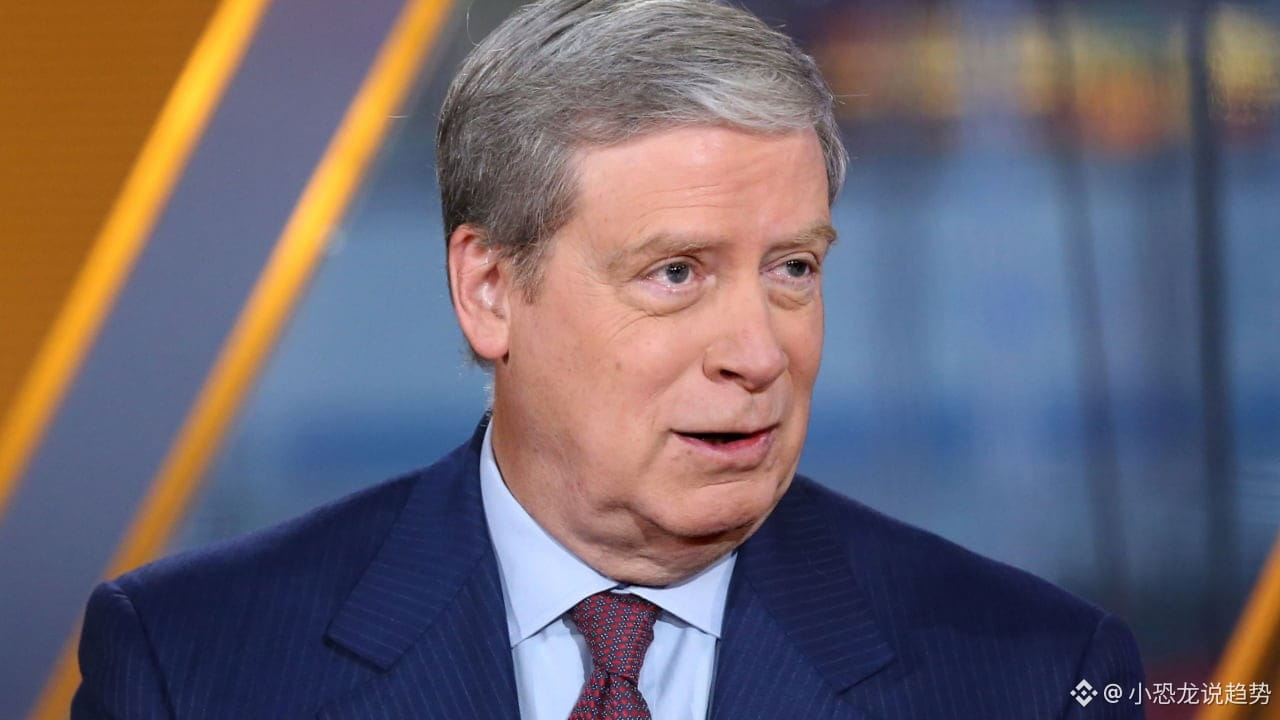
Bitcoin rockets 25% in a week—breaking the 80,000 mark is no longer a question of “if”
Last time it stood above 80,000 was back in May. Tonight it goes straight through 80,001.
A quarter’s gain in a week like this—shorts get queued up and carried out, liquidation orders flying everywhere.
But here’s the interesting part: despite the surge, open interest in the futures market is actually shrinking, and the funding rate is also unusually calm.
In plain language: this isn’t bloated leverage. It’s a real spot bid pushing price higher.
Industry insiders say this kind of structure is, ironically, healthier than a straight, explosive breakout—once the “air force” gets cleared out, the new shorts still don’t have the nerve to jump in.
Looking back on these seven days: first it broke out of the six-week range, then it reclaimed the long-term moving average, and finally it swept through the 80,000 psychological level in one clean move.
Each step feels like it was written into a script—performed specifically for the people who missed the move.
Even Wall Street is cooperating: U.S. stocks hit new highs, and risk appetite is back.
My take: in a bull market, the most expensive thing isn’t the coins—it’s hesitation.
Every time you think it’s gone up too much, it pulls higher again to show you what it can do.
By the time you finally can’t resist chasing, that’s when the script starts to flip.
With this kind of momentum, 85,000 and 90,000 are just bystanders. The real disagreement is around the 100,000 level—those stubborn old holdouts: when will they finally surrender?
One small detail, too: the options market has quietly been adding more bullish call positioning. Institutions are getting their year-end plans in early.
Add to that falling U.S. Treasury yields, and capital moving from bond markets into risk assets—Bitcoin has caught the tailwind.
Some people say this is the final round of a bull trap. I say: a trap that lures for a year—who can stand that?
That said, the smoother it runs, the more you should keep a hand ready. There’s no market that only goes up—only people who remember the wins but ignore the losses.
Don’t ask me whether I can chase—ask yourself whether you can hold. And when there’s a pullback, will you dare to buy the dip?
How far do you think this move can go? Drop your target price in the comments—and let’s see who the real contrarian indicator is.
Click the avatar to watch the livestream
Every day, I’ll take you to follow Bitcoin highlights—not just what happens in the news, but how to understand the underlying logic and opportunities 👉🦖
#比特币 #BullMarket
Last time it stood above 80,000 was back in May. Tonight it goes straight through 80,001.
A quarter’s gain in a week like this—shorts get queued up and carried out, liquidation orders flying everywhere.
But here’s the interesting part: despite the surge, open interest in the futures market is actually shrinking, and the funding rate is also unusually calm.
In plain language: this isn’t bloated leverage. It’s a real spot bid pushing price higher.
Industry insiders say this kind of structure is, ironically, healthier than a straight, explosive breakout—once the “air force” gets cleared out, the new shorts still don’t have the nerve to jump in.
Looking back on these seven days: first it broke out of the six-week range, then it reclaimed the long-term moving average, and finally it swept through the 80,000 psychological level in one clean move.
Each step feels like it was written into a script—performed specifically for the people who missed the move.
Even Wall Street is cooperating: U.S. stocks hit new highs, and risk appetite is back.
My take: in a bull market, the most expensive thing isn’t the coins—it’s hesitation.
Every time you think it’s gone up too much, it pulls higher again to show you what it can do.
By the time you finally can’t resist chasing, that’s when the script starts to flip.
With this kind of momentum, 85,000 and 90,000 are just bystanders. The real disagreement is around the 100,000 level—those stubborn old holdouts: when will they finally surrender?
One small detail, too: the options market has quietly been adding more bullish call positioning. Institutions are getting their year-end plans in early.
Add to that falling U.S. Treasury yields, and capital moving from bond markets into risk assets—Bitcoin has caught the tailwind.
Some people say this is the final round of a bull trap. I say: a trap that lures for a year—who can stand that?
That said, the smoother it runs, the more you should keep a hand ready. There’s no market that only goes up—only people who remember the wins but ignore the losses.
Don’t ask me whether I can chase—ask yourself whether you can hold. And when there’s a pullback, will you dare to buy the dip?
How far do you think this move can go? Drop your target price in the comments—and let’s see who the real contrarian indicator is.
Click the avatar to watch the livestream
Every day, I’ll take you to follow Bitcoin highlights—not just what happens in the news, but how to understand the underlying logic and opportunities 👉🦖
#比特币 #BullMarket
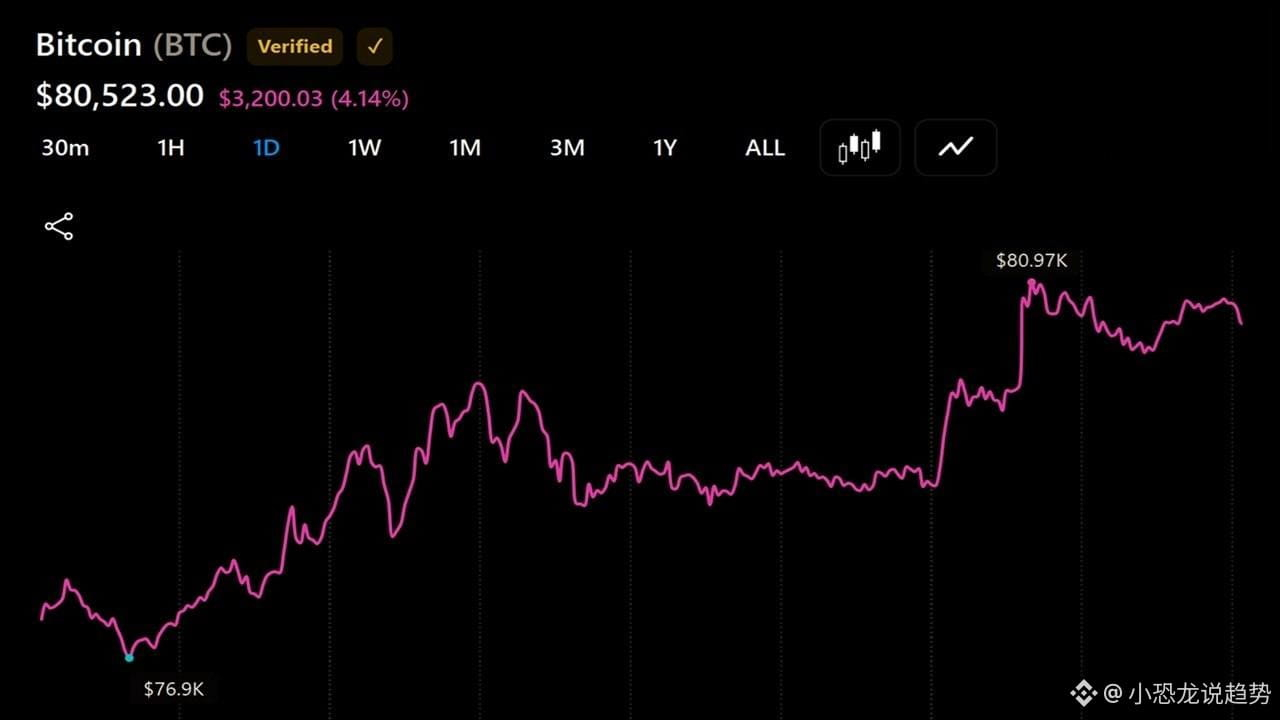
Verified
Investment bank raised a $140 target price for Circle — USDC is about to take off
Bernstein, a top-tier Wall Street investment bank, set a target price of $140 per share for stablecoin giant Circle. The rationale is that USDC will enter a new round of growth.
Bernstein’s logic: the springtime for stablecoins is here. The regulatory framework is rolling out. Tokenized capital markets are expanding. On-chain activity is bouncing back. Plus, a surge in payments use cases. With four positive factors stacking up, the adoption rate of stablecoins should jump to the next level.
Circle holds USDC, the world’s second-largest stablecoin. It has a complete set of compliance licenses. The stricter the regulation becomes, the more it benefits. In this wave of industry-wide normalization, it’s the most direct beneficiary.
What’s interesting is that investment banks are starting to seriously value stablecoin companies. What does that mean? Stablecoins are no longer viewed as a side product of the crypto world, but as an independent track—one with its own business model and growth curve.
For the market, stablecoin market cap continuing to expand is essentially fuel for a bull market. An increase in stablecoin supply means more capital is waiting on-chain for opportunities—an early indicator of liquidity.
Of course, a target price is one thing, and whether it can be realized is another. Still, the direction is worth paying attention to. When Wall Street starts writing research reports on stablecoins, the narrative for this industry has already changed.
Circle’s compliance licenses, in a tougher regulatory environment, are actually a core competitive advantage. Competitors are still catching up, but Circle has already earned its points.
Every day, I’ll keep you updated on the latest stablecoin hotspots—beyond just seeing what happens in the news, I’ll help you understand the logic and opportunities behind it 👀🚀
Click the link below to follow me 👇🏻加入小恐龙粉丝群
#USDC #stablecoins #Circle
Bernstein, a top-tier Wall Street investment bank, set a target price of $140 per share for stablecoin giant Circle. The rationale is that USDC will enter a new round of growth.
Bernstein’s logic: the springtime for stablecoins is here. The regulatory framework is rolling out. Tokenized capital markets are expanding. On-chain activity is bouncing back. Plus, a surge in payments use cases. With four positive factors stacking up, the adoption rate of stablecoins should jump to the next level.
Circle holds USDC, the world’s second-largest stablecoin. It has a complete set of compliance licenses. The stricter the regulation becomes, the more it benefits. In this wave of industry-wide normalization, it’s the most direct beneficiary.
What’s interesting is that investment banks are starting to seriously value stablecoin companies. What does that mean? Stablecoins are no longer viewed as a side product of the crypto world, but as an independent track—one with its own business model and growth curve.
For the market, stablecoin market cap continuing to expand is essentially fuel for a bull market. An increase in stablecoin supply means more capital is waiting on-chain for opportunities—an early indicator of liquidity.
Of course, a target price is one thing, and whether it can be realized is another. Still, the direction is worth paying attention to. When Wall Street starts writing research reports on stablecoins, the narrative for this industry has already changed.
Circle’s compliance licenses, in a tougher regulatory environment, are actually a core competitive advantage. Competitors are still catching up, but Circle has already earned its points.
Every day, I’ll keep you updated on the latest stablecoin hotspots—beyond just seeing what happens in the news, I’ll help you understand the logic and opportunities behind it 👀🚀
Click the link below to follow me 👇🏻加入小恐龙粉丝群
#USDC #stablecoins #Circle

Log in to explore more content