

(Source: Health Times, Baijiahao)
Have you noticed that when you reach a certain age, your knees start to “alert” you: knee pain, “crackling” noises when you move, and even your shoulders feel like they can’t be lifted… The more it hurts, the more you’re afraid to move; the less you move, the more it hurts. This “vicious cycle” is something many middle-aged and older adults are experiencing.
So what kind of exercise can truly improve long-standing problems like knee pain and osteoporosis? It’s not running, playing sports, or swimming, but rather Baduanjin and Tai Chi—“traditional Chinese exercises” passed down by our ancestors. Recently, a new study has provided an unexpected answer: these “traditional Chinese exercises” can help improve issues such as knee joint pain, chronic pain, and osteoporosis.
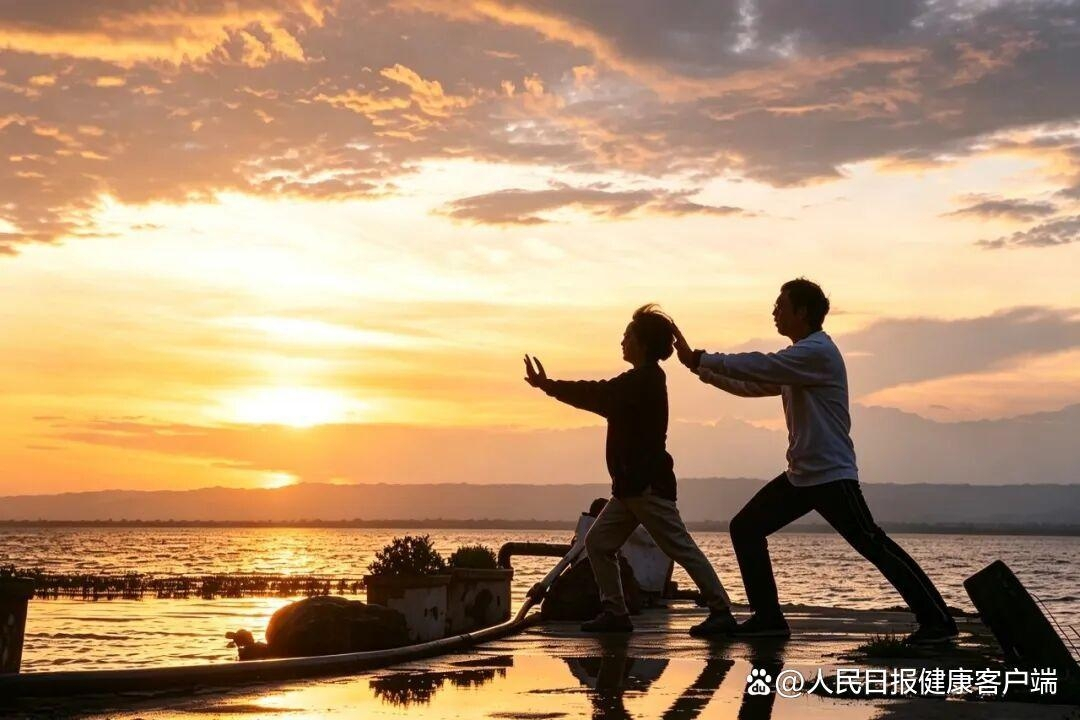
For those who keep practicing traditional Chinese-style exercises,
Both joint pain and muscle pain improve
In August 2026, a study published in the (British Journal of Sports Medicine) evaluated the effectiveness of traditional Chinese exercises (Baduanjin, Tai Chi, Five-Animal Qigong, Yijinjing, qigong, etc.) for improving 10 types of musculoskeletal disorders. The study integrated 92 meta-analyses. The findings show that traditional Chinese exercises can improve conditions such as osteoarthritis, chronic pain, and osteoporosis.
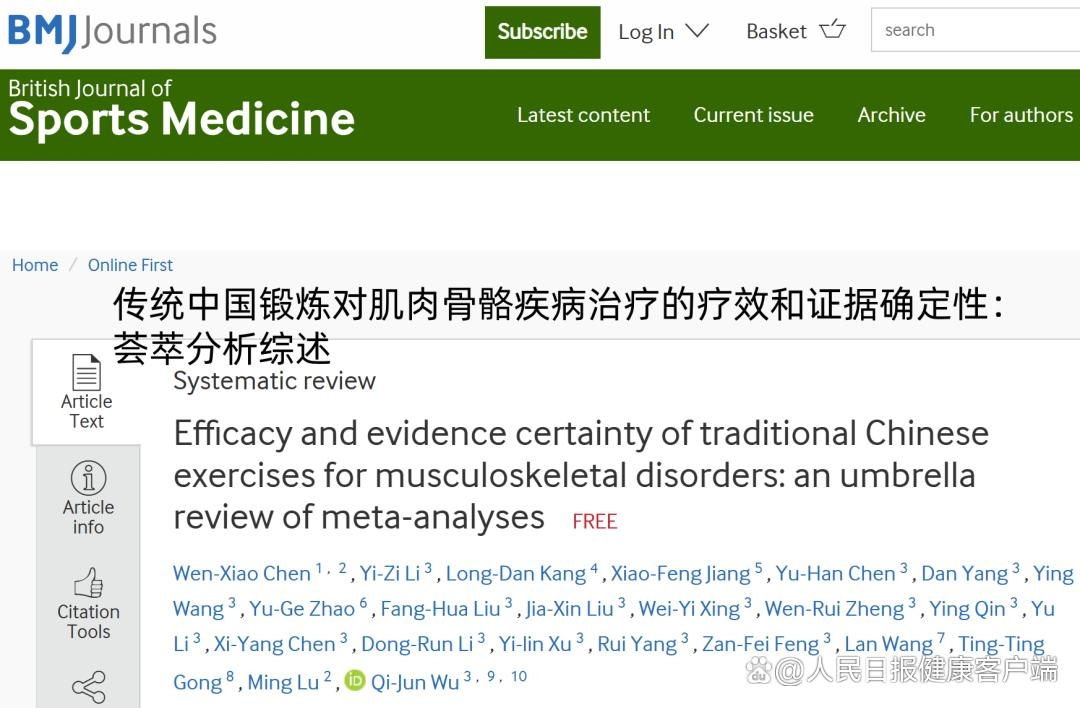
What specific findings did the research identify? Focus on these 4 points:
1. People with knee problems: going up and down stairs and walking feels much easier
Research found that traditional Chinese exercises can significantly improve physical function in patients with knee osteoarthritis. Pain, stiffness, mobility, and quality of life all improve in parallel.
In other words, for people with knee pain, if they keep practicing for a while, walking and going up and down stairs feel much lighter. And whether it’s Tai Chi or Baduanjin, you can see this kind of improvement—it isn’t limited to only one form of traditional Chinese exercise.
2. People with chronic pain: the intensity of pain clearly decreases
Research found that Tai Chi can significantly reduce the intensity of chronic pain. More importantly, this benefit isn’t limited to just one condition—it's beneficial for knee osteoarthritis, chronic low back pain, neck-and-shoulder pain, and fibromyalgia, where people feel pain all over but no specific cause can be identified.
3. People with fibromyalgia: sleep quality gets better, too
For people with fibromyalgia, there’s an additional benefit: not only does the pain lessen, but sleep quality also improves. Many people with fibromyalgia struggle to sleep well all night. But those who keep practicing traditional Chinese exercises have noticeably higher sleep scores.
4. People with osteoporosis: bone mineral density improves in multiple areas
Research has found that consistently practicing Tai Chi helps improve bone mineral density in multiple key areas, including the hips, as well as the lumbar spine in postmenopausal women. And these are precisely the places where older adults are most prone to fractures.
Since research shows that the “traditional Chinese-style exercises” work so well, how long does it take for results? The research also answers this: the longer you practice, the higher the frequency, and the greater the weekly exercise volume, the more noticeable the effects. To get more obvious improvements, the research provides a specific plan: practice at least 3 times per week, at least 30 minutes per session, and stick with it for at least 6 months.①
More and more research has found that,
The benefits of traditional exercises like Baduanjin are countless.
1. Improve blood pressure: 15 minutes of Baduanjin every day works
In February 2026, a study published by the Li Jing team at Fuwai Hospital, Chinese Academy of Medical Sciences, stated that setting aside 15 minutes each day to practice Baduanjin can significantly lower blood pressure.② In 2025, a review published in (BMJ Medicine) showed that relaxation activities can significantly reduce blood pressure levels, especially in the short term. Among them, Tai Chi and yoga on average reduced systolic blood pressure by 9.58 mmHg and diastolic blood pressure by 4.57 mmHg.③
2. Improve sleep: the effect is comparable to first-line non-drug therapy
In November 2025, researchers at The University of Hong Kong published a clinical trial in the (British Medical Journal) comparing Tai Chi with cognitive behavioral therapy (a first-line non-drug treatment for insomnia). The results showed that by the 15th month of follow-up, the reduction in the insomnia severity index in the Tai Chi group was basically on par with that of the cognitive behavioral therapy group. In other words, if you keep practicing Tai Chi long term, the improvement in insomnia is about the same as that achieved with first-line non-drug therapy.④
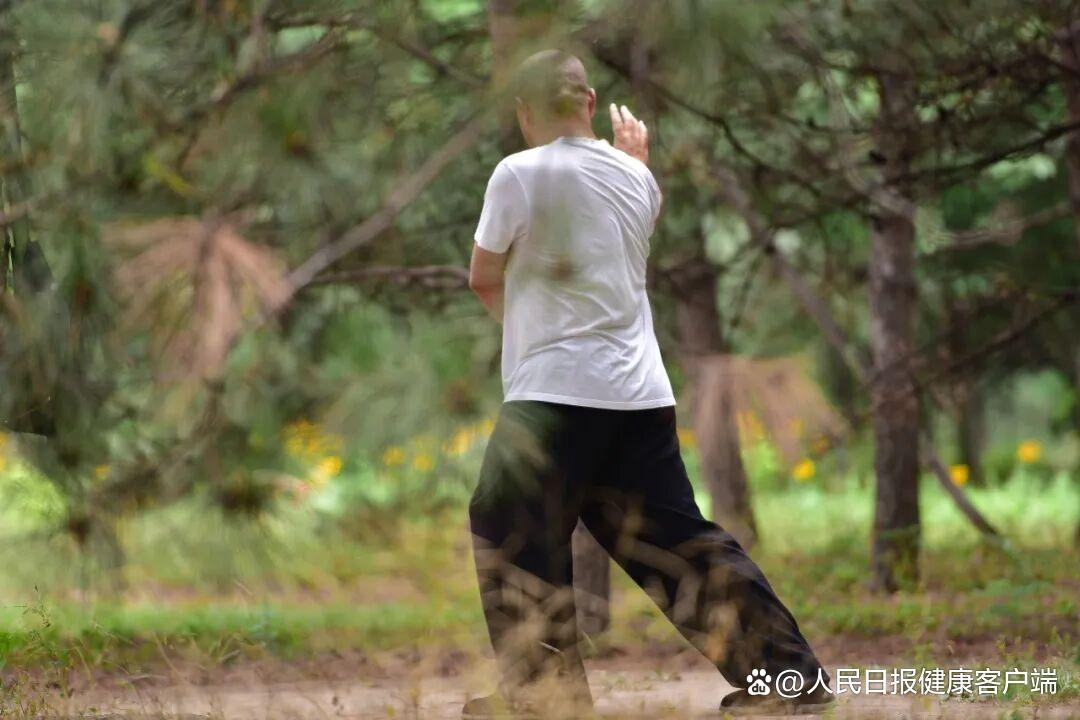
3. Improve mood: with long-term practice, your mood gets better
A 2023 systematic review study published in (BMC Complementary Medicine and Therapies) indicates that Tai Chi can significantly improve depressive symptoms in middle-aged and older adults. Interventions lasting more than 24 weeks produced significantly better results than those lasting only 12 weeks, and the effects were even more pronounced when the total practice time exceeded 2400 minutes.⑤
4. Improve the whole system: like giving your internal organs a “massage”
In 2020, He Yinghua, Chief Physician in the Department of Anorectal Medicine at Guang’anmen Hospital, China Academy of Chinese Medical Sciences, wrote an article in Health Times explaining that in traditional Chinese health qigong—such as Tai Chi and Baduanjin—most methods use “tranquilness and emptiness, fewer thoughts and desires” to “regulate the spirit and refine the intent” (tiao shen lian yi). Combined with abdominal breathing and spine exercise, it can achieve psychological balance and produce a squeezing-and-massaging effect on internal organs. This helps improve blood circulation in digestive organs like the stomach and intestines, promotes the motility of the digestive organs, and enhances secretion from digestive glands, thereby improving the overall digestive system function. It is especially suitable for older adults.⑥
5. Improve balance: key for fall prevention in older adults
In August 2017, the (National Fitness Guidelines) released by the General Administration of Sport of China stated that Chinese traditional exercises such as Tai Chi (sword), Mulan boxing (sword), martial arts routines, Five-Animal Qigong, Baduanjin, Yijinjing, and the Six-Character Formula (Liu Zi Jue) not only enhance balance but also help strengthen immune function, improve respiratory function, and increase flexibility.
How should beginners get started? What should they practice?
Baduanjin is the friendliest option for beginners
If you don’t know where to start, the first choice is—Baduanjin. It has only 8 movements, like doing exercises, easy and straightforward, with no complicated footwork or weight shifts. Even beginners with zero foundation can easily keep up. It’s also very friendly for office workers who sit for long periods and don’t have time to exercise: a complete guided session takes about 12 minutes, doesn’t require any space, and needs no equipment—you can practice anytime.
Just 1–2 times a day—like giving your body a gentle “slow charge.” It won’t tire you out, yet it helps get your whole body’s muscles and bones moving. In May 2026, the (Baduanjin) group standard was officially released, led jointly by the Chinese Health Qigong Association together with the Chinese Association of Traditional Chinese Medicine and related organizations. With a national-level “standard textbook,” practicing along is more reassuring.
The following guided practice video is recommended to save first and then practice with it ↓
12:06
Of course, although traditional Chinese exercises are gentle, the details you should pay attention to are still the same—especially when you’re just starting.
? Progress gradually and stick with it long term: increase the amount of exercise slowly rather than going all-in right away with the movement range. Remember one principle—“soreness adds, pain reduces, numbness stops”: muscle soreness and swelling can continue; if you feel joint pain, reduce the range; once numbness appears, stop immediately.
? Practice steadily to prevent falls: For elderly people with osteoporosis or slightly weaker balance, be sure to choose a flat surface for practice. Ideally, there should be handrails nearby or someone accompanying you. Safety always comes first.
? Enjoy the process—don’t chase perfection: When practicing traditional exercises, a calm mind matters more than executing movements “to the standard.” Instead of obsessing over whether you’re doing it right, focus on stretching your body and keeping your breathing smooth. Treat the practice as something enjoyable, not a task.
Lastly, if you already have high blood pressure, heart disease, severe osteoporosis, or other underlying conditions, it’s recommended to consult a doctor first. After assessment by a physician, then consider trying the practice.
This article draws on:
①Chen WX, Li YZ, Kang LD, et al. Efficacy and evidence certainty of traditional Chinese exercises for musculoskeletal disorders: an umbrella review of meta-analyses. Br J Sports Med. Published online August 17, 2026. doi:10.1136/bjsports-2026-111792
②Pu B, Zhang L, Sun Y, et al. Effect of Baduanjin on Blood Pressure Among Individuals With High-Normal Blood Pressure: A Multicenter, Open-Label, Blinded-Outcome Randomized Controlled Trial. J Am Coll Cardiol. 2026 Feb 18
③Effectiveness of stress management and relaxation interventions for management of hypertension and prehypertension: systematic review and network meta-analysis. BMJ Medicine, 2025, 4: e001098.
④Siu PM, Yu DJ, Yu AP, Recchia F, Li SX, Chan RN, Fong DY, Chan DK, Hui SS, Chung KF, Woo J, Wang C, Irwin MR. Tai chi or cognitive behavioural therapy for treating insomnia in middle aged and older adults: randomised non-inferiority trial. BMJ. 2025 Nov 26;391:e084320. doi: 10.1136/bmj-2025-084320. PMID: 41297969; PMCID: PMC12651913.
⑤Zeng, L., Zhao, X., Yu, Y. et al. Effects of Tai Chi on depression of middle-aged and older adults: an updated systematic review and meta-analysis. BMC Complement Med Ther 23, 382 (2023). https://doi.org/10.1186/s12906-023-04207-1
⑥2020-05-05 Health Times (A whole toolbox of skills to treat constipation)