



On August 20th, Binance dropped a major bombshell—Agent OS officially launched.
Simply put: AI tools like ChatGPT, Claude Code, and Cursor can now be directly connected to your Binance account to help you check market conditions, do analysis, and even place trades.
After years of working as an AI consultant, I’ve been waiting for this day. For an AI agent to truly run, payment rails are a must—and cryptocurrencies are a natural choice. Now that Binance has laid the groundwork, the significance goes far beyond simply “letting AI help you trade coins.”
But don’t rush in yet. In today’s article, from the perspective of someone working in AI, I’ll take you through Agent OS piece by piece—what it really is, whether its safety mechanisms are reliable, how regular people can get started, and what pitfalls to watch out for.
I. What exactly is Agent OS?
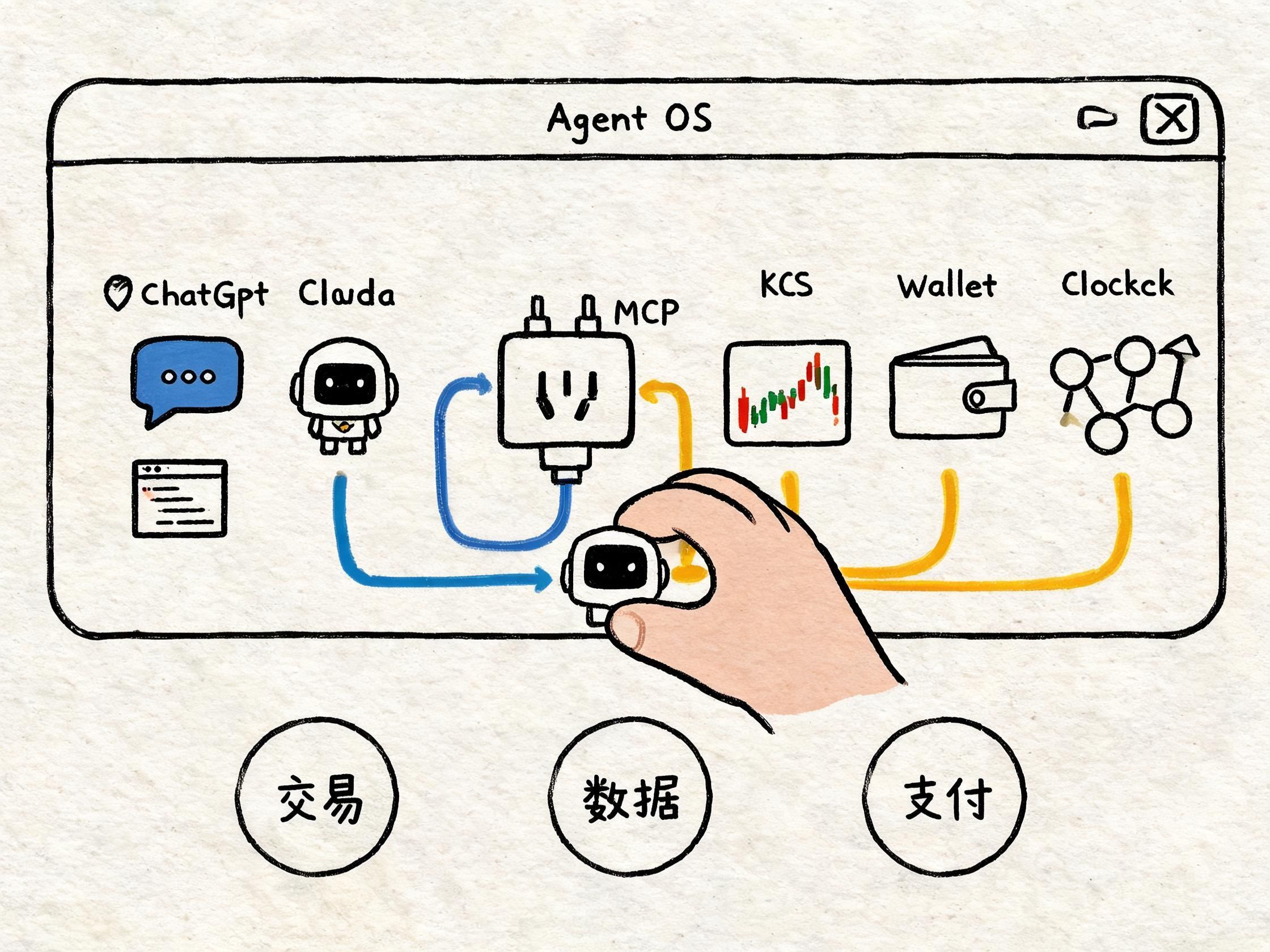
Translated into plain language: Agent OS is Binance’s “universal socket” for AI Agents.
In the past, if you wanted to trade with AI, you had to manage API keys, write code, handle signatures, deal with risk controls... the barrier was insanely high, and ordinary users simply couldn’t play with it.
Now with AgentOs, Binance has essentially packaged trading, market data, wallets, payments, and other capabilities into standard interfaces that AI Agents can plug into and use right away. It also uses the MCP (Model Context Protocol) protocol — an open standard, so AI tools that support MCP, like ChatGPT, Claude, and Cursor, can connect directly to Binance in the future.
What are the core capabilities?
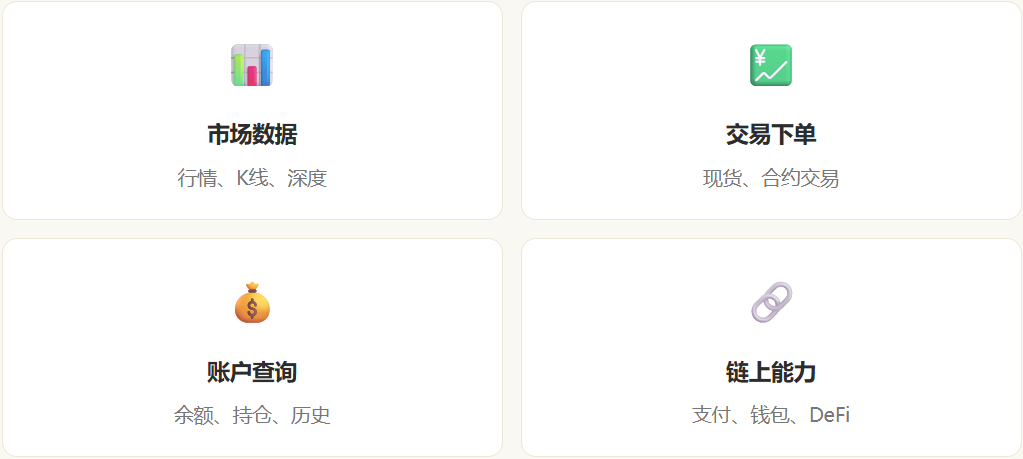
Binance product VP Jeff Li put it this way: “Agent OS solves the fragmentation problem developers face when building Agent financial applications across crypto and traditional markets.”
Simply put — before, you had to connect to APIs one by one; now one MCP does it all.
II. Is it safe? This is the question everyone cares about most
How do you feel about giving trading permissions to AI? Honestly, that was my first reaction too.
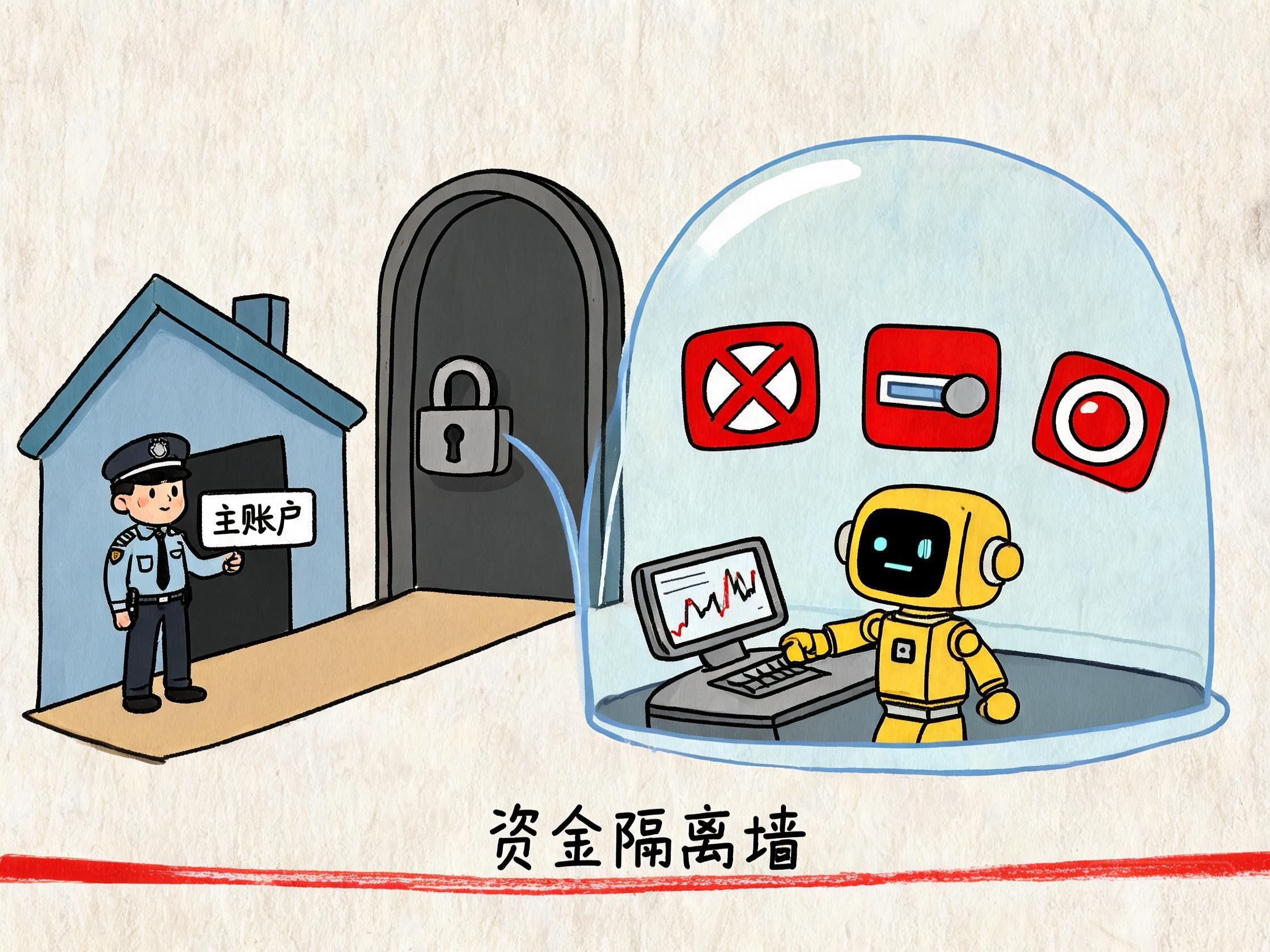
Binance’s solution is: sub-account isolation + granular permission control + withdrawals disabled by default. Three layers of protection, one by one.
First layer: sub-account isolation
AI Agents won’t touch your main account; all operations are carried out in a dedicated “Agent sub-account.” No matter how much you transfer into the sub-account, that’s the maximum you can lose, and it won’t affect the other funds in your main account.
🚀 Cat Brother tip: this design is crucial. It’s like giving AI a separate “pocket money account” — if it loses it all, so be it, and it won’t affect the family savings. When I talk about AI implementation, I always say: isolate risk first, then talk about efficiency. Binance’s approach is the right one.
Second layer: withdrawals disabled by default
The withdrawal function for the Agent sub-account is disabled by default. AI can trade within the sub-account, but it cannot move the money out. This fundamentally eliminates the risk of “AI running off with the money.”
Third layer: controllable permissions
You can precisely control what AI can do:
Only want market data? Read-only permission is enough
Spot trading? Enable spot permission
Futures trading? Enable futures permission separately
Don’t want it anymore? Revoke permissions anytime
Important note: Binance can monitor trade orders, but it cannot see the AI’s decision-making process. Why the AI buys, why it sells, and what external data it used to make the judgment — Binance doesn’t know, because the reasoning happens in the AI application you chose (ChatGPT/Claude).
Another question: does every trade need human confirmation?
According to the current MCP documentation, there are two modes:
Approval mode: when AI wants to place an order, it first sends you a confirmation, and only executes after you click approve
Automatic mode: within the authorized scope, AI executes automatically without confirming each order
Beginners are advised to start with approval mode and switch to automatic only after they’re familiar with it.
III. How can ordinary users get started? Three steps
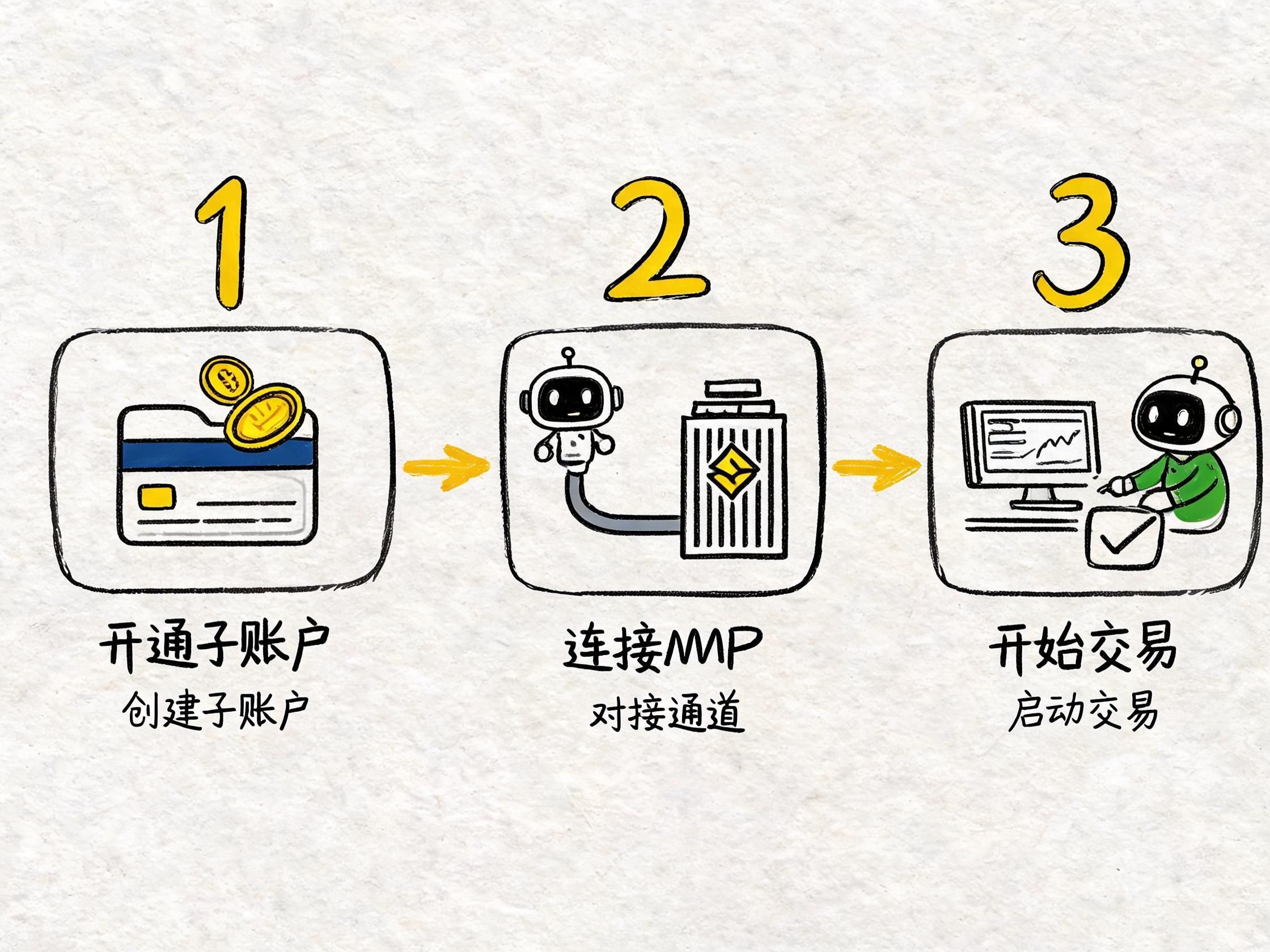
1 Activate the Agent sub-account and deposit funds
Open the Binance app or web version:
Go to Personal Center → Sub-account → Agent sub-account
Click to activate and complete verification as prompted
Transfer funds from the main account to the Agent sub-account (it’s recommended to start with a small amount)
Key point: AI cannot proactively transfer money from your main account — only you can transfer it manually. This is an important safety gate: the money in the sub-account is the maximum loss amount.
2 Connect AI Agent via MCP
Binance official MCP endpoint address:
# Binance MCP Server address https://agent.binance.com/mcp/agentic
Supported AI clients (must support MCP over Streamable HTTP):
ChatGPT (official plugin method)
Claude Code
Cursor
Codex
Other AI tools that support the MCP protocol
Take Claude Code as an example: add the endpoint address above in the MCP configuration, then scan the QR code or log in to authorize as prompted.
3 Set permissions and start using it
After connecting successfully, configure the AI’s permissions on Binance:
Choose the allowed transaction types (spot/futures)
Set a daily trading limit (spot default cap: $50,000/day)
Choose the trading mode: per-order approval or automatic execution
After confirming everything is correct, you can let AI start working
IV. Competitive landscape: Binance wasn’t first, but it may be the most aggressive
First, a fact many people don’t know: Binance was not the first exchange to launch an AI Agent trading platform.
In the past 30 days, at least 4 exchanges have already launched similar products. Binance is the fifth to enter the market, but once it makes a move, the rules of the whole sector may change.
Comparison of major players
🔵 Coinbase for Agents
Launch time: June 2026 (2 months earlier than Binance)
Core selling point: compliance first, focused on the institutional market, enabling AI autonomous payments through the x402 payment protocol
Weaknesses: high fees (0.4% for spot), limited supported coins, average retail user experience
🟣 Kraken AI Advisor
Launch time: July 2026
Core selling point: AI investment advisor that recommends trading opportunities based on user goals
Weakness: orders can only be placed with manual approval, so it’s more like “AI stock picking” than “AI trading”
🟢 OKX AI Agent Market
Launch time: July-August 2026 (Beta)
Core selling point: AI Agent marketplace platform, Agents can trade with each other and pay using stablecoins, focused on an intelligent-agent economy closed loop
Weaknesses: still in Beta, limited liquidity and user base
🟡 Bybit AI Agents
Launch time: around August 2026
Core selling point: natural language trading, AI skills marketplace, strong futures trading
Weaknesses: security mechanisms are less complete than Binance’s, and sub-account isolation is weaker
Where is Binance’s advantage?
To be honest, functionally speaking, everyone is basically doing the same thing — letting AI connect to exchanges, view market data, and place orders. But Binance has three advantages that others can’t match:
First, overwhelming liquidity. Binance is the world’s largest crypto exchange, with daily trading volume accounting for half the market. What does AI trading fear most? Slippage. No matter how good your AI algorithm is, on an exchange with shallow depth, the price will swing wildly when buying or selling even one or two BTC, and the strategy simply can’t run. Binance’s depth is unmatched by other platforms.
Second, the security mechanism is the most thorough. Sub-account isolation, withdrawals disabled by default, granular permission control — Coinbase has these three, but fees are too high; Kraken only went as far as “manual confirmation required” (which is basically semi-automatic); OKX and Bybit’s risk control systems are still not mature enough. Binance is currently the only one that has fully done all three: “fund isolation + permission control + open standards.”
Third, MCP is an open standard. This is very important. Binance is not building a closed AI ecosystem of its own; instead, it uses MCP, an open protocol — meaning any AI tool that supports MCP can connect directly to Binance. ChatGPT can, Claude can, Cursor can, and any new AI tool that comes out in the future can too. This is not “Binance builds its own AI trading bot”; it is “Binance builds trading infrastructure for all AI” — the scale is different.
To use an analogy: Coinbase is like opening its own AI trading shop and only selling its own products; Binance is like building a highway for AI trading, where anyone can get on and drive. In the short term, Coinbase got there first; in the long term, Binance’s open route has more imagination.
V. Cat Brother’s AI advisory perspective: how big is this, really?
To be honest, most people who look at Agent OS are thinking, “Can AI help me make money?” But after years of doing AI advisory work, what I see is something deeper.
Short term: AI trading tools will explode
In the past, building an AI trading bot meant connecting APIs yourself, handling risk controls, and building a UI. Now with Agent OS, Binance handles all that infrastructure for you, and developers only need to focus on the strategy itself.
Over the next six months, all kinds of AI trading agents will pop up like mushrooms after the rain — some for grid trading, some for trend following, some for cross-chain arbitrage, with a hundred flowers in bloom.
Medium term: infrastructure for the AI Agent economy
Remember Tom Lee’s three-stage theory for AI? The first wave was chips (already passed), the second wave is the AI Agent economy, and the third wave is ETH as the base currency for machine-to-machine economics.
What is Binance Agent OS doing? It’s the infrastructure for the second wave — giving AI Agents a safe and controllable financial entry point. If AI Agents want to trade autonomously, make payments, or call on-chain services, they need a channel. Binance has standardized that channel.
Long term: the true intersection of AI + Crypto
I’ve always said that the intersection of AI and Crypto is not “AI coins pump, so it’s bullish,” but three real demands:
AI Agent payment demand — AI autonomous trading requires payment channels, and cryptocurrency is the natural choice
Verifiability of AI reasoning — AI outputs require a trust foundation, and on-chain zk verification provides cryptographic proof
Ownership of data privacy — the ownership and revenue sharing of AI training data; blockchain provides a rights-confirmation solution
Agent OS hit the first point. For the other two, Binance already has plans in place (Chainlink’s verifiable AI stack and x402 payments).
VI. Risk warning: don’t just look at the upside, look at the pitfalls first
Let’s be practical. No matter how attractive this is, you can’t ignore the risks.

The loss risk is yours. Binance provides sub-account isolation and spending limits, not a guarantee of principal safety. If AI loses money, it’s your money. How much you put into the sub-account is how prepared you should be for a total loss.
AI will make mistakes, and it may make very stupid ones. AI is not a god — it may misunderstand instructions, make wrong judgments, or make bad decisions in extreme market conditions. Don’t blindly trust it just because it’s AI.
Use the testnet first, then real money. Binance has a testnet (testnet.binance.vision); it’s recommended to run it there for a while, verify that the strategy is reliable, and then try it with a small amount of money.
Don’t grant too many permissions. When you first start using it, just enable read-only permission to look at the market and do analysis. Once you’re familiar with it, then consider enabling trading permissions. Futures permissions should be approached with extra caution.
It’s recommended to enable manual approval mode. After AI initiates each trade, you confirm it before execution. It may be a bit slower, but it’s much safer. Once you fully trust the AI’s decision logic, then consider going fully automatic.
Keep an eye on it. Don’t set up automatic trading and then ignore it; you still need to monitor the market. AI is a tool, not a hands-off manager.
Binance product VP Jeff Li said it very plainly: “We don’t do full discretionary control; we put the power in the user’s hands and let the user precisely control what the Agent can do.” — In other words: the tools are given to you, and you bear the risk.
VII. Who is it suitable for? Who should stay away?
Suitable for:
Have basic understanding of AI Agents and know the boundaries of AI capabilities
Have trading experience and can judge whether AI’s advice is reliable
Willings to spend time testing, tuning, and optimizing strategies
Can accept losses and play with spare money
Not suitable for:
Complete beginners who can’t even tell spot from futures
People who want to get rich overnight with AI and go all in
People who put money in that they can’t afford to lose
People who think AI is definitely smarter than humans and that once you hand things over to AI, you don’t need to care anymore
VIII. Conclusion
Binance Agent OS’s launch is a landmark event in the development of AI + Crypto. It is not the first platform to let AI trade, but it is the first product from a top-tier exchange that personally entered the field, built security mechanisms into the account system, and connected the AI ecosystem using the open MCP standard.
In the short term, this will give rise to a wave of AI trading tools and applications. In the long run, it is one of the infrastructure pieces for the AI Agent economy.
But for ordinary people, first understand it before you act, start with small money, and safety comes first. AI is a tool, not a money printer. Used well, it can improve your efficiency; used badly, it can help you lose money faster.
Would you let AI trade for you?
Whether it’s a mule or a horse, test it on the testnet first.
Let’s discuss your thoughts in the comments.
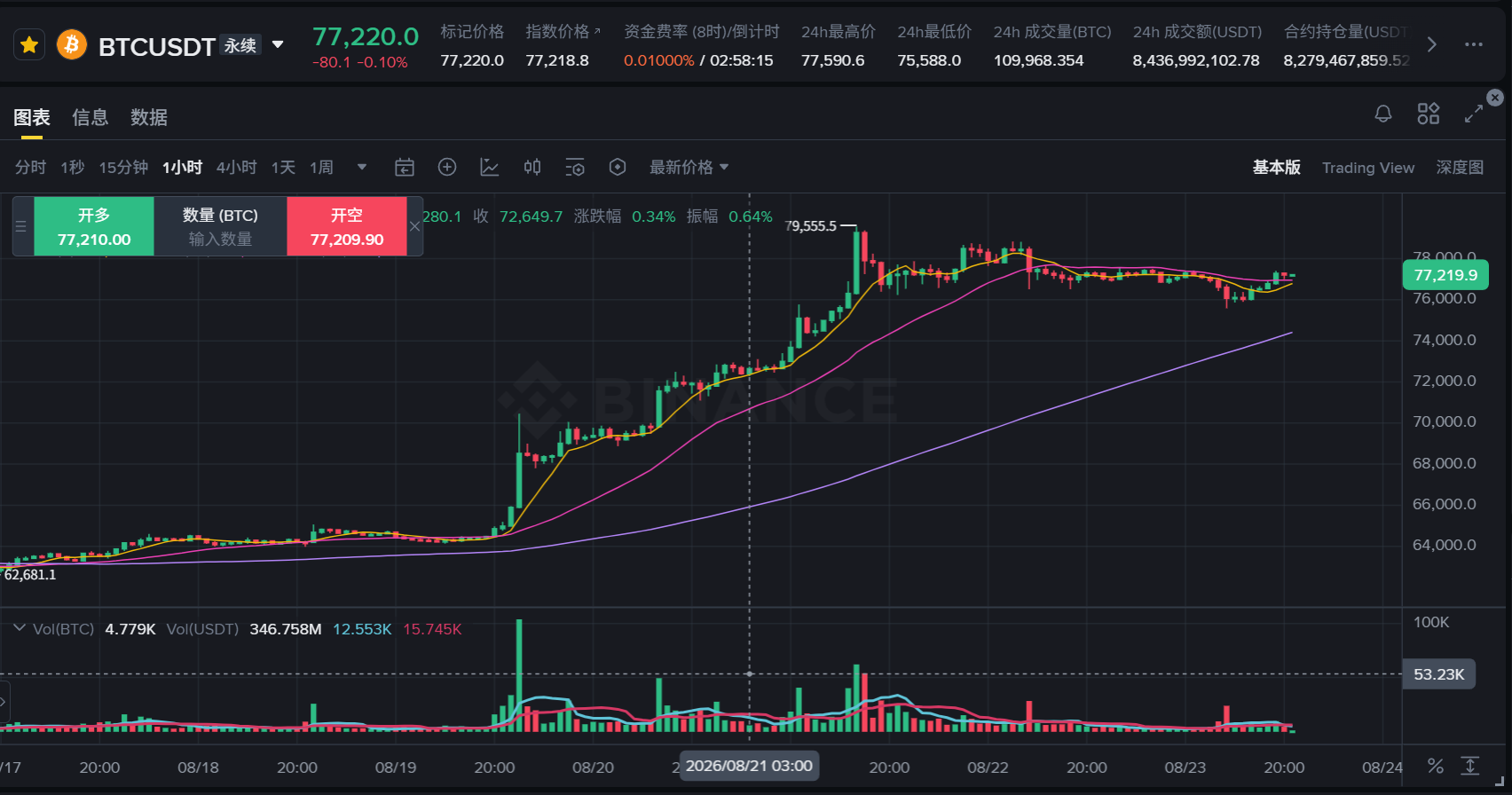
When writing this article, it just happened that $BTC , so I took a screenshot and put it here

The above is a personal opinion and does not constitute any investment advice.