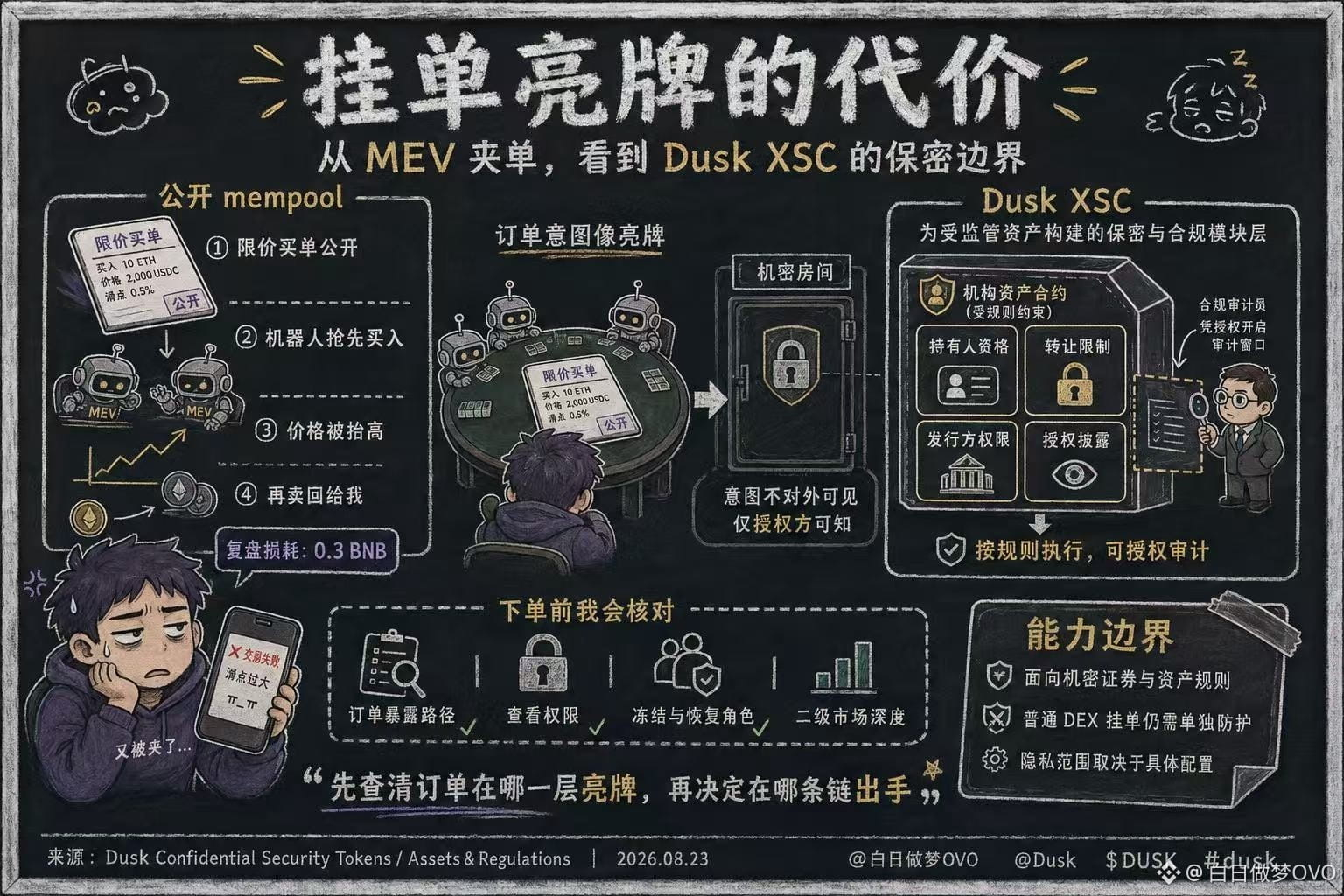
In the afternoon, I placed a limit order for an on-chain new listing. As soon as the fill receipt popped up, the price was hard-coded to be two percentage points higher. Dusk Network made me re-examine this kind of loss: once a buy order enters the public mempool, the direction and the slippage room are like cards laid out on a table—bots can buy first and then sell the chips back to me. Losing 0.3 BNB back-and-forth really hurts 😤 Not investment advice—just a retrospective.
I went digging through Dusk’s XSC materials. It targets confidential securities: the eligibility of holders, transfer restrictions, and issuer permissions are written into the asset rules. Trading details can be disclosed according to permissions. It’s like a securities firm’s authorization room: outside the door, you can only confirm that the trade was completed according to the rules; auditors can only access the records once they have authorization; onlookers can’t see the full hidden hand. XSC can’t automatically protect against order sniping the way a normal DEX would. How far privacy covers still depends on asset configuration and the specific transaction path.
So I won’t treat the phrase “privacy chain” as insurance. For my next round of testing Dusk, I’ll find out who can view the transactions, verify the freeze and recovery roles, and then track the execution depth in the secondary market. Privacy can reduce strategy exposure, but overly centralized permissions can push the dark pool toward a black box. I’ll take the 0.3 BNB hit. Next time, before I act, I’ll check which layer the order reveals its cards on, and then decide which chain to submit the order on.
#dusk $DUSK @Dusk