As 2026 marks the beginning of the 15th Five-Year Plan period, new-quality productive forces have become the core focus of industrial development. As the Guangdong-Hong Kong-Macao Greater Bay Area, a forerunner in intelligent manufacturing and the green transition, it is leveraging robust industrial clusters and abundant digital innovation and R&D resources, and is emerging as a key testing ground for exploring sustainable manufacturing through the integration of digitalization and greening.
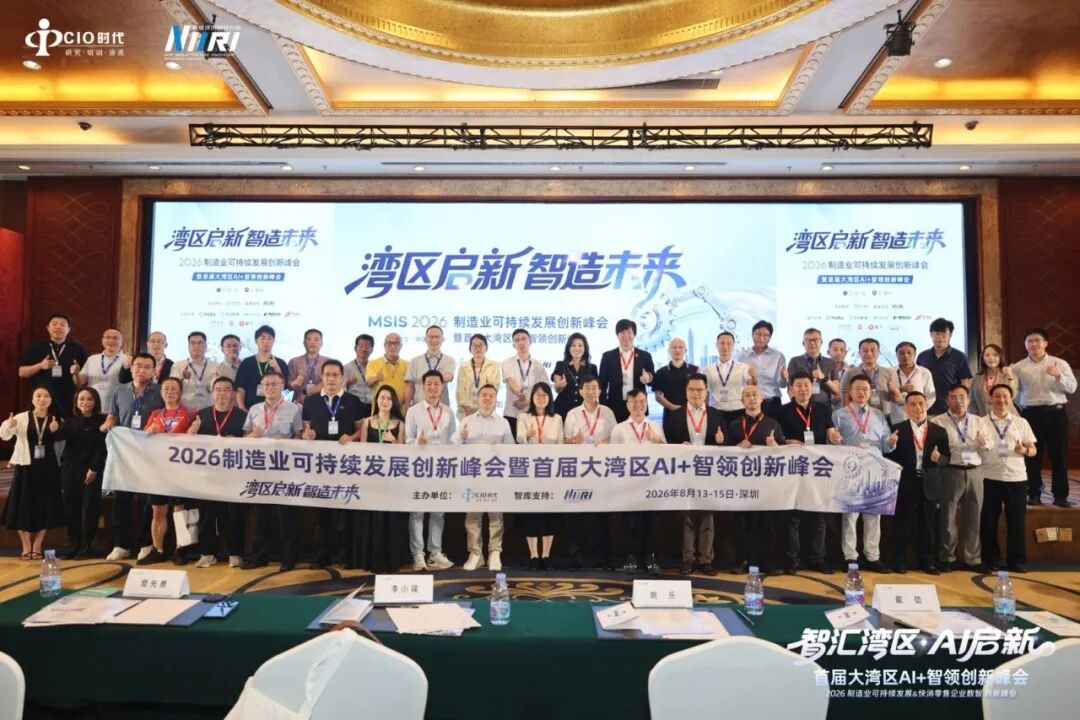
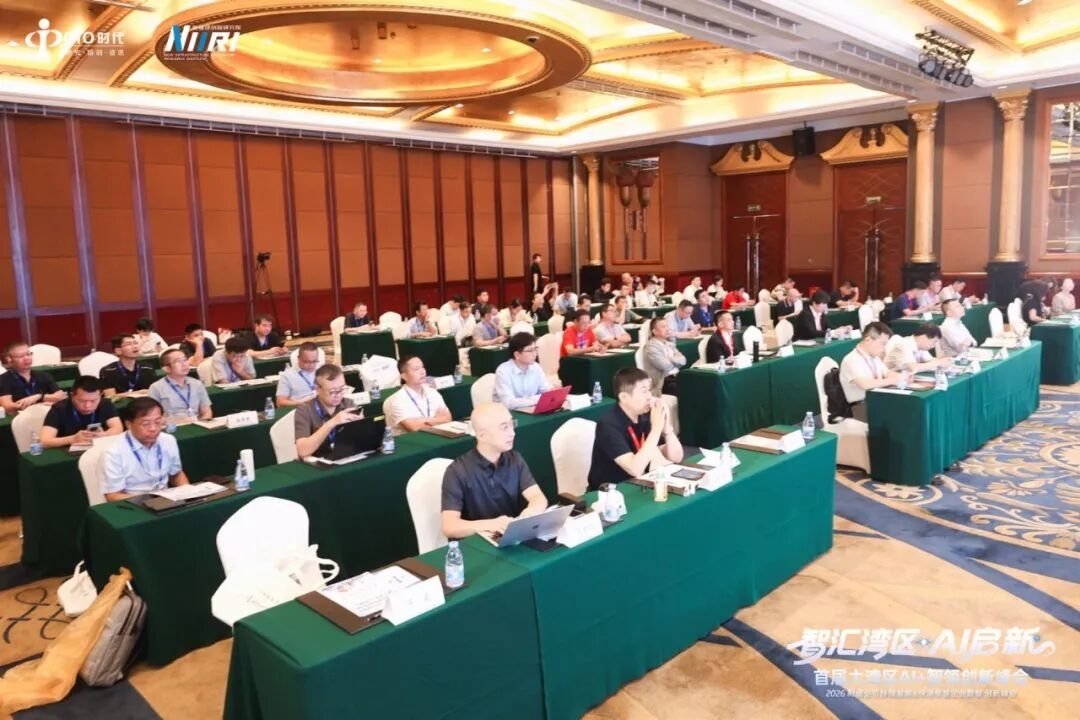
On August 15, the “Greater Bay Area: A New Chapter, Smart Manufacturing for the Future | 2026 Manufacturing Industry Sustainable Development Innovation Summit & the First AI+ and Intelligence-Led Innovation Summit in the Greater Bay Area,” hosted by CIO Times and supported by the New Infrastructure Innovation Research Institute as a think tank, was successfully held in Shenzhen. As the first exemplar summit in the Greater Bay Area in this field, the event brought together representatives from all sectors, including experts and scholars, digitalization leaders of leading enterprises, industry CIOs, and digital service providers. Through diverse formats such as keynote speeches, panel discussions, ecosystem alliance signings, award ceremonies, appointment of think-tank experts, exhibition-area exchanges, and interactive sessions, it built an in-depth platform for matching industry, academia, research, and application—helping to chart a localized implementation path for long-term, low-carbon, and intelligent manufacturing development in the manufacturing industries of the Guangdong-Hong Kong-Macao Greater Bay Area.
Multi-stage, multidimensional collisions
Anchoring on the development direction of the Bay Area for intelligent manufacturing
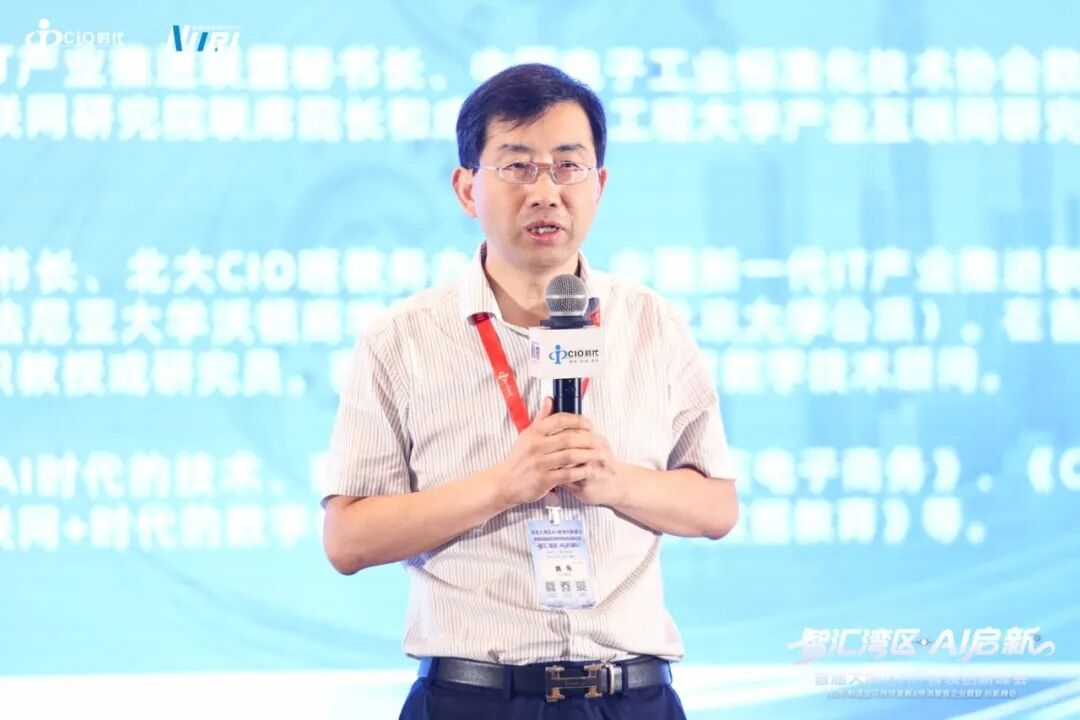
Founder and Dean of the Research Institute of CIO Era, Yao Le
In the opening segment of the conference, Yao Le, founder of CIO Era and Dean of the Research Institute, delivered the opening address as the organizer. He noted that exports have long been an important engine for the development of China’s manufacturing industry. China’s export products have evolved from the “old three” to the “new three,” and then to the “new new three,” reflecting that comparative advantages have upgraded from demographic dividends and complete industrial chains to innovation capability. Meanwhile, a country’s industrial scale advantage also determines its competitive advantage in the global arena. Regarding AI’s impact on the manufacturing industry, he quoted NVIDIA CEO Jensen Huang’s viewpoint: Generative AI has achieved the first major turning point that enables machines to possess thinking and decision-making capabilities; and AI entering the physical world to realize embodied intelligence is the second major turning point. Embodied intelligence is not limited to humanoid robots—various manufacturing equipment also falls within the scope of embodied intelligence. Traditional manufacturing has largely involved discovering problems after the fact and manually reviewing and iterating production lines. In the future, relying on AI’s multimodal perception capabilities, enterprises can capture real-time operational status of production lines, complete problem identification, feedback, and dynamic adjustments—driving manufacturing toward a more profound transformation.
Deputy Director of the Guangdong-Hong Kong-Macao Development Research Institute, Sun Yat-sen University
Professor of Economics and Doctoral Supervisor, Li Xiaoying
In the themed keynote speech session, Li Xiaoying, Deputy Director of the Guangdong-Hong Kong-Macao Development Research Institute of Sun Yat-sen University, Professor of Economics, and Doctoral Supervisor, interprets the (Report on Trends and Case Studies of Chinese Enterprises Going Global). She provides an in-depth introduction to the evolution logic and spatial layout of Chinese enterprises going global. She points out that global industrial relocation has shifted from single-factor cost-driven considerations to a multidimensional consideration of “cost + efficiency + security + resilience.” She emphasizes that Asia, especially the ASEAN region, has become a “strategic ballast” for Chinese enterprises’ outward investment, and she analyzes in detail the going-global characteristics of “progressive” versus “avoidance” enterprises. In response to challenges enterprises face, such as compliance adaptation, talent constraints, and cross-cultural management, she proposes recommendations including building a global compliance governance system, implementing a two-track system for localizing talent, and deeply integrating into the local ecosystem. These provide theoretical support and practical pathways for enterprises to make the leap from “exporting products” to “exporting ecosystems.”
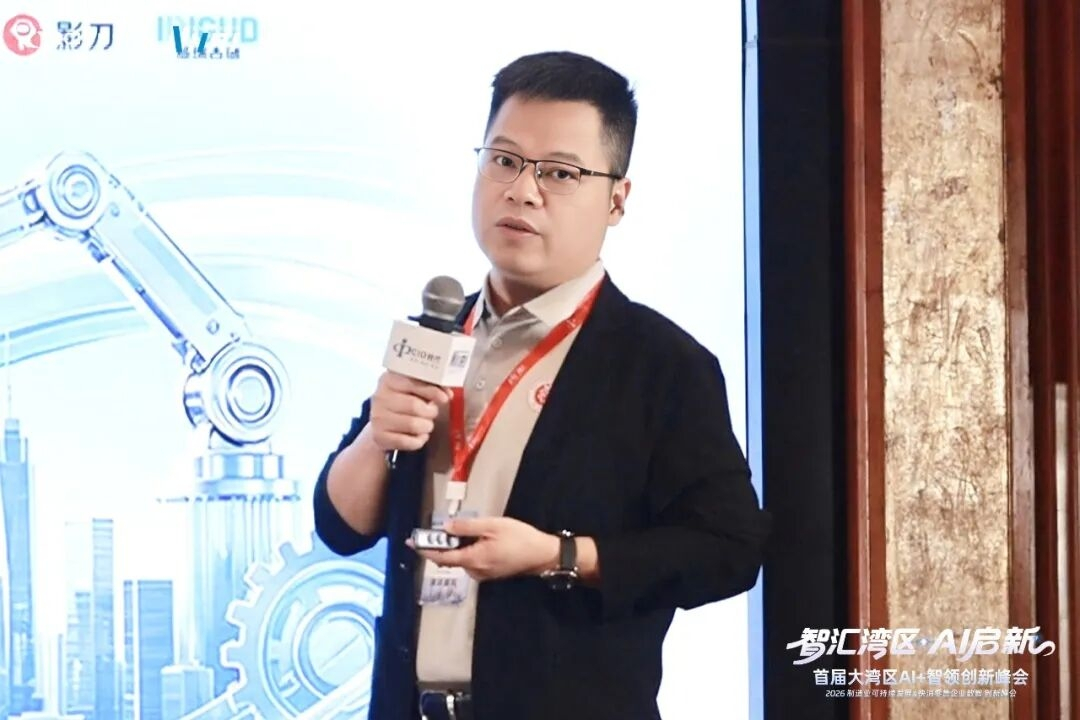
Dai Jin, General Manager of Hua Yan Robotics in the automotive industry
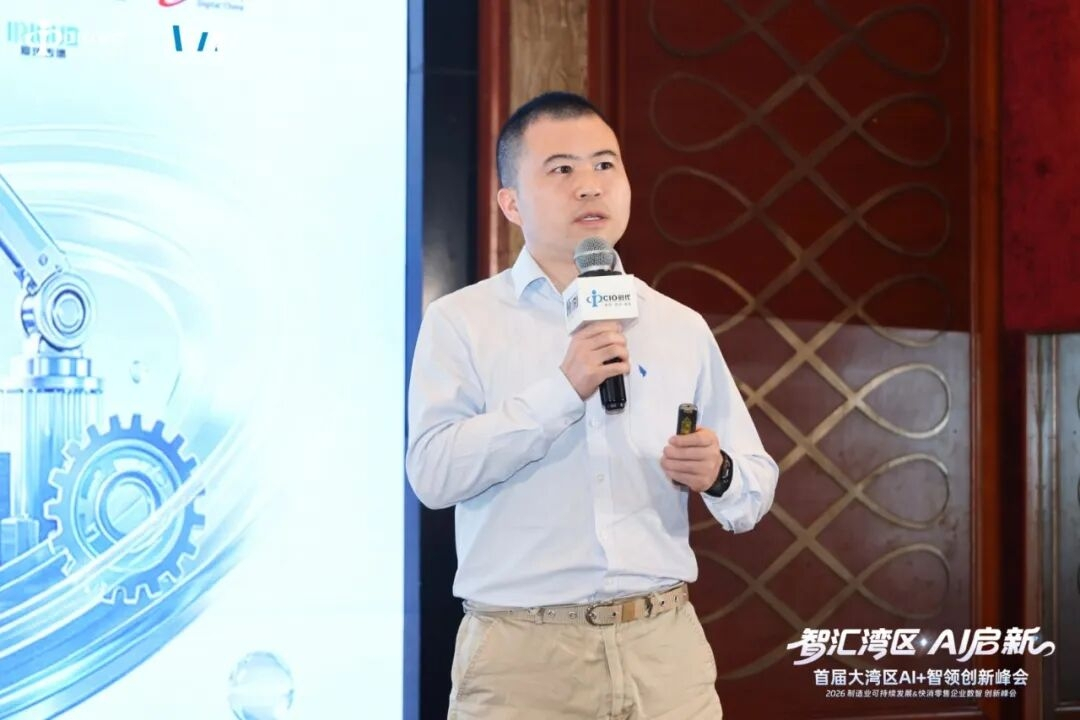
Hua Yan Robotics’ General Manager in the automotive industry, Dai Jin, brings a themed sharing: (Innovation and excellence—Hua Yan Robotics enables intelligent manufacturing to be implemented more efficiently). He introduces Hua Yan’s years of focus on R&D of core motion components, and highlights the company’s innovative applications of robots in multiple scenarios and fields such as intelligent manufacturing. As a national-level “specialized, refined, distinctive, and innovative” “little giant” enterprise, Hua Yan Robotics achieves independent and controllable development of core key technologies including motors, joint module systems, servo drives, and motion control algorithms. Hua Yan Robotics will continue to collaborate with Huawei Cloud to jointly build and prosper the ecosystem of the “embodied intelligence deployment foundation.” Mr. Dai Jin also proposed that both sides should drive the industry toward a higher level of intelligence by deeply integrating computing power, model technology, and the robot’s own-body technology.
Zhan Xianyong, New Quality Industry General Director of Alibaba Qianwen Office (DingTalk)
Alibaba Qianwen Office (DingTalk) New Quality Industry General Director Zhan Xianyong delivers a themed sharing: (AI-driven manufacturing enterprises leap to new-quality productive forces). He provides an in-depth analysis of the three dilemmas企业 AI deployment faces—profits, costs, and security—and proposes that “implementation is a matter of choice, not a technological problem.” He advocates that enterprises progress from Chatbot to Agent by clearly defining three boundaries: application scenarios, system data, and employee capabilities, and building a four-step governance closed loop—governance for entry, data governance, audit governance, and cost governance. With an enterprise-level Agent platform, he helps manufacturing enterprises achieve a leap from efficiency gains at single points to new-quality productive forces at the organizational level. He said that Qianwen Office, as an enterprise Agent platform, balances data security and cost controllability with a complete five-layer architecture and a security governance closed loop. It targets scenario-based “digital employees” for manufacturing industries such as semiconductors, new materials, and new energy, covering use cases like ensuring yield targets and coordinating production and sales. This helps enterprises transform individual AI capabilities into organizational capabilities, enabling manufacturing enterprises to realize the leap to new-quality productive forces powered by AI.
CIO of JinkoEnergy Co., Ltd.
Student of the 2nd South China CIO Class, Wang Xingwang
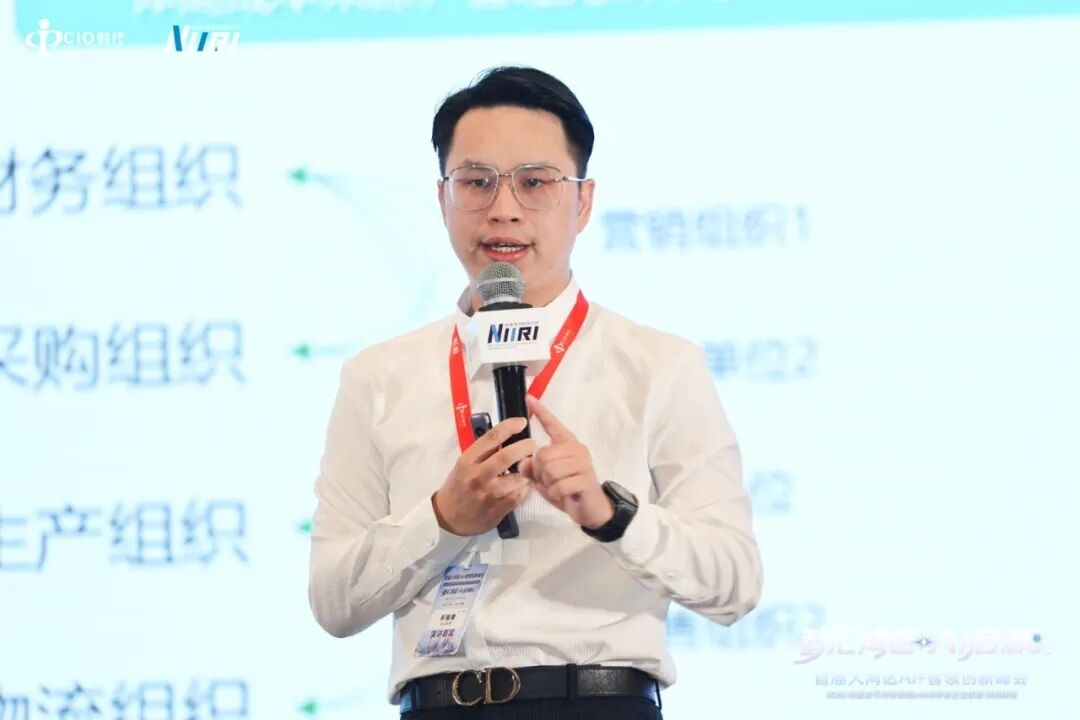
Wang Xingwang, CIO of JinkoEnergy Co., Ltd. and a student of the 2nd South China CIO Class, delivers a themed sharing on (JinkoEnergy’s AI practices and the application sharing of digital employees). He provides a detailed retrospective of the incremental path of the enterprise’s AI transformation and proposes a phased innovation roadmap: “cultivate the soil with culture first, set benchmarks with key breakthroughs, plan system-wide coverage, and improve efficiency with platform enablement.” He focuses on the transformation methodology based on the W model and a “three-stage six-step” approach for delivering value from demand. He also demonstrates JinkoEnergy’s significant results achieved by building a “digital employee” system, enabling daily work efficiency improvements by 20 to 44 times. Wang Xingwang emphasized that deep integration of AI with the business not only optimizes specific processes such as approvals and reconciliation, but also helps transform the organization from “passive response” to “active control,” ultimately reshaping business models and organizational forms at their core.
Yunyan Data Digital Transformation Expert, Li Junfeng
Li Junfeng, a digital transformation expert from GAINOR DATA, brings a themed sharing: (Decision Breakthrough in the AI Era—from “Seeing Data” to “Predicting Growth”). He provides an in-depth analysis of the evolution path of data analytics from the traditional BI era to the intelligent decision-making era of AI + BI. He innovatively proposes a practical framework for the Agent era that unifies three flows: the business flow, data flow, and action flow. He points out that enterprises should use micro-consulting to sort out business scenarios, build a unified KPI and semantic layer system, and break down the barriers between data and business—thereby realizing an end-to-end closed loop from data insights to intelligent execution, and shifting business questions from being “merely seen” to being “decidable and evolvable.”
Director of the Key Laboratory for System Chip Design, Peking University Shenzhen Graduate School
Commander of the Shaonian China Chip Engineering, He Jin
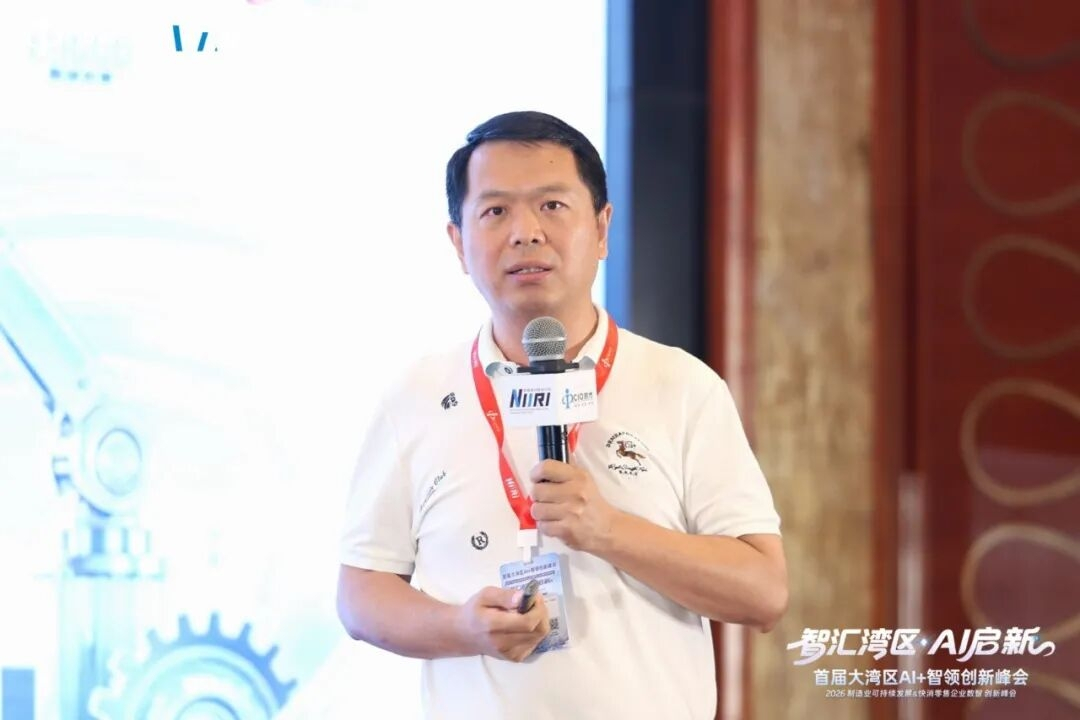
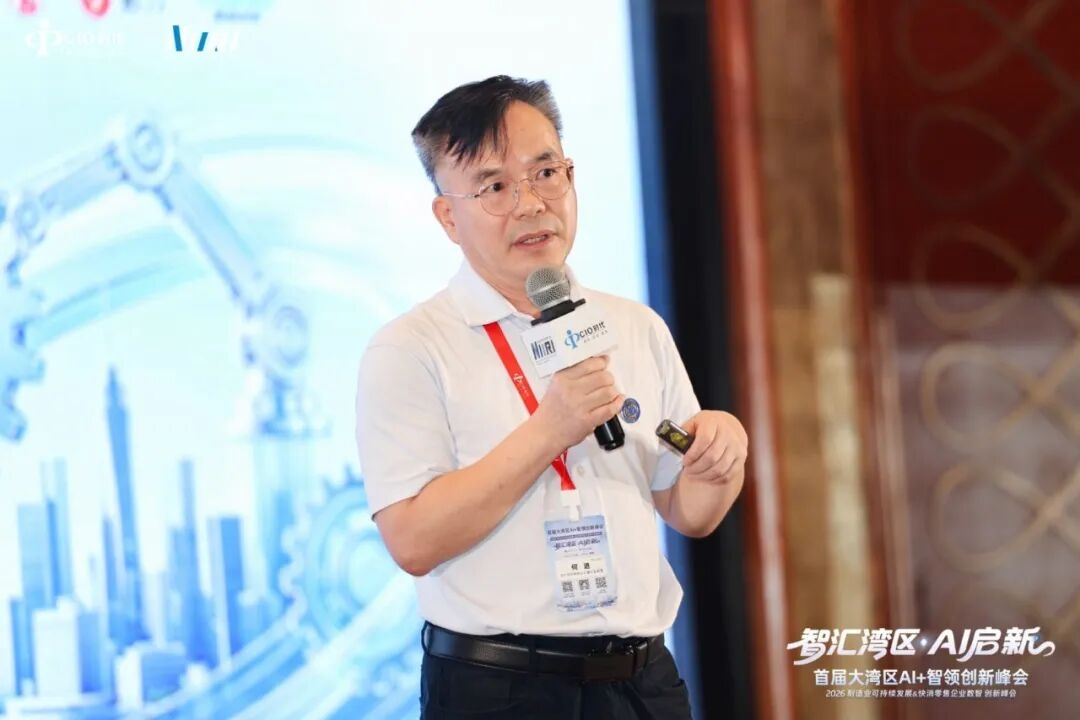
He Jin, Director of the Key Laboratory for System Chip Design at Peking University Shenzhen, and Commander of the Shaonian China Chip Engineering, pointed out in a themed keynote speech (From “Moore’s Law” to “Taoding’s Law”: Changing Course Development for the Chip Industry) that as the traditional Moore’s Law approaches both physical and economic dual limits, industry development has hit a bottleneck. He then provided an in-depth interpretation of “Taoding’s Law,” namely replacing traditional “geometric scaling” with “time micro-scaling,” and breaking through physical process limitations through architectural innovations such as “logic folding.” This technical roadmap opens up a new track for China’s chip industry to make a breakthrough in a blockade environment and is expected to reshape the global semiconductor competitive landscape—shifting the industry from a single-process race to a new paradigm of system-level innovation. From “Moore’s Law” to “Taoding’s Law,” at its core is a paradigm reconstruction from “physical accumulation” to “efficiency racing,” providing a new evolutionary path for chips and system architectures in the post–Moore era to break through physical limits and continuously create value.
WONDERFUL ELECTRONICS CO., LTD.
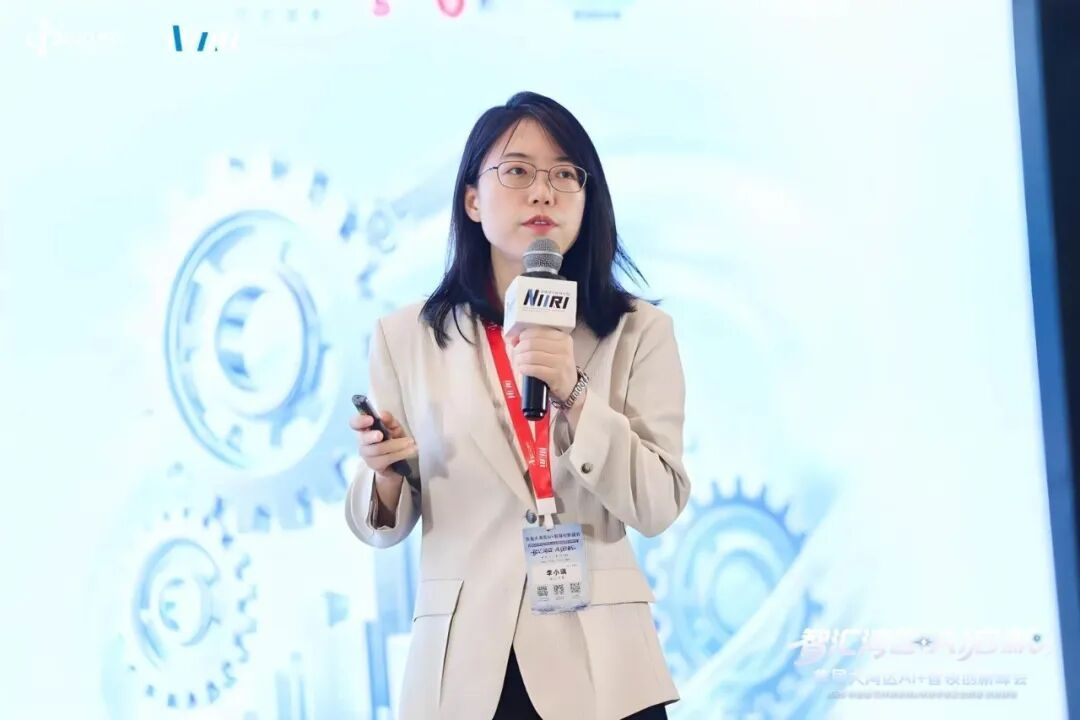
Li Lin, Senior Operations Manager of the Digital Development Center
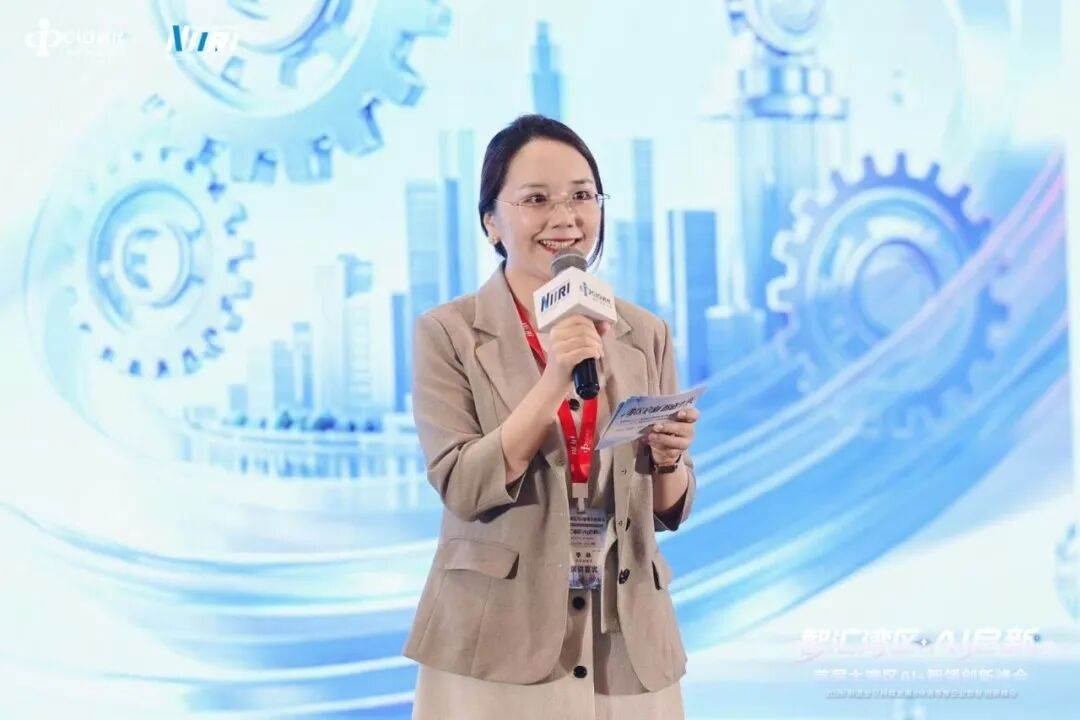
Li Lin, Senior Operations Manager of the Digital Development Center of Shenzhen Wonderful Electronics Co., Ltd., serves as the event host.
High-end panel discussion
Discussing China’s globalized digital competitive strength reconfiguration

Panel discussion
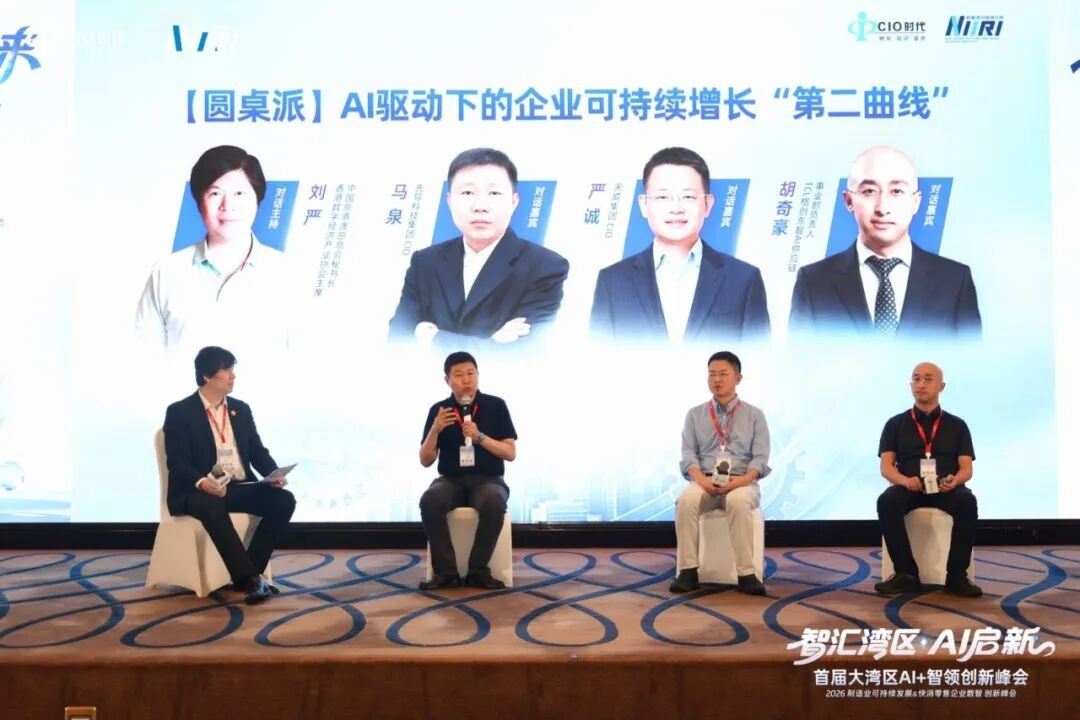
The high-end panel discussion session was hosted by Liu Yan, Chairman of the Hong Kong Digital Economy Industry Association and Secretary General of the China Hong Kong-Macao and Guangdong Business Chamber, together with industry luminaries from Leading Technology, Tianwei Group, and TCL GECreative Dongzhi. They held an in-depth discussion around “AI-driven enterprises’ sustainable growth— the second growth curve.” Based on the industrial policy background of the “14th Five-Year Plan and 5-Year Plan for 2035” (15th five-year) and focusing on several core goals—“upgrading traditional manufacturing industries,” “tackling key core technologies to strengthen resilience in the industrial chain,” “cultivating and expanding advanced manufacturing and emerging industries,” and “green and low-carbon manufacturing”—the guests analyzed the pain points and growth opportunities of manufacturing enterprise transformation and shared real-world experiences of deploying AI intelligent agents in industrial scenarios.
Alliance signing, honor awards, and think tank appointments
Delivering multiple industrial achievements
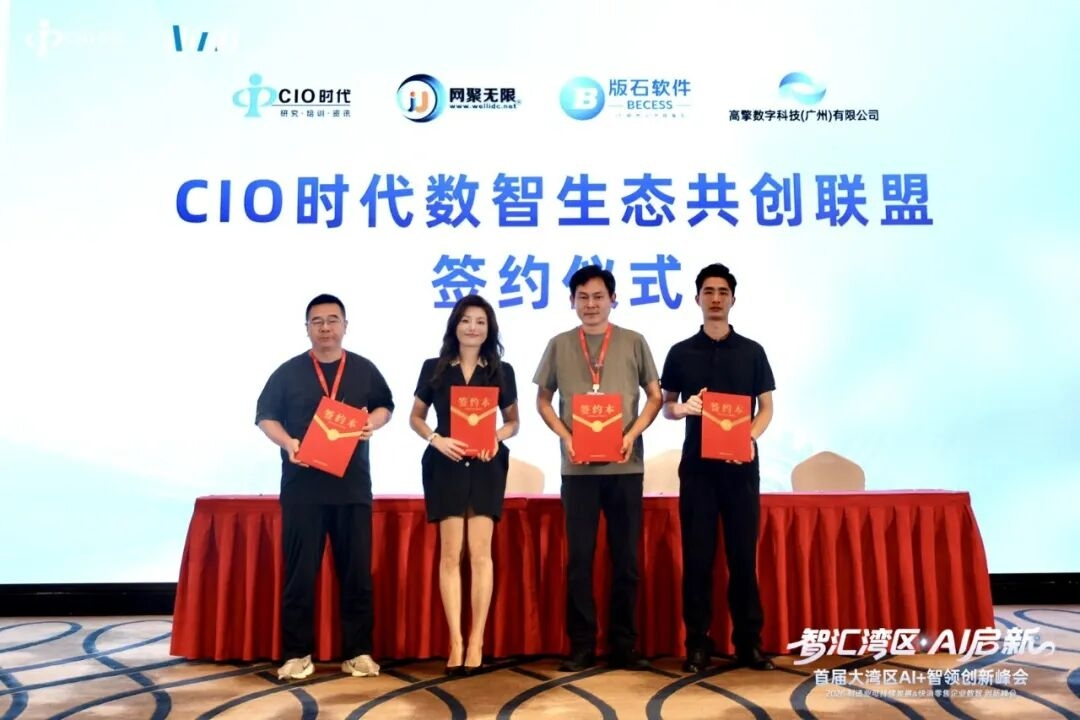
Signing Ceremony of the CIO Era Digital Intelligence Ecosystem Co-creation Alliance
Representative of High View Digital Technology (Guangzhou) Co., Ltd. ? Chen Jun
Sun Jian ? Co-founder of Beijing Wangju Unlimited Communications Technology Co., Ltd., and student of the 4th Internet CIO-CTO Class
Baoshi Software Technology (Beijing) Co., Ltd. ? Partner ? ? Bao Yanyan
Industrial digital transformation is never about one single enterprise going it alone. Ecosystem collaboration is the key to long-term development. During the event,
Signing Ceremony of the “CIO Era Digital Intelligence Ecosystem Co-creation Alliance.” Multiple manufacturing enterprises, digital service providers, and institutions complete alliance signing, formally establishing a long-term coordinated manufacturing industry digital intelligence innovation collaboration ecosystem. It breaks through barriers to mutual access of technology, scenarios, and resources through contract as a bond to consolidate the industry’s collective strength.
Ceremony for presenting three major industry awards:

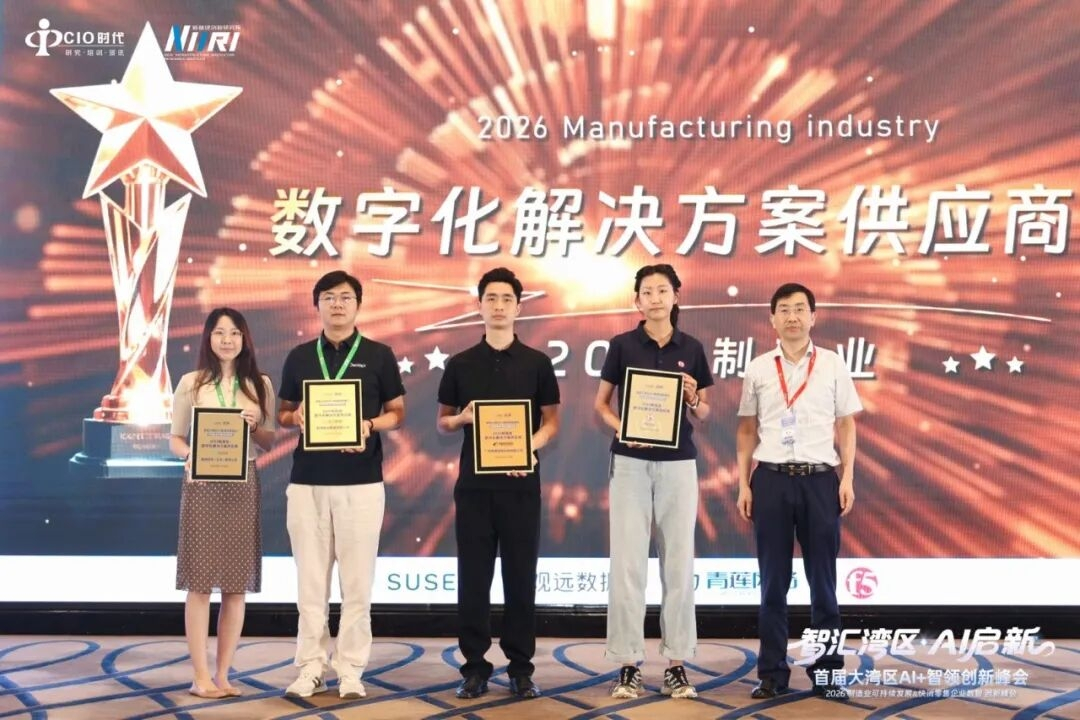
2026 Manufacturing Industry Digitalization Solution Supplier Award

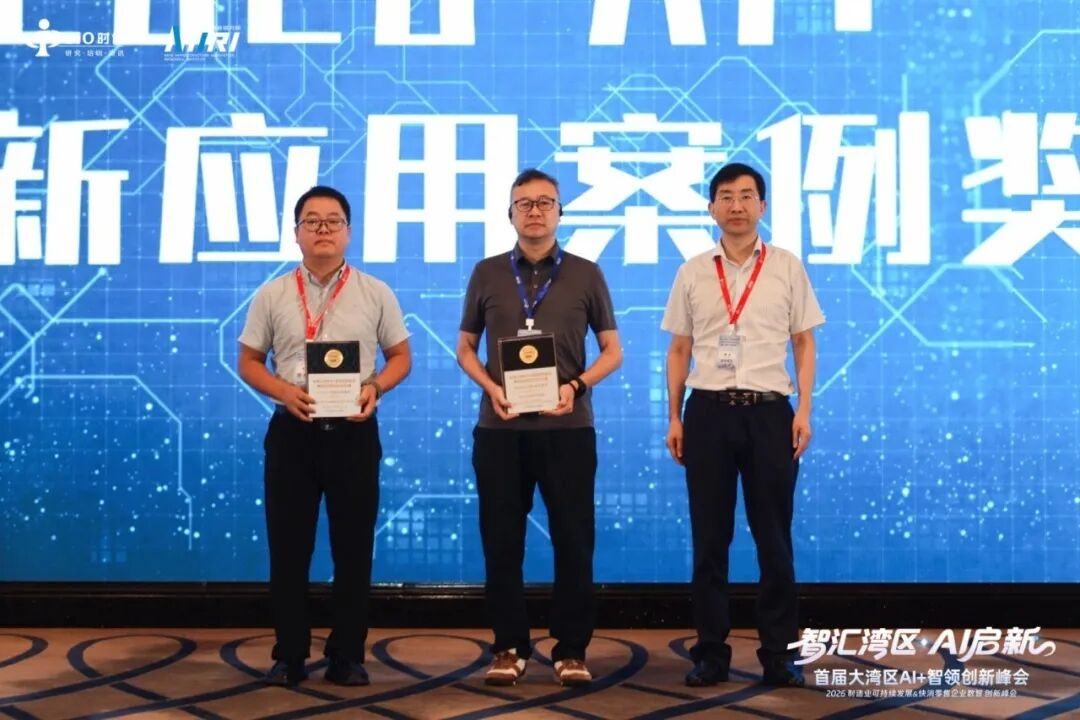
2026 AI + Innovative Application Case Award
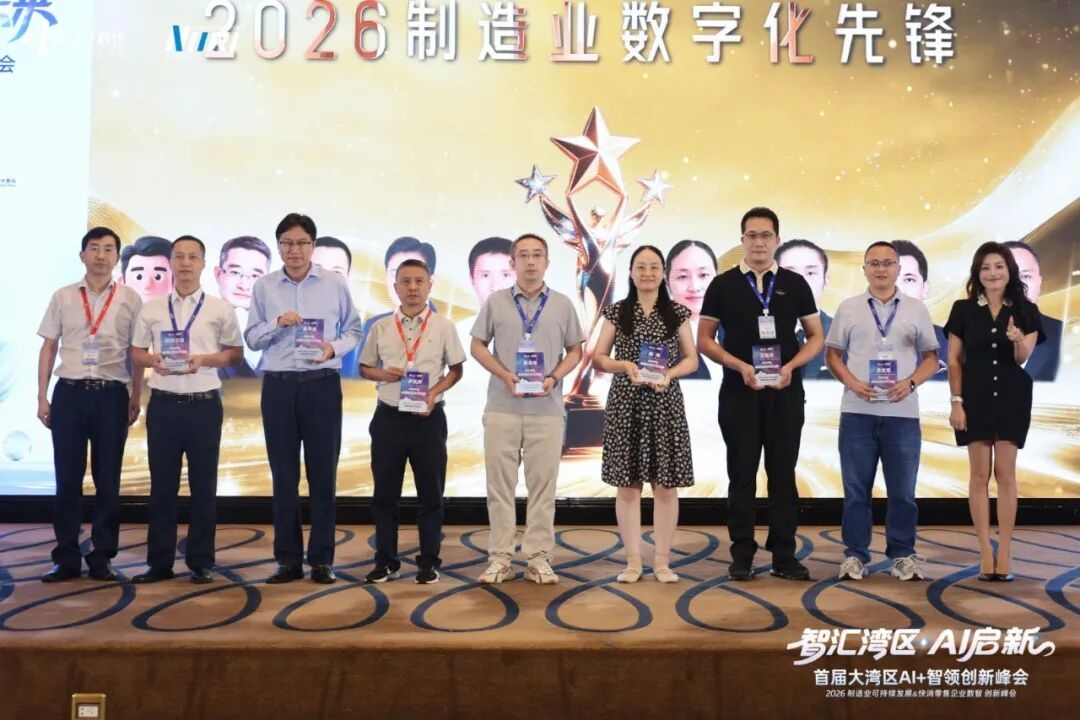
2026 Manufacturing Industry Digitalization Pioneer Award
During the conference, three major industry awards were revealed and presented: the “2026 Manufacturing Industry Digitalization Solution Supplier Award,” the “2026 AI + Innovative Application Case Award,” and the “2026 Manufacturing Industry Digitalization Pioneer Award.” They commend companies and benchmark cases that have achieved outstanding practices in digital transformation and AI deployment, setting an example for industry transformation.
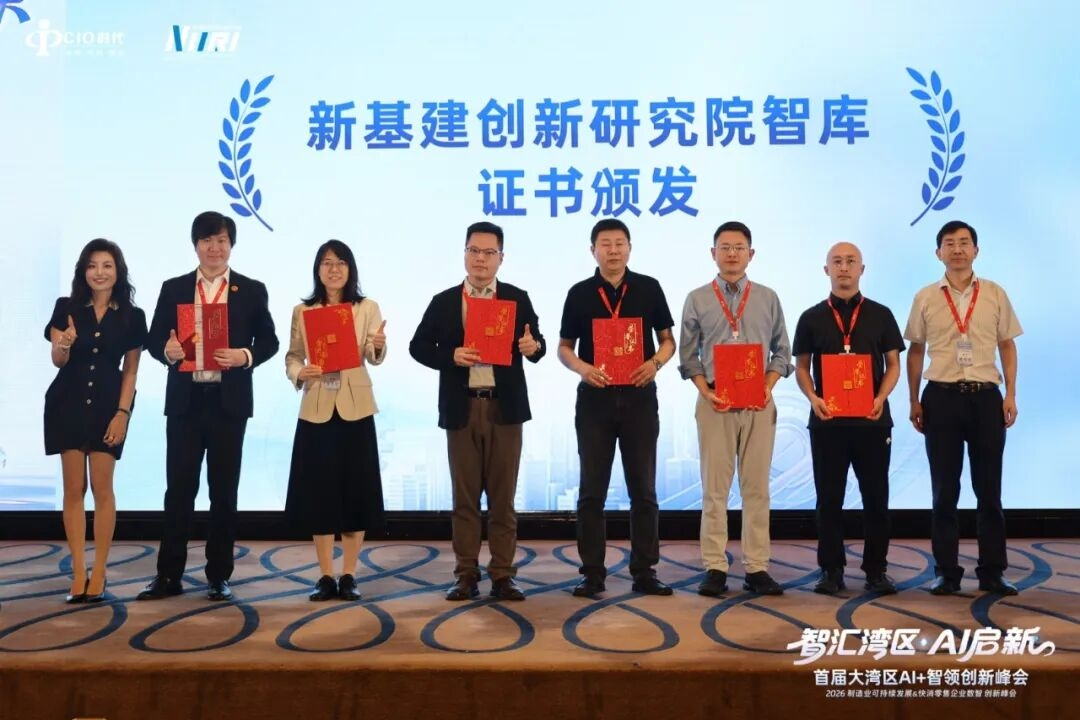
Think Tank Appointment Ceremony of the New Infrastructure Innovation Research Institute:

At the site, industry experts and enterprise digital transformation leaders were awarded the think tank appointment certificates of the “New Infrastructure Innovation Research Institute.” This expanded the research institute’s matrix of industry think tank experts, continuously strengthening professional research forces in the field of sustainable development in manufacturing.
Consolidating the driving force for intelligent manufacturing in the Greater Bay Area
Continuously empower sustainable manufacturing
Thanks to the summit sponsors
The successful convening of this summit built a high-end communication bridge for the manufacturing industry in the Greater Bay Area, focusing on sustainable development, and further connected the cooperative linkages across industry, academia, research, and application. In the future, in the CIO era, together with the New Infrastructure Innovation Research Institute, we will continue to pool innovation momentum from the Greater Bay Area manufacturing industry, and continuously deliver practical experience and resource-connection services tailored to local industries. This will help manufacturers in the Greater Bay Area accelerate long-term, sustainable development through digitalization, intelligence, and green and low-carbon initiatives, and explore a replicable Bay Area model for the high-quality, sustainable development of China’s manufacturing industry.
Deeply rooted in the Yan Yuan legacy, nurturing Bay Area digital intelligence pioneers! Having devoted 21 years to digital intelligence education in the CIO Era, the 8th South China CIO class will officially start in September 2026. As the second cohort after the establishment of the Bay Area branch, students will have the opportunity to study together with both new and veteran students from South China and integrated cohorts nationwide, with fully connected resources across circles. A grand opening ceremony will be held in September. The program is built on an international EXIN certification system plus top-tier government-enterprise think tank resources, and carefully designed with six customized core modules. It will deeply integrate company visits and research training with leading enterprises from the North China, GuangDong, Shenzhen, Hong Kong, and Macao regions, helping digital managers achieve cognitive leaps, capability upgrades, and resource linking. Supported by a lifelong growth ecosystem and diversified benefits, the program now opens limited recruitment for core digital managers across all industries. Come and grow together with the digital intelligence pioneers—coexisting, achieving win-win outcomes, and embarking on this shared journey of smart transformation!

Click to view details:
Gather strength for Bay Area intelligent manufacturing—CIO Era inaugurates the new journey ahead! The CIO Era Greater Bay Area branch is officially unveiled and established!
Bay Area Leading Plan—Build Your Future Vision! Recruitment Brochure for the 8th South China CIO Class
?
?
CIO Era was founded in 2003 and was created by Dr. Yao Le, the founder of the Peking University CIO Forum, along with other forum core members. Over more than 20 years since its establishment, CIO Era has taken the mission of disseminating knowledge of “new technologies, new business, and new management,” focusing on cultivating the CIO community and providing technology-themed training for CIOs. It provides CIOs with digital-related information and professional research content, building a professional, precise, and multidimensional vertical media platform. It is committed to becoming “an enabler of individual and organizational digital business, management, and technology knowledge.”
New Infrastructure Innovation Research Institute:
The New Infrastructure Innovation Research Institute is a think tank research organization under the CIO Era. It brings together more than ten industry expert groups, including academicians, government leaders, central/state-owned enterprises, healthcare, education, energy, manufacturing, and others, forming a think tank with a roster of over a thousand experts. The institute’s main goals are to establish cooperation among the government, research institutions, universities, and practitioners in industry digital transformation, and to play the role of a bridge and bond across government, industry, academia, and research. It aims to promote exchanges and cooperation between the government and enterprises, and among enterprises. It also seeks to promote the landing of the digital industry. The institute hopes to extract excellent digitalization practices into theoretical methods for promotion and application; to help improve the efficiency of industry digital transformation and to advance the construction of a digital China.

·END·