

Author: harpaljadeja.eth (evm/acc)
Compilation: Deep Tide TechFlow
Monad is a Layer-1 blockchain fully compatible with EVM, but optimized for high throughput and low latency.
It adopts a brand new architecture (including the MonadBFT consensus mechanism, RaptorCast network, asynchronous and parallel execution, just-in-time compilation, and custom MonadDb database), achieving approximately 10,000+ TPS (transactions per second), block time of about 400 milliseconds, and final confirmation time of about 800 milliseconds.
It is worth noting that Monad fully retains compatibility with EVM and RPC, allowing all existing Solidity contracts, development tools, and wallets to be used directly without additional adjustments!
Monad is committed to pushing the boundaries of decentralization and blockchain scalability. With Monad, developers can enjoy faster block generation speeds and higher throughput without changing Solidity or Web3 workflows.
In this article, I will introduce some resources to help you better understand Monad and start developing!
Monad is designed to be used with standard Ethereum development tools.
In particular, Foundry and Hardhat are fully supported, and other tools like Remix and Scaffold-ETH can also be used normally.
You can refer to the relevant guides to deploy and verify smart contracts!
Please ensure you are using Foundry version v1.5.0+ and Viem version v2.40.0+.
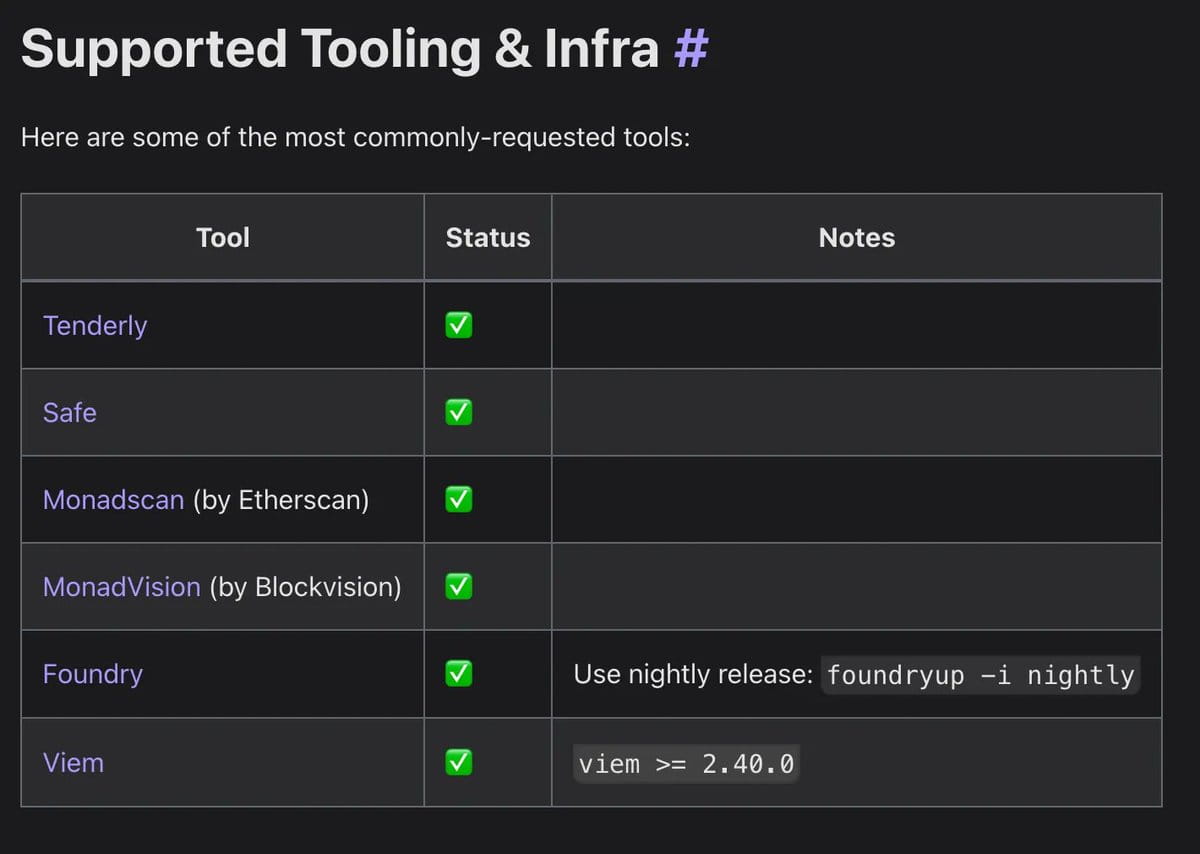
Image: Monad's infrastructure and development tools
Network Information
If you need to understand information such as chain ID, block explorers, and RPC URLs, you can refer to the network information page (including details for both mainnet and testnet).
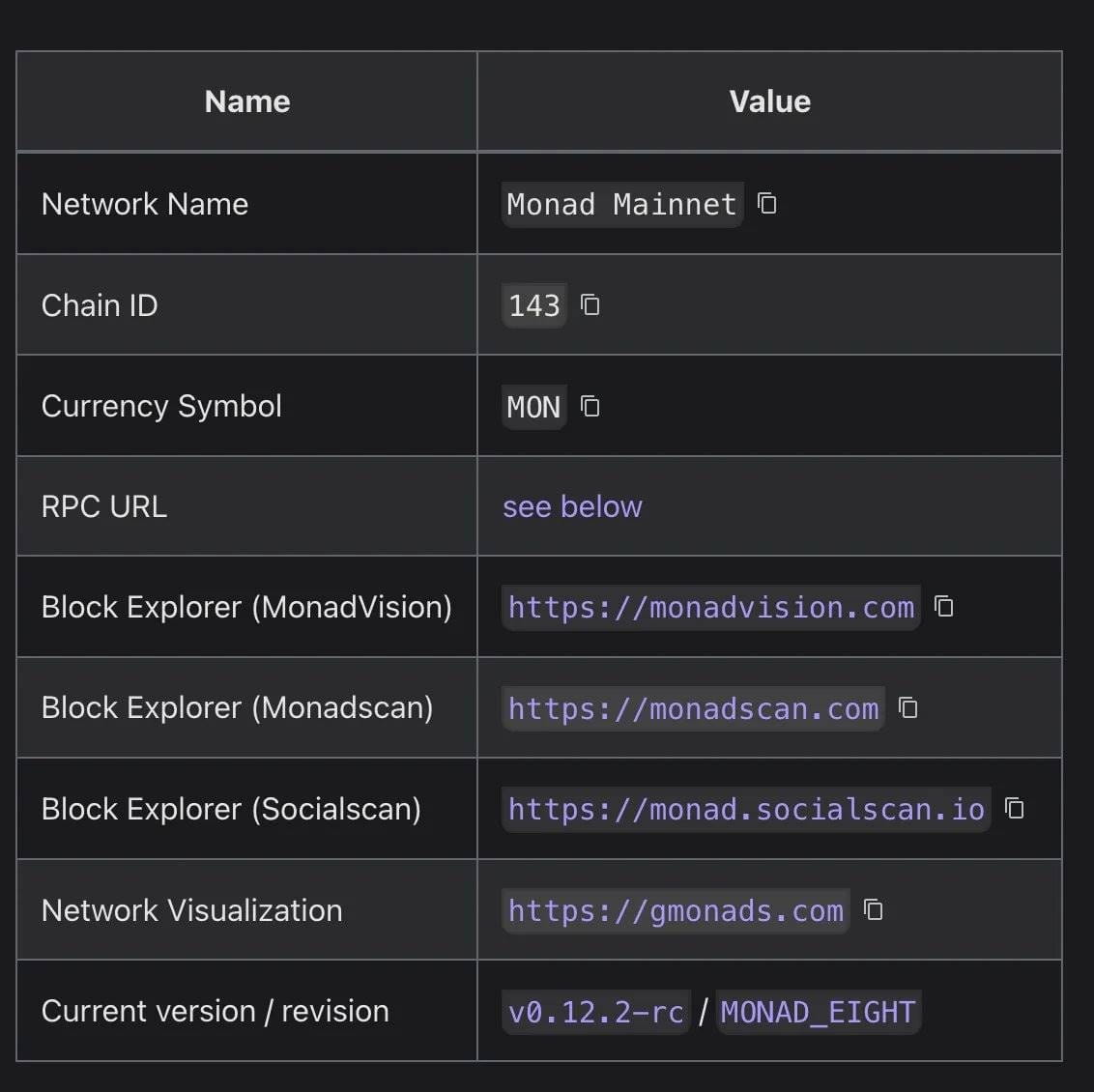
Image: Monad Mainnet Network Information
Migrating applications from other EVM chains to Monad
If you are migrating applications from other EVM chains to Monad, then the (deployment summary) will be the most worthwhile content for you to reference.
This document includes network information, protocol addresses deployed on Monad, and various differences between Monad and Ethereum that need to be considered when migrating applications!
Developer-specific Monad deployment summary
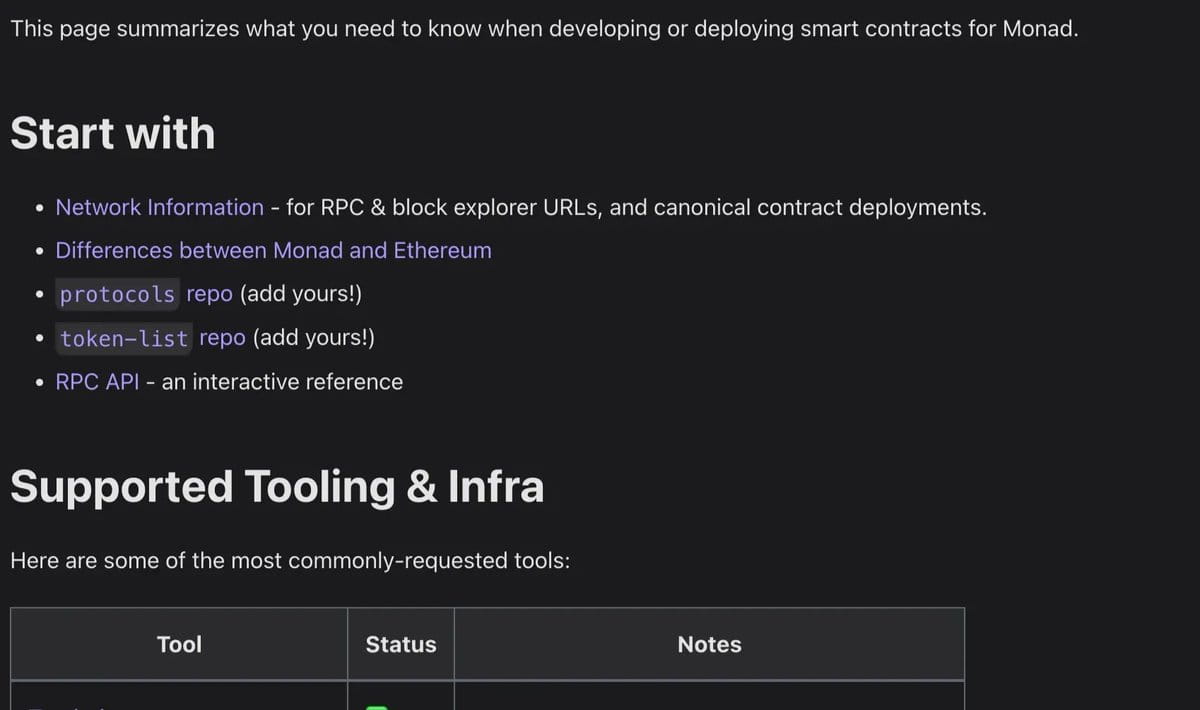
Image: Developer Monad deployment summary
Monad supports the EIP-7702 proposal and includes reserve balance conditions, you can learn more related information here.
Best practices for high-performance applications
The Monad documentation also offers excellent guides on high-performance applications, covering best practices such as which RPC methods to use, how to batch calls, and when to use indexers.
Best practices for high-performance application development
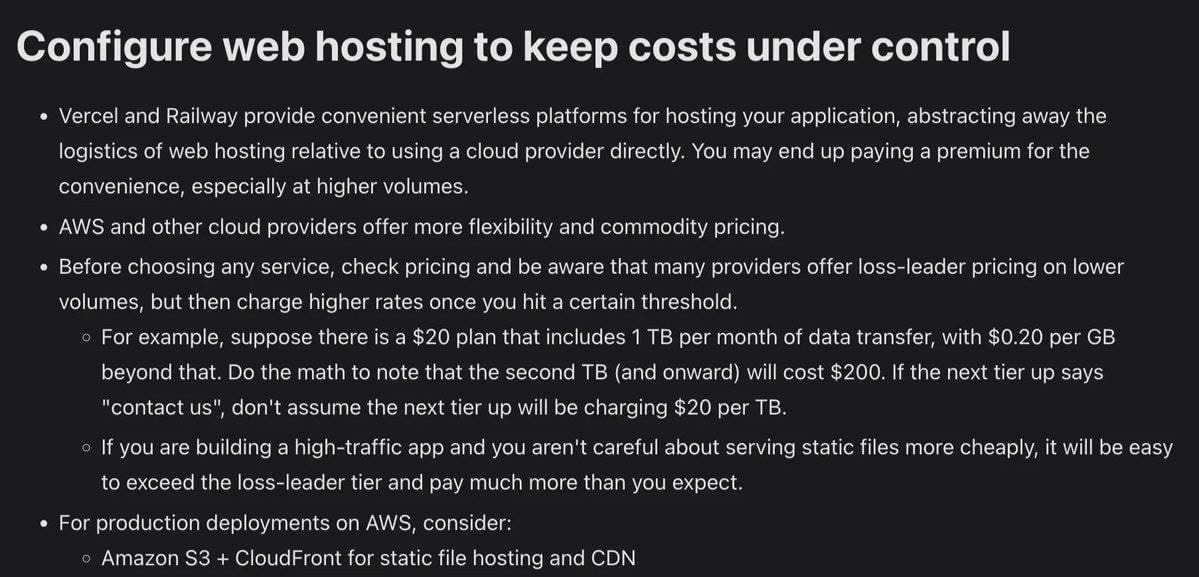
Image: Best practices for high-performance applications
Gas Pricing
(Gas pricing documentation) can help you understand the changes in various gas opcodes in Monad compared to Ethereum, which are particularly important for you to note when deploying on Monad.
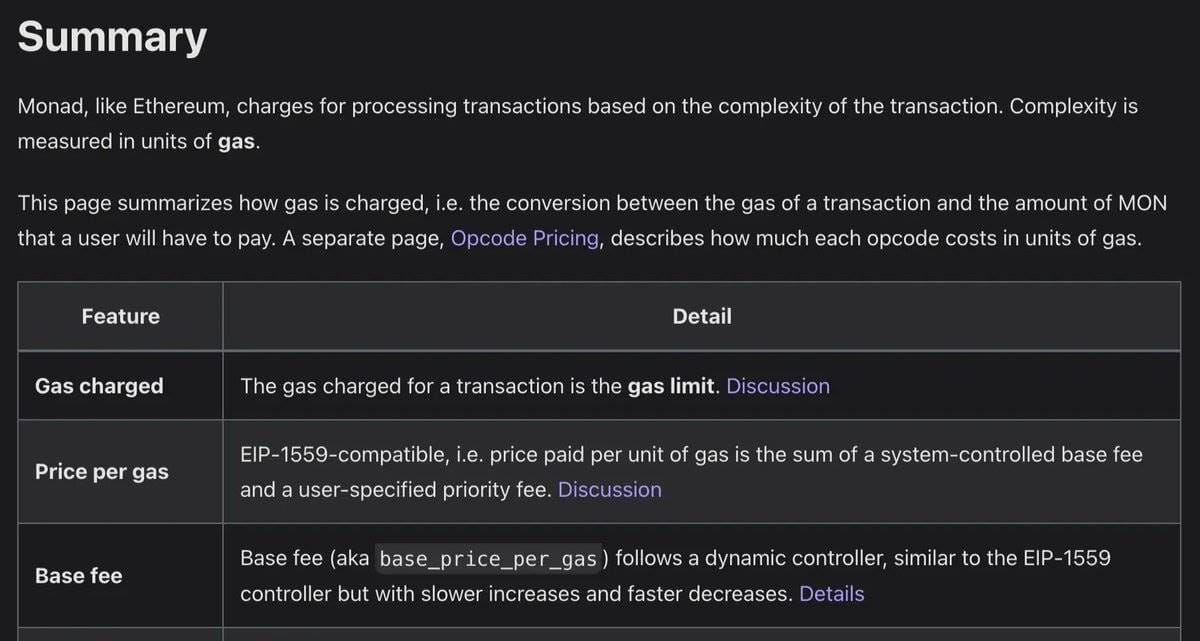
Image: Monad Gas Pricing Guide
Development tools and infrastructure
Monad currently has the richest ecosystem of development tools and infrastructure on the mainnet!
You can browse various service providers mentioned in the Monad documentation, or quickly view the snapshot tweet posted by @keoneHD:
Tweet link
Monad tools and infrastructure documentation
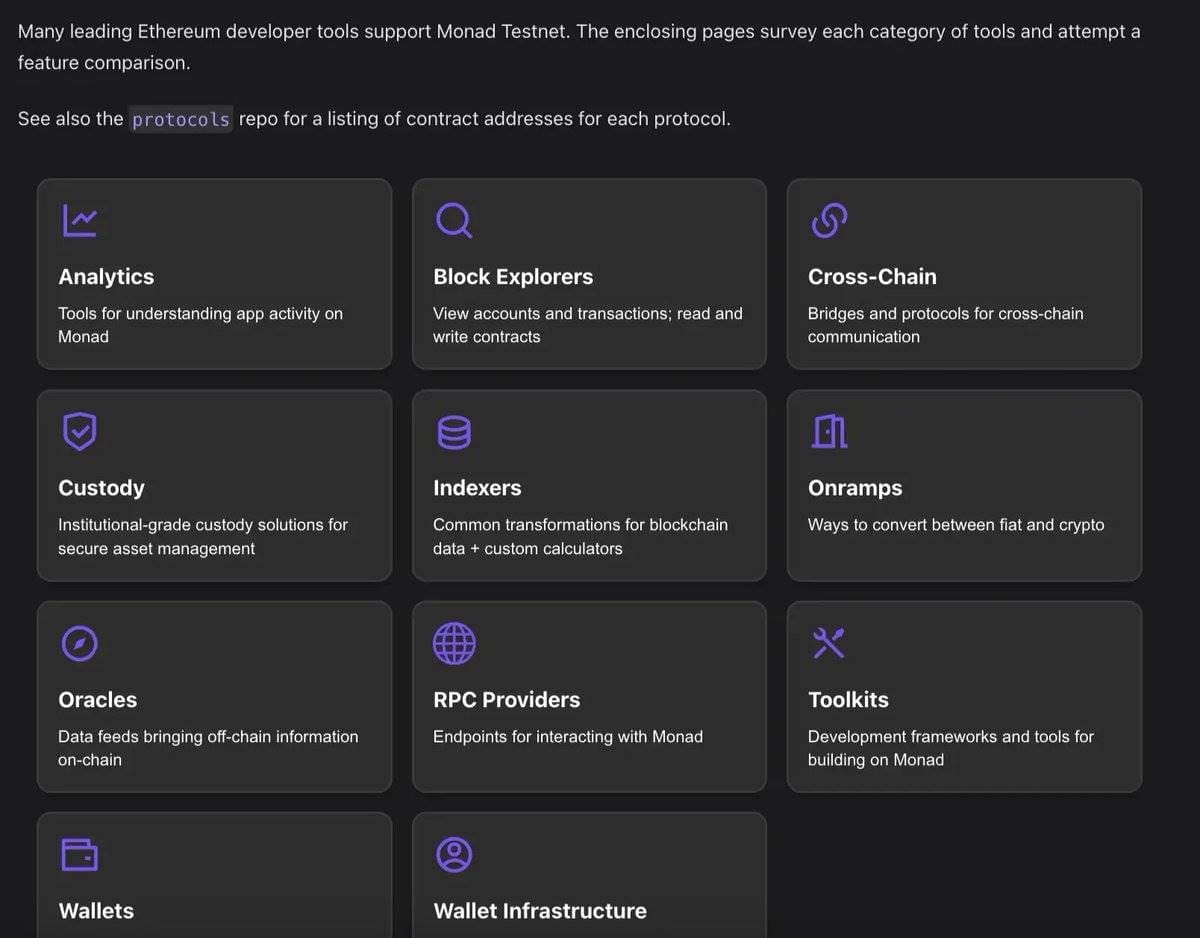
Image: Tools and infrastructure on Monad
If you need to use certain service providers that are not yet available on the Monad mainnet, feel free to contact us!
Monad Architecture
If you wish to delve deeper into the internal mechanisms of Monad, you can visit the Monad architecture section in the documentation.
This section explains in detail several core technologies of Monad, including Parallel Execution and the MonadBFT consensus mechanism.
MonadDB database, etc.
Detailed explanation of Monad architecture
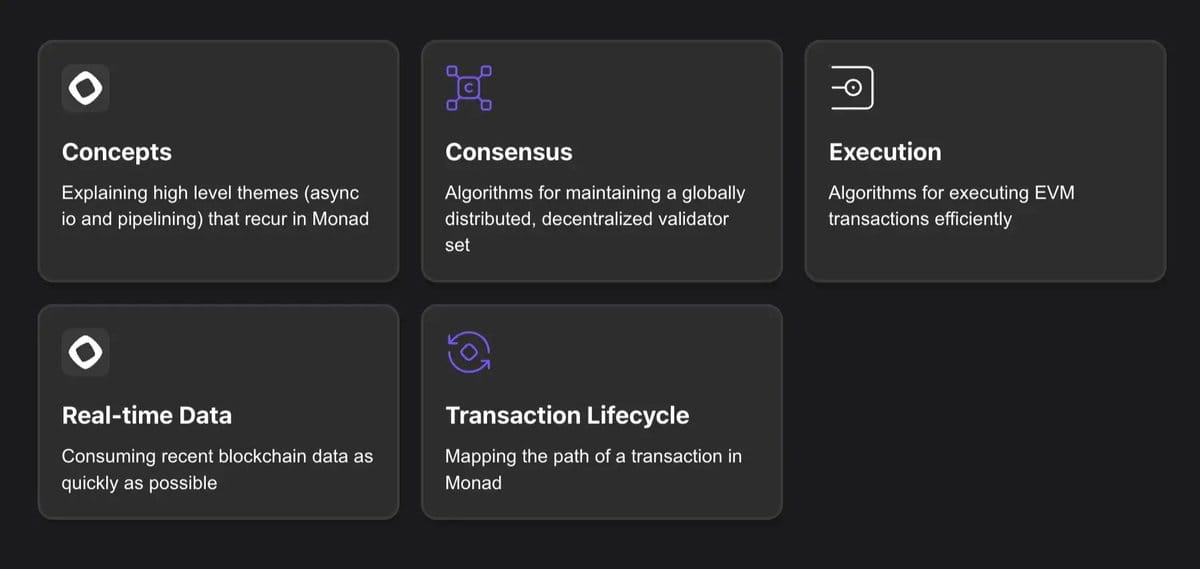
Image: Monad Architecture
Looking for application development guides?
If you are a Web3 newcomer or looking for application development guides, there is a fantastic section in the Monad documentation specifically prepared for developers who want to start developing on Monad.
This includes detailed guides on how to use indexers, wallet connection SDKs, and even MCP and x402 applications!
Monad Application Development Guide
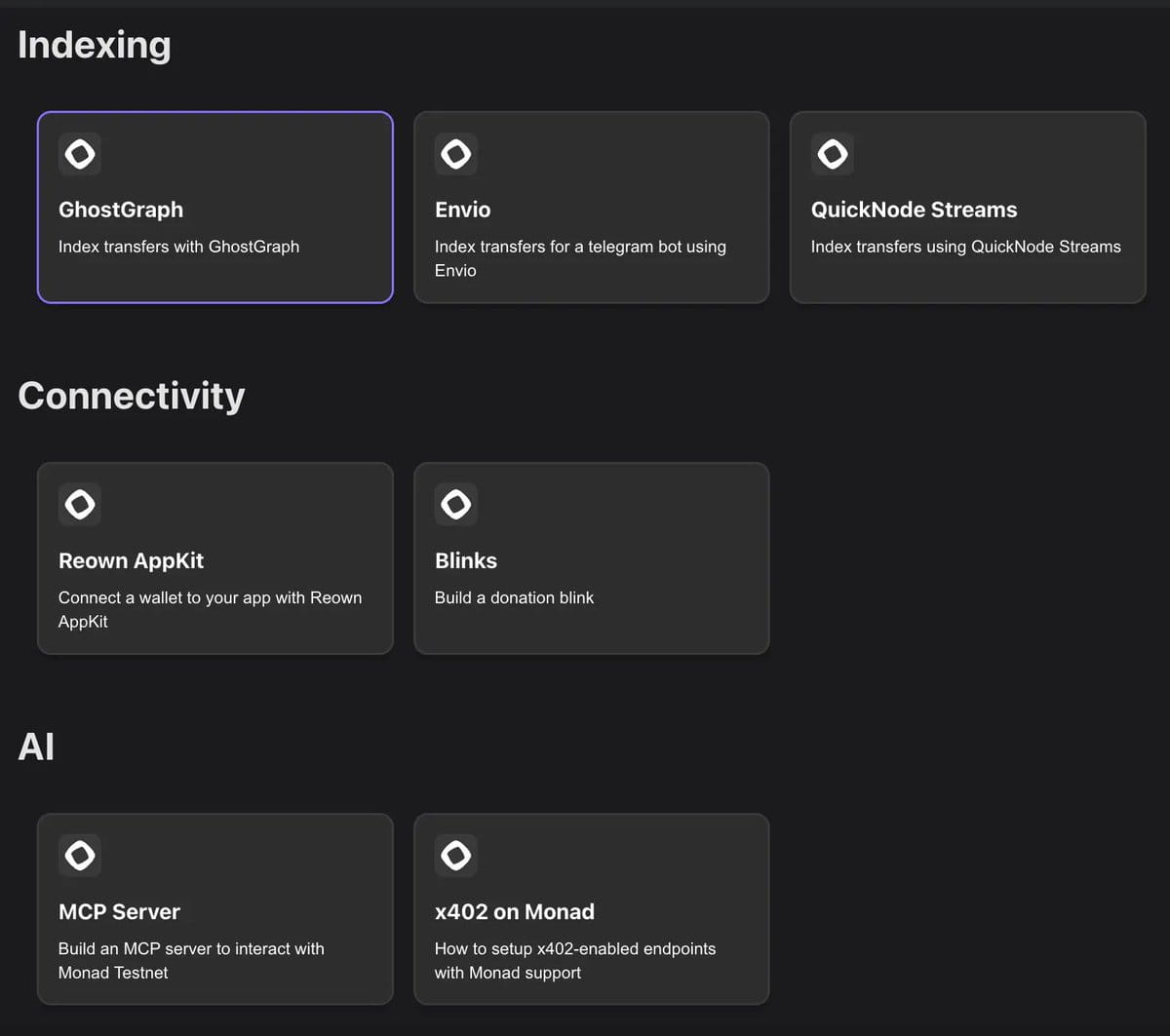
Image: Guidance developed in Monad
Looking for templates?
The Monad documentation also provides a template for Farcaster Mini applications, yes, the Farcaster application fully supports the Monad mainnet, including the @farcaster_xyz wallet!
Farcaster Mini application template
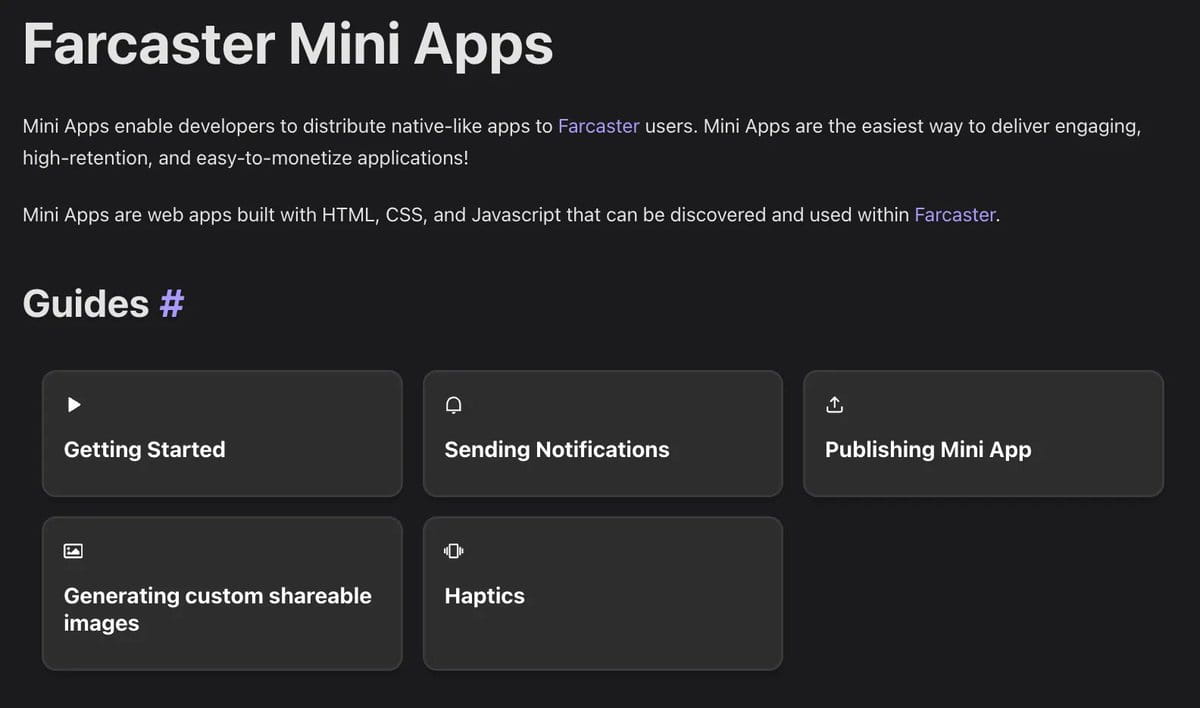
Image: Farcaster Mini program template
Mobile application template
The Monad documentation also provides templates for building mobile applications using React Native!
Mobile application template
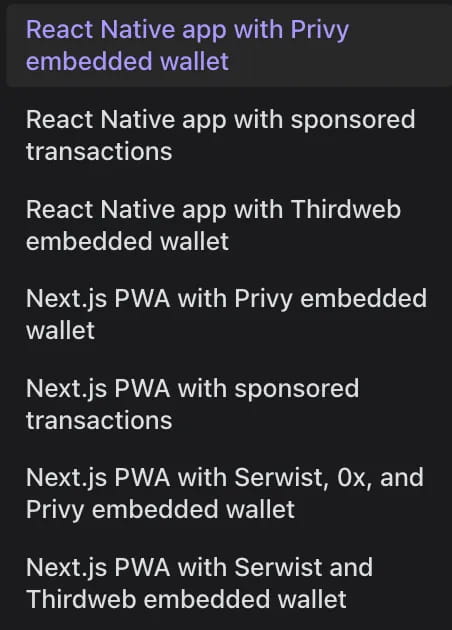
Image: Mobile application template
I strongly recommend browsing different sections of the Monad documentation, as there are a lot of useful contents that can answer most of your questions!
If you still need help finding certain resources, feel free to contact me :)