


Résumé
NFTs are unique digital collectibles on the blockchain. This characteristic makes them suitable for games, they can thus become representations of characters, consumables and other tradable objects.
NFT games have become popular in the Game-fi world to earn revenue. You can sell your in-game NFTs to other collectors and players and even earn tokens with play patterns to earn money.
When transferring your gaming NFTs, be sure to transfer them to a compatible wallet. Also watch out for common scams when sending the NFT to an NFT marketplace or another user. Finally, carefully read the rules of any NFT games you play to avoid any risk of loss.
NFT games are mainly present on Ethereum and Binance Smart Chain (BSC). Some offer a combat experience with collectible characters like CryptoBlades and Axie Infinity, and others use collectible cards like Sorare.
Binance also offers NFT mystery boxes, which give holders the opportunity to own NFTs of varying rarity. These boxes are included in collections created in partnership with NFT games.
Introduction
Since their beginnings with the CryptoKitties craze, NFT games have grown and started offering “play to win” models. Game-Fi, as it is called, blends the worlds of finance and gaming, offering players the opportunity to earn money while playing. You no longer need to focus on earning, searching, or creating a rare collectible worth thousands of dollars. Players can now choose to experience multiple game designs in different themes, in addition to collectible animals.
What are NFTs?
A non-fungible token (NFT) is a type of cryptographic token on a blockchain that represents a unique asset. The use cases for an NFT are numerous. It could be a digital asset in a game, a collectible piece of art, or even a real object like real estate. NFTs have solved the long-standing problem of creating decentralized digital collection and ownership in a “copy and paste” world.
An NFT is non-fungible. This property means that each token is unique and can never be exchanged for another identical token. You can exchange 1 BTC (Bitcoin) for another 1 BTC equal in every way. With an NFT, this is impossible, even with NFT works published in a series with multiple versions. In this case, the metadata of each NFT will be different, just like in the case of a series of numbered prints.
How do NFT games work?
NFT gaming isn't about just keeping digital collectibles in your wallet. An NFT game will use NFTs according to its own rules, mechanics and player interactions. For example, a game can represent your unique character or avatar as an NFT. Digital items you find in-game may also be NFTs. You can then exchange or trade your NFTs with other players for a profit. A newer model, “play to earn,” also allows you to generate revenue from NFT games. We will come back to this later.
So how do you take NFTs and implement them technically in a gaming environment? To trade, create and implement NFTs in a game, developers create smart contracts that make up the rules for the NFTs used. Smart contracts are self-executing pieces of code stored on a blockchain.
CryptoKitties, for example, has a small number of main contracts that structure the game. The most famous is their geneScience contract which determines the random mechanisms that generate new cats. The game's developers initially kept its code secret. Interested players have even created tools to analyze the probabilities of particular traits in cats. With this information, players can maximize their chances of developing a rare breed that is worth more money.
What are play-to-earn NFT games?
“Play-to-earn” NFT games allow users to generate an income stream through playing. Typically, a player is rewarded with tokens and sometimes NFTs, allowing them to earn more money when they spend more time playing. Earned tokens are often necessary as part of the game creation process.
The token method is generally the more stable of the two, as tokens can be earned regularly through playing, while NFT distributions are more chance-based. Play-to-earn has been particularly popular with users in low-income countries as an alternative/complement to a fixed income or state support.
Axie Infinity has become one of the most popular play-to-earn games. The game requires an initial investment to purchase three Axies, or you can receive a free purse from another player. Once you have a startup team and have started completing tasks and challenges, you can earn a Small Love Potion (SLP), an ERC-20 token tradable on exchanges.
Breeders use SLP to breed new Axies, creating demand for this item. Axie Infinity has become particularly popular in the Philippines, where many users have started generating a salary through its gaming model. Many players earn between $200 and $1000 (USD) per month, and some even more than that, depending market price and time invested.
What are NFTs in play?
In-game NFTs provide another way to generate income by playing NFT games. Rather than earning a fungible ERC-20 token like SLP in Axie Infinity or SKILLS in CryptoBlades, you earn NFTs which represent collectibles. This gaming mechanic is the conventional way of generating revenue with NFT games. The value of items varies depending on their aesthetic, rarity, or in-game usefulness.
CryptoKitties is an example of a game that relies solely on the collection of in-game NFTs. It is impossible to continue playing and obtain a stable income without the element of luck. Most of the newer NFT games offer a mix of gaming NFTs and the play-to-earn model.
How do NFT games make money?
The amount of money you can earn playing an NFT game depends on the game mechanics and market demand. The money you earn comes from other users who enjoy the NFTs or cryptocurrencies earned in the game. You will need to withdraw your funds by selling your assets on a market, exchange or auction. In the case of NFT games, value is derived from either the collectability of the NFT or token or its in-game utility. Both of these factors also lead to speculation.
Can I lose money playing NFT games?
It is possible to lose money playing NFT games. The exact amount depends on the type of game you play, its mechanics, and the value of the NFTs you manage. Losing money doesn't necessarily mean you're being scammed. Since NFTs are speculative and their value depends on what people attribute to them, your losses also depend on market forces. Like any crypto investment, only spend what you can afford to lose.
Can I lose my NFTs?
Given the value of some NFTs, the fear of losing them while playing a game or interacting with the blockchain is common. Whether you purchased your NFTs or earned them in-game, you need to ensure their security. To put it simply, it is possible to lose your NFTs if you are not careful. However, your chances of losing them are minimal if you follow the best practices that we will present later.
You risk losing your NFT in several ways:
1. You attempt to transfer it from your wallet to another that does not support your NFT's token standard.
2. You are the victim of a scam or fraud, and you send your NFT to a scammer.
3. You grant a malicious smart contract permission to access your wallet, and it steals your NFT.
4. You lose it within the rules of a game.
Aside from this last point, you will be able to avoid the above situations with a better knowledge of NFTs, blockchain technology and scams in general. Just like you wouldn't use PayPal or internet banking without understanding how to use them properly, the same goes for NFTs. To make sure you don't lose your NFTs, you should:
1. Confirm that if you send your NFT to another wallet, you won't get scammed. You can check out the most common scams in our guide 5 Common Cryptocurrency Scams and How to Avoid Them.
2. Familiarize yourself with the types of tokens and blockchains supported by your wallet or platform. ERC-721 and ERC-1155 are the most common NFT token protocols for Ethereum, BEP-721 and BEP-1155 are the most common for Binance Smart Chain (BSC). Always make sure you are sending them to the correct address and never assume compatibility.
3. Only interact with smart contracts from reputable projects that you can trust. If you allow a smart contract to interact with your wallet, keep in mind the risk that the contract may steal your funds.
4. Carefully check the rules of the game you are playing. Some NFT games allow you to trade with other users or use NFT consumables. These could be items or potions, for example. Familiarize yourself with the game to avoid any unpleasant surprises.
Popular NFT games
There is a wide range of NFT games available, with the majority being on BSC and the Ethereum network. Some offer more conventional video game experiences, and others rely primarily on collecting NFTs.
Axie Infinity
As we mentioned before, Axie Infinity follows a similar model to Pokemon, with collectible creatures and battles. Axie Infinity is located on the Ethereum blockchain and offers users potential income based on the exchange of Small Love Potions (SLP), axies and Axie Infinity Shards (AXS). Both SLP and AXS are available on Binance.

Sister
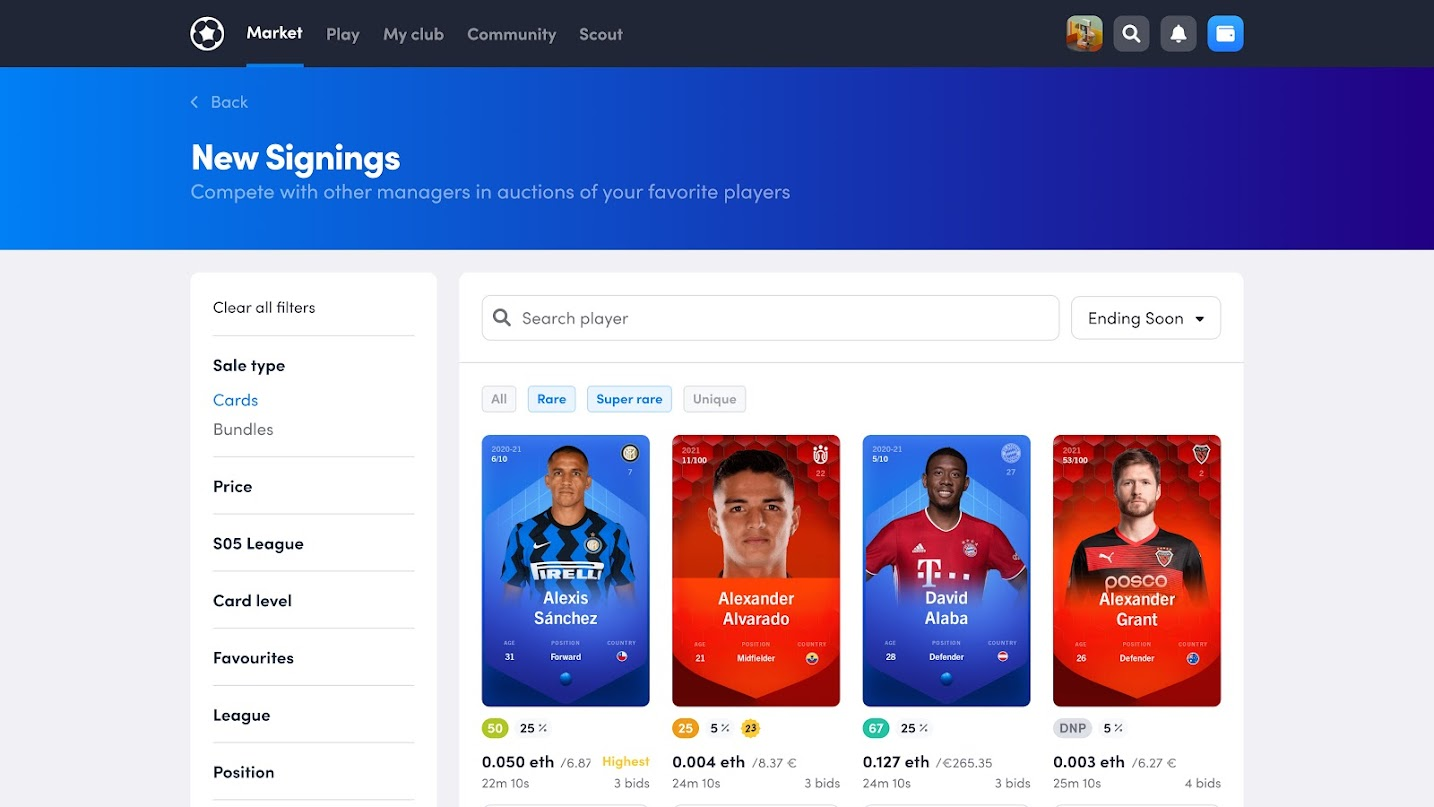
Sorare is a fantasy football game with collectible and tradable football players from real life. You create a five-player soccer team using either free cards for beginning players or purchasing cards in token form. You can earn points to level up every time you win a match, score a goal, or complete other tasks.
Gods Unchained
Gods Unchained is an NFT card game tradable on Ethereum, similar to Magic The Gathering or Hearthstone. Players build game boards with different powers and strengths to take on other players. As you win, you find in-game items to use or sell. If you win ranked games, you can start earning Flow which allows you to craft powerful NFT cards. You can then take your profits by selling them or reinvesting them in new cards and continue the process.

Collections NFT Binance
Binance's NFT Marketplace offers an NFT gaming experience with NFT mystery boxes and collection creation partnerships. These partnerships range from digital artists to NFT games. Each mystery box available for purchase contains a random NFT of a different rarity from the collection. You can open the box to reveal the NFT or sell it without opening it.
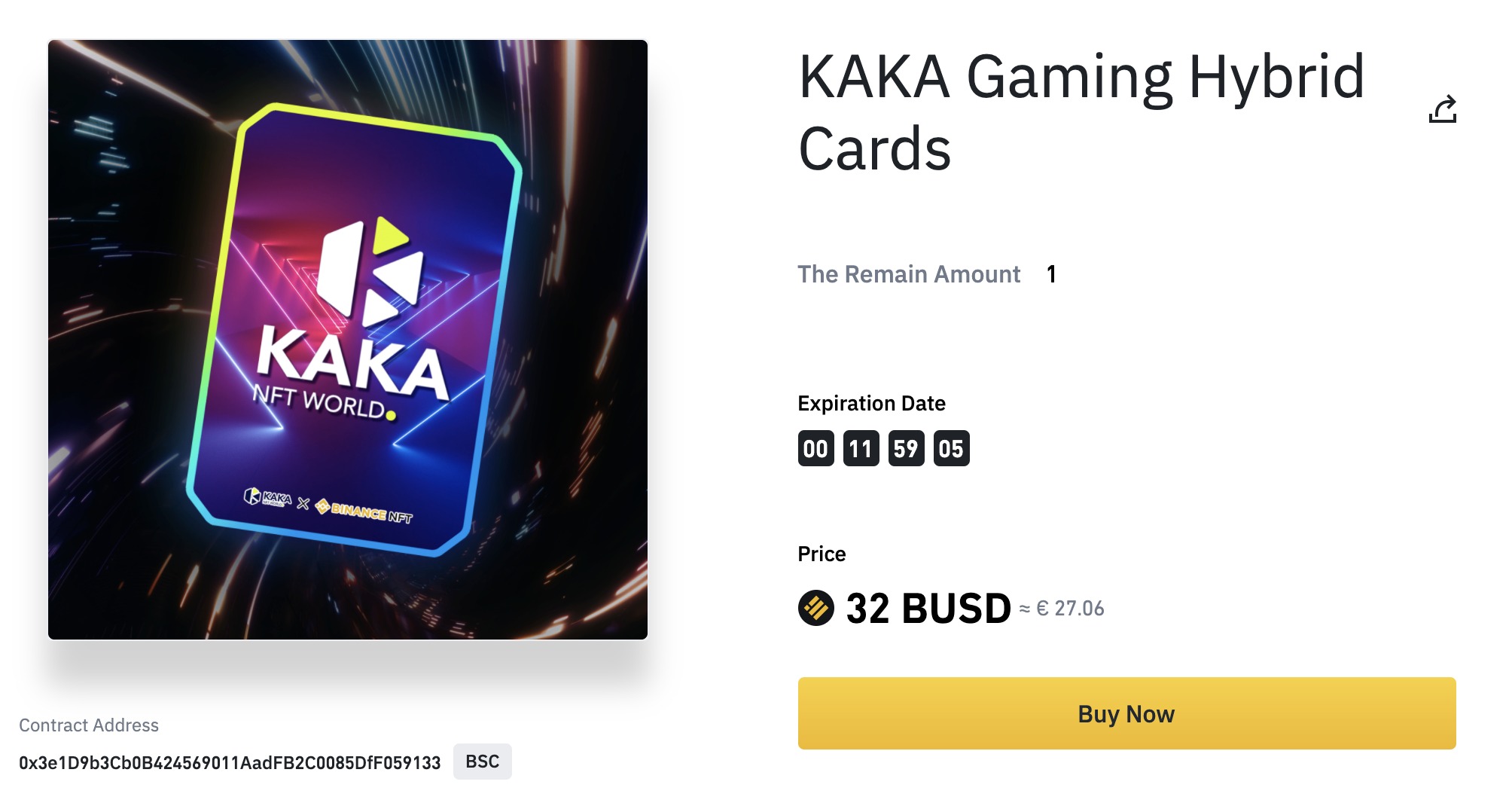
NFT Collections contain multiple NFTs and mystery boxes centered around a specific theme or project. The Game-fi mystery box collections have been some of the most popular so far. Let's look at some of them:
1. The MOBOX collection. MOBOX is a BSC gaming platform combining yield farming DeFi and NFT. The collection includes NFT Mystery Boxes containing MOMO NFTs with random hashing power on the MOBOX platform. The more hashing power the NFT has, the more valuable the MOMO will be in MOBOX games.
2. The My Neighbor Alice collection. My Neighbor Alice is a virtual world building game with NFT cosmetic items. Although the game items in the collection's mystery boxes are only cosmetic, users still value them and give them value on the secondary market.
To conclude
The NFT game uses digital collectibles and creates rules for players to interact with others' NFTs. While some people enjoy NFTs for their collectible nature, others seek them out for their utility. Many NFT games function like a collectible card game, but not everyone who collects the cards intends to play. Game-fi has now created new NFT gaming economies that have changed the way people can make money using NFTs. Earning money is no longer just about luck and collecting, but also about gambling.