

In the past, people thought stablecoins were the 'least sexy' segment of the crypto world. But now, with the new round of financial infrastructure revolution unfolding, this segment, once seen as a 'backend payment tool', is quietly becoming one of the most important strategic high grounds globally.
In 2024, the circulating supply of fiat-backed stablecoins increased by 53%, surpassing $200 billion, with on-chain transaction volumes reaching $5.8 trillion. This is not only a victory for DeFi but also marks the rapid infiltration of a new financial paradigm into mainstream business society.
Giants are betting: The stablecoin has entered an era of power competition.
Recently, multiple significant announcements have been released, and stablecoins have become new weapons for global financial giants:
Fidelity (managing $5.9 trillion in assets) plans to issue a US dollar stablecoin.
World Liberty Fi, supported by Trump, has launched USD1 on Ethereum and BSC.
Wyoming has officially tested a stablecoin issued by the state government, expected to go live in July this year.
Custodia Bank and Vantage Bank Texas have also begun experimenting with stablecoin issuance in an unlicensed blockchain environment.

These actions are not coincidental; they reveal a trend: Stablecoins are becoming the infrastructure for payment and asset settlement, and every entity that has users, traffic, or capital management capabilities does not want to fall behind in this infrastructure reconstruction.
Why are stablecoins an opportunity that institutions cannot afford to miss?
In the traditional financial payment system, intermediaries like Visa, Mastercard, and SWIFT structurally extract nearly $2.4 trillion in fees annually, with transaction costs as high as 1.6%-3%. In contrast, on-chain settlement fees for stablecoins are almost zero, with cross-border transfers costing only a few cents and settling in real-time.
Institutions are recognizing this disruptive efficiency. They are no longer satisfied with just 'using' stablecoins; they want to issue them themselves, turning payments into profit centers. We have already seen:
Tether's annual profit exceeds $13 billion, mainly from the yields on customer reserve assets.
Circle's profit reached $825 million in six months, relying on the interest spread of government bonds and money market funds.
The user retention, fee reduction, and cross-border expansion brought by stablecoins have made them an important lever for the transformation of financial institutions.
More importantly, with the advancement of the US STABLE Act and GENIUS Act, and the implementation of the European MiCA regulations, compliant stablecoin issuance has a solid legal foundation. Banks with regulatory resources naturally possess credibility backing and regulatory priority, giving them a clear advantage in competition with native stablecoin issuers.

A dramatic shift in the financial landscape: Stablecoins will reshape the global payment map.
Banks can reduce transaction fees to one-fifth of traditional networks.
Merchants receiving payments through stablecoins will enjoy higher profit margins.
Users can trade, transfer, and mortgage loans directly through wallets—without relying on high-threshold financial systems.
Payment links require no intermediaries, allowing for instant settlement and significantly reducing fraud risk.
Developers can build a 'super app-level' payment ecosystem around stablecoins.
This means that future payment scenarios may be jointly dominated by stablecoins + application wallets + on-chain contracts, building a more efficient and globally applicable financial network.
Want to track in real-time which institution or country is preparing a new stablecoin? Mlion.ai's news analysis engine and sentiment assessment system can help you identify the deep connections between policies, projects, and capital flows at the first opportunity.
How can investors seize the opportunity of the rise of stablecoins?
Currently, there is no 'stablecoin index' in the market, so investors cannot directly bet on the overall stablecoin ecosystem. But you can indirectly participate through the following paths:
Follow Mlion.ai's AI research reports and on-chain address analysis tools to track the active address changes and institutional holdings distribution of stablecoins like USDT, USDC, DAI, FDUSD, USD1, etc.
Use Mlion.ai's data dashboard to observe which DeFi protocols are integrating more emerging stablecoins and their TVL growth.
Combine the AI strategy diagrams provided by the platform to assess whether tokens related to stablecoins (such as governance tokens CRV, MKR, LDO, etc.) have technical support during market cycles.
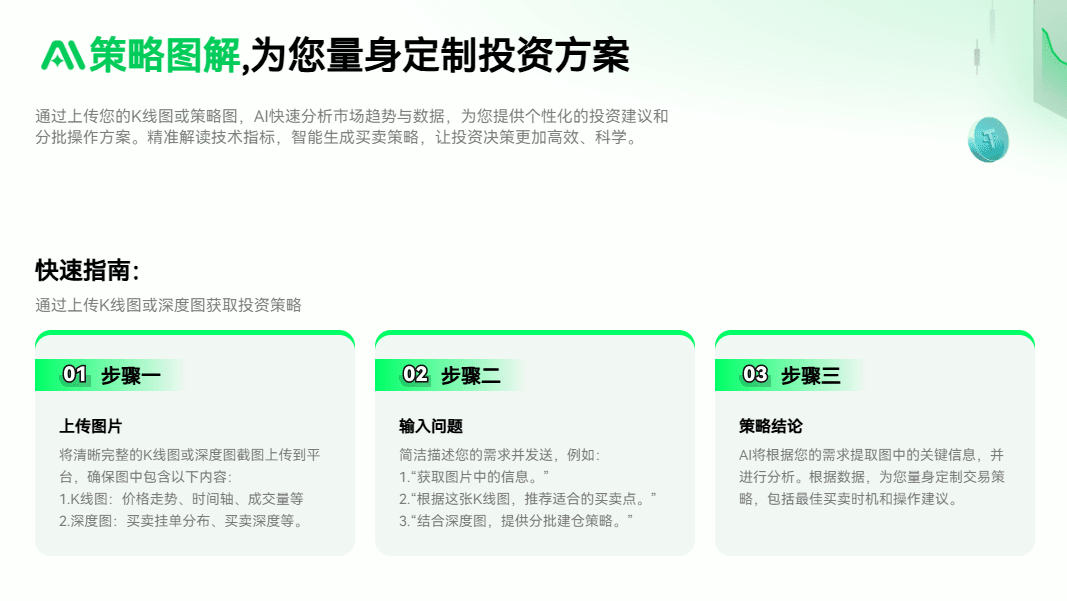
Through Mlion.ai's sentiment assessment system, monitor investor reactions to stablecoin-related news to determine whether the market has priced in the information ahead of time.
When the wave of upgrading financial infrastructure truly arrives, stablecoins will not only be payment tools but also a new entry point for on-chain sovereignty, regulatory order, and the digital economy.
Conclusion: It's not a matter of 'whether to issue' but 'when to start running.'
As stablecoins complete their leap from marginal experimental products to core components of mainstream payment systems, this battle is no longer a technical confrontation but a multi-faceted struggle involving capital, policy, and trust systems.
Every regulatory approval, every new coin launch, and every surge in on-chain transaction volume represents a restructuring of the financial landscape. The next phase of dividends will belong to those players who understand trends and possess data advantages in advance.
Don't wait for stablecoins to 'mature.' They are already in the present continuous tense.
Using Mlion.ai, interpret the signals behind stablecoins to establish a moat of data and logic for every decision you make.
Disclaimer: The above content is for information sharing only and does not constitute any investment advice. Investment carries risks; please make your own judgment.
The stablecoin competition has fully erupted: Why are banks, presidents, and asset giants all getting involved?