


Article reprint source: AI Trends
Source: New Intelligence

Image source: Generated by Unbounded AI
OpenAI and Google are competing like crazy for talent, with one offering sky-high annual salaries of $5 million to $1 million, while the other promises even higher salaries. Domestic AI PhDs are also being snapped up, with some being poached for millions of dollars a year before they even graduate.
Crazy competition, crazy competition! The war between OpenAI and Google for talent has reached a fever pitch.
OpenAI threw the ultimate temptation to Google employees - an annual salary of 5 million to 10 million US dollars! And endless computing power from Microsoft!

As a result, the key research talent of Google's revenge artifact Gemini model was poached by OpenAI.
Google also launched a revenge, promising to give OpenAI employees a higher annual salary than the previous year, and successfully recruited the former OpenAI employee who developed Code Interpreter.
In China, AI talents are also being scrambled for. Recently, China Business News reported that the annual salary of freshly graduated PhD students in AI in China has risen to over one million yuan, and some are even poached before they even graduate from school.
A Peking University professor said that before his students even graduated, big companies had already offered them millions of dollars to poach them.
The temptation of OpenAI: stock price soars, and there is no shortage of chips
According to foreign media The Information, the recruiting war between OpenAI and Google has intensified.
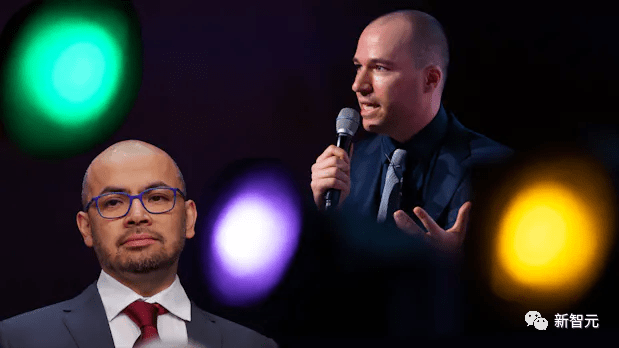
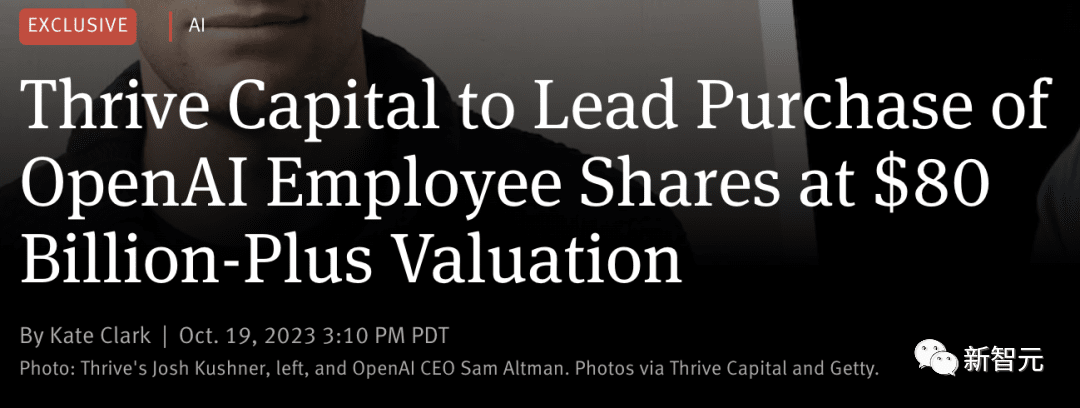
OpenAI began selling employee stock, nearly tripling its valuation to more than $80 billion.
Taking advantage of this favorable situation, OpenAI recruiters began to poach people from Google - Google's top artificial intelligence employees were offered millions of dollars in olive branches.
OpenAI said that if you join us now, you can lock in a stock share for $27 billion, and it will rise sharply in the future, making countless profits.
In addition, the temptation offered by OpenAI is of course not just stocks. The recruiter claimed that as long as you come to OpenAI, you don’t have to worry about computing resources anymore, and there will be enough chips for developing models.
However, employees on both sides actually tacitly agree that Google is the one that really has an advantage in the chip field. After all, it has invested heavily in data centers and dedicated AI chips, which have become the company's key development direction.
For OpenAI to obtain chips, it has to rely on a multi-billion dollar partnership with Microsoft.
Of course, Sam Altman is well aware of this.
According to insiders, he has told some colleagues that Google is expected to gain an advantage in computing resources sometime next year, and at that time, OpenAI will need Microsoft to provide more chips.
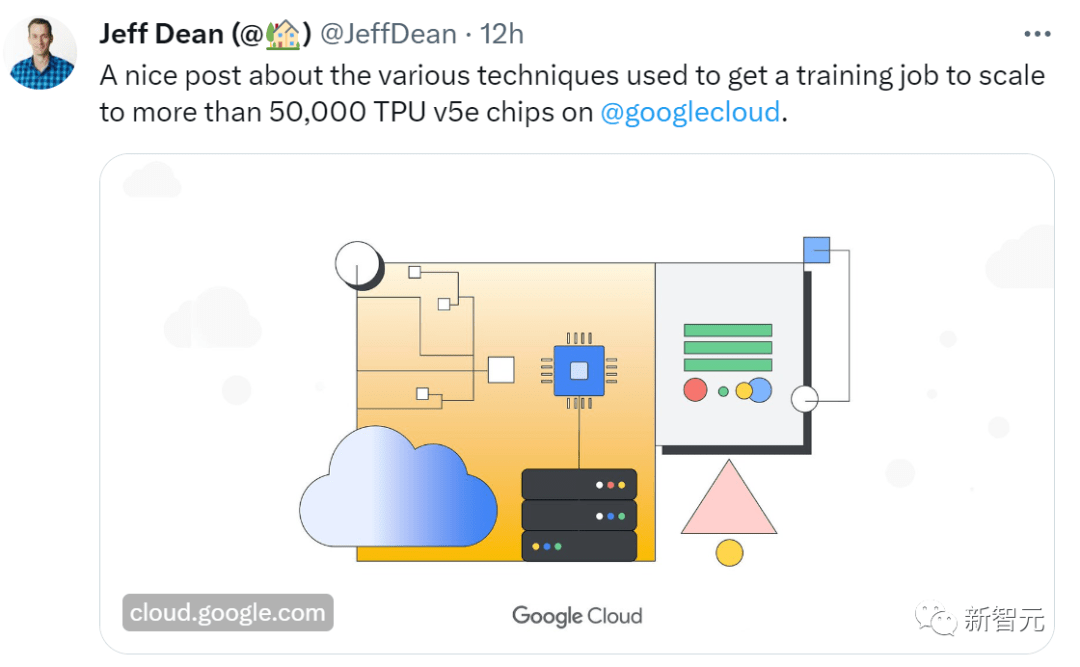
Google has achieved the world's largest distributed large language model training task, involving more than 50,000 TPU v5e chips
Despite this, OpenAI will certainly claim that allowing researchers to quickly use Nvidia chips is one of its major advantages.
The total package is 10 million dollars, just asking if you want to come
This is how OpenAI recruiters negotiated with senior AI researchers at Google: If they sold their stock, their annual salary would be around $5 million to $10 million.

How was this sky-high figure calculated? Someone explained that this assumes that the newly recruited employees join OpenAI before the equity sale is completed, and it also depends on their level within OpenAI.
He specifically emphasized that Google did not have an offer at this level.
Another insider revealed that OpenAI recently gave salary increases to some junior employees because salaries across the market have increased.
Also, OpenAI's stock compensation is somewhat unusual.
Its shares are distributed in profit units, meaning shareholders can get returns without acquiring the company or conducting an initial public offering, as long as OpenAI performs well.
Although the returns on those units may be capped based on the equity structure OpenAI had when it raised $10 billion from Microsoft earlier this year.
But OpenAI has told employees that the company will periodically allow them to sell shares to other investors, as private companies such as SpaceX do.
OpenAI’s current stock sale will be its second this year. After the tender offer, it may be harder for OpenAI to recruit talent from Google because the stock’s upside may be limited.
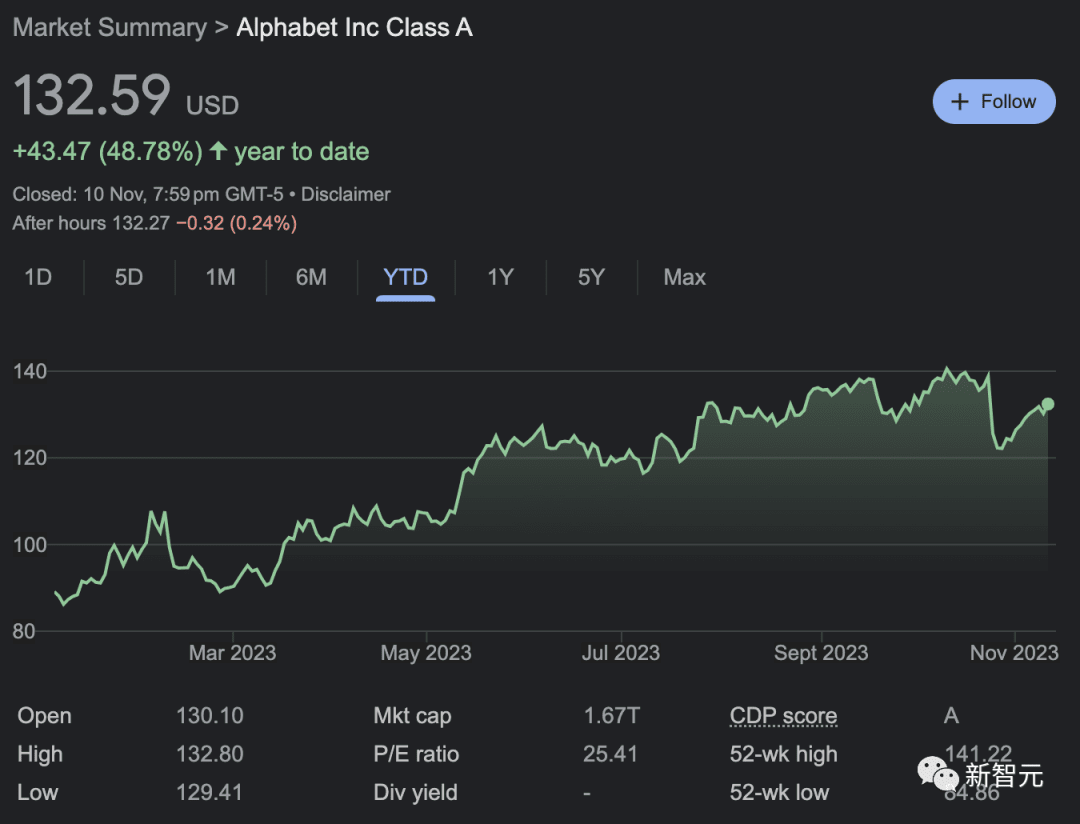
Of course, Google's stock price is not bad either: as its advertising business has gradually recovered and its cloud server leasing business has become profitable, Google's stock price has risen by nearly 50% this year.
Thrive Capital will lead a buyout of employee shares at a valuation of at least $80 billion, The Information reported last month.
The new valuation of OpenAI will be more than 60 times its annualized revenue! This also makes OpenAI one of the most highly valued private companies backed by venture capital.
 Google's top talents are all in high demand
The war for talent between OpenAI and Google is intensifying and shows no signs of abating.
Since ChatGPT started the AI competition, companies including Anthorpic and Meta have been competing to attract top researchers.

However, Google has become OpenAI's primary target because of its deep talent pool and publication of cutting-edge research results.
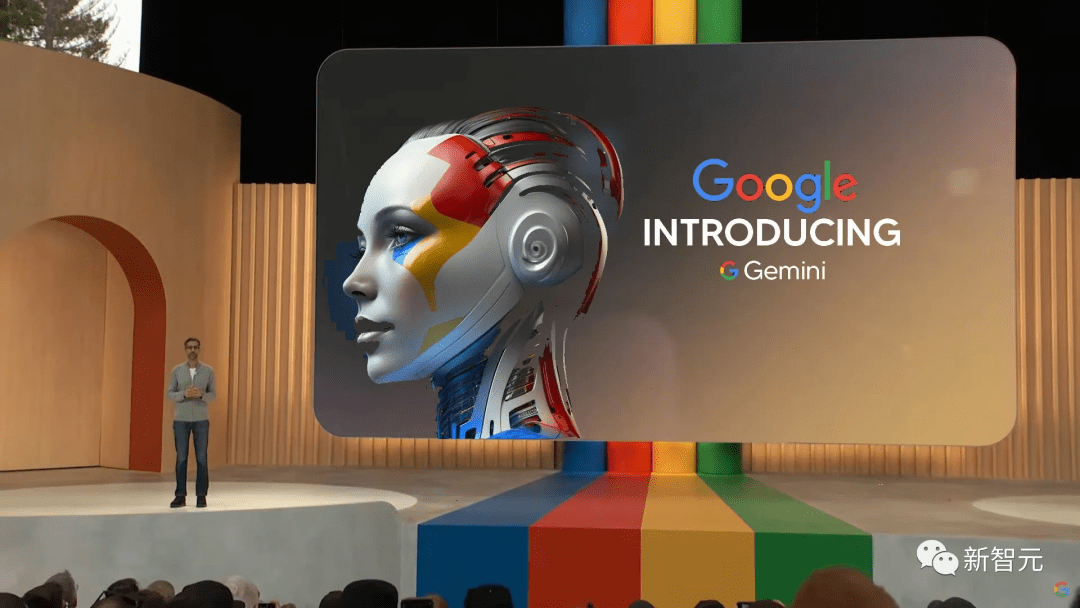
It is said that the Gemini series of models that Google is developing has been long-awaited by the entire company. After all, Gemini is going to compete with GPT-4.
OpenAI, of course, must take advantage of the situation.
At the end of last year, OpenAI successfully recruited more than a dozen researchers, and recently poached a number of key researchers from Google.
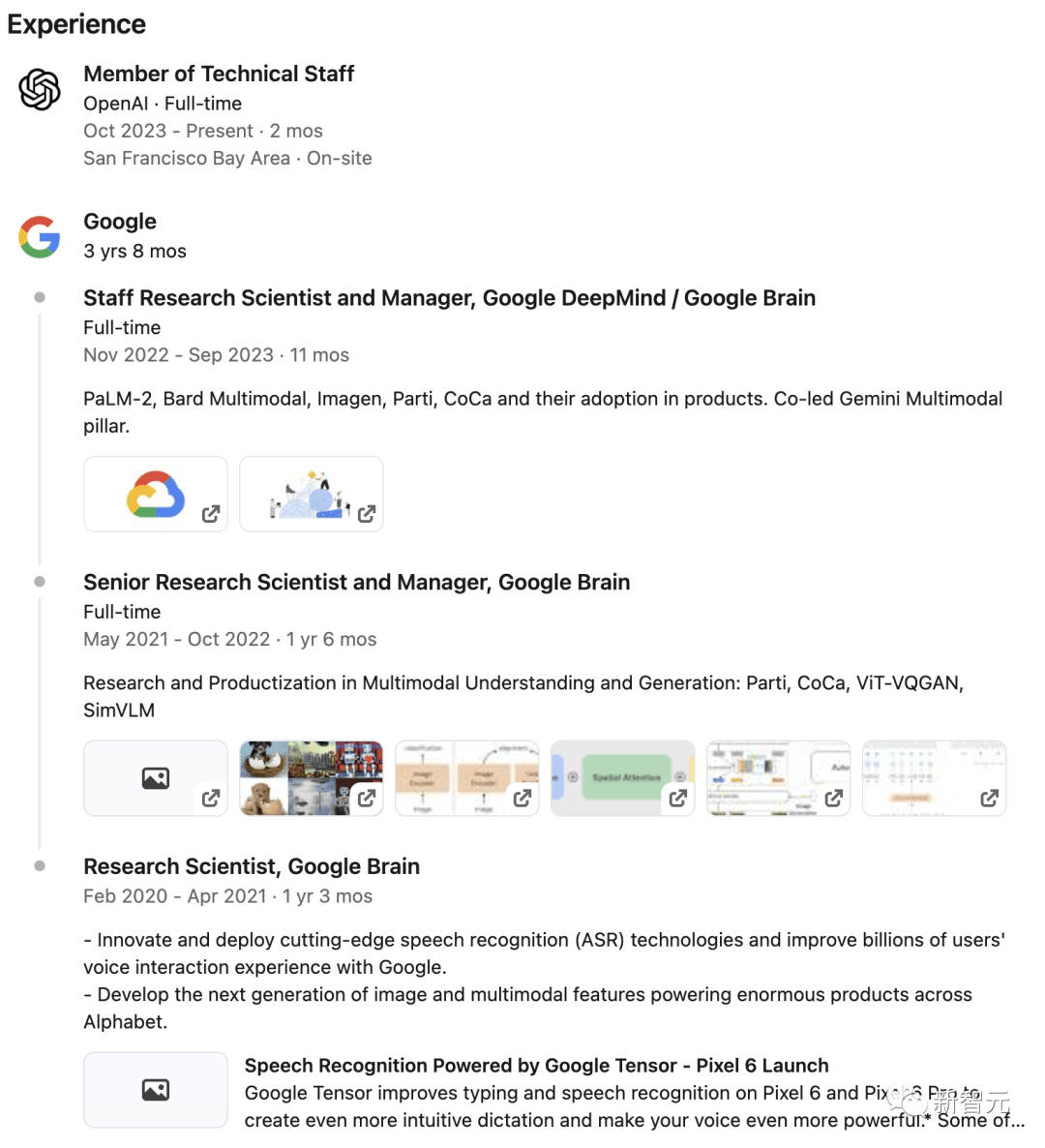
For example, Jiahui Yu, who leads the Gemini project, is very good at developing models that include both text and images.
According to his LinkedIn profile, he joined OpenAI in October.
In fact, the successful launch of ChatGPT is inseparable from the important role of former Google researchers, some of whom were recruited by Sam Altman himself.
Today, ChatGPT has become a multi-billion dollar business.
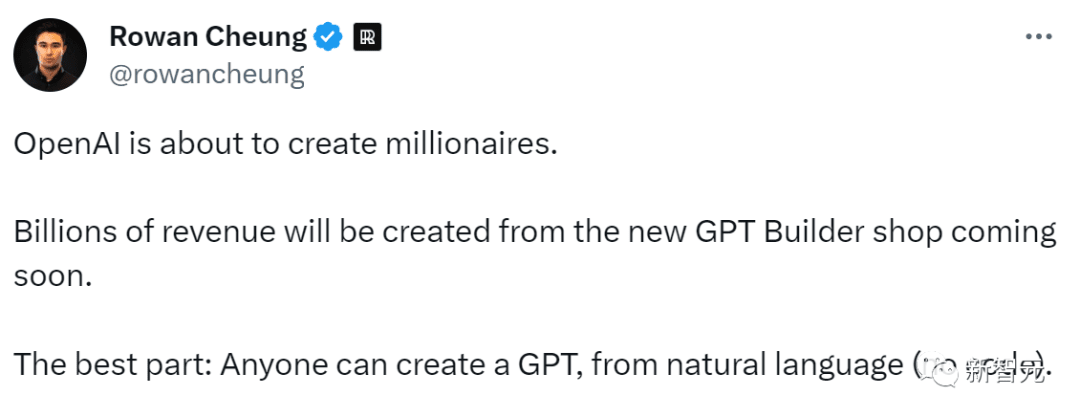
OpenAI's new GPT Builder allows anyone to create GPTs using natural language and zero code, which will generate billions of dollars in revenue
This is intolerable, and Google is certainly not idle either.
People familiar with the matter revealed that Google has begun to fight back this year, recruiting some well-known researchers from OpenAI and willing to offer them higher salaries than their former employers.
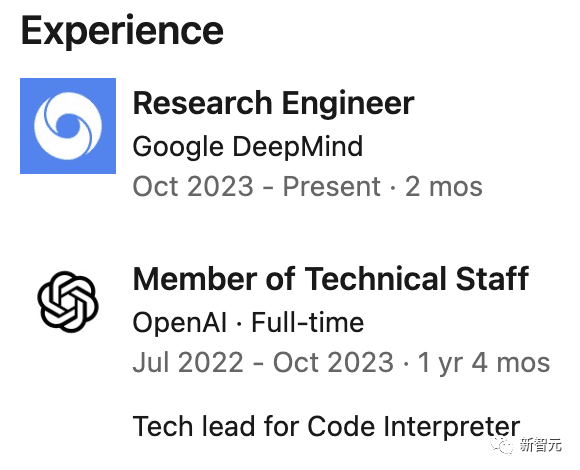
For example, according to LinkedIn information, Matt Wiethoff, a former employee who developed the ChatGPT code interpreter, left OpenAI in October and joined Google DeepMind.
 The demand for AI talents in China has increased dramatically, and PhDs are being poached before they even graduate.
Just recently, China Business News reported that the annual salary of freshly graduated PhDs in AI in China has risen to over one million yuan, and some are even poached before they even leave school.
The article mentioned that a professor from a Peking University software engineering laboratory said that their team has students who have not even graduated yet and large companies have offered millions of dollars to poach them.
In this regard, Liepin Group CEO Dai Kebin said, "AI talent is now in high demand. If a PhD student is in the right field, he or she can still get a starting salary of 2 million right after graduation, not including stocks."
This also confirms the previous statistics of Liepin Big Data Research Institute - among the demands for 2023 doctoral graduates, the largest growth was in AI big models, reaching 430%; artificial intelligence ranked sixth, at 112.50%.
In addition, according to Liepin's analysis, from January to August 2023, the number of newly posted AIGC positions in China increased by 139.76% year-on-year, and the average annual salary reached 410,900 yuan.
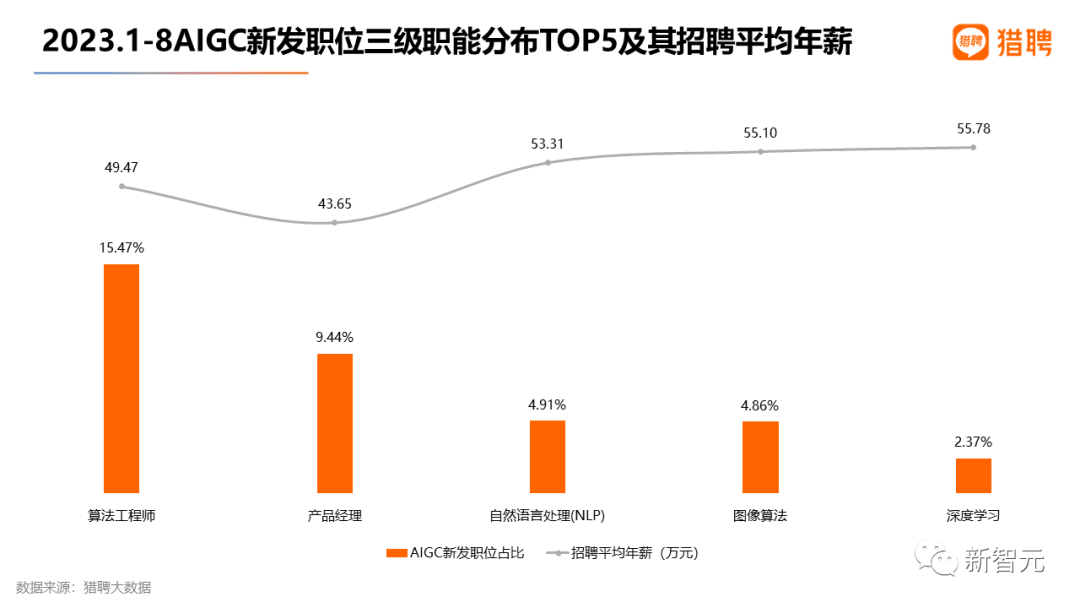
The top five functions in terms of the number of newly posted positions are algorithm engineer (15.47%), product manager (9.44%), natural language processing (4.91%), image algorithm (4.86%), and deep learning (2.37%).
Moreover, the salaries for these positions all exceeded RMB 430,000. Among them, deep learning, image algorithm, and natural language processing ranked the top three, at RMB 557,800, RMB 551,000, and RMB 533,100, respectively. Algorithm engineer and product manager ranked fourth and fifth, at RMB 494,700 and RMB 436,500, respectively.
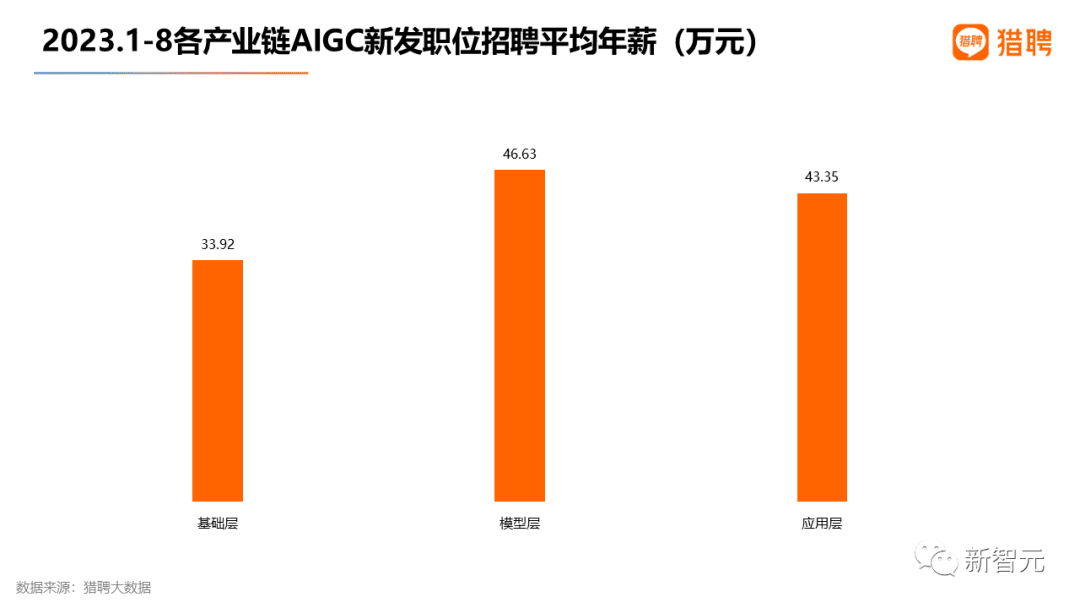
Liepin stated that the domestic AIGC industry can be roughly divided into the infrastructure layer, model layer and application layer.
Basic layer: construction of basic support platform, including sensors, AI chips, data services and computing platforms; Model layer: research and development of core technologies, mainly including algorithm models, basic frameworks, and general technologies; Application layer: development of industrial applications, mainly including industry solution services, hardware products and software.
- The model layer has the highest educational requirements, with master's and doctoral degrees accounting for over 30%
Since the basic layer and model layer focus more on technology, the positions require higher academic qualifications.
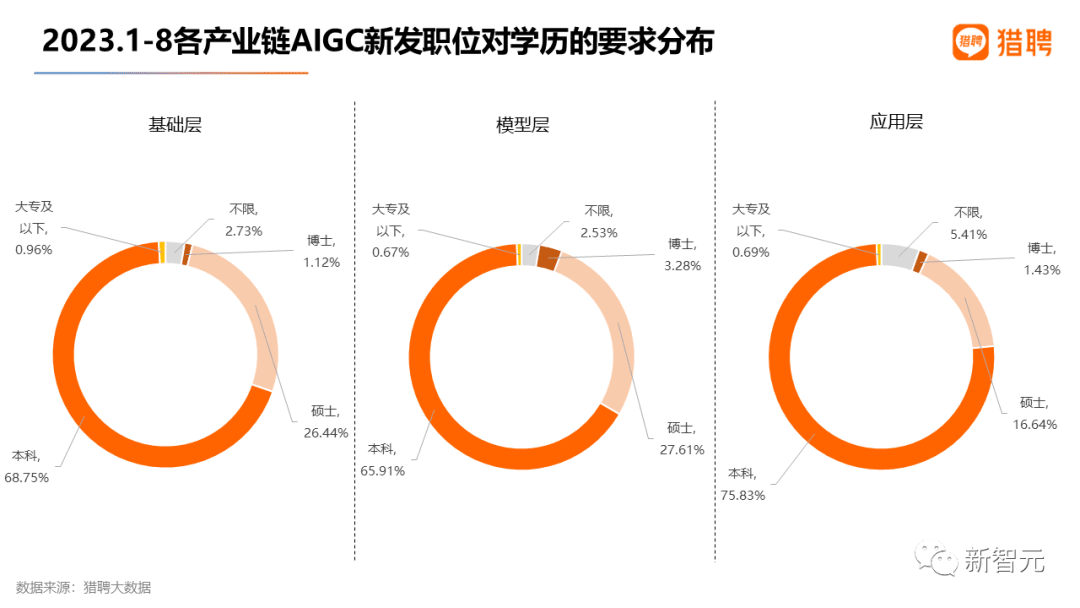
In terms of master's and doctoral degrees, the demand for the basic layer accounts for 27.56% of the total; the model layer is 30.89%; and the application layer is 18.07%.
Among them, the model layer has the highest demand for PhDs, accounting for 3.28%, while the basic layer and application layer have a demand for PhDs of no more than 1.5%.
- More high-paying model-level positions
At the same time, higher educational requirements also bring higher salaries.
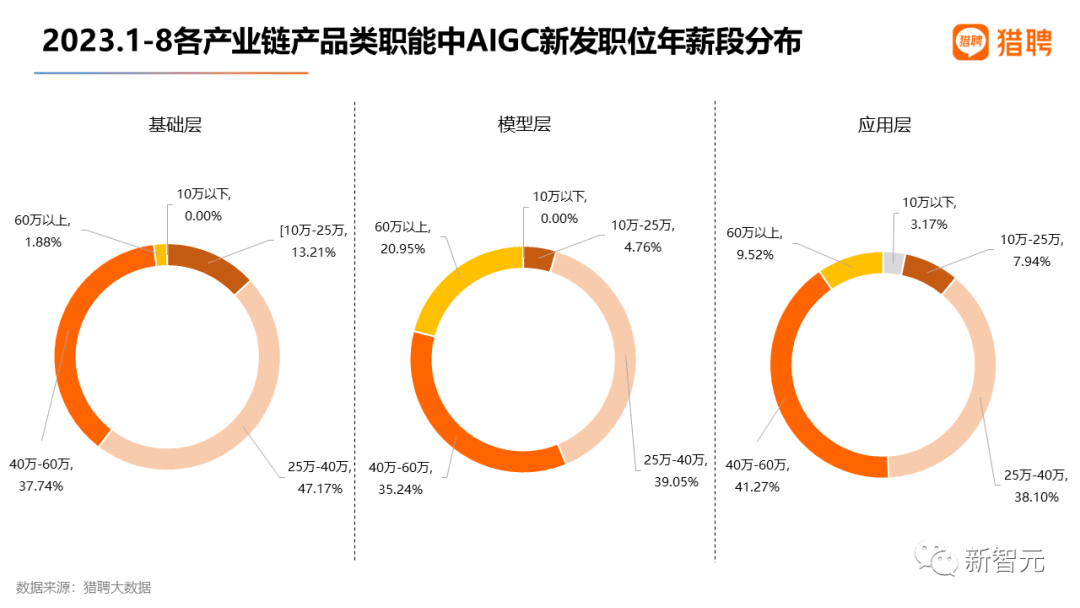
According to statistics, positions with a salary of more than 600,000 in the model layer even account for 20.95%, which is much higher than the 1.88% in the basic layer and 9.52% in the application layer.
In comparison, the proportion of the low-salary segment is even smaller - positions below 250,000 only account for 4.76%, which is significantly less than the 13.21% of other basic layers and 11.11% of the application layer.
- The average annual salary is over 330,000 yuan, and the model level is as high as nearly 470,000 yuan
Specifically, the average annual salary for positions at the basic layer, model layer, and application layer is over 330,000.
Among them, the model layer has the highest number, which is 466,300; the application layer is second, which is 433,500; and the basic layer ranks third, which is 339,200.
 Google Open Book: Working more than 8 hours a day
With the competition for talent externally so fierce, it's obviously not going to be easy internally either.
According to an internal memo, the average Google employee's work hours have actually exceeded the "normal" 9-to-5...

When a Google employee asked if the company could arrange his schedule so that he worked fewer hours over more days, an HR representative responded:
"Most salaried Googlers already work more than eight hours a weekday. No one at Google is 120% full-time, so a 100% compressed schedule is not realistic."
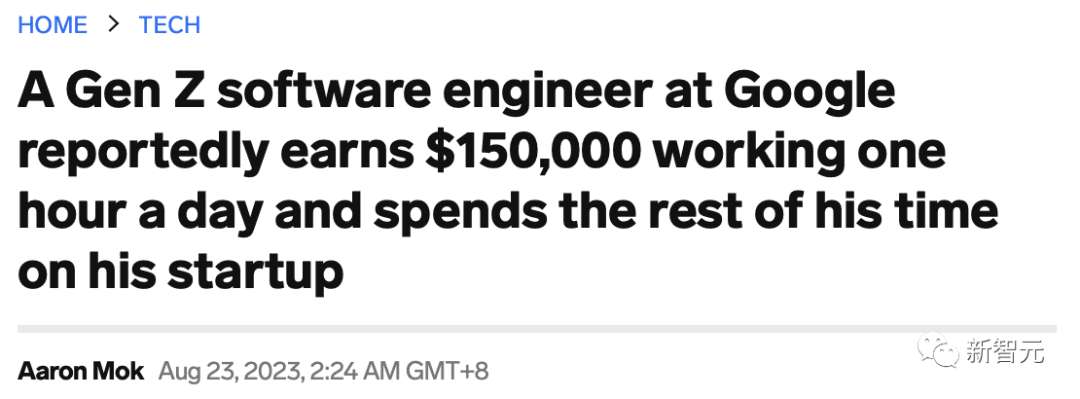
This summer, multiple publications reportedly interviewed a six-figure Google software engineer who said he only worked one hour a day coding in the morning and spent the rest of the time working on his startup.
Reports of these one-hour workdays went viral online, including among friends and family of Google employees.
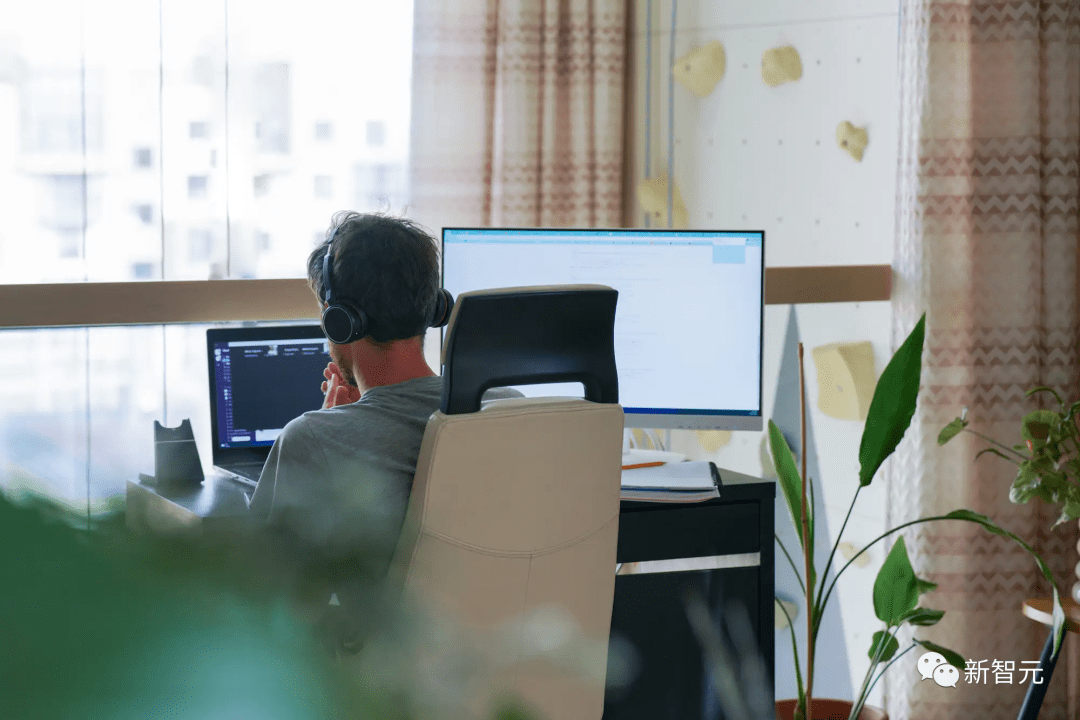
In response, Google spokesperson Courtenay Mencini said in a statement that Google employees can request more flexible schedules and that requests will be reviewed based on their roles and teams.
"Like any company, there are times when our employees work more than 40 hours a week to meet deadlines or deliver products and services to our customers."
In addition, the company will consider approving 60% and 80% full-time work schedules, as well as other forms of part-time work, based on the employee's circumstances and manager approval.
However, Google said the compressed work week isn't as flexible as other options the company offers and can't be matched to the schedule of an entire team.
Over the past two decades, Google employees have enjoyed extremely high benefits, and these strategies have been adopted by other large technology companies to attract talent.
However, in 2023, affected by the overall economic environment, many companies decided to cut some benefits.
References:
https://www.theinformation.com/articles/openais-new-tack-in-talent-war-with-google-promising-recruits-a-quick-stock-bump?rc=epv9gi
https://www.cnbc.com/2023/11/09/google-employees-typically-work-longer-than-eight-hours-a-day.html
https://www.yicai.com/news/101901024.html
https://t.1yb.co/KbLY