


Sky is the latest decentralized finance (DeFi) protocol launched by the MakerDAO team. As a pioneer in decentralized autonomous organizations (DAO) and stablecoin innovation, MakerDAO launched the world's first decentralized stablecoin Dai (DAI) back in 2017. The development of the Dai stablecoin has driven the rise of the DeFi ecosystem, becoming a bridge for users to enter the DeFi world.
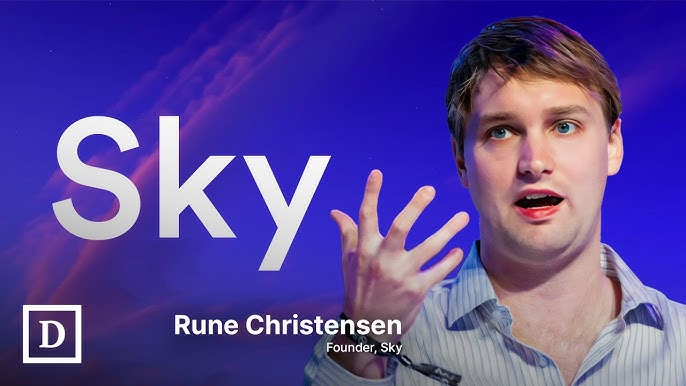
However, as global regulatory trends gradually tighten, MakerDAO faces the challenge of balancing compliance and decentralization. Therefore, MakerDAO founder Rune Christensen initiated the 'Endgame' plan, aiming to promote further decentralization of the protocol and reform its governance structure, upgrading MakerDAO to the brand new Sky. Sky not only continues the concept of decentralized stablecoins but also introduces support for real-world assets (RWA), designing a dual-stablecoin strategy to better adapt to the current market demands and regulatory environment.
This article will delve into the background of Sky's creation, the historical significance of MakerDAO, key upgrades in the new protocol, and how these changes will affect the DeFi ecosystem and user experience.
The Historical Significance of MakerDAO and the Application of Dai in DeFi
MakerDAO is one of the earliest decentralized autonomous organizations in the cryptocurrency space, and its pioneering Dai stablecoin has fundamentally changed the infrastructure of DeFi. As a fully decentralized stablecoin, Dai does not rely on centralized capital reserves but achieves price stability through an over-collateralization mechanism, allowing users to mint Dai by using cryptocurrency assets (such as ETH or BTC) as collateral. Dai's stability stems from its smart contract mechanism, which ensures that Dai can remain stable around $1 in most cases, making it the foundational currency of the DeFi world.
The decentralized nature and stability of the Dai stablecoin make it an important asset in DeFi applications. Here are the main application scenarios of Dai in the DeFi ecosystem:
1. Lending Platforms: On DeFi lending platforms like Compound and Aave, users can use Dai for loans and collateral, thereby gaining additional income or liquidity. The liquidity pools collateralized with Dai on lending platforms allow users to freely borrow or lend funds.
2. Liquidity Mining: DeFi projects generally allow users to deposit Dai into liquidity pools, providing liquidity for the platform and earning mining rewards. Liquidity mining is very common in DeFi protocols, and Dai's role in these protocols makes its value extend beyond the stablecoin itself, becoming an important tool for participating in the DeFi ecosystem.
3. Cross-Platform Payments: The stability and openness of Dai make it a payment tool, allowing users to use Dai for transactions in decentralized applications while avoiding price volatility risks. Dai's characteristics as a stablecoin ensure its stable performance in payment scenarios and trading activities within the DeFi ecosystem, facilitating transfers and transactions between different platforms.
The emergence of Dai not only expands the financial boundaries of DeFi but also becomes an important tool for users to participate in DeFi applications, enabling the formation of a fully decentralized financial system. These application scenarios illustrate the importance of Dai and the foundation laid by MakerDAO in the DeFi world.
Why did MakerDAO transform into Sky?
In 2022, MakerDAO founder Rune Christensen proposed the 'Endgame' plan, aimed at deep-seated reforms to address the governance challenges faced by MakerDAO. With the rapid development of the cryptocurrency market, global regulatory efforts are also gradually strengthening. Finding a balance between compliance and decentralization has become a core issue for MakerDAO. Therefore, the MakerDAO team decided to upgrade to a brand new Sky, comprehensively innovating its structure, governance tokens, and stablecoin mechanisms.
Key Changes of Sky
1. Dual-Stablecoin Strategy: USDS and PureDAI
Sky introduces a dual-stablecoin strategy, namely USDS and PureDAI. USDS is a stablecoin backed by real-world assets (RWA), allowing for more compliant operations and meeting the market demand for higher stability. PureDAI, on the other hand, is a fully decentralized stablecoin, unaffected by any regulatory influences, designed for users who value the spirit of decentralization.
2. The Launch and Split of Governance Token SKY
In Sky, the original governance token MKR has been split into 24,000 new governance tokens SKY. This split allows more users to participate in governance, lowering the participation threshold and making the governance of the protocol more representative. This change not only enhances the democracy of the protocol but also broadens community participation.
3. Multi-SubDAO (SubDAO) Structure
Sky has created multiple SubDAOs, each focusing on different application scenarios such as asset management, lending, and real-world asset tokenization. This multi-SubDAO structure allows various branches to better adapt to different market demands while maintaining the decentralized nature of the overall protocol.
Reversible Exchange between SKY and MKR: Assurance of User Flexibility
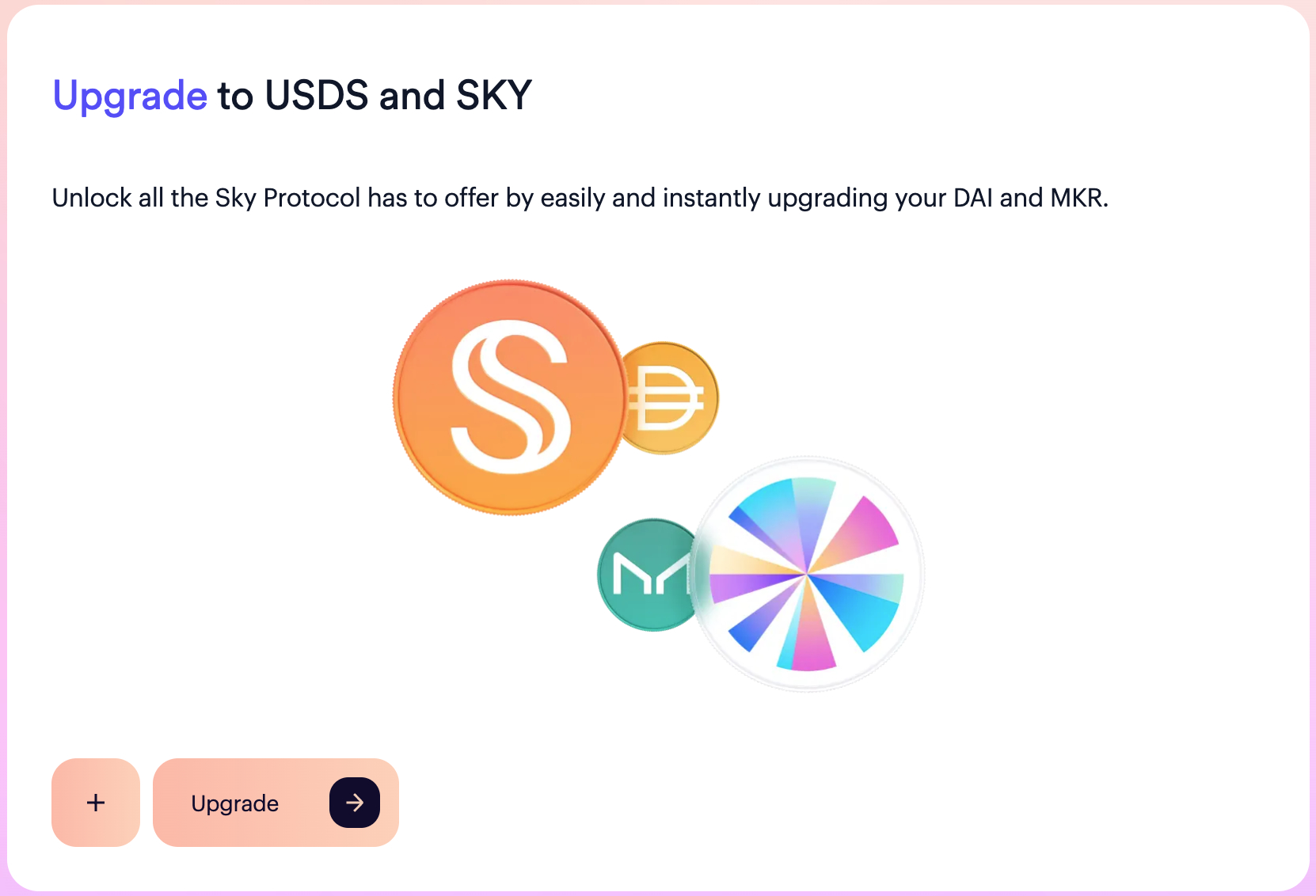
An important innovation in Sky is allowing users to perform reversible exchanges between the governance token SKY and the old MKR. This design provides bidirectional flexibility, enabling users to choose the appropriate token based on market conditions.
The advantages of this exchange mechanism for users include:
1. Asset Protection: In unstable market conditions, users can convert SKY back to MKR to avoid potential price volatility risks.
2. Multiple Choices: This design reflects Sky's commitment to user flexibility, allowing users to freely choose the tokens they hold based on their needs and preferences.
3. Balancing the Needs of New and Old Users: Some early MKR holders may have concerns about the new governance structure of SKY, and the reversible exchange mechanism allows these users to choose whether to participate in the governance of the new protocol without giving up their original tokens.
The reversible exchange mechanism between SKY and MKR provides flexible choices for Sky's governance structure, enhances users' sense of trust and security in the protocol, and plays a positive role in the stable development of the protocol.
Changes and Potential Risks Brought by Sky
Sky's innovations not only expand its functionality but also achieve a better balance between compliance and decentralization. However, these changes also bring some potential risks:
1. The Freezing Mechanism of USDS
Although USDS is supported by real-world assets (RWA), enhancing compliance, it also introduces a freezing function. Under specific circumstances (e.g., regulatory requirements), USDS can be frozen by the protocol. This function brings USDS closer to traditional stablecoins (e.g., USDT, USDC), but may raise questions about its decentralized attributes, potentially reducing the trust of decentralization enthusiasts.
2. Governance Challenges of SubDAOs
While the SubDAO structure enhances the flexibility and scalability of the protocol, the governance models of each SubDAO may vary depending on the market and demand they face, leading to the problem of governance complexity. Maintaining collaborative cooperation among multiple SubDAOs and ensuring the consistency of the overall protocol will be one of the challenges Sky faces.
3. RWA Risks
Sky plans to bring more real-world assets (RWA) into the protocol, which helps enhance stability and strengthen compliance, but also faces challenges such as regulatory changes and asset management risks. The inclusion of RWA may subject the protocol to additional constraints when facing traditional financial regulators, thereby affecting its decentralized nature.
Outlook for Sky's Future
Sky, through its dual-stablecoin strategy and SubDAO structure, explores new possibilities for the integration of decentralized finance (DeFi) and real-world assets (RWA). In the future, it is expected to become a core pillar of DeFi applications and expand into broader fields such as asset management and asset tokenization. Sky's design makes it more competitive in diverse market demands and has the potential to become an important driving force in the DeFi sector.
Personal Opinion
I believe that Sky is a necessary upgrade by MakerDAO to respond to market changes and compliance demands. The dual-stablecoin strategy allows it to find a balance between decentralization and compliance, while the reversible exchange mechanism and SubDAO structure grant users more choices and flexibility. These innovations not only contribute to the long-term development of the protocol but also attract more users to join the Sky ecosystem.