


Capitulate literally means to give in, to give in. In the financial industry, capitulation refers to a period of aggressive selling of a cryptocurrency/stock, when even the most stubborn bulls admit defeat and turn into bears.
Signs of cryptocurrency market capitulation
Imagine a situation where the cryptocurrency you invested in fell by 30% overnight. You have two options: sell it urgently in order to at least slightly compensate for the losses, or continue to hold it in the hope of growth in the future.
If the majority of investors decide to sell, the price drop will intensify even more. Those who continue to hold the coin are subject to intense selling pressure. Eventually the bears will run out of coins to sell and a “price bottom” will occur.
It is quite difficult to predict capitulation, but it can be identified - traders should pay attention to a combination of events such as:
Large trading volumes.
A rapid drop in the value of the coin.
High volatility.
Signs of oversold.
Negative market factors.
Reducing the number of "whales".
A recent example is the collapse of the FTX token, which was accompanied by most of the listed signs, as can be seen on the Trading View chart.
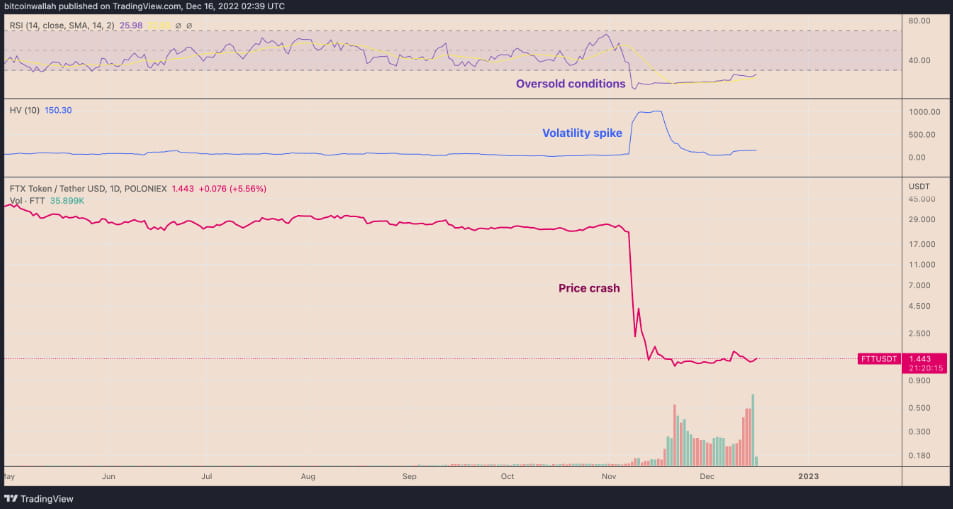
Cryptocurrencies, especially those with small market capitalization and low liquidity, will always experience greater volatility during capitulation. But the capitulation of the crypto market does not always harm investors. On the contrary, when the price of an asset reaches the bottom, a convenient profit opportunity arises.
For example, Bitcoin and Ethereum have shown signs of capitulation many times over the past eight years, with large sales volumes and falling prices. Remember the market crash in March 2020.
What does capitulation mean for the crypto market?
Many experienced traders and investors view crypto market capitulation as a harbinger of a price bottom. As a result, they prefer to hold coins during market declines, thus absorbing the selling pressure and creating fertile ground for a bullish trend in the future.
In addition, capitulation usually eliminates short-term sellers and gradually shifts momentum towards companies with long-term prospects, since almost everyone who is in the mood to sell has already done so.
This usually translates into a constant increase in the supply of coins held by addresses for more than six months. It was called "old coins".
Indicator of old BTC coins, according to Glassnode:

Glassnode analysts conducted a study and noted that such coins are less likely to be spent at any time.
“Typically, the volume of old coins increases during a bearish market trend and reflects a net transfer of crypto capital from new investors and speculators back to patient long-term investors (called HODLers).” However, determining the market bottom during a capitulation event is extremely difficult, as the process can take months, if not several years, as was the case with Bitcoin in 2014-2016. Traders often rely on historical data and previous price lows to anticipate possible capitulation. For this, many criteria and indicators are used.
Translation of analytical material from the site: cointelegraph.com