


Written by Bing Ventures
As a scalability solution, Rollup has great potential in the expansion of public chains. However, it still faces some difficulties, such as security, decentralization, user experience, and cost-effectiveness. By solving these difficulties and establishing a sound ecosystem and standardization support, Rollup is expected to achieve a wider range of applications and development, providing lasting support for the scalability of public chains.
Hybrid Rollup is a useful exploration to achieve this goal. Hybrid Rollup is an innovative concept that can better solve the scalability and performance problems of the public chain by integrating different architectures and absorbing their advantages, while providing higher security and better user privacy protection.
This Bing Ventures article will consider the difficulties faced by Rollup as a scalability solution from the perspective of public chain expansion, explore issues such as security, decentralization, user experience, and cost-effectiveness, and on this basis explore possible solutions and look forward to the prospects of Rollup.
The Dilemma of a Single Rollup
Zero-knowledge Rollup and Optimistic Rollup are the two mainstream Rollup architectures at present, but they each have obvious limitations. Optimistic Rollup takes up to 1 week for transactions to reach finality due to the need to submit fraud proofs, while zero-knowledge Rollup faces higher costs due to the need to verify validity proofs on the chain. The former has a poor user experience, while the latter is not cost-effective and sustainable. Both also have different degrees of trade-offs in terms of security and decentralization. For example, Optimistic Rollup has the risk of operator fraud leading to exit scams, while most zero-knowledge Rollups are centralized, and only a few operators can submit transactions and validity proofs to L1, which increases the risk of censorship.
The hybrid model using optimistic rollup and zero-knowledge rollup is expected to provide a better trade-off between security and decentralization, maintaining a certain degree of decentralization while improving the overall system security. This hybrid model is also expected to provide the best possible experience for users and developers.
In addition, the large-scale universalization of Rollup requires a healthy ecosystem to provide developers with better tools and documentation to support them in building and deploying Rollup solutions. At the same time, it is also necessary to formulate unified standards and specifications to ensure the interoperability and compatibility of different Rollup solutions.
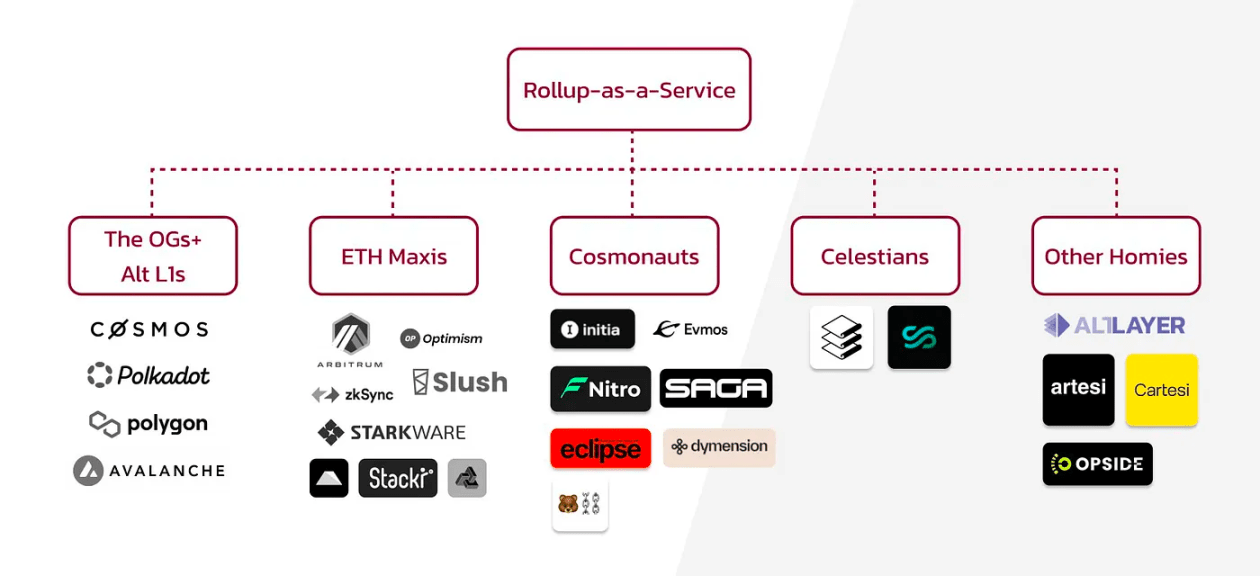 Potential Advantages of Hybrid Rollups
As an emerging scaling solution, hybrid Rollup is expected to bring improvements in the following aspects:
First, hybrid Rollup provides greater flexibility and scalability. By building ZK circuits for simple machines on L2, hybrid Rollup is able to publish validity proofs based on optimistic Rollup while avoiding the problem of frequent circuit updates because the target machine architecture is fixed. This flexibility enables hybrid Rollup to adapt to different application scenarios and needs, and can be effectively expanded to handle large-scale transactions.
Secondly, Hybrid Rollup combines the advantages of optimistic and zero-knowledge proofs to provide higher security. Optimistic Rollup provides high-performance and low-cost transaction processing, but there are certain risks because the verification is performed after the transaction is submitted. Zero-knowledge proof can ensure the validity and privacy of transactions, making it difficult for attackers to tamper with or steal users' assets. By combining these two mechanisms, Hybrid Rollup can provide stronger guarantees in terms of security.
In addition, hybrid Rollup can also reduce the need for trust. By using zero-knowledge proofs to prove the correct execution of transactions, hybrid Rollup can reduce users' reliance on the honesty of verification nodes. Users only need to trust the correctness of the ZK circuit without verifying the honesty of the node, thereby reducing the user's trust requirements.
 Technical Implementation Challenges of Hybrid Rollup
As an emerging scaling solution, the hybrid Rollup model faces some technical implementation challenges. The following are the two main challenges:
First, the process of compiling the execution layer to a simplified virtual machine may require complex engineering and research. This process needs to ensure that the compiled code can be executed correctly on the simplified virtual machine and is consistent with the original execution layer. To solve this challenge, a series of technical issues such as compiler optimization, virtual machine architecture, and compatibility need to be addressed. Only when these issues are properly addressed can the hybrid Rollup model realize its advantages of flexibility and scalability.
Secondly, the implementation of tracking zero-knowledge proofs may require processing a large amount of data and computation, which will bring performance and scalability challenges. The hybrid Rollup model uses zero-knowledge proofs to verify the correctness of the execution trajectory, which requires the generation and verification of a large amount of proof data. In order to ensure that these tracking proofs are generated and verified in real time in the actual network, the proof generation algorithm and verification algorithm need to be optimized to improve their efficiency and scalability.
Given these difficulties, at the current technical level, the hybrid Rollup model is more suitable for specific application scenarios and needs. The following are two main application scenarios that I think are more suitable:
The first is large-scale transaction processing. Since the hybrid Rollup model provides higher flexibility and scalability by compiling the execution layer to a simplified virtual machine, it is more suitable for processing large-scale transactions. It can effectively batch a large number of transactions and achieve low-latency transaction confirmation, thus meeting the needs of large-scale transaction processing.
The second is applications that are highly concerned about privacy. The hybrid Rollup model uses zero-knowledge proof to verify the execution trajectory, thereby protecting the privacy of transactions. The details of the transaction can be proven to be correct, but the actual transaction data can be kept confidential and only accessible to the nodes involved in the verification. This privacy protection mechanism makes the hybrid Rollup model more suitable for application scenarios with high demands for privacy protection, such as financial transactions or personal identity verification.
In summary, the hybrid Rollup model faces technical implementation challenges such as compiling the execution layer to simplifying virtual machines and tracking zero-knowledge proofs. However, in large-scale transaction processing and application scenarios with a high focus on privacy, the hybrid Rollup model shows its advantages and applicability. By solving technical challenges and meeting specific needs, hybrid Rollup is expected to play an important role in the field of capacity expansion.
The future development direction of Rollup
Hybrid Rollup is considered to be the future development direction of Rollup, but its further maturity must be based on the further development of the following single Rollup technologies:
The first is the optimistic Rollup model. Optimistic Rollup provides higher transaction throughput and lower costs by further optimizing and improving the optimistic confirmation (finality) mechanism. This may involve innovations in more efficient state management, transaction submission, and dispute resolution mechanisms. The optimistic Rollup model has the potential to surpass hybrid Rollup in terms of performance and cost.
The second is the zero-knowledge proof Rollup model. With the development of zero-knowledge proof technology, it will bring a more efficient and faster verification process, thereby improving the performance and scalability of zero-knowledge proof Rollup, including innovations in more efficient proof construction, more compact proof size, and faster verification algorithms. The zero-knowledge proof Rollup model is expected to surpass hybrid Rollup in terms of verification efficiency and performance.

We believe that the introduction of hybrid Rollup will promote more projects and developers to participate in building the Rollup ecosystem. By providing flexibility and scalability, hybrid Rollup provides more opportunities for various application scenarios and industries. For example, the DeFi field can take advantage of the high performance and low cost of hybrid Rollup to build more complex financial protocols and smart contracts. The following are several directions that I am optimistic about:
Cross-chain interoperability: Hybrid Rollup can provide cross-chain interoperability solutions for different public chains. By using hybrid Rollup as a bridge layer, each public chain can achieve secure and efficient asset transfer and information transmission. This will promote collaboration and value flow between multiple chains, breaking down the barriers between existing chains. Interoperability between Ethereum and other public chains is a potential opportunity. Hybrid Rollup can achieve seamless interaction and combination of assets on both chains on a larger scale.
Industry compliance and privacy protection: The combined characteristics of hybrid Rollup can provide solutions for industry compliance and privacy protection. By adopting zero-knowledge proof technology, hybrid Rollup can ensure transaction privacy and provide verifiable transaction execution. This is especially important for the RWA field and institutional users, which have high demands for privacy protection.
Community governance and consensus mechanism innovation: The development of hybrid Rollup will encourage more innovation in community governance and consensus mechanisms. By introducing hybrid Rollup, the public chain community can achieve higher transaction throughput and lower costs while maintaining a high degree of decentralization and security. This may lead to experiments and improvements in public chain governance and consensus mechanisms to meet the needs of different DAOs.
Infrastructure and development tool support: As hybrid Rollup develops, more infrastructure and development tool support is expected to emerge. Developers can build tools and platforms for deploying and managing hybrid Rollup, simplifying the development process and providing a better user experience. This will further promote the adoption of hybrid Rollup and provide developers with more opportunities and resources.
In summary, hybrid Rollup is expected to bring positive trends in ecosystem expansion, cross-chain interoperability, industry compliance and privacy protection, community governance and consensus mechanism innovation, as well as infrastructure and development tool support. With the continuous development of technology and applications, hybrid Rollup will promote the further improvement of the scalability and practicality of L1 and L2.