



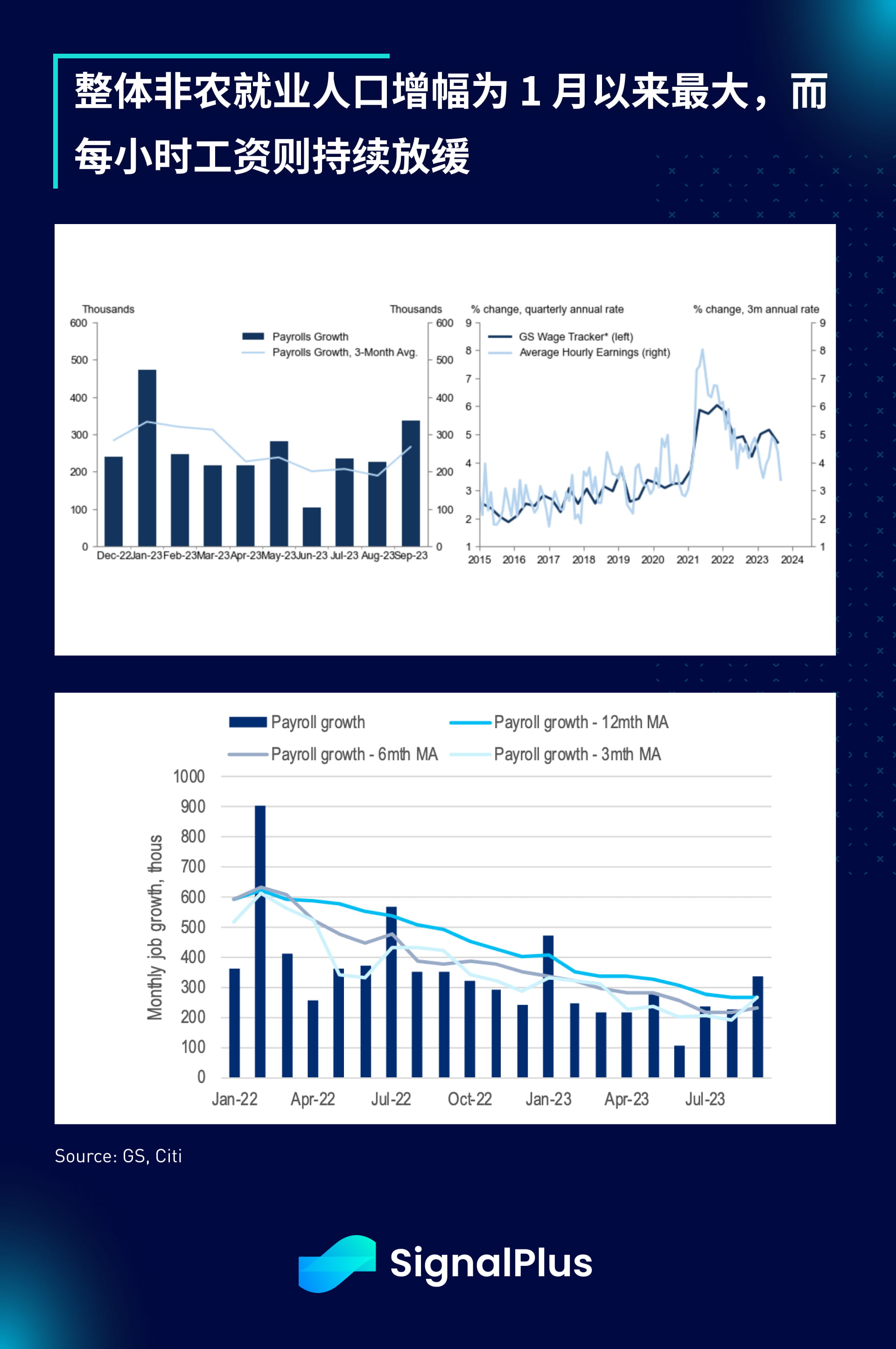
Non-farm employment data released last Friday showed that the number of employed people increased by 336,000 in September, which was almost twice the market expectation and the largest monthly increase since January. The previous value was also revised upward. August and July was revised up to 227,000 (+ 40,000) and 236,000 (+ 79,000) respectively, showing a strong job market overall, with the service industry being the strongest, with an increase of 234,000 jobs, followed by leisure and The hotel industry increased by 96,000, and education and health care increased by 70,000. However, the overall unemployment rate also reached a seven-month high of 3.8%, and hourly wage growth slowed to 0.2% month-on-month (0.4% in July). %), finally, as the economic situation slowed down, the labor force began to increase again. After the labor force surged by 736,000 people in August, it further increased by 90,000 people in September, and the labor force participation rate remained stable at 62.8%.
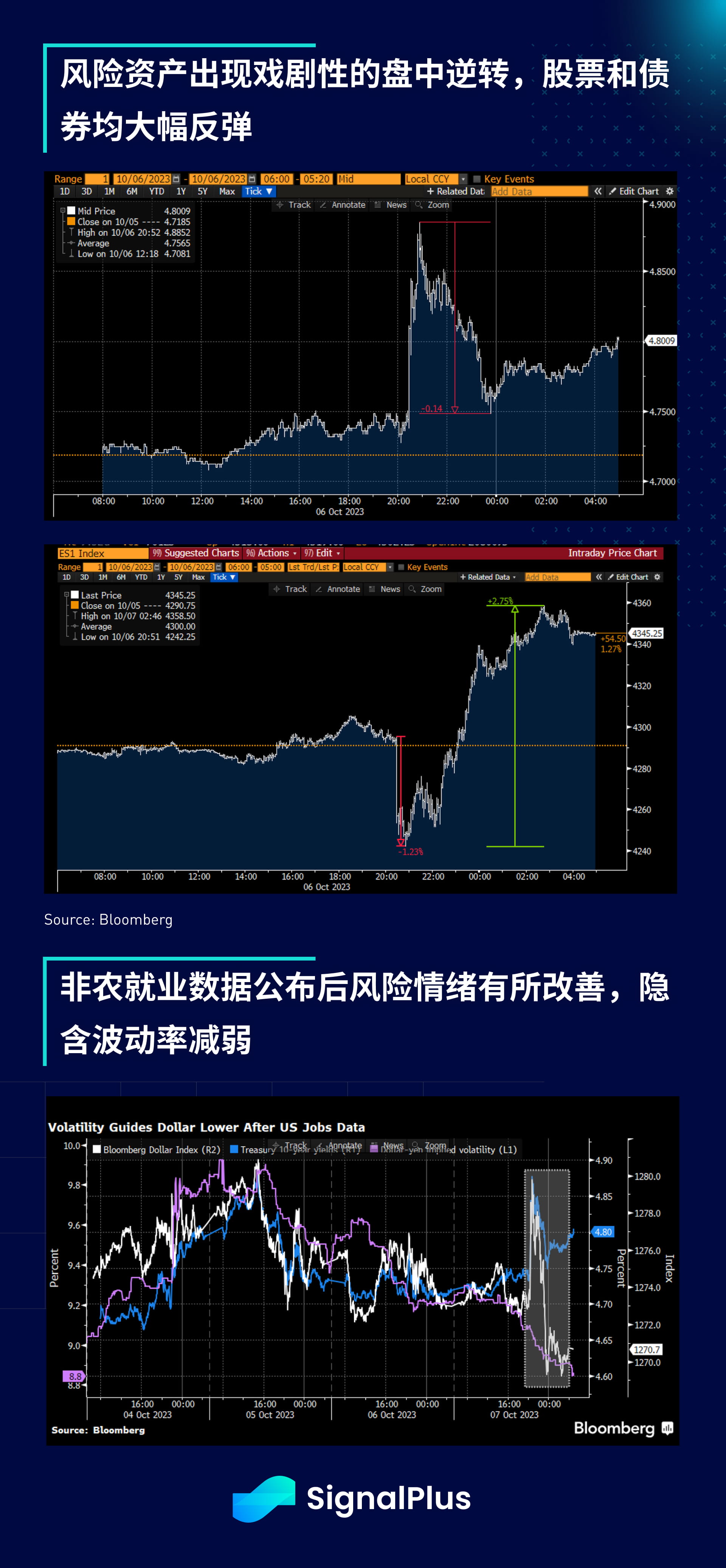
Soon after the data was released, 30-year Treasury yields first surged, hitting their highest level since 2007. Yields initially jumped 16 basis points, while SPX futures fell 1.3%. However, just when risk assets looked like they were going to have another difficult trading day, market sentiment took a sharp turn in late morning in New York, with yields falling 14 basis points from peak to trough, while the SP index's intraday change exceeded 3 standard deviations, rebounding by a staggering 2.8%. The US dollar index broke a 12-week winning streak, implied volatility fell, gasoline and industrial commodities fell to their lowest levels in a month, and despite the strong non-farm payrolls, the probability of a Fed rate hike in November remained stable at just above 20%. All in all, last week ended with a well-placed squeeze rebound.
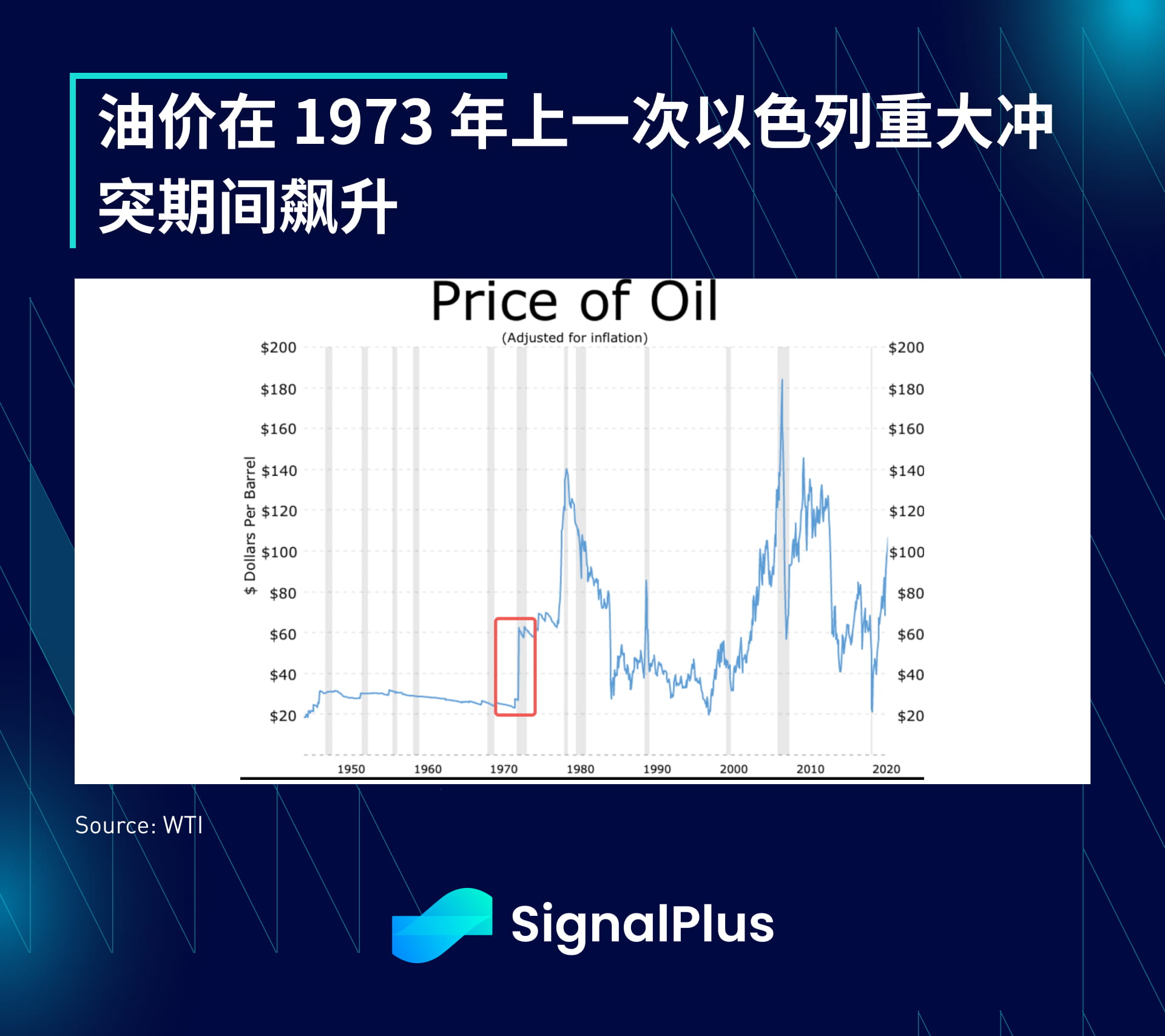
However, the calm in markets did not last long, as Hamas launched an unprecedented attack on Israel over the weekend, raising concerns about deepening conflict in the region and the risk of another war, the last time a similar situation occurred in 1973. The Yom Kippur War in 2006 caused crude oil (supply reduction) and gold (safe haven) prices to rise sharply, bond yields soared (inflation), and stocks sold off accordingly. This time, the market was relatively more conservative, opening on Monday morning. , crude oil/gold/bond prices rose slightly, and stocks fell only 0.6%; apart from the tragedy caused by the conflict, the main focus of the market will be on crude oil supply and whether the current attack will significantly weaken the global efforts to promote in recent years. De-escalation in the Middle East, we hope the conflict can be de-escalated quickly to minimize casualties.
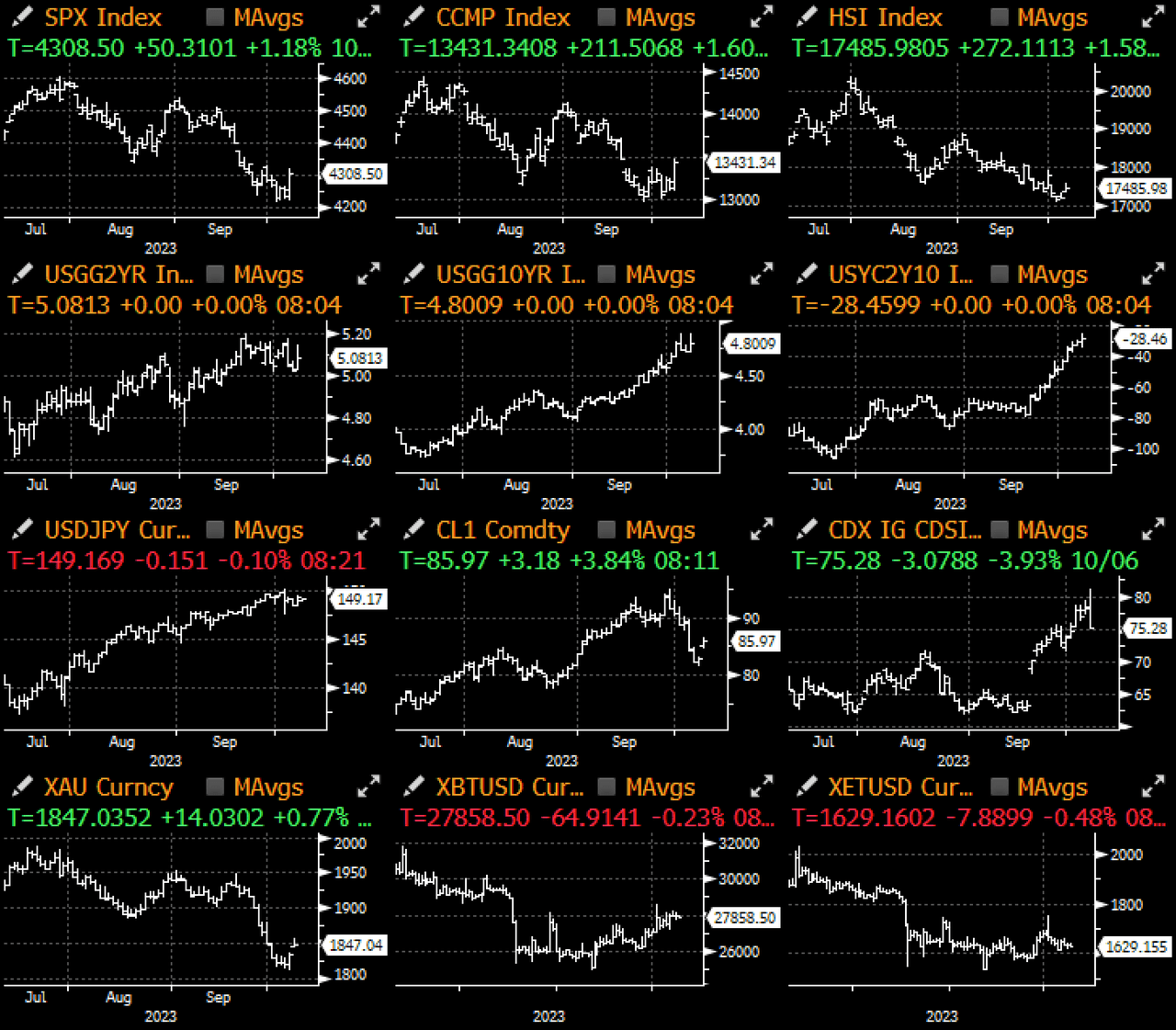
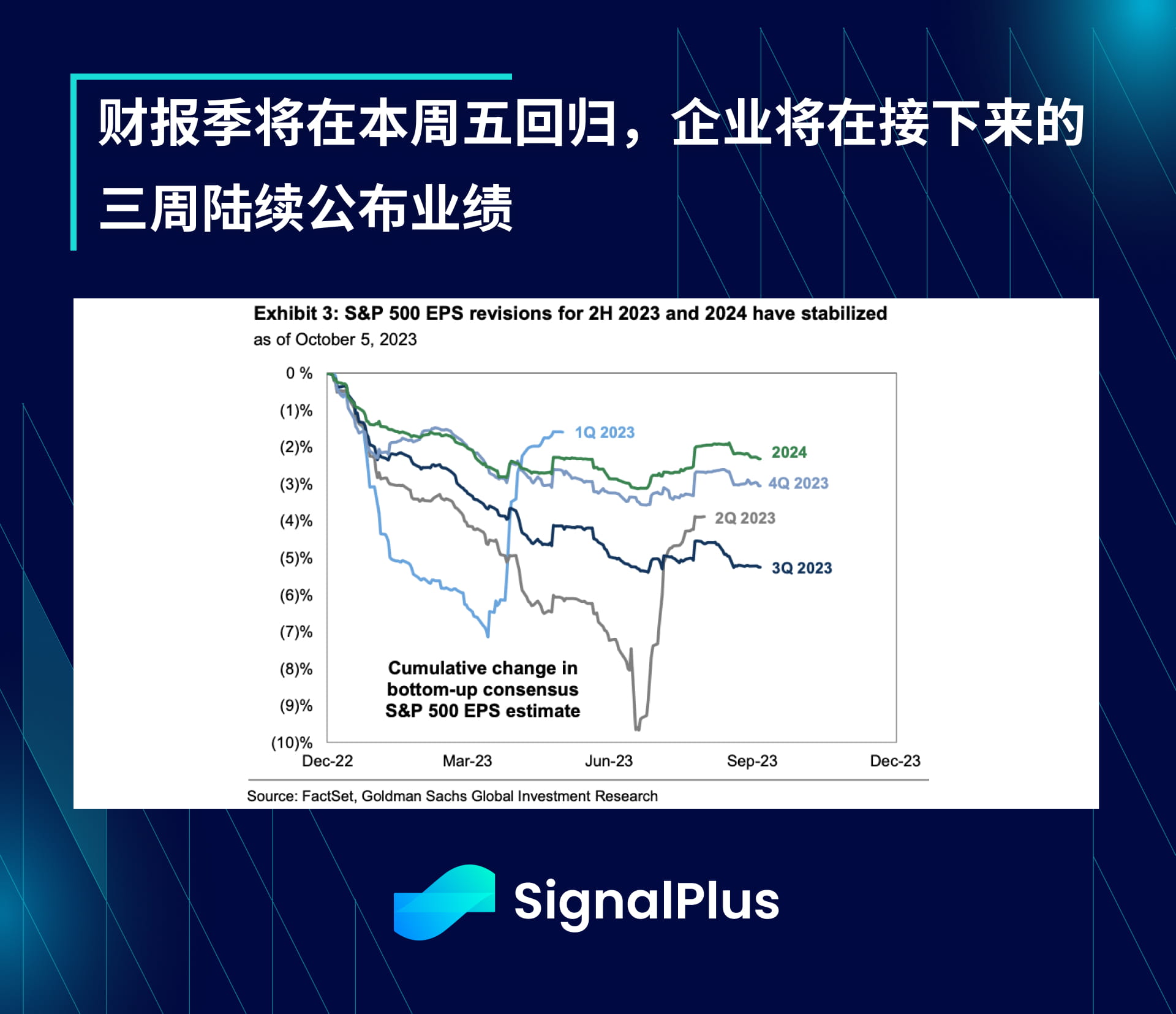
The market will next focus on CPI data later this week, which is expected to rise 0.3-0.4% month-on-month, with OER (Owner Equivalent Rent) and travel prices rising. In addition, earnings season will return in full force after this week, with Citi, JPM and Wells Fargo kicking off their third-quarter earnings on Friday. Nearly 80% of SP 500 companies will report results in the next 3 weeks, and profit forecasts have been quite stable, with EPS thresholds slightly higher than the past two quarters.

You can search for SignalPlus in the ChatGPT 4.0 Plugin Store to get real-time crypto news. If you want to receive our updates immediately, please follow our Twitter account @SignalPlus_Web3, or join our WeChat group (add assistant WeChat: SignalPlus 123), Telegram group and Discord community to communicate and interact with more friends.
SignalPlus Official Website:https://www.signalplus.com